Sourdough Focaccia Recipe
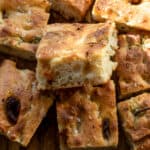
My Sourdough Focaccia Recipe is made with an active sourdough starter, extra virgin olive oil, freshly ground black pepper, rosemary, sun-dried tomatoes, and sea salt.
Servings: 12 pieces
Calories: 193kcal
Ingredients
- ½ cup sourdough starter (active and fed) (4 ½ oz/125 grams)
- 1 ⅓ cups water (at room temperature)
- 1 tablespoon honey
- 4 cups plain white flour / all-purpose flour
- 1 ½ teaspoon salt
- 2 ½ tablespoon extra virgin olive oil
Sourdough Focaccia Toppings
- 1 teaspoon Maldon sea salt
- ½ teaspoon freshly ground black pepper
- 2 sprigs rosemary
- 4-5 sun-dried tomatoes (chopped)
Instructions
Prepare the Dough
- Place your sourdough starter in a large bowl and add the water. Mix until the starter loosens and combines with the water.
- Add the honey, flour, salt, and olive oil, then mix everything together with your hands or a spatula until you have a wet, sticky dough. The dough will look rough at this stage, and that is completely normal. Focaccia dough should be soft and sticky, so don’t add extra flour.
- Cover the bowl with cling film or a clean tea towel and leave it to rest for around 30 minutes. This resting time helps the flour absorb the water and makes the dough easier to handle.
Stretch and Fold
- After 30 minutes, do the first set of stretch and folds. Wet your hand slightly, grab one side of the dough, stretch it upwards, and fold it over itself. Turn the bowl and repeat this four times around the dough.
- Cover and rest for 20 to 30 minutes, then repeat the same process two more times. You will do three sets of stretch and folds in total. This helps build strength in the dough without kneading and encourages a better texture once baked.
- After the final stretch and fold, cover the bowl and leave the dough to prove for 2 to 3 hours, or until it has risen by about 40%. You should see small bubbles on the surface. If your kitchen is cold, it may need longer. If it is warm, it may prove faster.
- For a stronger sourdough flavour, you can refrigerate the dough for up to 18 to 24 hours after the stretch and folds instead of doing the shorter room-temperature rise.
Second Rise
- Grease a deep nonstick baking tray, around 23 cm x 33 cm or 9 x 13 inches, generously with olive oil. Carefully transfer the dough into the tray. If your tray is not nonstick, line it with parchment paper and oil it well.
- Let the dough relax for 20 minutes, then rub your hands with a little olive oil and gently stretch the dough towards the edges of the tray. Don’t force it if it springs back. Leave it for another 10 to 15 minutes and try again. The dough doesn’t have to look perfect, as it will continue to spread while it rises.
- Cover the tray with an upside-down sheet pan or a large container, making sure it doesn’t touch the dough. Leave it in a warm spot until the dough is puffy, pillowy, and bubbly. This usually takes 2 to 3 hours, depending on the temperature of your kitchen.
Dimple, Top, and Bake
- Preheat the oven to 200°C or 390°F.
- Once the dough has risen and looks bubbly, drizzle a little olive oil over the top. Oil your fingertips and press firmly but gently into the dough until you touch the bottom of the pan. This creates the classic focaccia dimples.
- Sprinkle the top with Maldon sea salt, freshly ground black pepper, and rosemary leaves. Gently press the chopped sun-dried tomatoes into the dough so they stay in place while baking.
- Place the tray on the middle rack of the preheated oven and bake for 25 to 30 minutes, or until the focaccia is golden brown on top and crisp around the edges.
- Let it cool in the pan for a few minutes, then transfer it to a wire rack to stop the bottom from becoming soggy. Leave it to cool for 20 to 30 minutes before cutting it into squares.
Video
Notes
- Use an active, strong, fed sourdough starter that has just peaked and looks bubbly. A weak or sleepy starter will make the dough rise slowly and can give you a dense focaccia.
- Don’t add extra flour just because the dough feels sticky. Focaccia dough should be wet, soft, and slightly messy, as this is what creates the fluffy centre.
- Do the stretch and folds as instructed. They help build gluten strength without kneading and make it easier for the dough to hold bubbles.
- Watch the dough, not only the clock. The proofing time changes depending on the temperature of your kitchen and the strength of your starter.
- For a stronger sourdough flavour, refrigerate the dough for up to 24 hours after the stretch and folds instead of doing the shorter room-temperature bulk fermentation.
- Use a good-quality nonstick metal pan for the best crust. If your pan isn’t nonstick, line it with parchment paper and oil it generously.
- Be generous with olive oil. It adds flavour, helps stop sticking, and gives the focaccia its crisp golden base and edges.
- The dough should be about 4 cm or 1 ½ inches tall in the tray. If the pan is too large, the focaccia will bake thinner and won’t have the same soft middle.
- When dimpling the dough, press firmly but gently all the way down until you touch the pan. This creates the classic focaccia texture without destroying all the air bubbles.
- Press the sun-dried tomatoes and any other toppings into the dough so they stay in place and don’t burn while baking.
Nutrition
Calories: 193kcal | Carbohydrates: 34g | Protein: 5g | Fat: 4g | Saturated Fat: 1g | Polyunsaturated Fat: 1g | Monounsaturated Fat: 2g | Sodium: 294mg | Potassium: 67mg | Fiber: 1g | Sugar: 2g | Vitamin A: 8IU | Vitamin C: 0.3mg | Calcium: 9mg | Iron: 0.5mg