
Acma is a soft and buttery Turkish bread ring, sold in bakeries and by street vendors all over Turkey. The dough is enriched with milk, oil, and butter, and scented with mahleb. It bakes up golden, pillowy, and lightly sweet.

This recipe makes 16 rings with about 20 minutes of hands-on work plus two rises. I eat them warm with cheese, olives, and a glass of Turkish Tea - Çay.
What Is Açma?
Açma sits somewhere between bread and pastry: a ring of yeast dough glazed with egg yolk and baked until deep gold.
It belongs to the same family of soft doughs as Paskalya Çöreği (Tsoureki) - Easter Bread, and some bakers add yogurt as well to keep the crumb light.

Açma is everyday breakfast food in Turkey, eaten on the way to work or school. It looks like a bagel, but the dough is never boiled, so the rings bake up light and fluffy instead of chewy.
Açma vs. Simit: What’s the Difference?
Many people mistake açma for Simit (Turkish Sesame Bagel) due to their similar ring-like shape, but the two breads are quite different:
| Feature | Açma | Simit |
|---|---|---|
| Texture | Soft, fluffy, buttery | Crunchy, chewy, slightly dense |
| Preparation | Made with butter and milk for richness | Coated in molasses and sesame seeds for a nutty, crispy crust |
| Baking Process | Directly baked in the oven | Dipped in molasses and rolled in sesame seeds before baking |
| Common Fillings | Cheese, olives, chocolate | Usually plain, sometimes with cheese |
If you cannot decide, make both: simit for crunch, açma for softness.
Ingredients You'll Need
Please scroll down to the recipe card below for the full ingredients list with measurements, complete recipe method, recipe notes, and nutritional information.

- Flour - All-purpose flour (plain flour in the UK) works best for the light and fluffy texture we are after.
- Milk - I use lukewarm whole milk or 2% milk to add softness and flavor. Skim milk would not give the same results.
- Butter - Good quality unsalted butter gives acma its signature rich taste. It should be soft enough to be able to spread it on the dough but not melted.
- Egg - The egg white helps with the dough's texture, while the yolk is used as an egg wash to give a slight golden color. Use a medium-sized, fresh, free-range egg at room temperature.
- Yeast - You can use fast-action dry yeast, instant yeast, or fresh yeast to help the dough rise.
- Mahleb - The secret ingredient here, which gives it its aromatic bakery fragrance. It has a sweet and fruity smell, and when you bake with it, the entire house smells like a pastane. Middle Eastern shops and online retailers carry it, and the rings are still very good without it.
How to Make Acma?
Prepare the Dough
Start by activating the yeast. Mix warm milk, sugar, and yeast in a bowl and let it sit for 5-10 minutes until foamy, which shows the yeast is alive and working.


In a large mixing bowl, combine the flour and salt. Make a well in the center and pour in the yeast mixture, vegetable oil, mahleb, and the egg white.
Mix until a sticky dough forms. Alternatively, you can use your stand mixer fitted with the dough hook.
Knead the dough on a floured surface for about 8-10 minutes until smooth and elastic. If using a stand mixer, knead for about 6-7 minutes on medium speed with a dough hook.
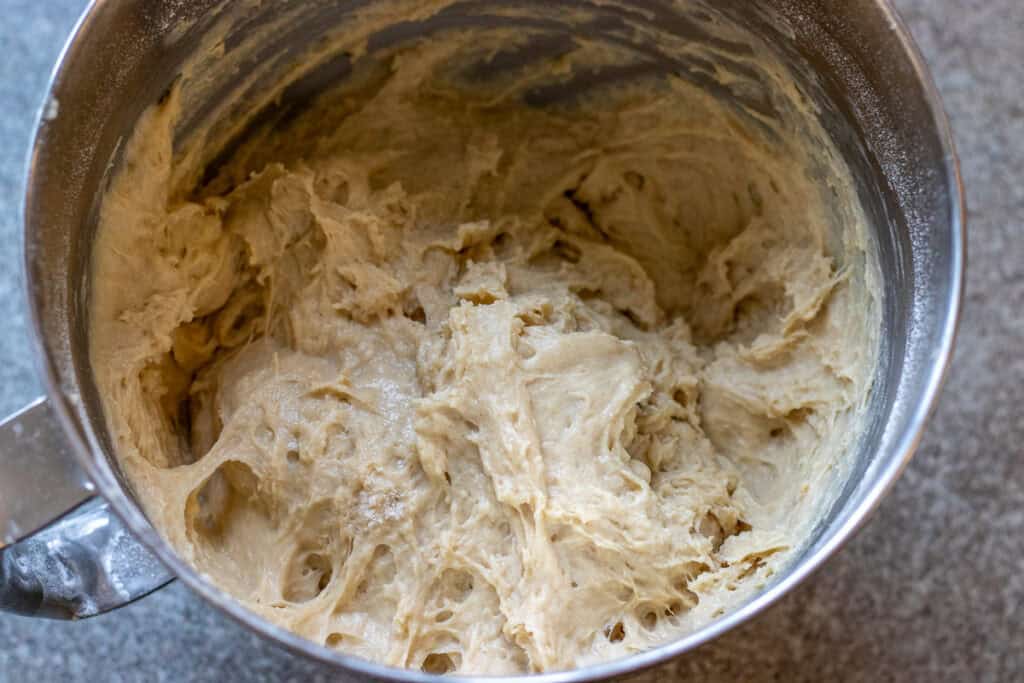
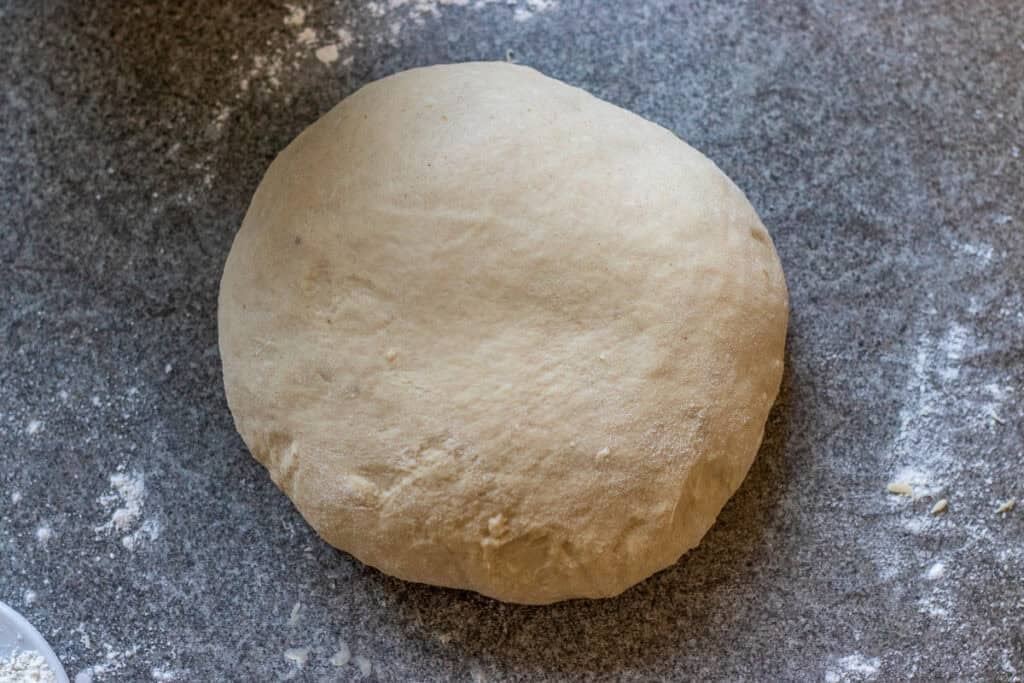
Place the dough in a lightly greased bowl, cover with a damp cloth, and let it rise in a warm place for about 1 hour or until doubled in size.


Shape the Rings
Line 2 large baking sheets with parchment paper. Once the dough has risen, pinch the dough down to release the air. Lightly drizzle your worktop with a little oil, then place the dough on it.
Press the dough gently with your hands to stretch and thin it out to approximately 15" x 20" (40 cm x 50 cm).

Once the dough is stretched enough, spread ¾ of the softened butter over it, then fold the edges toward the center. The layers of butter trapped between the folds are what give acma its pull-apart, stringy texture.


Spread the rest of the butter on top and fold the dough again. Next, press down gently on the dough to shape it into a rectangular shape to a size of 10" x 17" (27 cm x 44cm).


Cut the dough into 16 strips about one finger width wide. Twist and shape the dough strips into bread rolls until all the dough is used up.
Place the shaped rings on a lined baking sheet, leaving space for them to expand.
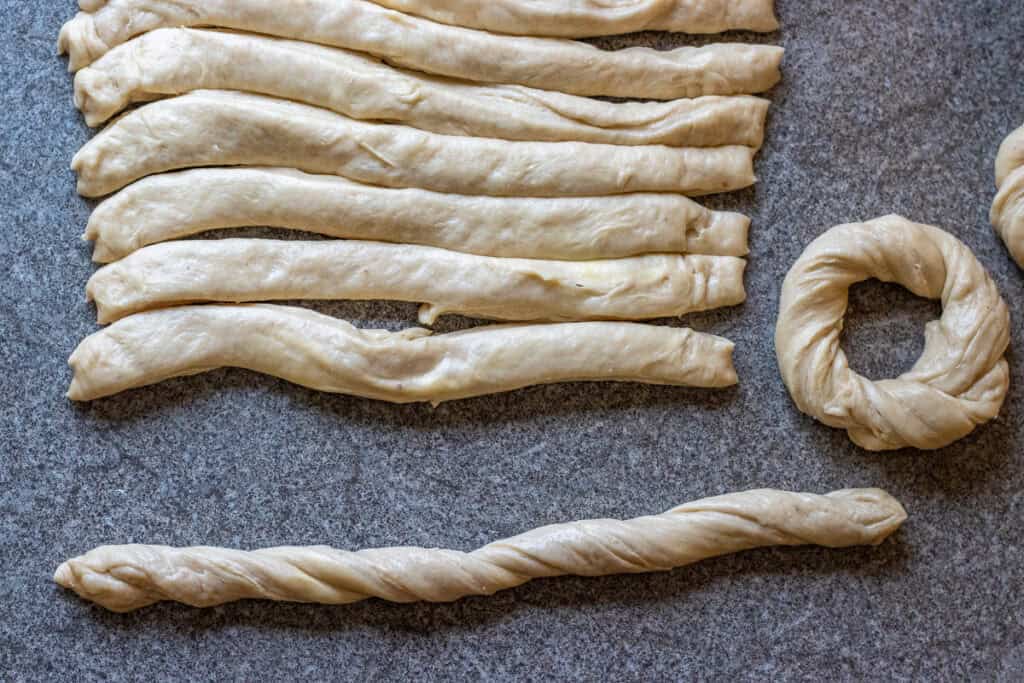
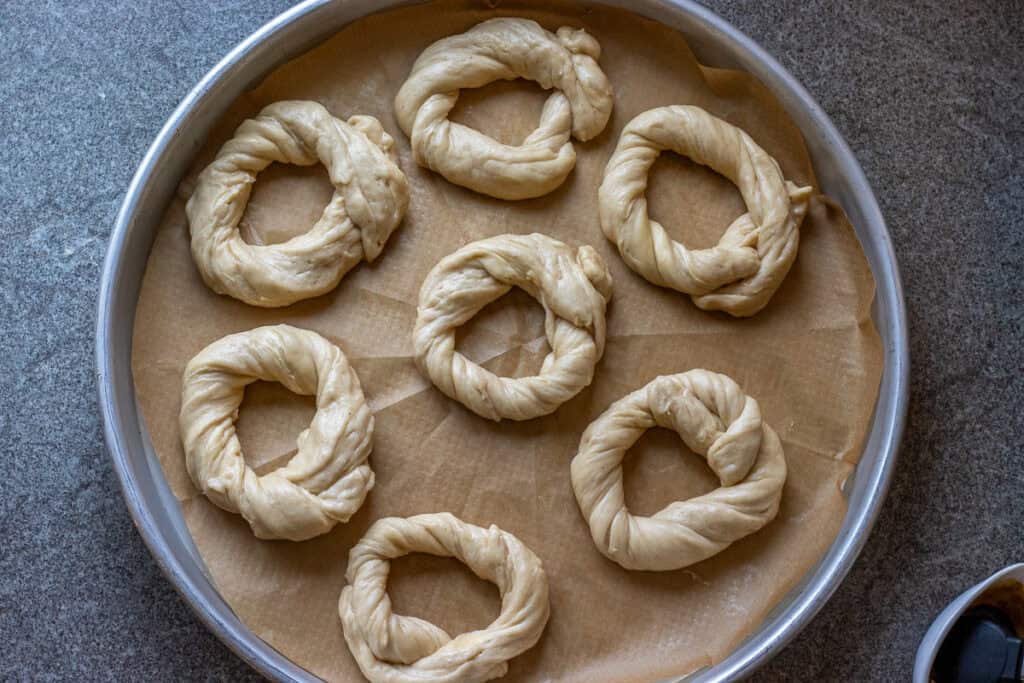
Second Rise and Bake the Bread Rings
Cover the shaped dough with a cloth and let it rest for another 30 minutes. Brush the tops with the egg yolk mixed with a splash of milk for a shiny, golden crust.
Optionally, sprinkle sesame or nigella seeds for extra flavor.

Bake at 356°F (180°C) for 18-22 minutes or until golden brown. Let the rings cool slightly before serving, and cover them with a clean damp cloth as they cool if you want them extra soft.

Recipe Tips From the Chef
- Weigh your ingredients on an electronic scale, as baking is far less forgiving of cup measurements than cooking.
- Knead until the dough is smooth and as soft as an earlobe, which is the traditional Turkish test for this dough.
- Use good quality unsalted butter, soft enough to spread but not melted; the butter between the folds is what gives the rings their pull-apart layers.
- Let both rises finish properly, as a well-risen dough is what makes the rings fluffy.
- Brush the tops with egg yolk mixed with a splash of milk for a shiny crust that stays soft.
- Cover the baked rings with a clean damp cloth as they cool to keep them soft.
Serving Suggestions
There are many ways to eat these rings:
With a full Turkish breakfast - my Turkish Breakfast Recipes post has ideas for the rest of the table.
Plain - freshly baked and warm, straight from the oven.
With jam or honey - my Strawberry and Rhubarb Jam is the one I reach for.
Stuffed with chocolate or cheese - fold a little into each strip before you twist them.
Storage and Make Ahead
These rings are best eaten fresh, but they keep well. Store the rings in an airtight container for up to 2 days at room temperature, or up to a week in the fridge, and warm them slightly before eating.
They freeze for up to 3 months; thaw at room temperature and reheat at 350°F (175°C) for 5 minutes.
If you are baking them ahead for guests, cover the rings with a clean damp cloth while they cool, as it keeps them soft for longer.
Recipe FAQs
Açma comes from the Turkish verb açmak, which means to open. The name refers to the way the dough is opened out and stretched thin before it is buttered, folded, and twisted into rings.
Under-proofed dough is the usual cause, so give both rises their full time. Cold ingredients slow the yeast down too, which is why the milk should be lukewarm and the egg at room temperature before you start.
Açma is mildly sweet but can be adjusted to taste. You can make it completely savory by reducing the sugar or adding cheese and herbs.
Yes, instant yeast works well and does not need activating. Mix it straight into the flour, and skip the 5-10 minute foaming step.
Related Recipes
For more delicious Turkish breakfast pastry recipes why not try:


Did you make this recipe? Please let me know how it turned out! Leave a comment below and tag @cookingorgeous on Instagram and hashtag it #cookingorgeous.
I hope you enjoy the process of making these deliciously soft and fluffy Açma - Turkish Soft Bread Rings as much as you enjoy eating them! 🙂
Want to Save This Recipe?
Enter your email & I'll send it to your inbox. Plus, get great new recipes from me every week!
By submitting this form, you consent to receive emails from Cooking Gorgeous

Acma
Ingredients
- 15 ½ fl oz whole milk or reduced-fat milk (460 ml)
- ½ cup vegetable or sunflower oil (130 ml)
- 1 large egg white
- 1 ½ tablespoon sugar
- 1 ½ teaspoon salt
- 2 ¼ teaspoon yeast (1 pack)
- 6 ½ cups all-purpose flour (800 grams)
- 1 ½ teaspoon mahleb
- 3 ½ oz softened butter for spreading over the dough (100 grams)
- 1 large egg yolk (for egg wash)
- sesame seeds or nigella seeds (optional)
Instructions
Prepare the Dough
- Start by activating the yeast. Mix warm milk, sugar, and yeast in a bowl and let it sit for 5-10 minutes until foamy, which shows the yeast is alive and working.
- In a large mixing bowl, combine the flour and salt. Make a well in the center and pour in the yeast mixture, vegetable oil, mahleb, and the egg white.
- Mix until a sticky dough forms. Alternatively, you can use your stand mixer fitted with the dough hook.
- Knead the dough on a lightly floured surface for about 8-10 minutes until smooth and elastic. If using a stand mixer, knead for about 6-7 minutes on medium speed with a dough hook.
- Place the dough in a lightly greased bowl, cover with a damp cloth, and let it rise in a warm place for about 1 hour or until doubled in size.
Shape the Rings
- Line 2 large baking trays with parchment paper.
- Once the dough has risen, pinch the dough down to release the air.
- Lightly drizzle your worktop with a little oil, then place the dough on it.
- Press the dough gently with your hands to stretch and thin it out to approximately 15" x 20" (40 cm x 50 cm).
- Once the dough is stretched enough, spread ¾ of the softened butter over it, then fold the edges toward the center.
- Spread the rest of the butter on top and fold the dough again.
- Next, press down gently on the dough to shape it into a rectangular shape to a size of 10" x 17" (27 cm x 44cm).
- Cut the dough into 16 strips about one finger width wide.
- Twist and shape the dough strips into bread rolls until all the dough is used up.
- Place the shaped açma on a lined baking sheet, leaving space for them to expand.
Second Rise and Bake
- Cover the shaped dough with a cloth and let it rest for another 30 minutes.
- Preheat the oven to 180 ℃ (356 ℉).
- Brush the tops with an egg yolk mixed with a splash of milk for a shiny, golden crust. Optionally, sprinkle sesame or nigella seeds for extra flavor.
- Bake for 18-22 minutes or until golden brown. Let them cool slightly before serving.
Video
Notes
- Weigh your ingredients on an electronic scale, as baking is far less forgiving of cup measurements than cooking.
- Knead until the dough is smooth and as soft as an earlobe, which is the traditional Turkish test for this dough.
- Use good quality unsalted butter, soft enough to spread but not melted; the layers of butter between the folds are what give acma its pull-apart texture.
- Let both rises finish properly, as a well-risen dough is what makes the rings fluffy.
- Brush the tops with egg yolk mixed with a splash of milk for a shiny crust that stays soft.
- Cover the baked rings with a clean damp cloth as they cool to keep them soft.
- Mahleb gives acma its bakery smell; leave it out if you cannot find it, and the rings will still be very good.
- Storage: keep in an airtight container for up to 2 days at room temperature, or up to a week in the fridge; warm slightly before eating.
- Freezing: freeze for up to 3 months, thaw at room temperature, and reheat at 350°F (175°C) for 5 minutes.

Dennis & Marlene Haney says
I made these today and am so pleased! They turned out so light and fluffy. I will be adding this to my growing list of recipes from you. Thank you so much!
Ayla Clulee says
Hi Dennis and Marlene, your lovely words made me so happy!
Best wishes
Ayla
Teresa says
wow i just got the mahleb spice today in time to see your recipe:) Im excited to try this!
I did hear that mahleb seeds are better but I could only find the powder form. Would I need to use the bag as soon as possible because it will go rancid ? The expiry isn't until after next year. Im worried the taste will dissipate fast
Ayla Clulee says
Hi Teresa
That’s perfect timing! Mahleb adds such a lovely flavor, and the powder form works just as well. It’s best to store it in an airtight container in a cool, dry place to keep it fresh. You can also freeze it to extend its shelf life. As long as it smells fragrant, it should still have great flavor. Excited for you to try the recipe! 😊
teresa says
Thanks Ayla! I made this today and they turned out so well. I also tried to add chocolate and olive paste inside but i messed up with rolling because they were much more difficult to shape than having only butter inside.
The mahleb smelled so nice from the oven but I couldn't taste it which is a shame 🙁 so im not sure if the mahleb was just losing potency from sitting inside the sealed pack (packaged about 8 months ago) or if I should put more than the recipe.
Ayla Clulee says
So happy to hear they turned out well! Chocolate and olive paste sound like great fillings, but yes, they can make shaping a bit trickier compared to just butter. A lighter touch when rolling might help next time.
As for the mahleb, it’s normal for the aroma to be stronger than the actual taste since it mainly enhances fragrance rather than flavor. If it’s been sealed for eight months, it might have been still ok to use. Hope that helps, and let me know if you have any other questions! 😊