
Tulumba tatlisi is a popular Turkish dessert made with small, ridged pieces of fried dough soaked in sweet syrup. It is crisp on the outside, soft and syrupy inside, and usually served as a little bite-sized treat with Turkish Tea - Çay or coffee.

You’ll often see tulumba in Turkish bakeries, dessert shops, and street stalls, usually piled up in shiny, syrupy pieces. It looks harder than it is, but the recipe becomes much easier once you understand the cold oil method and the syrup stage.
Jump to:
I’ve also added a video in the recipe card, so you can see how the dough should look, how to pipe it, and what to watch for while frying and dipping the pieces in syrup.
What Is Tulumba?
Tulumba Tatlısı is a traditional Turkish syrup dessert made with a choux-style dough. The dough is cooked in a saucepan first, mixed with eggs, piped through a star nozzle, fried, and dipped in syrup.
Tulumba is also known in different versions across the Middle East, the Balkans, and the Mediterranean. You might see similar desserts called bamiyeh or balah el sham, depending on the country.
The Turkish version is usually shaped into short ridged pieces. The ridges are not only for looks; they help the dough fry well and hold the syrup after frying.
Why This Recipe Works
- This recipe gives you the crisp, syrupy tulumba you expect from Turkish bakeries, but with clear steps that make it easier to manage at home.
- The cold oil method is what makes this version work so well. The dough has time to puff up slowly, hold its ridged shape, and turn crisp before it goes into the syrup.
- The syrup is made first and cooled completely, so the hot tulumba soaks up just enough syrup without turning soft too quickly.
- The soaking time is short on purpose. A few minutes in the syrup is enough to give you a syrupy middle while keeping the outside crisp.
- The video in the recipe card is especially helpful for this recipe because tulumba is much easier to understand when you can see the dough texture, piping, frying, and syrup stage
Ingredients You'll Need
Please scroll down to the recipe card below for the full ingredients list with measurements, complete recipe method, recipe notes, and nutritional information.
Syrup Ingredients

- Sugar - Both caster sugar and granulated sugar are fine for making syrup.
- Lemon juice - A few drops of lemon juice help stop the syrup from crystallizing.
Choux Pastry Ingredients

- Eggs - Use room temperature eggs for best results. They serve as the leavening agent for the choux pastry. It's important to add the eggs to the dough one at a time.
- Flour - All-purpose flour gives the dough its structure.
- Salt - It seasons the dough while enhancing its sweetness.
- Sugar - It not only adds a subtle sweetness but also helps in coloring the dough.
- Starch - You can use either corn starch or wheat starch.
- Vanilla paste - I use vanilla bean paste or vanilla extract to add flavor.
- Vinegar - White wine vinegar helps stabilize the dough and improve its texture.
How to Make Tulumba
Prepare the Syrup
Place the water and sugar in a medium saucepan and bring to a boil over medium heat. Let it simmer for 15 minutes, then add a few drops of lemon juice just before removing it from the heat.


Set the syrup aside and let it cool completely while you prepare the dough. The syrup should be cold when the hot tulumba pieces go in.
Prepare the Choux Pastry
Place the water, sugar, salt, and ⅓ cup / 80 ml vegetable oil in a saucepan and bring it to a boil. Add the flour all at once and stir continuously until the dough comes together. Keep stirring until there are no dry patches or lumps.
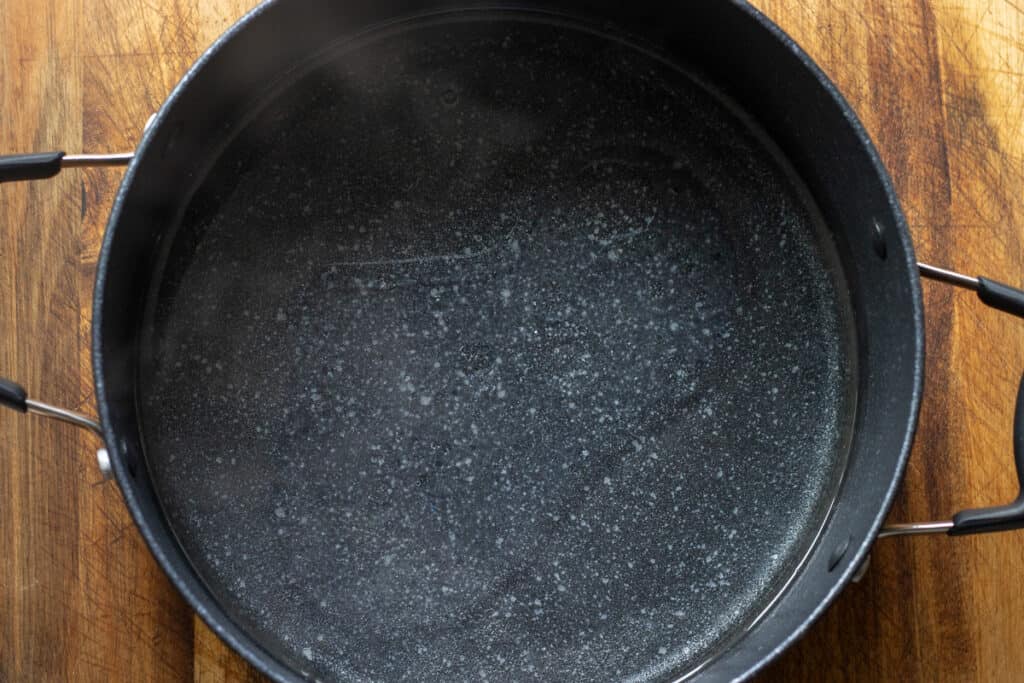

Remove the dough from the saucepan and let it cool until it is warm but no longer hot enough to burn your hands. If the dough is too hot, it can cook the eggs when you add them.
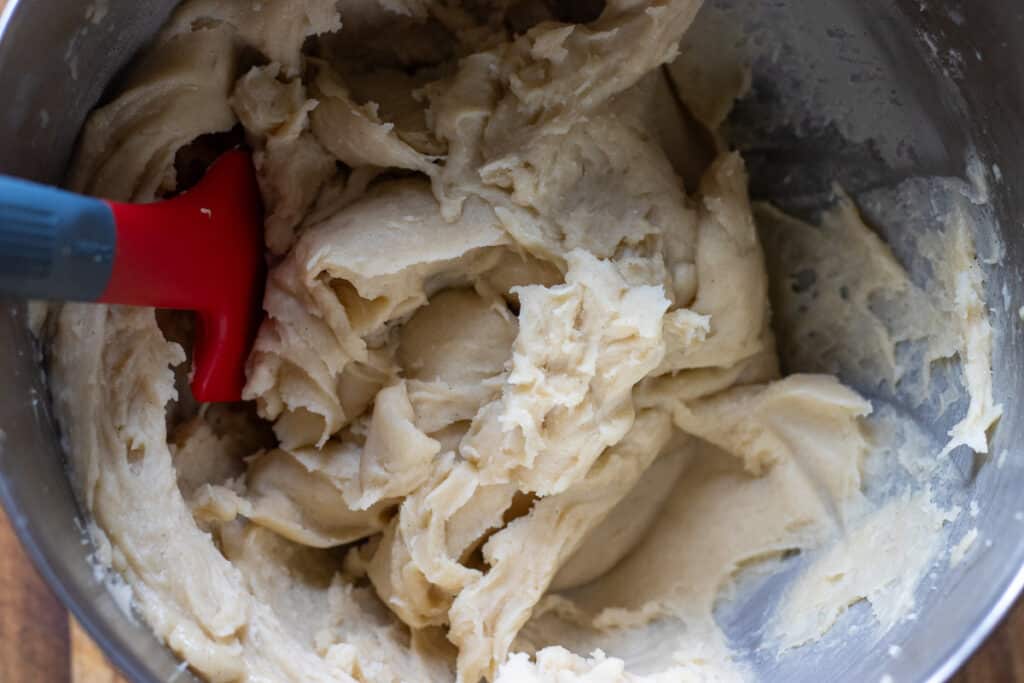
Transfer the cooled dough to the bowl of a stand mixer. Add the eggs one at a time, mixing well after each addition before adding the next.


Add the vanilla, white wine vinegar, and starch, then mix again until the dough is smooth, thick, and pipeable. The dough should be firm enough to hold its shape when piped, but not so stiff that it is impossible to squeeze.
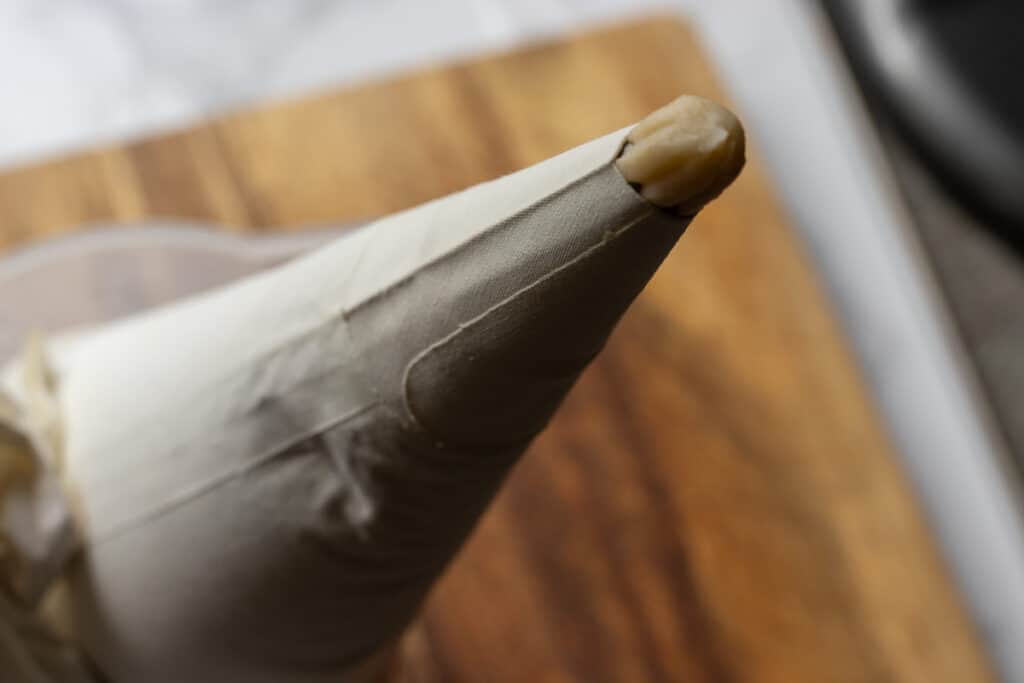
Transfer the dough to a strong piping bag fitted with a large star nozzle, about 1 inch / 2 to 3 cm wide. Don’t overfill the piping bag, as tulumba dough is thick and can be hard to squeeze.
Fry the Tulumba
Pour vegetable or sunflower oil into a deep saucepan. The oil should be cold before you start piping.
Pipe the dough directly into the cold oil, cutting each piece with scissors to about 2 inches / 5 cm long. Try to fit in as many pieces as you can without overlapping them.
Place the saucepan over low heat and let the tulumba fry slowly until they puff up and double in size. Don’t stir or move them at this stage, as they are still soft and can lose their shape.
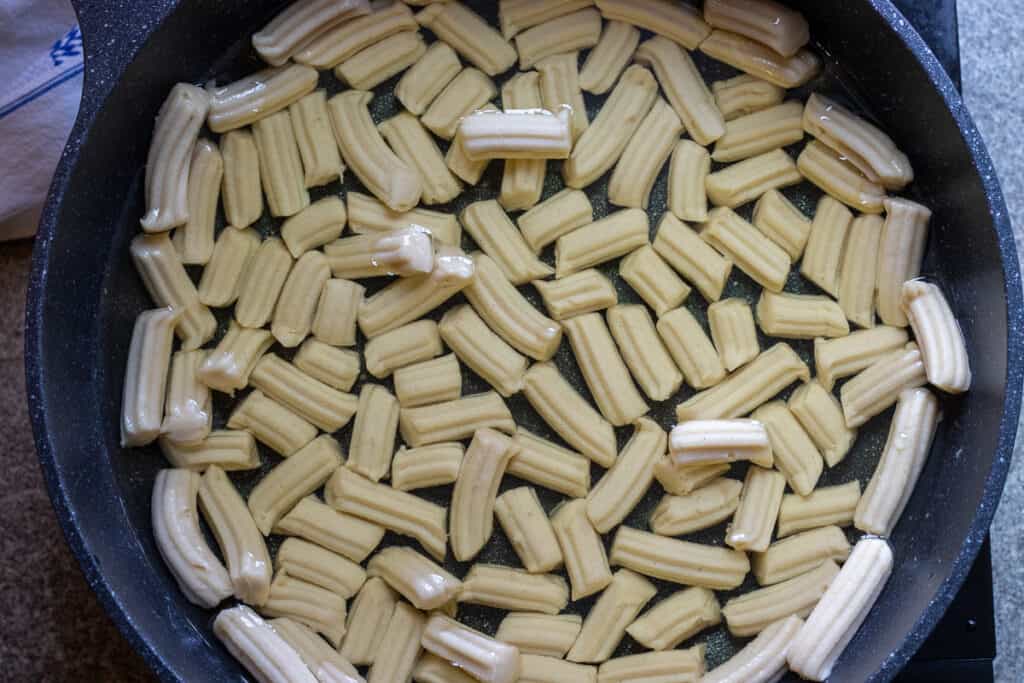
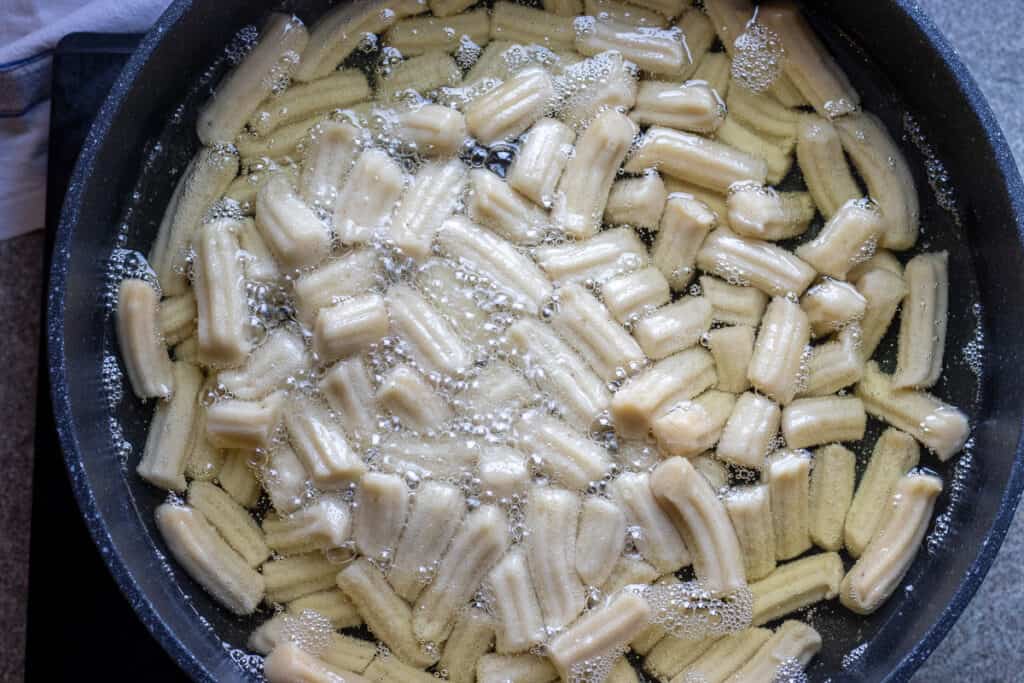
After about 40 minutes, the pieces should start to take on color. Increase the heat to medium and continue frying for another 15 minutes, or until they are golden, crisp, and evenly browned.
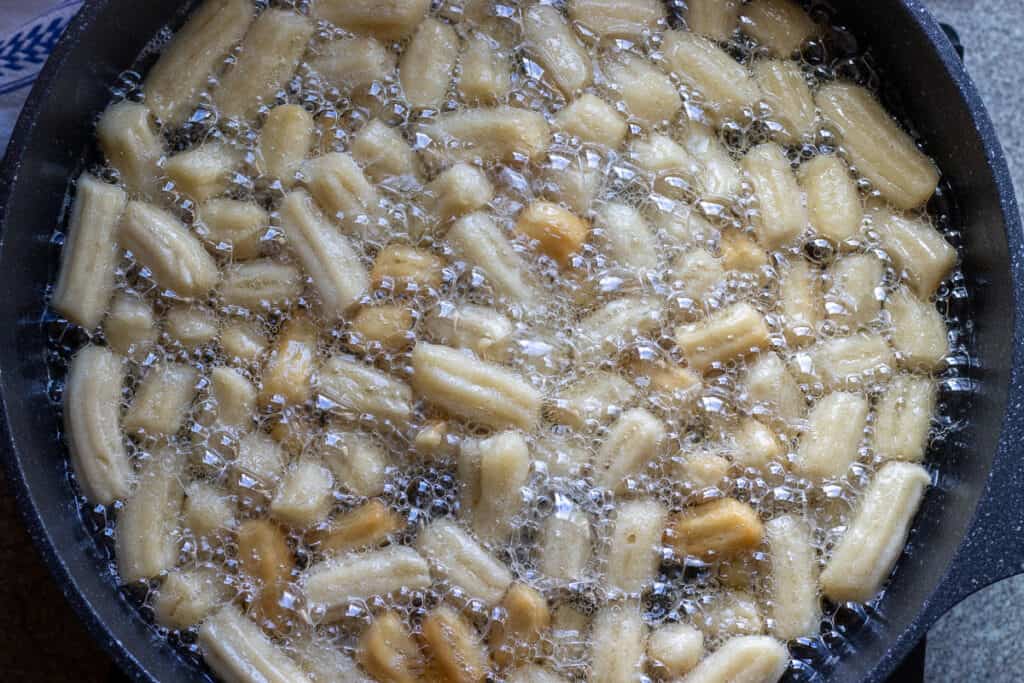
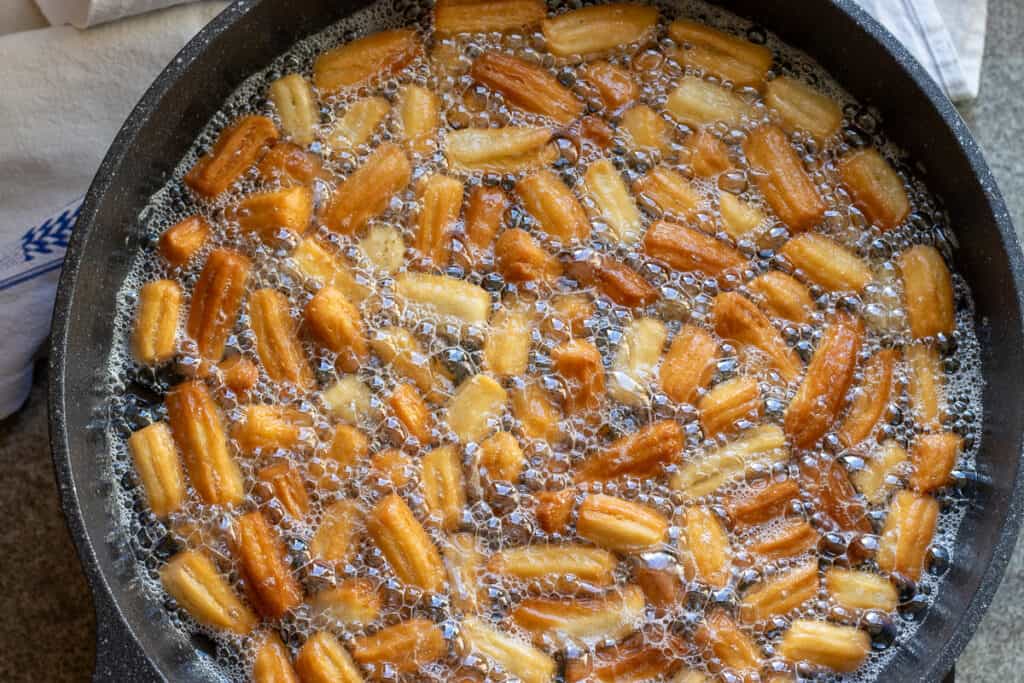
Lift the fried tulumba out of the oil and let the excess oil drain for a few seconds. This helps stop too much oil from going into the syrup, which can make the tulumba soften more quickly. Transfer them straight into the cold syrup and let them soak for 3 to 4 minutes. Don’t leave them in the syrup too long, or the outside can lose its crisp texture.

Remove the tulumba from the syrup and place them on a serving plate. Garnish with ground pistachios, walnuts, or desiccated coconut if you like.

If you need to fry a second batch, let the oil cool completely before piping more dough into it.
Recipe Tips From the Chef
- Make the syrup first so it has enough time to cool completely. Hot tulumba should go into cold syrup.
- Let the cooked dough cool before adding the eggs. If the dough is too hot, the eggs can cook and make the mixture lumpy.
- Add the eggs one at a time and mix well after each one. The dough should be thick and smooth, but still soft enough to pipe.
- Use a strong piping bag and a large star nozzle. Tulumba dough is quite thick, and a thin piping bag can split.
- Always pipe the dough into cold oil. This helps the tulumba expand slowly, keep its shape, and turn crisp.
- Don’t move the pieces too early. Let them puff up and start setting before stirring gently.
- Drain the fried tulumba before adding them to the syrup. Too much oil going into the syrup can make the syrup thinner and the tulumba softer.
- Don’t leave them in the syrup for too long. A few minutes is enough.
- Let the oil cool completely before starting another batch.
Troubleshooting
Why is my tulumba soft?
Tulumba can turn soft if the syrup is warm, if the pieces stay in the syrup too long, or if too much oil goes into the syrup. Use cold syrup, drain the fried pieces well, and soak them for only a few minutes.
Why did my tulumba lose its shape?
The dough may be too loose, the oil may have been too hot at the start, or the pieces may have been moved too early. Pipe into cold oil and leave them alone until they puff up and begin to set.
Why did my tulumba burst or crack?
The oil may have heated too quickly, or the dough may not have been mixed properly after adding the eggs. Start with cold oil and low heat, and make sure the dough is smooth before piping.
Why is my dough hard to pipe?
Tulumba dough is thick, so you need a strong piping bag. If the dough feels very stiff, the eggs may have been too small or the dough may need a little more mixing after each egg.
Why is my tulumba greasy?
The pieces may not have fried long enough, or the oil may not have been hot enough near the end. Start low so they puff up, then increase the heat to medium so they turn crisp and golden.
Can I fry all the dough in one batch?
Only if your pan is large enough. The pieces need space to expand. If you need to make a second batch, wait for the oil to cool before piping more dough.
What to Serve with Turkish Fried Dough Dessert
Tulumba is sweet enough on its own, so you don’t need much with it. It is usually served with Turkish tea or coffee.
You can garnish it with ground pistachios, walnuts, hazelnuts, or desiccated coconut. If you want to serve it as a richer dessert, add a small spoonful of kaymak, clotted cream, or a scoop of Homemade Turkish Ice Cream on the side.
Storage Instructions
Tulumba tastes best on the day it is made, especially while the outside is still crisp. After a few hours, the syrup starts to soften the texture, which is normal for this dessert.
Store leftover tulumba in a lightly covered container at room temperature for 2 to 3 days. Don’t seal it tightly while it is still fresh, as trapped moisture can soften the outside.
I don’t recommend reheating tulumba, as the syrupy texture does not reheat well. You can freeze it, but the texture will be softer after thawing.
Recipe FAQs
Tulumba and churros are similar because both are made with piped dough and fried. Tulumba is dipped in syrup after frying, while churros are usually coated in sugar and served with chocolate sauce or another dip.
Yes, but the dough is thick and takes effort to mix by hand. A stand mixer makes it easier to add the eggs evenly and get a smooth dough.
No. Tulumba is made with a choux-style dough and piped through a star nozzle. Lokma is usually made with yeast dough and fried as small round balls. Both are soaked in syrup.
Related Recipes
For more delicious syrupy dessert recipes why not try:


Did you make this recipe? Please let me know how it turned out! Leave a comment below, tag @cookingorgeous on Instagram, and hashtag it #cookingorgeous.
I hope you enjoy the process of making this delicious Tulumba - Turkish Fried Dough Dessert as much as you enjoy eating it! 🙂
Want to Save This Recipe?
Enter your email & I'll send it to your inbox. Plus, get great new recipes from me every week!
By submitting this form, you consent to receive emails from Cooking Gorgeous

Tulumba
Ingredients
For the Syrup
- 2 cups water (480 ml)
- 2 ¼ cups sugar (450 g)
- 2-3 drops freshly squeezed lemon juice
For the Choux Pastry
- 2 cups water (480 ml)
- ⅓ cup vegetable oil (80 ml)
- 1 teaspoon sugar
- ¼ teaspoon salt
- 3 ¼ cups plain white flour / all-purpose flour (390 grams)
- 3 large eggs (at room temperature)
- 1 teaspoon vanilla bean paste or extract
- 1 tablespoon white wine vinegar
- 1 tablespoon corn or wheat starch
- 2 cups vegetable or sunflower oil for frying
Instructions
Prepare the Syrup
- Place the water and sugar in a medium saucepan and bring to a boil over medium heat.
- Let it simmer for 15 minutes, then add the lemon juice just before removing it from the heat.
- Set the syrup aside and let it cool completely while you prepare the dough.
Prepare the Choux Pastry
- Place the water, sugar, salt, and ⅓ cup / 80 ml vegetable oil in a saucepan and bring to a boil.
- Once it boils, add the flour all at once and stir continuously until the dough comes together without dry patches or lumps.
- Remove the dough from the saucepan and let it cool until it is warm but no longer hot enough to burn your hands.
- Transfer the dough to the bowl of a stand mixer. Add the eggs one at a time, mixing well after each addition before adding the next.
- Add the vanilla, white wine vinegar, and starch, then mix again until the dough is smooth, thick, and pipeable.
- Transfer the dough to a strong piping bag fitted with a large star nozzle, about 1 inch / 2 to 3 cm wide.
Fry the Tulumba
- Pour the vegetable or sunflower oil into a deep saucepan. The oil should be cold before you start piping.
- Pipe the dough directly into the cold oil, cutting each piece with scissors to about 2 inches / 5 cm long. Leave some space between the pieces as they will expand.
- Place the saucepan over low heat and let the tulumba fry slowly until they puff up and double in size. Don’t move them at this stage.
- After about 40 minutes, when the pieces start to take on color, increase the heat to medium. Fry for another 15 minutes, or until golden, crisp, and evenly browned.
- Lift the fried tulumba from the oil and let the excess oil drain for a few seconds. Transfer them straight into the cold syrup and let them soak for 3 to 4 minutes.
- Remove from the syrup and place on a serving plate. Garnish with ground nuts or desiccated coconut if you like.
- If frying a second batch, let the oil cool completely before piping more dough.
Video
Notes
- Make the syrup first and let it cool completely before frying the tulumba.
- Add the eggs one at a time, mixing well after each addition.
- Use a strong piping bag fitted with a large star nozzle for the ridged shape.
- Always pipe the dough into cold oil. This helps the tulumba expand, puff up, and keep its shape.
- Don’t move the pieces too early while frying, as they can lose their shape.
- Transfer the fried tulumba to cold syrup while they are still hot, but drain the excess oil first.
- Soak them in syrup for 3 to 4 minutes only. Leaving them too long can soften the outside.
- Let the oil cool completely before frying another batch.
- Tulumba is best on the day it is made, but leftovers can be kept lightly covered at room temperature for 2 to 3 days.


Liliana says
Just made this dessert and we absolutely loved it! Excellent recipe!
Ayla Clulee says
I am so pleased to hear that Liliana, and thank you so much for taking time to leave a comment!
Best wishes
Ayla