
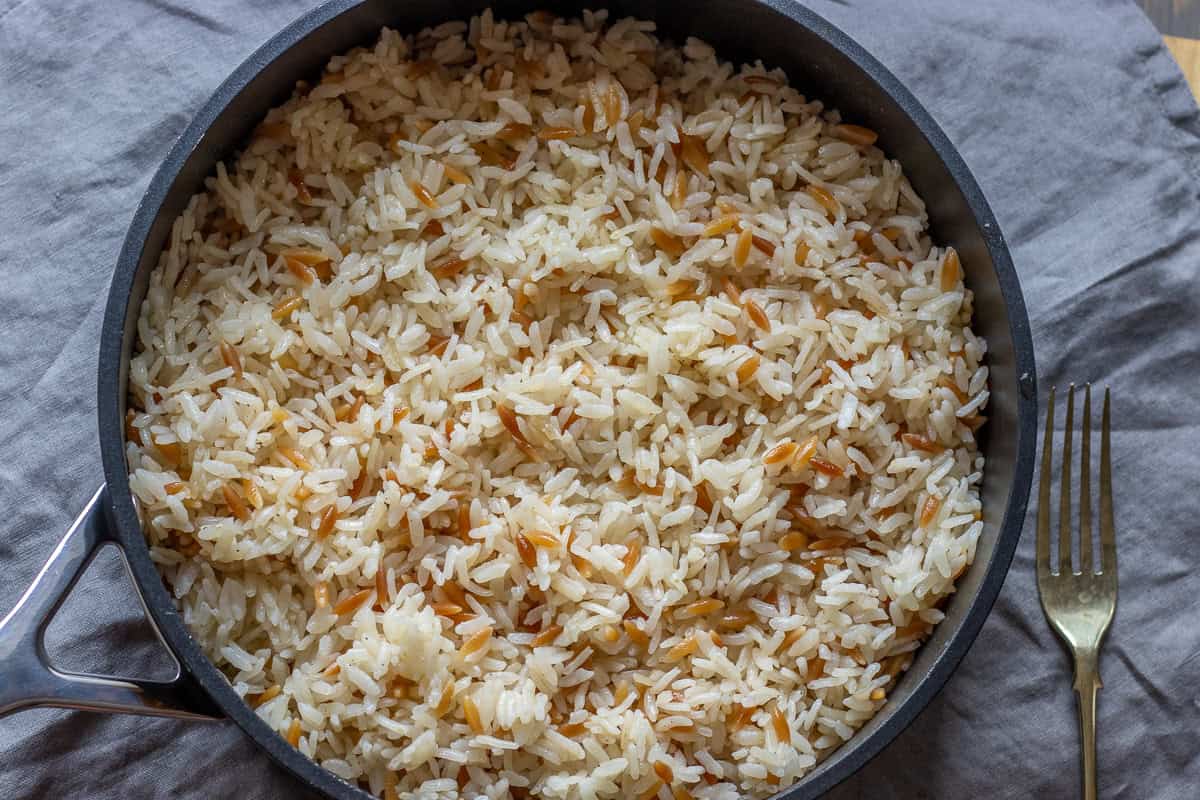
My Turkish Rice recipe is made with Baldo rice, orzo, butter, and stock for a fluffy, buttery pilaf that goes with almost any main dish. It is simple, inexpensive, and ready in about 30 minutes. The little brown pieces are toasted orzo, called şehriye, and they give the rice a nutty flavor.
Jump to:
Turkish rice, or Sehriyeli Pirinc Pilavi, is one of the most common side dishes in Turkish cooking. You will see it served with kebabs, stews, grilled meats, beans, vegetable dishes, and even a simple bowl of yogurt. It may look plain at first, but good Turkish rice is all about texture. The grains should be tender but separate, the orzo should be golden, and the rice should rest long enough to become light and fluffy.
This is the rice I make when I need an easy side dish that goes with almost anything. It pairs beautifully with Chicken Shish Kebab, Adana Kebab, Baked Lamb Chops - Firinda Kuzu Pirzola, Tavuk Sote - Turkish Chicken Saute, Kuru Fasulye, or Cacik (Turkish Yogurt Dip).
What is Turkish Rice?
Turkish rice is a simple rice pilaf made with rice, butter, stock or water, and toasted orzo or vermicelli.
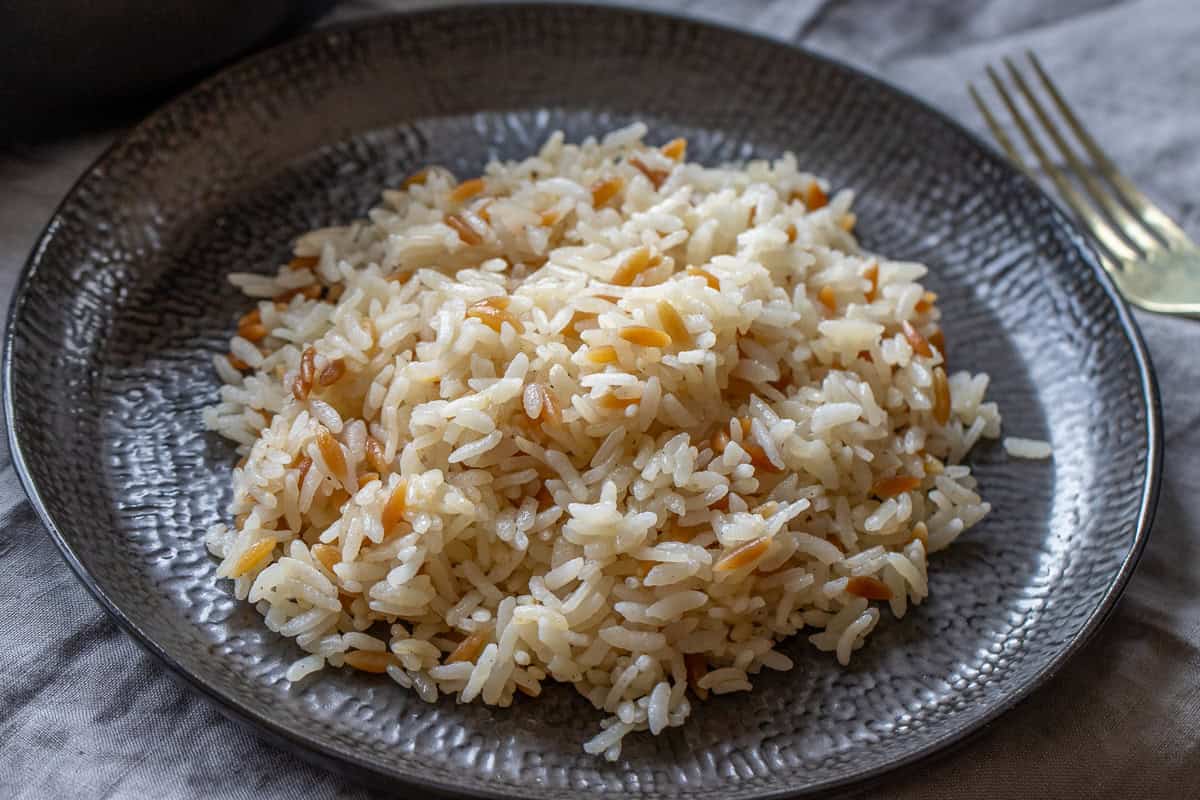
In Turkish, it is called Sehriyeli Pirinc Pilavi. “Pirinç pilavı” means rice pilaf, and “şehriyeli” means made with şehriye, which is the small pasta toasted in butter before the rice is added.
The orzo gives the rice its classic look and flavor. It turns golden brown in the butter and adds a gentle nutty taste. The rice is then cooked slowly with stock and left to rest before serving.
Turkish rice is usually served as a side dish, but it is tasty enough to eat on its own with yogurt, Pickled Cucumber - Salatalık Turşusu, or a spoonful of Homemade Yogurt.

If you prefer something with a bit more depth, my mushroom rice pilau is another great option to try.
What is Sehriye?
Şehriye is a small pasta used in Turkish rice dishes and soups.
The most common type for Turkish rice is arpa şehriye, which looks like orzo or risoni. You can also use tel şehriye, which is thin vermicelli broken into small pieces.
When şehriye is toasted in butter, it turns golden brown and gives Turkish rice its familiar flavor and appearance. This is the part many people notice first when they eat rice at Turkish restaurants.
If you cannot find Turkish şehriye, use regular orzo, risoni, or broken vermicelli.
Why This Recipe Works
- It uses a simple Turkish method for fluffy rice with separate grains.
- Toasted orzo adds color, texture, and a nutty flavor, and butter gives the rice a rich, restaurant-style taste.
- Washing the rice removes extra starch and helps stop it from turning sticky.
- Resting the rice after cooking makes it lighter and easier to fluff.
- You can make it with vegetable, chicken, or beef stock.
- It works with kebabs, stews, grilled meat, chicken, fish, and vegetable dishes.
- It is ready in about 30 minutes with everyday ingredients.
Ingredients You'll Need
Please scroll down to the recipe card below for the full ingredients list with measurements, complete recipe method, recipe notes, and nutritional information.

Baldo Rice
Baldo rice is the best rice for traditional Turkish rice pilaf. It is a short, plump rice grown in Turkey and often used for rice dishes such as Ankara Tava - Turkish Lamb and Rice or Perde Pilavi.
Baldo rice absorbs liquid well and keeps its shape when cooked properly. This gives the pilaf a soft but separate texture.
If you cannot find Baldo rice, use Tosya rice, Arborio rice, or another short-grain rice. Basmati or long-grain white rice can also work, but the texture will be different, and you may need to adjust the liquid.
Orzo
Orzo, or Turkish arpa şehriye, is a small rice-shaped pasta that turns golden when sautéed in butter.
You can also use broken vermicelli. Vermicelli browns faster than orzo, so watch it closely.
If you do not have orzo or vermicelli, you can leave it out and add the same amount of extra rice.
Other ingredients you will need:
- Butter - Butter is the secret to a delicious rice pilaf. Fry the orzo with butter until golden brown for a nutty flavor. Use olive oil for the vegan/dairy-free options.
- Stock - It adds great flavor to the rice. Use Basic Homemade Vegetable Stock for vegan/vegetarian options. Homemade Beef Stock or Chicken Stock (Bone Broth) works perfectly with pilaf. If you use store-bought stock, check the salt before adding more. Some stocks are already quite salty. You can also use water for a lighter version.
- Lemon juice and sugar - Two unusual ingredients, but they enhance the flavor of the pilaf and give it a nice white color. Don't go crazy with the amount of lemon juice, all you need is 2 to 3 drops maximum!
- Salt and pepper - Use the salt amount as a guide and adjust it depending on your stock. Black pepper is optional, but I like the gentle warmth it adds.
How to Make Turkish Rice Pilaf
Soak the rice in salted warm water for 20 minutes. Place it in a sieve and wash it under running cold water until the water from the rice runs clear. This is an essential step for a fluffy-flaky texture.

Heat a pan over medium heat and melt the butter. Add orzo and sauté until golden brown.

Add the salt and rice to the pan when the orzo is browned and then fry until the rice is totally dried. Salt will help the rice to dry quicker.

Add the liquid to the rice along with the pepper, lemon juice, and sugar. Increase the amount of the liquid to 4 cups (800 ml) if you didn't soak the rice.

Mix them all gently and let it simmer on low heat with the lid off for 15 to 20 minutes, until the rice absorbed the liquid. When cooked, let it rest for 15 minutes without opening the lid. Gently fluff with a fork before serving.

Recipe Tips From the Chef
- Use Baldo or Tosya rice if you can find it. These are the best choices for traditional Turkish rice.
- Rinse the rice until the water runs clear. This helps remove extra starch.
- Toast the orzo until golden, but do not let it burn.
- Sauté the rice with the butter and orzo until it looks dry.
- Use stock instead of water for more flavor.
- When you add the stock to the rice, stir just enough to combine, and don't open the lid while cooking.
- When the rice is cooked, let it rest for 10 minutes with the lid on. Cover with a clean kitchen towel or cloth to keep it warm. Gently fluff the rice with a fork before serving.
Should You Soak Rice for Turkish Pilav?
Soaking the rice is optional, but I recommend it if you have time. It helps remove some of the starch and allows the rice to absorb water before cooking. This gives the rice a softer texture and helps it cook more evenly.
If you soak the rice, use 3 cups / 600 ml liquid for this recipe.
If you do not soak the rice, use 4 cups / 800 ml liquid instead.
Either way, rinse the rice well until the water runs clear.
How to Stop Turkish Rice From Turning Sticky
The main reason Turkish rice turns sticky is excess starch.
Wash the rice well, drain it properly, and sauté it in butter before adding the liquid. Once the stock goes in, stir only once and leave it alone.
Do not keep lifting the lid or stirring the rice while it cooks. This can break the grains and make the pilaf sticky.
Resting the rice after cooking also helps. Leave it covered for 15 minutes, then fluff it gently with a fork.
Serving Suggestions
Turkish rice goes with almost anything, which is why it is such a regular part of our family meals.
Try it with Zeytinyagli Enginar Dolmasi - Stuffed Artichokes, Musakhan - Sumac Chicken, Ghormeh Sabzi - Persian Herb Stew, Steak Picado (Bistek Picado), Easy Homemade Peri Peri Chicken, or Jamaican Style Pepper steak.
This buttery Turkish rice dish is tasty enough to eat on its own or just with a bowl of yogurt or Coban Salatasi (Turkish Shepherd's Salad).
Alternatively, you can mix in vegetables, chickpeas, cooked leftover lamb meat, or chicken and turn it into a substantial meal.
Storage and Reheating
How to Store Turkish Rice
Let the rice cool completely before storing it. Place it in an airtight container and keep it in the fridge for up to 3 days.
Do not leave cooked rice sitting at room temperature for too long. Cool it quickly and refrigerate it as soon as possible.
Can You Freeze Turkish Rice?
Yes, you can freeze the leftovers for up to 3 months. Let it cool completely, then place it in freezer-safe containers or bags. Flatten the bags slightly so the rice freezes and thaws more quickly.
Thaw overnight in the fridge before reheating.
How to Reheat Turkish Rice
Reheat Turkish rice in a pan over low heat with a splash of water or stock. Cover with a lid and warm gently until hot all the way through.
You can also reheat it in the microwave. Sprinkle a little water over the rice, cover, and heat in short intervals, fluffing between each one. Make sure the rice is piping hot before serving.
Recipe FAQs
Yes, you can make Turkish rice without orzo. If you do not have orzo, use broken vermicelli instead. If you do not have either, simply leave it out and add a little extra rice.
The flavor will be simpler, but the rice will still be delicious if you use butter, stock, and the same cooking method.
Orzo is rice-shaped pasta and it is a staple in Turkish cuisine. It is a great ingredient to add to pilav dishes as well as adding to soups. You can also make a salad with orzo or cook it like a pilaf to serve it as a side dish.
Yes, Turkish rice is easy to make vegan. Use olive oil instead of butter and vegetable stock instead of chicken or beef stock. The rice will still be flavorful, especially if you toast the orzo until golden.
You can also add cooked chickpeas, peas, or sautéed vegetables to turn it into a simple meal.
Related Recipes
For more delicious rice recipes why not try:


Did you make this recipe? Please let me know how it turned out! Leave a comment below and tag @cookingorgeous on Instagram and hashtag it #cookingorgeous.
I hope you enjoy the process of making this fluffy and buttery Turkish Rice - Sehriyeli Pirinç Pilavi as much as you enjoy eating it! 🙂
Want to Save This Recipe?
Enter your email & I'll send it to your inbox. Plus, get great new recipes from me every week!
By submitting this form, you consent to receive emails from Cooking Gorgeous
Turkish Rice
Ingredients
- 2 ½ tablespoon butter (50 grams)
- ⅓ cup orzo (50 grams)
- 2 cups rice (baldo or tosya) (400 grams)
- 3 cups vegetable stock, chicken stock, beef stock or water (600 ml)
- ¼ teaspoon black pepper
- ½ teaspoon salt
- 2-3 drops lemon juice
- ¼ teaspoon sugar
Instructions
- Soak the rice in warm salted water for 20 minutes (optional).
- Wash the rice in a sieve under running cold water until the water from the rice runs clear, and let it drain.
- Heat a pan over medium heat and melt the butter.
- Add orzo and saute until golden brown, then add the rice with the salt, and sauté for a few minutes until the rice is dry.
- Add the liquid to the rice along with the pepper, lemon juice, and sugar. Increase the amount of the liquid to 4 cups (800 ml) if not soaking the rice.
- Mix them all gently and let it simmer on low heat with the lid off for 15 to 20 minutes, until the rice absorbed the liquid.
- When cooked, let it rest for 15 minutes without opening the lid.
- Fluff the rice gently with a fork before serving.
Notes
- Baldo rice is the best choice for traditional Turkish rice. Tosya rice or Arborio rice also works well.
- Wash the rice until the water runs clear. This helps stop the rice from turning sticky.
- Drain the rice well before cooking.
- Adjust the amount of liquid depending on the type of rice you use. Use 3 cups / 600 ml of liquid if you soak the rice first. Use 4 cups / 800 ml of liquid if you do not soak the rice.
- After adding the stock, stir only once and do not stir again while the rice cooks.
- Let the rice rest before serving. This gives you a fluffier pilaf.


Monica says
I made this yesterday. Wonderful! We have leftovers we’d love to enjoy later.
Shamin says
Superb! This dish was very easy and absolutely delicious! Don’t skimp on the butter.
Yvette says
Just made this rice and it was delicious. So tasty! Perfect recipe. Easy as well.
Dana says
First time trying out this recipe and it’s delicious!
Erica says
This is better than I even anticipated and quick to make. Will definitely be making it again.
Ayla Clulee says
I am so glad you like it, Erica!
Best wishes
Ayla x
Dilay says
Absolutely amazing and easy. A real love. Will do again.
Ayla Clulee says
Hi Dilay,
I am glad you enjoyed it!
Best wishes
Ayla x
Ayla says
Lovely
Simi says
Hi, This looks amazing. I actually have a question... Should it be with made no skin or should this be cooked with skin on? I'm planning to make with drumsticks and thighs.
Ayla Clulee says
Hi Simi! Thank you for reaching out. Turkish rice pilaf doesn't contain any chicken. Is there another recipe you are trying to find out about?
Thanks
Ayla