
Yaprak Sarma are Turkish Stuffed Grape Leaves with a lemony rice, pine nut and currant filling. There's no meat in them, so they're vegan, and you eat them cold or at room temperature. They're always on our mezze table, and they make a good light lunch with a bowl of yogurt.

Rolling a big batch takes an afternoon, so we usually do it together as a family. If you can, make them the day before, because they taste even better after a night in the fridge.
Jump to:
Yaprak Sarma is enjoyed across Mediterranean and Middle Eastern cuisines.
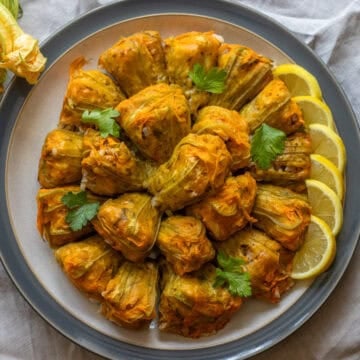
Similar to Vegan Stuffed Bell Peppers, Stuffed Artichokes, and Stuffed Zucchini Flowers, these appetizers are versatile and can be served as part of a mezze platter or as a main dish.
Every region in Turkey makes these a little differently. Some fill them with ground meat, and others keep them meatless with rice or bulgur. The filling can go in raw or get part cooked with onions and spices first. This one is the meatless version, cooked in olive oil.
Turkish Manti is another one we do with three or four people round the table. The shaping takes a long time on your own, and a big batch goes quickly with company.
When I was little, my mom and aunties would sit together on special occasions and roll dolmas for hours, and I'd watch them. Once I was old enough, I started helping, and that's how I learned to roll them.
Sarma vs Dolma
Sarma means "wrapped thing" in Turkish and is made by wrapping leaves (most commonly grape, cabbage, or chard leaves) around the filling. Wrapped dolma, specifically, is also known as "sarma".
Dolma means "stuffed thing" and covers the stuffed dishes of Ottoman cooking, served warm or cold. Some are made with whole vegetables, like Stuffed Onions and Kabak Dolması, and others with fruit, offal or seafood.
You can fill both dolma and sarma with the same stuffing, and both turn up all over the Balkans, the Mediterranean and the Middle East. They work warm or cold, though the ones with meat in them are best warm.
The meatless version has its own name in Turkish, yalancı dolma, which means the fake one, because there's no meat in it. The Greeks call theirs yialantzi for the same reason.

Best Grape Leaves for Yaprak Sarma
You can use fresh grape leaves or preserved ones from a jar. I go for fresh when I can get them, because the flavor is much better. Fresh leaves add a step and a bit of time, and I think it's worth it.
Look for thin leaves without very hard veins, whichever kind you buy. If you can get fresh vine leaves, wash them and blanch them for a minute or two in boiling water to soften them and make them easier to roll. Jarred leaves need no cooking, just a good rinse to take the salt off.
Why This Recipe Works
- These rice stuffed grape leaves are vegan and gluten free, so they suit almost any table.
- You eat them cold, so you can make them well before anyone arrives.
- A batch tastes better the next day, after a night in the fridge.
- Nobody misses the meat in them, and they cost less to make.
- Rolling yaprak sarma goes quickly with three or four people round the table.
- Put them on a mezze table, or eat them as a light lunch with yogurt.
- They freeze well, cooked or raw, for up to three months.
Ingredients You'll Need
Please scroll down to the recipe card below for the full ingredients list with measurements, complete recipe method, recipe notes, and nutritional information.

- Grape leaves - Jarred leaves in brine are the easy option, and Turkish or Middle Eastern shops sell them all year. Fresh ones are better if you can get them in spring.
- Rice - Any short grain rice works here. Wash it under cold running water first to get the starch off.
- Pine nuts - They give the filling a bit of crunch and a nutty flavor. I use them in Rice Stuffed Chicken and Vegan Lebanese Eggplant Moussaka as well. Leave them out for a nut allergy.
- Onions - They are the base of the filling. Finely diced brown, yellow or white onion all work, and shallots are fine.
- Currants - These are small dried grapes, not fresh blackcurrants. They add a bit of sweetness against the lemon.
- Tomato paste - It gives the filling a deeper flavor and a little color. Turkish and Middle Eastern shops sell it, and so does Amazon.
- Spices - Cinnamon, allspice, paprika and black pepper are what I use, along with dried mint. Adjust them to your taste.
How to Make Stuffed Grape Leaves?
Prepare the Grape Leaves
When buying grape leaves, make sure that the leaves are flexible enough and don’t have very hard veins.
If using fresh grape leaves, wash them thoroughly and blanch them in boiling hot water for a couple of minutes, until they are soft and easy to fold. Place them in a colander and let them cool down as you prepare the rice filling.
If using jarred grape leaves in brine, take them out and rinse them well. Taste one before you start, because brands vary. If yours are very salty, soak them in warm water for an hour and change the water once. Let them drain in a colander as you prepare the rice stuffing.
Prepare the Rice Stuffing
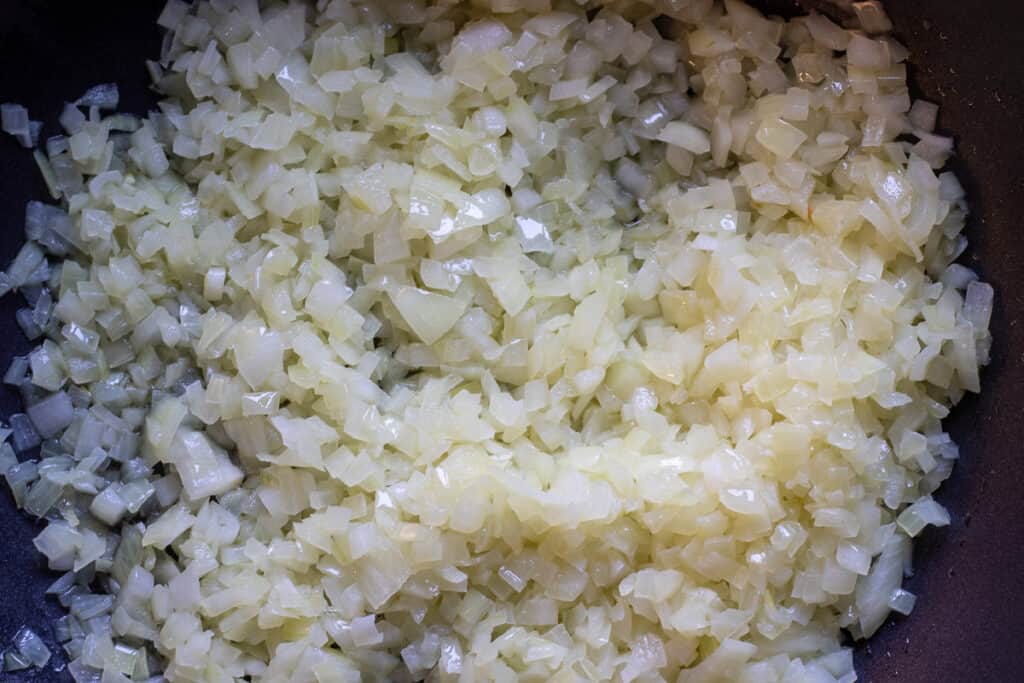
Rinse the rice under cold running water and then let it drain on a colander. Place a pan on medium heat and add 3 tablespoon of olive oil. Place the chopped onions in the pan and sauté until soft and translucent.
Add the pine nuts and sauté until they turn slightly brown.

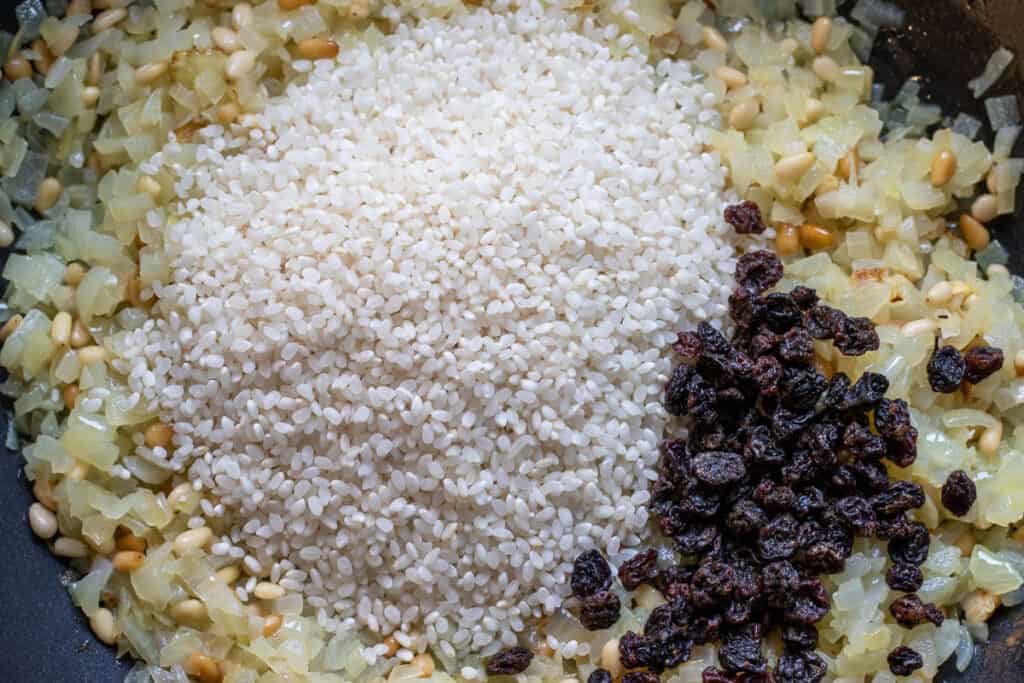
Add the washed rice and black currants and sauté the rice until they are totally dry.
Stir in the tomato paste, salt, freshly ground black pepper, cinnamon, allspice, paprika, dried mint, sugar, 1 cup of water, and lemon juice, and cover the pan with a lid.

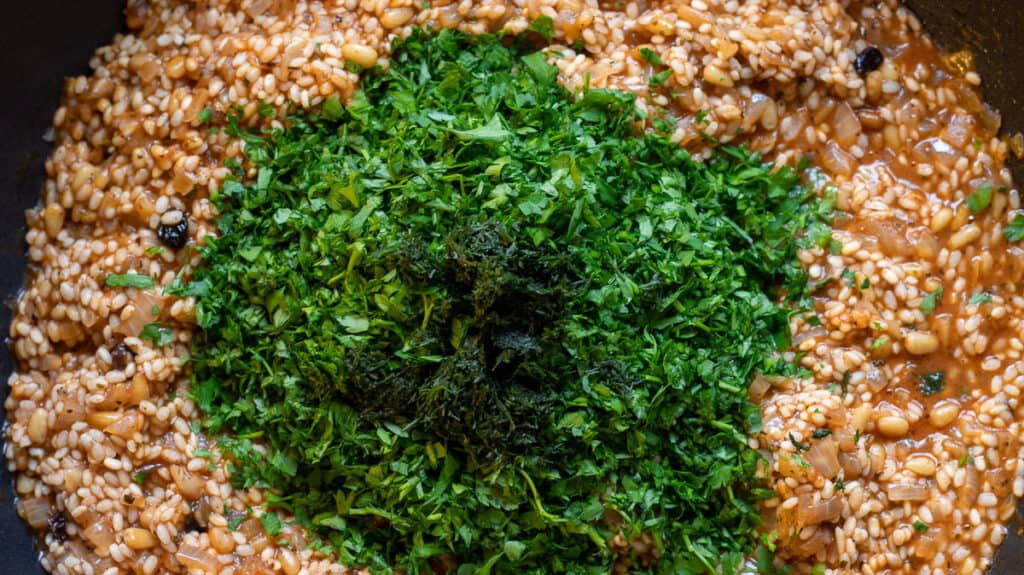
Cook until the water evaporates, take the pan off the heat then add the parsley along with the dill. Don't fully cook the rice as it will continue cooking with the grape leaves.
Stir the mixture and let it cool down for 10 minutes before stuffing the grape leaves.

Stuff and Roll the Grape Leaves
Start preparing your Dutch oven or pan by layering it with broken/unused grape leaves. You can also use sliced tomatoes or potatoes to prevent the stuffed grape leaves from touching the bottom of the pot from burning.
Lay the leaf flat on a cutting board with the shiny side down. Place about 1 tablespoon of the rice filling in the center of the leaf, close to where the stem is.
Fold the sides over the filling.
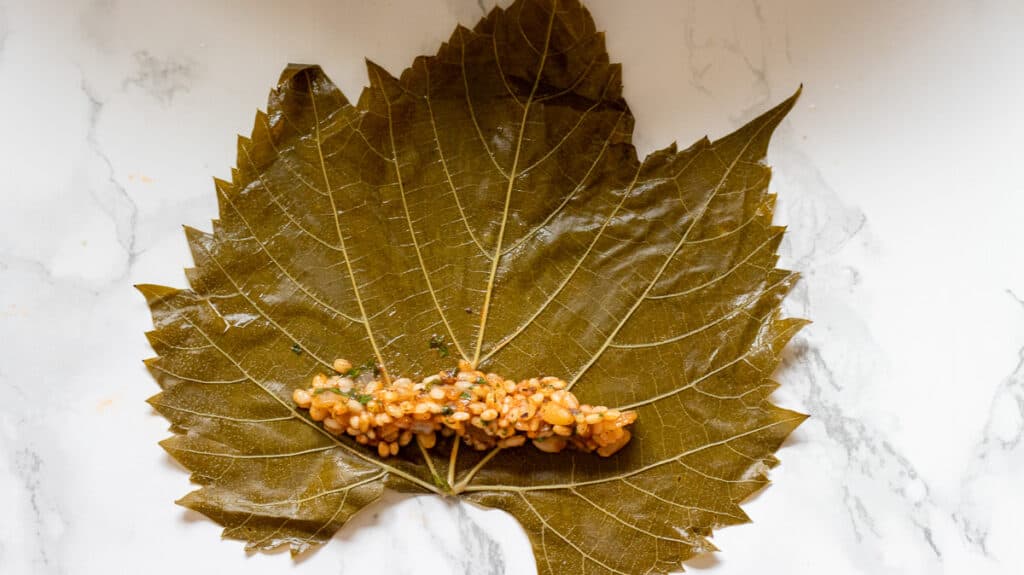

And roll, keep tucking the sides as you roll.
Roll them tightly enough but not too tight, leaving enough room for the rice to expand as they cook.
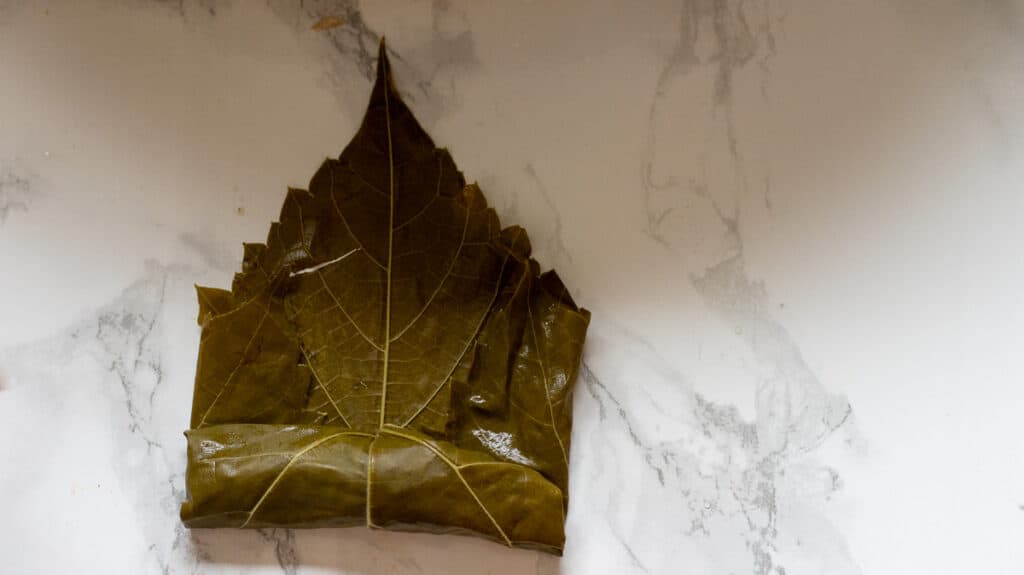

Arrange the stuffed grape leaves in rows neatly in your prepared Dutch oven or pan.
Place them seam-side down and cover the bottom of the pan without leaving any space. Layer a few slices of lemons on top of the arranged stuffed dolmas.
Dilute 1 teaspoon of tomato paste with 2 cups of water and add a tablespoon of olive oil. Pour it over the dolmas until it almost covers them, then sit a plate upside down on top so they stay put and cook evenly.
Bring it to a boil and simmer gently on low heat for an hour, or until the leaves are soft and the rice is fully cooked. Let them cool in the pot with the lid on before you move them to a serving plate.
Recipe Tips From the Chef
- Taste a leaf before you start. Brands vary, and if yours are very salty, soak them in warm water for an hour and change the water once.
- Don't overfill them. The rice swells as it cooks, and an overfilled roll will burst.
- Roll them firmly but not tight, so the rice has room to expand.
- Line the bottom of the pot with torn or leftover leaves, or a few slices of tomato or potato, so nothing catches and burns.
- Pack them into the pot tightly, seam side down, with no gaps between them.
- Sit a plate upside down on top of the rolls before the water goes in. It stops them unrolling and they cook more evenly.
- Keep the water at a gentle simmer. A hard boil breaks the leaves apart.
- Let them cool in the pot with the lid on before you move them to a plate.
- Make them a day ahead if you can. They taste better after a night in the fridge.
- The cooking time depends on the leaves. Thin fresh ones soften in well under an hour, and jarred leaves usually need the full hour or a little longer.
Serving Suggestions
Put these out as part of a mezze spread with Muhammara Recipe, Melitzanosalata and Authentic Homemade Lebanese Falafel.
Çerkez Tavuğu and Paçanga Böreği round it out if you want something more filling on the table.
Serve them as a vegetarian main with Turkish Acili Ezme Salad and warm Bazlama, and a bowl of thick yogurt on the side. For a party spread, Vegetarian Stuffed Mushrooms sit well next to them.
Variations
- Swap the pine nuts for chopped walnuts or almonds, or use pistachios, which is common on the Aegean side.
- Leave the nuts out completely for a nut allergy.
- Add a pinch of red pepper flakes to the filling if you want a little heat.
- Leave the tomato paste out for a paler, lemony filling. That's how it's made in parts of Turkey.
- Roll chard, kale or cabbage leaves instead. All three are proper sarma in Turkey, and kale sarma is a Black Sea specialty. My Stuffed Cabbage Rolls Recipe is the cabbage one.
- Make the sour cherry version, vişneli yaprak sarma. Use pistachios instead of pine nuts, stir a spoon of pomegranate molasses into the filling, and scatter whole sour cherries between the rolls in the pot.
- You can swap the rice for bulgur, which is how a lot of families make them in Ramadan.
Storage and Make Ahead Instructions
Cooked yaprak sarma keeps in the fridge for up to five days in an airtight container.
Let them cool in the pot first, then pack them in with a spoonful of the cooking liquid so they don't dry out. Keep the container covered, because the rice goes hard if the leaves dry out.
They freeze both ways. Freeze the cooked ones for up to three months and thaw them overnight in the fridge.
You can also freeze them raw, rolled and packed flat in a single layer, then thaw them in the fridge overnight before cooking.
Eat them cold or at room temperature, which is how we serve them in Turkey. If you want them warm, put them in a pan with a splash of water, cover, and heat them gently until they are warmed through.
Leftover filling keeps for a couple of days. Cook it as a pilaf, or stuff it into a tomato or a zucchini and sit that in the pot alongside the rolls. Spare grape leaves go in the freezer as they are.
Recipe FAQs
Usually because they were rolled too loosely, or the pot boiled instead of simmering. Roll them firmly, pack them in with no gaps, and sit a plate upside down on top so they can't move around. Keep the heat low the whole time.
There wasn't enough liquid, or they didn't cook for long enough. The rolls need to be almost covered, and they want a full hour on a low simmer. Add a splash of hot water if the pot runs dry before the rice is soft.
Both make it, and so do the Balkans, the Caucasus and the Middle East. Dolma is a Turkish word and the dish comes out of Ottoman cooking, but every country round the eastern Mediterranean has its own version.
The jarred ones are fine in a pinch, but they come out softer and more sour than homemade. Rolling your own gets you a better filling and leaves that still have some bite.
Turkish and Middle Eastern shops sell them in jars all year, and you can order them online. For fresh ones, ask at a farm or a vineyard near you. In Turkey the markets have them through spring and early summer.
Related Recipes
For more Turkish recipes why not try:



Did you make this recipe? Please let me know how it turned out! Leave a comment below and tag @cookingorgeous on Instagram and hashtag it #cookingorgeous.
I hope you enjoy the process of making this delicious Yaprak Sarma - Vegetarian Stuffed Grape Leaves as much as you enjoy eating it! 🙂
Want to Save This Recipe?
Enter your email & I'll send it to your inbox. Plus, get great new recipes from me every week!
By submitting this form, you consent to receive emails from Cooking Gorgeous

Yaprak Sarma - Stuffed Grape Leaves
Ingredients
- 14 oz grape leaves (approx 60 - 70 leaves - 1 jar) (400 g)
- 3 tablespoon extra virgin olive oil
- 3 onions (finely chopped)
- ⅓ cup pine nuts (50 g)
- 1¾ cups short grain rice (350 g)
- ¼ cup currants (30 g)
- ½ tablespoon tomato paste
- 1 tablespoon salt (use less if your grape leaves taste very salty)
- ½ teaspoon freshly ground black pepper
- ½ teaspoon cinnamon
- ½ teaspoon ground allspice
- 1 teaspoon paprika
- 1 teaspoon dried mint
- 1 teaspoon sugar
- 1 cup water
- ⅓ cup freshly squeezed lemon juice
- 1 cup chopped parsley
- 2 tablespoon chopped dill
- few lemon slices
For Cooking Sauce
- 2 cups water
- 1 teaspoon tomato paste
- 1 tablespoon extra virgin olive oil
Instructions
Prepare the Grape Leaves
- If using fresh grape leaves, wash them thoroughly and blanch them in boiling water for a couple of minutes, until they are soft and easy to fold. Place them in a colander and let them cool while you prepare the rice filling.
- If using jarred grape leaves in brine, take them out and rinse them well. Taste one first, because brands vary. If yours are very salty, soak them in warm water for an hour and change the water once.
- Let them drain in a colander while you prepare the rice stuffing.
Prepare the Rice Stuffing
- Rinse the rice under cold running water and let it drain in a colander.
- Put a pan on medium heat and add 3 tablespoons of olive oil. Add the chopped onions and cook until soft and translucent.
- Add the pine nuts and cook until they turn slightly brown, then stir in the washed rice and the currants.
- Cook the rice until it looks completely dry, then add the tomato paste, salt, freshly ground black pepper, cinnamon, allspice, paprika, dried mint, sugar, 1 cup of water and the lemon juice. Mix well and cover the pan with a lid.
- Cook until the water has gone, take the pan off the heat, then stir in the parsley and the dill. The rice should not be fully cooked, because it carries on cooking inside the leaves.
- Stir the mixture and let it cool for 10 minutes before you stuff the grape leaves.
Stuff and Roll the Grape Leaves
- Line the bottom of your Dutch oven or pot with torn or leftover grape leaves. Sliced tomatoes or potatoes work as well, and they stop the rolls catching on the base.
- Lay a leaf flat on a cutting board with the shiny side down. Put about 1 tablespoon of the rice filling in the middle, near the stem end.
- Fold the sides over the filling and roll, tucking the sides in as you go. Roll firmly but not tight, so the rice has room to expand.
- Arrange the rolls in neat rows in the pot, seam side down, packed in with no gaps between them. Lay a few lemon slices over the top.
- Dilute 1 teaspoon of tomato paste with 2 cups of water and add a tablespoon of olive oil. Pour it over the rolls until it almost covers them, then sit a plate upside down on top so they stay put and cook evenly.
- Bring it to a boil, then simmer gently on low heat for an hour, or until the leaves are soft and the rice is fully cooked.
- Let them cool in the pot with the lid on before you move them to a serving plate.
Notes
- Look for thin leaves without very hard veins, whichever kind you buy.
- Taste a leaf before you start. Brands vary, and if yours are very salty, soak them in warm water for an hour and change the water once.
- Do not overfill the leaves. The rice swells as it cooks and an overfilled roll will burst.
- Roll them firmly but not tight, so the rice has room to expand.
- Line the bottom of the pot with torn or leftover leaves, or a few slices of tomato or potato, so nothing catches and burns.
- Pack the rolls in tightly, seam side down, with no gaps between them.
- Sit a plate upside down on top of the rolls before the water goes in. It stops them unrolling and they cook more evenly.
- Keep the water at a gentle simmer. A hard boil breaks the leaves apart.
- The cooking time depends on the leaves. Thin fresh ones soften in well under an hour, and jarred leaves usually need the full hour or a little longer.
- Let them cool in the pot with the lid on, then serve them cold or at room temperature. They taste better the next day, so make them ahead if you can.
- Leftovers keep 5 days in the fridge and 3 months in the freezer. Keep the container covered, because the rice goes hard if the leaves dry out. You can also freeze them raw, rolled and packed flat, then thaw them overnight in the fridge before cooking.
- Swap the pine nuts for walnuts, almonds or pistachios, or leave them out for a nut allergy. Chard, kale and cabbage leaves all work in place of grape leaves, and bulgur works in place of the rice.

Kelly says
These came out super delicious. The proportions are perfect. A very long process of rolling but fun with others at a special occasion.
Nisha says
I was always scared to attempt this recipe but I finally gave in and did it and it turned out AMAZING!! Hubby says thanks
Abby says
I made these for vegan family friends. So delicious. Highly recommend this recipe. Thank you so much for sharing your incredible cooking skills with us.
Mel says
This was super delicious and my hubby loved it. That's a big win for us!! Thank you for sharing!
Selin says
I just made these today, no doubt it is a bit time consuming as it says, but the end result that makes it worthwhile. They were awesome, came out tender, delicious, reminds me of when I used to have them growing up!
Kanny says
I followed the recipe exactly and the dolmas came out perfect! Thank you for sharing your recipe. The flavours are outstanding.
Carley says
It was so delicious, worth every effort and definitely will do it again. Thanks for the recipe!
Gemma says
Great recipe for entertaining although it is a bit time consuming. I will definitely try for my next dinner party. Thank you for sharing!