
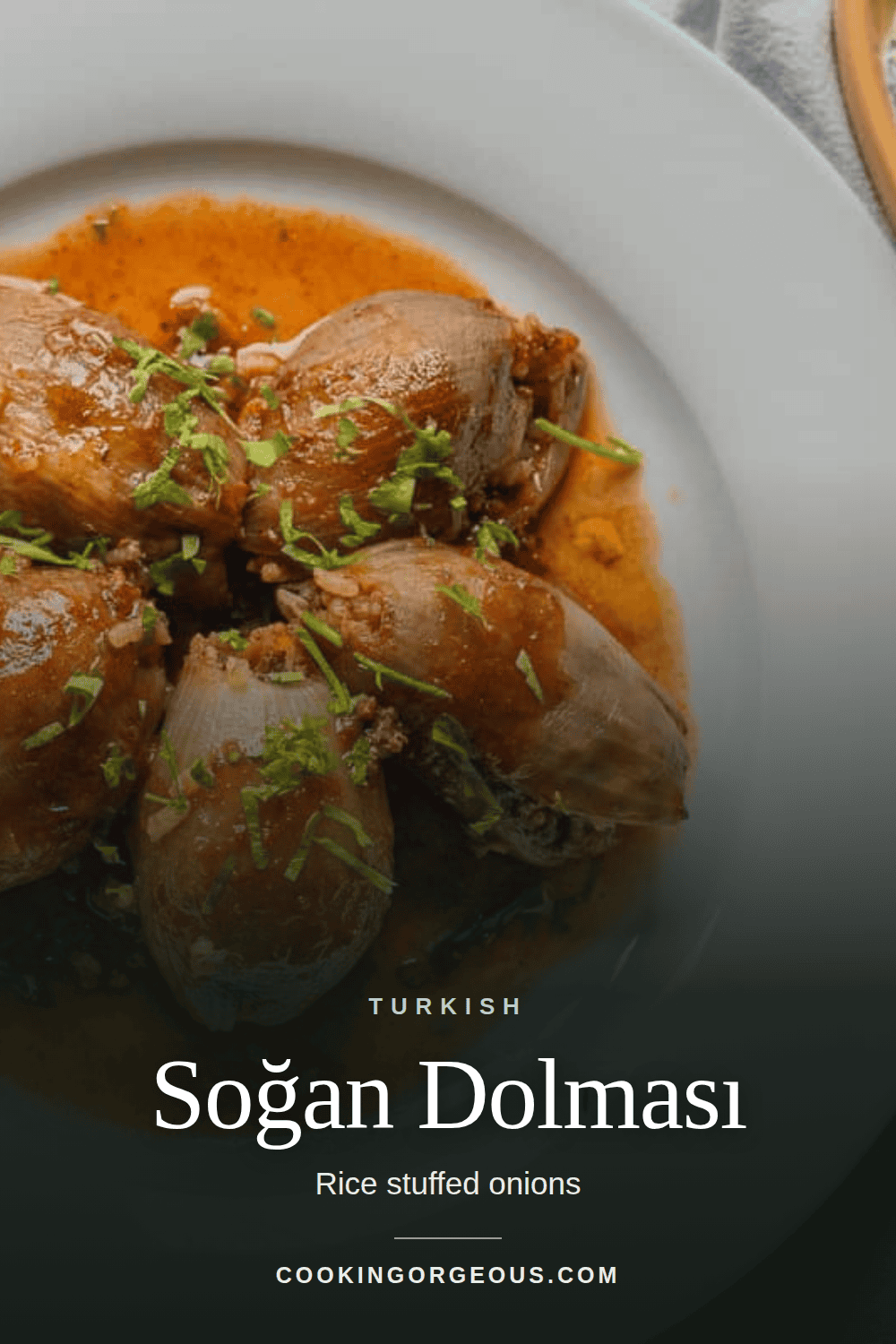
My Stuffed Onions, called Soğan Dolması in Turkish, are made with soft onion layers filled with ground beef, rice, parsley, tomato paste, and warm spices. I cook them slowly in a tomato and pomegranate molasses sauce until the onions are tender and the rice is fully cooked.

It looks like a dish that takes a lot of work, but once the onions have softened, the rest is quite straightforward. You separate the layers, add a little filling, roll them up, and place them in a pot to cook.
Soğan dolması is one of the forty recipes in my cookbook, Easy Turkish & Mediterranean Recipes, out now in paperback and on Kindle.
Jump to:
- What Are Stuffed Onions?
- Why This Recipe Works
- Ingredients You'll Need
- How to Make Stuffed Onions - Sogan Dolmasi
- Helpful Recipe Tips From the Chef
- Common Problems and How to Fix Them
- What to Serve with Stuffed Onions
- Can I Make Stuffed Onions Ahead?
- Storage, Reheating, and Freezing
- Recipe FAQs
- Related Recipes
- Stuffed Onions
I make this Turkish Soğan Dolması with a ground beef and rice filling, but ground lamb works well too. Serve them with homemade yogurt, Creamy Cucumber Dill Salad, and Greek Bread - Horiatiko Psomi to scoop up the sauce. The video in the recipe card shows how I cut and soften the onions, separate the layers, fill them, and arrange them in the pot before cooking.
A Kind Note From a Reader:
“Very delicious! I made them last night and now it’s noon and they are almost finished. Excellent recipe!”
What Are Stuffed Onions?
Soğan Dolması is the Turkish name for stuffed onions. Soğan means onion, and dolma means stuffed.
It is part of the same family as other Turkish dolma recipes, including Rice Stuffed Zucchini, Stuffed Artichokes, Stuffed Dried Eggplant, and Meat Stuffed Grape Leaves (Dolmas).
Turkish stuffed onions are usually made with a rice and ground meat filling, then cooked slowly in a tomato-based sauce. Pomegranate molasses adds a gentle sweet and sour flavor that works great with the sweetness of the cooked onions.
Versions of stuffed onions are also found in other parts of the Middle East, the Balkans, and the Mediterranean. The fillings, herbs, spices, and cooking methods change from one family and region to another.
Why This Recipe Works
- The filling goes into the onions raw, so you do not need to cook the beef or rice before rolling the parcels.
- The tomato and pomegranate molasses sauce gives the dish its familiar sweet and tangy flavor.
- You can prepare the stuffed onions a day ahead and cook them later, which is helpful when you are planning dinner for family or guests.
- Leftovers keep well and taste just as good the next day.
Ingredients You'll Need
Please scroll down to the recipe card below for the full ingredients list with measurements, complete recipe method, recipe notes, and nutritional information.

- Onions - Use large yellow or white onions. They are easier to soften, separate into layers, and fill. Try to buy onions that are similar in size. They will soften at the same rate and look neater in the pot. It is worth buying one extra onion. Some onions have fewer usable layers than others, and the inner layers can be too small to fill. Do not throw away the small inner pieces. Finely chop them and add them to the filling.
- Ground beef - I use ground beef with some fat because it gives the filling more flavor and keeps it from becoming dry. Ground lamb also works well. You can use half ground beef and half ground lamb if you like.
- Rice - Short-grain rice works best for Soğan Dolması. I usually use Baldo rice, but arborio rice or pudding rice also works.
- Tomato paste - Tomato paste adds color and depth to both the filling and sauce. Turkish tomato paste works well, but any good-quality tomato paste is fine.
- Flavorings - Paprika, allspice, black pepper, and salt give the beef and rice a warm, simple flavor. You can add a little chopped dill or mint as well, but parsley is enough for this recipe.
- Pomegranate molasses - Pomegranate molasses gives the sauce its sweet and tangy flavor. Use a good pomegranate molasses that tastes fruity and sharp. Some supermarket versions are very sweet, so taste yours before using it.
How to Make Stuffed Onions - Sogan Dolmasi
Prepare the Onions
Bring a large pot of water to boil on high heat. Peel the onions and cut a small slice off the top and bottom of each onion. Carefully cut halfway down the center from top to bottom with a small sharp knife. Avoid cutting all the way through or the onions will fall apart.
Reduce the heat to medium, and blanch the onions for about 10 minutes. This will soften them and make it easier to separate the layers.
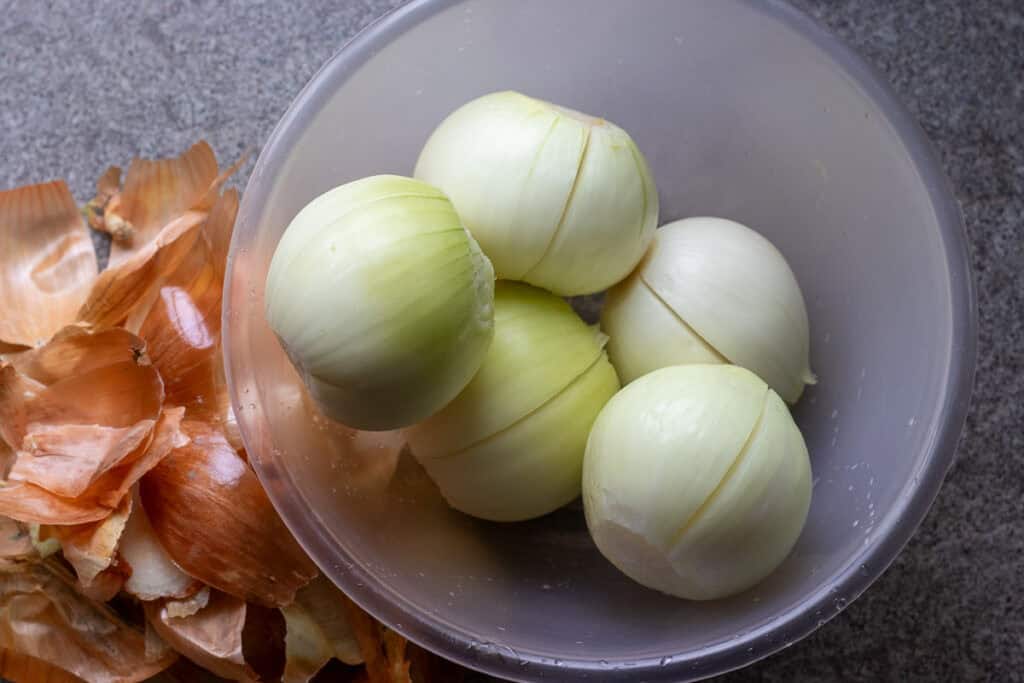
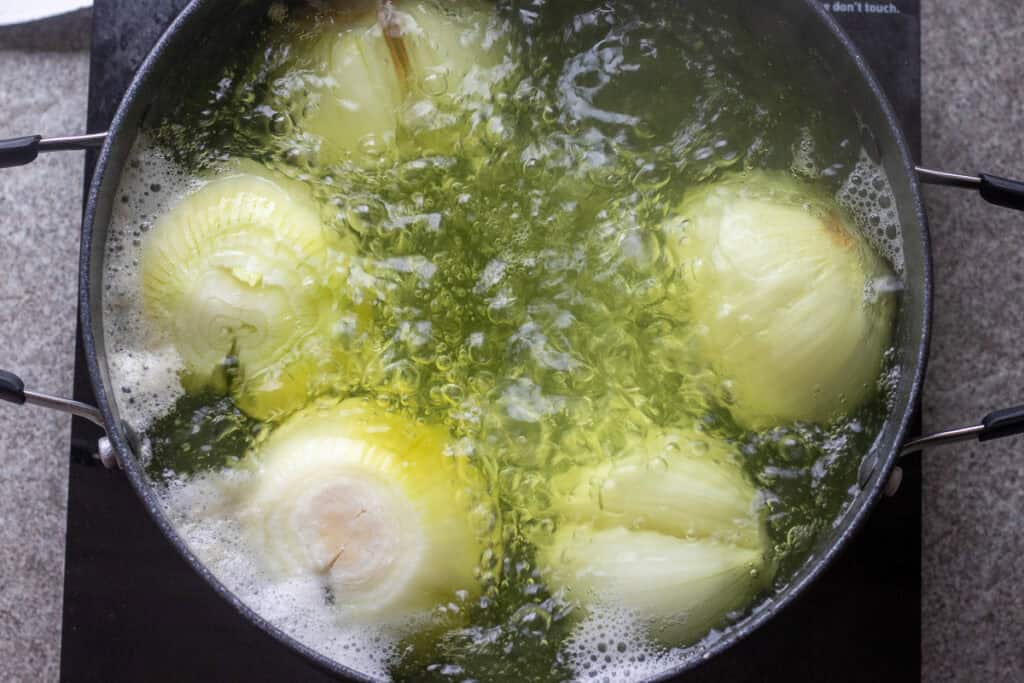
Lift the onions out with tongs and place them on a plate. Leave them for a few minutes until they are cool enough to handle. Start from the cut you made and gently separate the layers. Set the larger layers aside for stuffing. The smallest layers are usually too tight to fill, so keep them for the rice filling. If one of the outer layers is very large, cut it in half before filling it. This gives you smaller parcels that are easier to roll and cook.
Small tears are not a problem. Place torn pieces seam side down in the pot, or use them around the edges of another parcel.


Prepare the Rice Filling
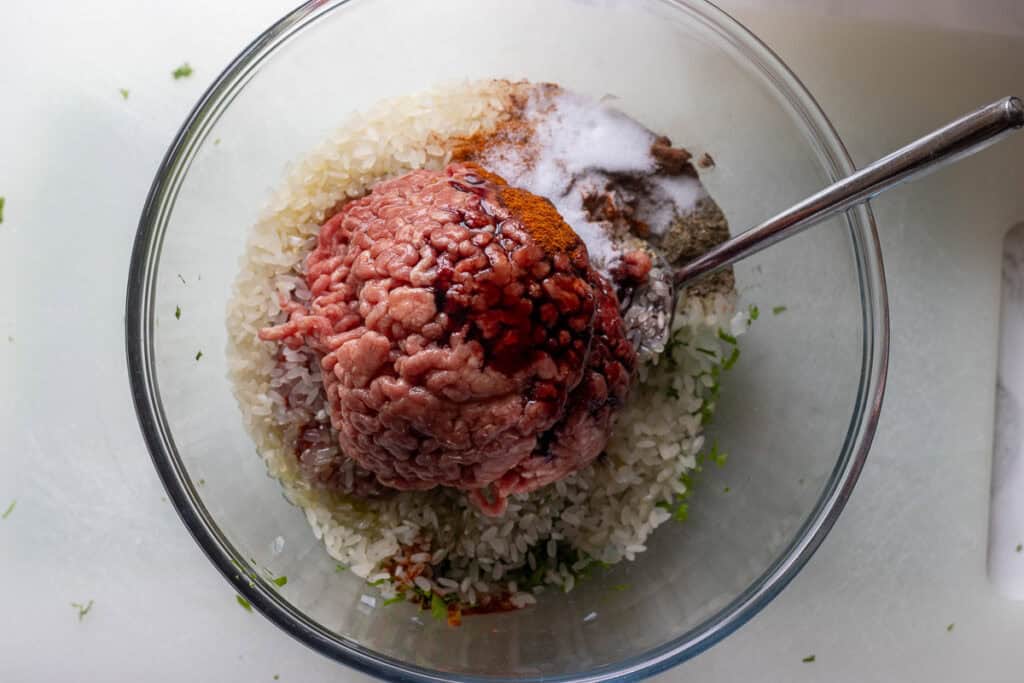
Finely chop the inner remaining onion layers and place them in a bowl. Add rinsed rice, ground beef, tomato paste, pomegranate molasses, olive oil, salt, freshly ground pepper, paprika, allspice, and chopped parsley to the chopped onions.
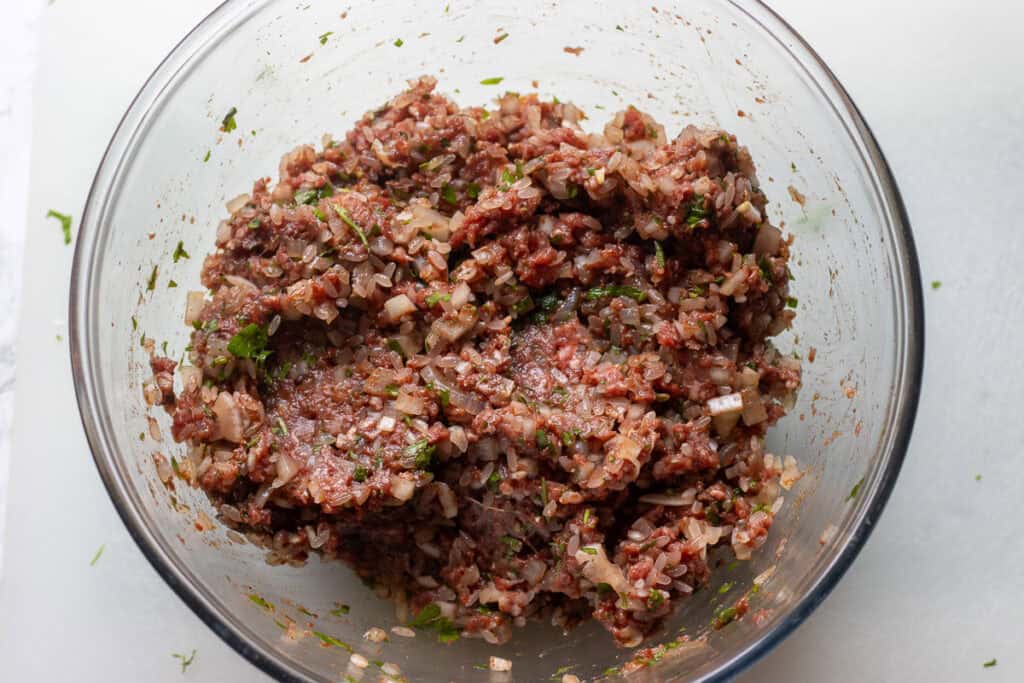
Mix well to combine all the flavors. The filling should look moist from the onion, tomato paste, olive oil, and pomegranate molasses. Do not add water to it.
Fill and Roll the Onion Layers
Place one onion layer on a board with the curved side facing down. Add a small spoonful of filling near one end of the onion layer. Do not overfill it. The rice expands as it cooks, so leave enough room for the parcel to close easily. Fold the sides over the filling and roll it up gently.
The parcels do not need to be tightly packed. Roll them firmly enough to stay closed, but leave a little room for the rice to expand. Place each stuffed onion seam side down in a wide pot.
Arrange the parcels close together in one layer if possible. They should support each other while cooking, but do not force them into the pot too tightly.

Cook the Stuffed Onions
Mix the water, tomato paste, and pomegranate molasses in a jug until smooth.

Pour the sauce carefully around the stuffed onions. The sauce should come partway up the sides of the parcels. It does not need to cover them.
Place a small heatproof plate over the onions before putting the lid on the pot. This helps keep them in place while the sauce simmers and reduces the chance of the parcels opening.

Place the pot over medium heat and bring the sauce to a gentle simmer. Once it starts bubbling, lower the heat, cover the pot, and cook for 45 minutes to 1 hour.
Check after 45 minutes. The onions should be very tender, and the rice should be soft.
If the sauce reduces too much before the rice is ready, add a small splash of hot water around the edges of the pot. Cover it again and continue cooking. Remove the pot from the heat and let the stuffed onions rest for 15 minutes before serving.

Helpful Recipe Tips From the Chef
- Choose large onions with smooth skins. Small onions are harder to separate and do not hold much filling.
- Do not boil the onions for too long. They should be flexible, not falling apart.
- Keep the filling fairly loose. Pressing too much filling into each layer can make the parcels split as the rice expands.
- Use a wide pot instead of a deep, narrow one. The stuffed onions cook more evenly when they are arranged in a close layer.
- Keep the heat low after the sauce starts simmering. A hard boil can move the onion parcels around and make them open.
- Always rest the pot before serving. The parcels are easier to lift once the sauce has settled.
Common Problems and How to Fix Them
My onion layers keep tearing
The onions may not have softened enough, or they may have been cooked for too long.
Simmer the onions until you can gently loosen the layers, then remove them from the water. Let them cool slightly before separating them.
If a layer tears, do not throw it away. Use it for a smaller parcel or place it seam side down in the pot.
My stuffed onions are opening while they cook
The parcels may be overfilled, rolled too loosely, or simmering too hard.
Use less filling, place every parcel seam side down, and arrange them closely together. A small heatproof plate placed over the onions also helps keep them closed.
My rice is still hard
Add a small splash of hot water around the edge of the pot, cover it again, and cook for another 10 to 15 minutes.
Rice can stay firm if the sauce reduces too fast or the heat is too low. Keep the pot covered while the rice finishes cooking.
My onions are too soft
The onions may have been blanched for too long before filling.
Next time, simmer them just until the layers begin to loosen. They will continue softening while they cook in the sauce.
I have filling left but no onion layers
Stuff a bell pepper, zucchini, tomato, or small eggplant with the extra filling and cook it in the same pot.
You can also make a few small meatballs from the leftover filling and cook them in the sauce.
What to Serve with Stuffed Onions
Stuffed onions are usually enough for a main meal, especially when served with yogurt, salad, and bread.
I like serving them with Cacik or plain yogurt. The cool yogurt goes well with the tomato and pomegranate molasses sauce.
Dutch Oven Sourdough Bread or a piece of Bazlama is good for scooping up the sauce from the plate.
For a fresh side, serve them with Persian Shirazi Salad, Patlıcan Salatası - Smoky Turkish Eggplant Salad, or Lebanese Fattoush Salad.
You can also add a few small plates to the table, such as Haydari, Turkish Acili Ezme, or Barbunya.
Can I Make Stuffed Onions Ahead?
Yes. You can prepare the onions, make the filling, roll the parcels, and arrange them in the pot up to one day ahead.
Cover the pot and keep it in the refrigerator. Make the sauce separately and keep it in a small container. When you are ready to cook, pour the sauce around the stuffed onions, add the plate and lid, then cook as directed.
You can also cook the whole dish a day ahead. The flavors settle nicely in the refrigerator overnight.
Storage, Reheating, and Freezing
Let the stuffed onions cool completely before storing them. Keep leftovers in an airtight container in the refrigerator for up to 4 days.
To reheat, place the stuffed onions in a saucepan with a small splash of water. Cover the pan and warm them gently over low heat until hot. You can also reheat them in the microwave, but the onion layers may become softer.
Freeze stuffed onions in an airtight container for up to 3 months. Thaw them overnight in the refrigerator, then reheat gently in a covered pan.
Recipe FAQs
Yes, you can use brown rice, but keep in mind that it will take longer to cook. You may need to add extra liquid and increase the cooking time.
Yes. Use the filling from my Yaprak Sarma recipe instead of the ground beef filling.
The onion preparation and cooking method stay the same. Check the rice earlier, as a meat-free filling can cook a little faster.
Boiling the onions first helps soften them, making it easier to separate the layers without tearing. Be gentle when handling them, and don’t overstuff each layer to keep them intact.
Related Recipes
For more delicious stuffed vegetable recipes, why not try:


Did you make this recipe? Please let me know how it turned out! Leave a comment below, tag @cookingorgeous on Instagram, and hashtag it #cookingorgeous.
I hope you enjoy the process of making this delicious dish 'Turkish Rice Stuffed Onions - Sogan Dolmasi' as much as you enjoy eating it! 🙂
Want to Save This Recipe?
Enter your email & I'll send it to your inbox. Plus, get great new recipes from me every week!
By submitting this form, you consent to receive emails from Cooking Gorgeous

Stuffed Onions
Ingredients
- 5 large onions
- 9 oz ground beef (250 grams)
- ¾ cup short-grain rice (150 grams)
- 2 tablespoon pomegranate molasses
- 2 tablespoon good quality olive oil
- 2 tablespoon tomato paste
- 2 tablespoon parsley
- 1 teaspoon salt
- ½ teaspoon freshly ground black pepper
- ½ teaspoon paprika
- ½ teaspoon allspice
For the Sauce
- 1 ½ cup water
- 1 tablespoon tomato paste
- 1 tablespoon pomegranate molasses
Instructions
Prepare the Onions
- Bring a large pot of water to a boil.
- Peel the onions and cut a small slice off the top and bottom of each onion.
- Carefully cut halfway down the center from top to bottom with a small sharp knife. Avoid cutting all the way through or the onions will fall apart.
- Reduce the heat to medium, and blanch the onions in simmering water for about 10 minutes. This will soften them and make it easier to separate the layers.
- Remove the onions from the water using tongs and let them cool slightly.
- Carefully separate the layers, trying to keep them as intact as possible. These layers will form the "shells" for your stuffing.
Prepare the Rice Filling
- Finely chop the inner remaining onion layers and place them in a bowl.
- Add rinsed rice, ground beef, tomato paste, pomegranate molasses, olive oil, salt, freshly ground pepper, paprika, allspice, and chopped parsley to the chopped onions.
- Mix well to combine all the flavors.
Stuff the Onions
- Take a layer of onion and gently fill it with the rice mixture. Be careful not to overfill, as the rice will expand as it cooks.
- Fold the sides of the onion layer over the filling to create a neat little parcel.
- Place the stuffed onion in a pot, seam side down. Repeat with the remaining onions and filling.
Cook the Stuffed Onions
- Once all the onions are stuffed and in the pot, mix together 1 ½ cups of water with 1 tablespoon tomato paste and 1 tablespoon of pomegranate molasses.
- Pour the mixture carefully over the stuffed onions. Place a small heatproof plate over the onions.
- Bring the liquid to a boil, then reduce the heat to low and simmer for about 45 minutes to 1 hour, or until the rice is fully cooked and the onions are tender.
- Let them rest for 15 minutes before serving.
Video
Notes
- Use large yellow or white onions for the easiest layers to separate and fill.
- Buy one extra onion if possible. Onion sizes and usable layers can vary.
- Do not boil the onions for too long. They should soften but still hold their shape.
- Finely chop the small inner onion pieces and add them to the filling.
- Use short-grain white rice and do not cook it before filling the onions.
- Do not overfill the onion layers. Leave room for the rice to expand.
- Arrange the stuffed onions seam side down and close together in a wide pot.
- A small heatproof plate placed over the parcels helps keep them closed while they cook.
- The sauce should come partway up the sides of the onion parcels. It does not need to cover them.
- Ground lamb or a mix of ground lamb and ground beef can be used instead of ground beef.
- For a vegetarian version, use the filling from my Yaprak Sarma recipe.
- Store leftovers in the refrigerator for up to 4 days, or freeze for up to 3 months.


Sandra says
The filling was so delicious and complemented the onions perfectly. A simple and delicious dish.
Zerrin says
My kids said these were the best I’ve ever made!
Ayla Clulee says
I am so pleased to hear that, Zerrin!
Kathryn says
Hello! I'm guessing 51 cal is per piece?
Ayla Clulee says
Hi Kathryn, yes that is correct!
Susan says
Very delicious! I made them last night and now its noon and they are almost finished. Excellent recipe!
Ayla Clulee says
Thank you so much for your lovely comment, Susan! I’m so happy to hear that you loved them!
Best wishes
Ayla
Diane Ricky says
Absolutely wonderful flavors! I made these already three times and turned out perfect each time. Thank you!
Ayla Clulee says
Hi Diane,
So thrilled to hear you’re loving the recipe! Making it three times is the best compliment—thank you! I'm so glad it’s turning out perfectly for you each time.
Best wishes
Ayla
Nancy Bennett says
I am quite enamored of the flavor. I must admit I was curious as to what pomegranate molasses would taste like. After making these, I've decided I would rather have it in a chicken dish with Jasmine rice. Overall, not bad at all. My husband agrees. I now have a new flavor to add to my dishes.
Ayla Clulee says
Hi Nancy,
Thank you for sharing! I’m so glad you enjoyed the flavor and discovered a new ingredient to play with. Pomegranate molasses is such a unique addition, and I bet it would be amazing with chicken and jasmine rice—great idea!
Thanks again for your feedback!
Best wishes
Ayla