
Shrimp Saganaki is a delicious Greek seafood dish made with juicy shrimp cooked in rich tomato sauce and finished with salty feta and fresh herbs. I serve it hot from the pan with Greek Bread - Horiatiko Psomi on the side to scoop up every bit of the sauce.
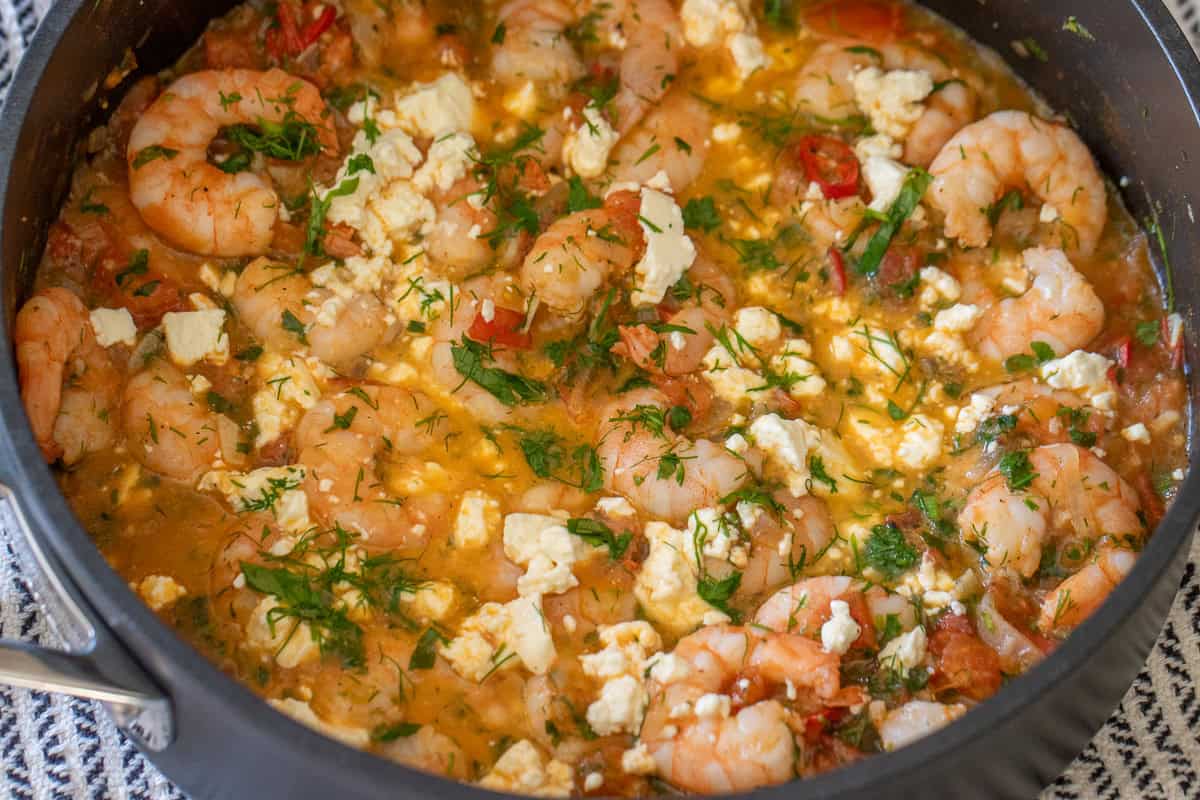
It is ready in just 25 minutes and works well as a starter, part of a mezze table, or a weeknight dinner for two. You can use fresh or canned tomatoes, so it is not a summer-only recipe. The shrimp go in near the end, so they stay tender.
Jump to:
This simple seafood dish is also known as Garides Saganaki and is traditionally made with ouzo. You can use raki or white wine, or leave the alcohol out if you prefer.
What is Shrimp Saganaki?
Shrimp Saganaki, or Garides Saganaki, is a Greek dish made with shrimp, tomato sauce, and feta cheese.
The word saganaki comes from the small two-handled pan used for cooking and serving dishes like this. Fried cheese saganaki is the best-known version, but seafood saganaki is also popular.
This shrimp version is usually served as a meze or starter. It can also be served as a main meal with bread, rice, pasta, or orzo.

Why You’ll Love This Recipe
- It is quick enough for a weeknight but still feels like something you would order in a Greek taverna. Serve it straight from the pan with bread, rice, or orzo.
- It works with fresh tomatoes, canned tomatoes, crushed tomatoes, or passata. That means you can make it even when ripe summer tomatoes are not around.
- The sauce is rich but not heavy. It has enough body for dipping bread, but it still works well with rice, orzo, pasta, or a mezze table.
- The alcohol is optional. Ouzo, raki, or white wine all work well. You can leave it out and still have a good shrimp dish with tomato sauce and feta.
- The feta stays part of the dish, not the whole dish. It softens into the sauce but does not turn it heavy or creamy.
Ingredients You'll Need
Please scroll down to the recipe card below for the full ingredients list with measurements, complete recipe method, recipe notes, and nutritional information.

- Shrimp - Use raw shrimp, peeled and deveined. Fresh shrimp are great, but frozen shrimp work well once fully thawed and patted dry. Avoid cooked shrimp, as they can turn tough in the sauce.
- Olive oil - Use good quality olive oil. It gives the tomato sauce a better flavour.
- Tomatoes - I prefer fresh ripe tomatoes (grated or chopped), but you can also use canned crushed tomatoes or passata.
- Feta cheese - Use good quality Greek feta if possible. Sheep’s milk feta has a sharper flavour and a creamier texture.
- Ouzo (optional) - This is optional. Ouzo gives the most familiar Greek flavour, raki also works well, and white wine is a good alternative.
- Seasonings - Fresh red chillies or red pepper flakes (for a little heat), salt, and black pepper.
How to Make Greek Shrimp Saganaki
Peel and devein the shrimp if needed. Pat them dry with kitchen paper and season lightly with salt and pepper. Set aside. You can check my BBQ Grilled Shrimp Skewers recipe for detailed instructions on how to do it!

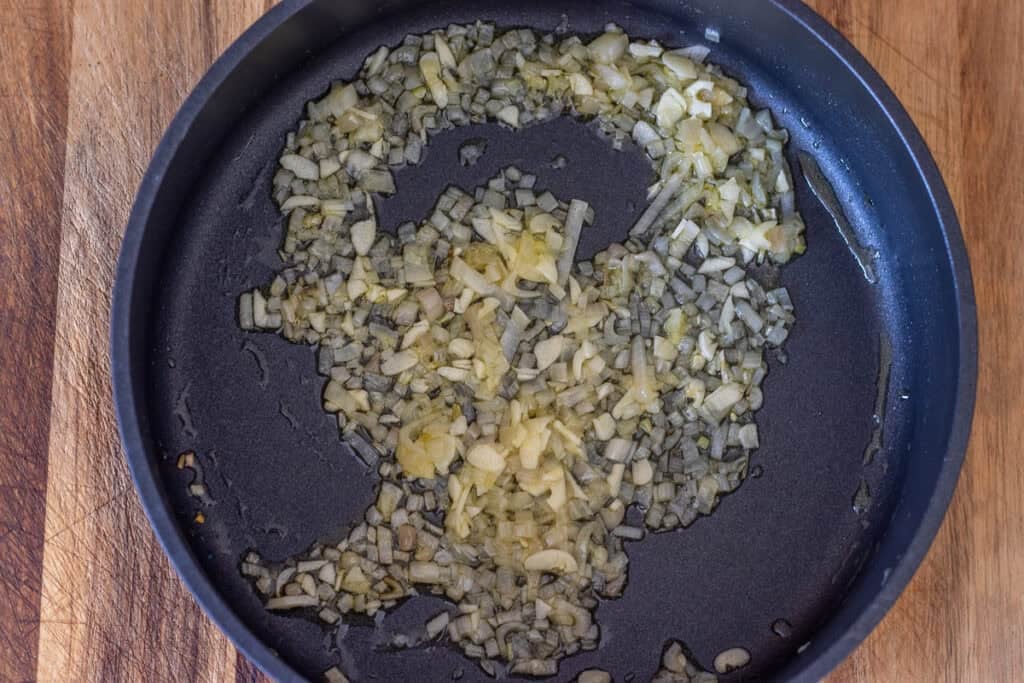
Warm the olive oil in a large skillet over medium heat. Add the shallot or onion and cook until soft. Add the garlic and cook briefly until fragrant.
Pour in the raki, ouzo, or white wine if using. Let it bubble for a short time so the sharp alcohol smell fades. Add the tomatoes and chilli.
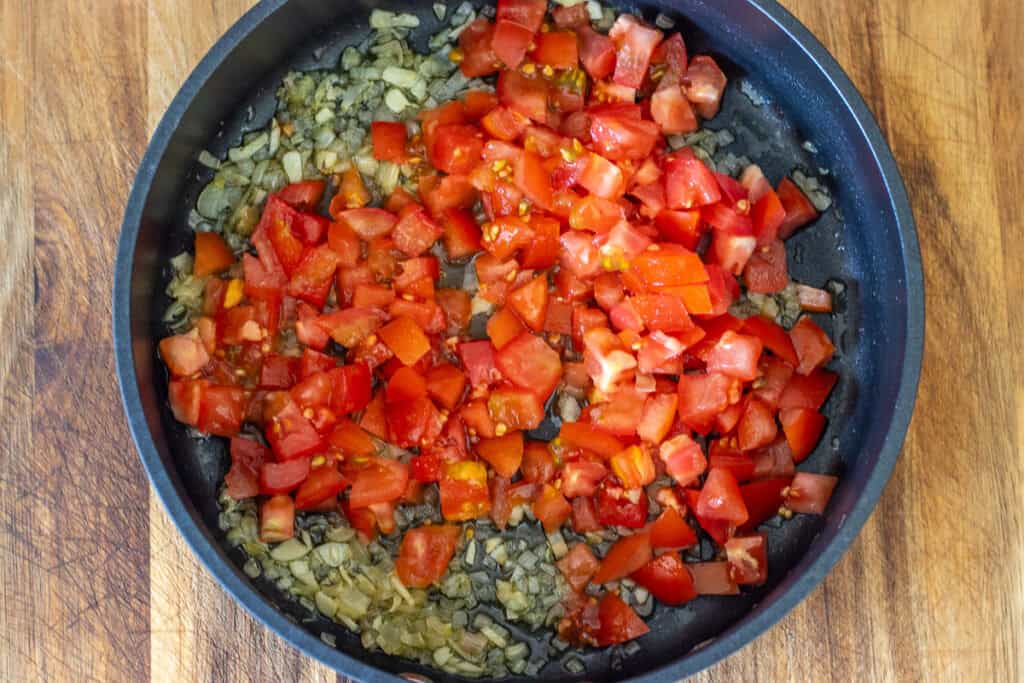
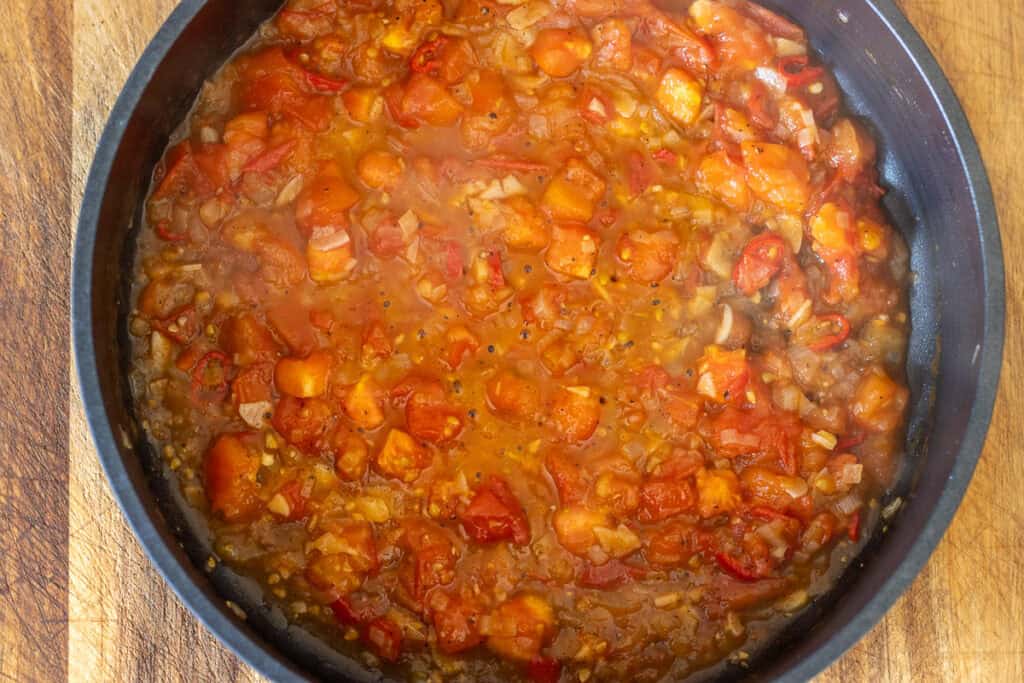
Season lightly, then let the sauce simmer until it thickens. Add the shrimp and most of the herbs. Stir gently so the shrimp sit in the sauce.
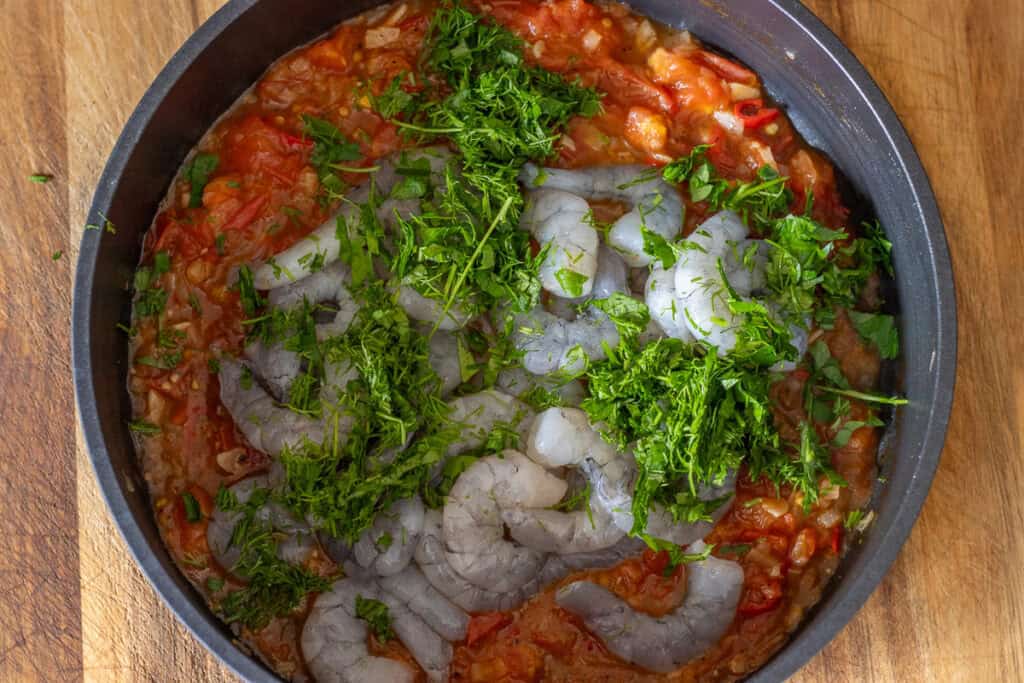
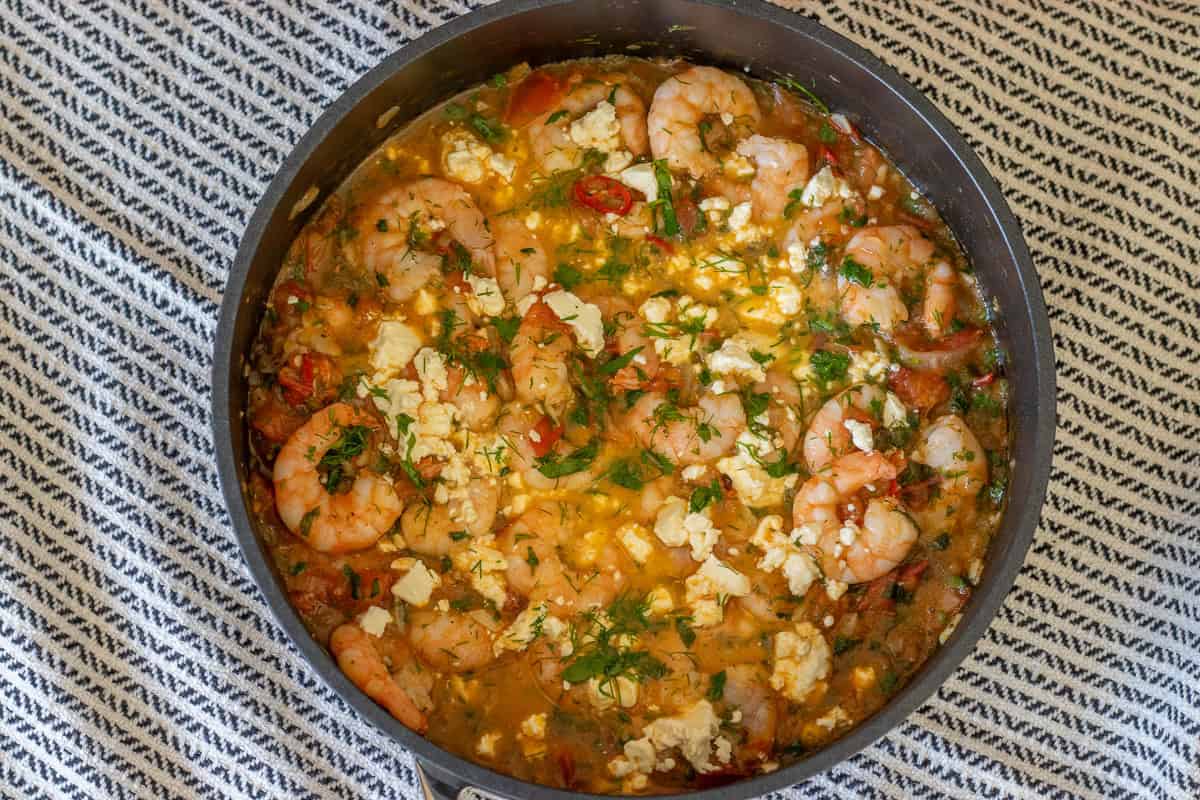
Cook until the shrimp turn pink and opaque. Keep the heat gentle so the shrimp stay tender. Add the feta over the top. Cover the pan briefly so the feta softens. Scatter over the remaining herbs and serve hot.
How Long to Cook Shrimp Saganaki
Greek Shrimp Saganaki takes about 25 minutes from start to finish.
The tomato sauce needs about 10 to 15 minutes to thicken. The shrimp only need 3 to 5 minutes once they go into the pan.
Shrimp are ready when they turn pink and opaque. They should curl slightly, but not into tight rings.
Small shrimp cook faster, so check them early. Very large shrimp may need an extra minute.
Recipe Tips From the Chef
- Pat the shrimp dry before cooking. Wet shrimp can water down the sauce.
- Cook the tomato sauce before adding the shrimp. The shrimp only need a few minutes in the pan.
- Do not reduce the sauce too much. It should be thick enough to coat the shrimp but still loose enough for dipping bread.
- Keep the heat gentle once the shrimp go in. A hard boil can make them rubbery.
- Use raw shrimp, not cooked shrimp. Cooked shrimp can turn tough by the time the sauce is ready.
- Taste the sauce before adding extra salt. Feta can make the dish salty enough.
- If the tomatoes taste sharp, add a tiny pinch of sugar or a small drizzle of honey.
- Serve the dish soon after cooking. Shrimp are best when freshly cooked.
What to Serve with Greek Shrimp Saganaki
Greek Shrimp Saganaki is best served hot, straight from the pan.
Bread is the easiest side. Try it with Barbari Bread, Greek Pita, or Italian Cheese and Herb Bread, which is perfect for dipping.
For a main meal, serve it with Tomato and Rice, Lebanese Rice Pilaf with Vermicelli, or Orzo Pasta Salad.
You can also toss the sauce and shrimp with linguine for a quick pasta dinner.
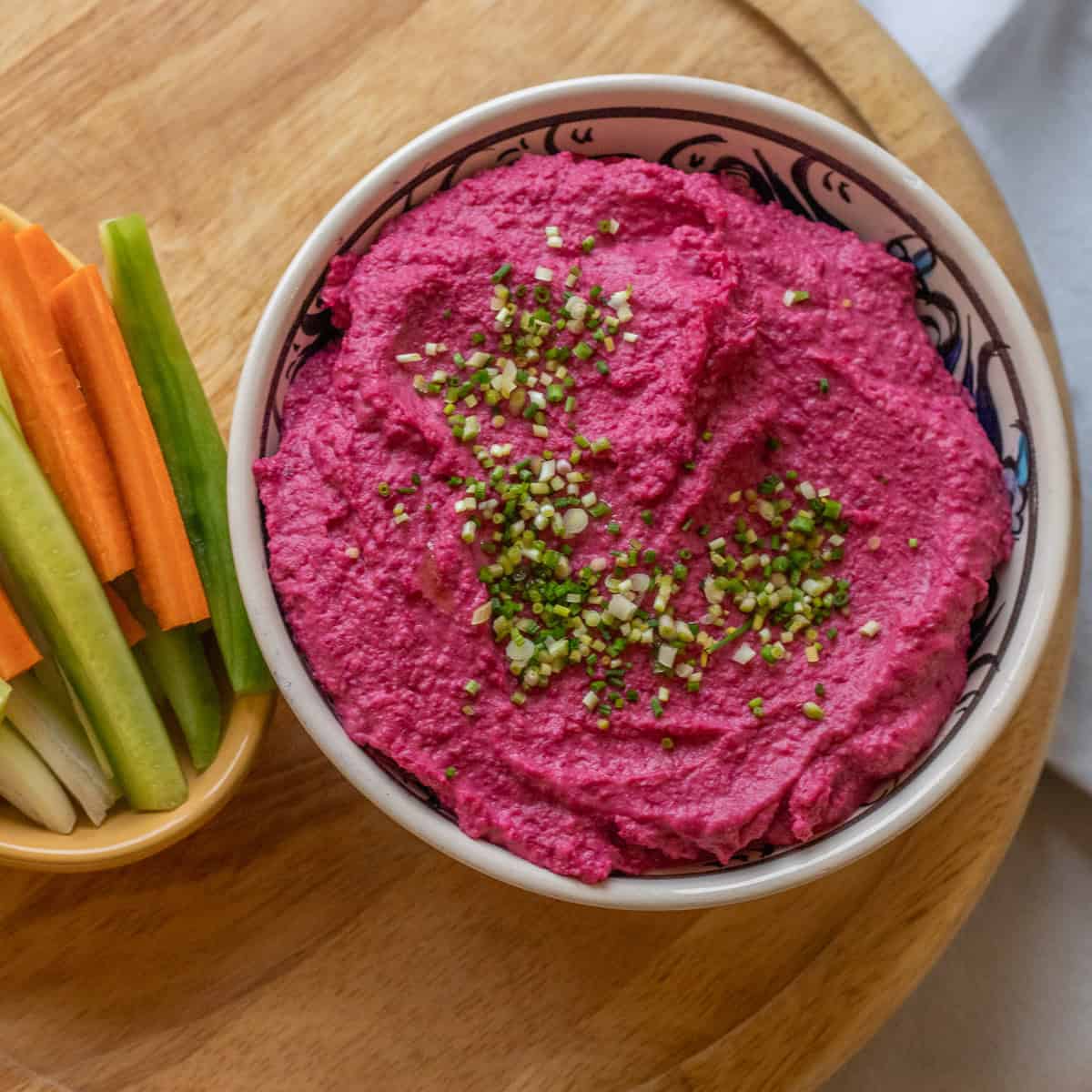
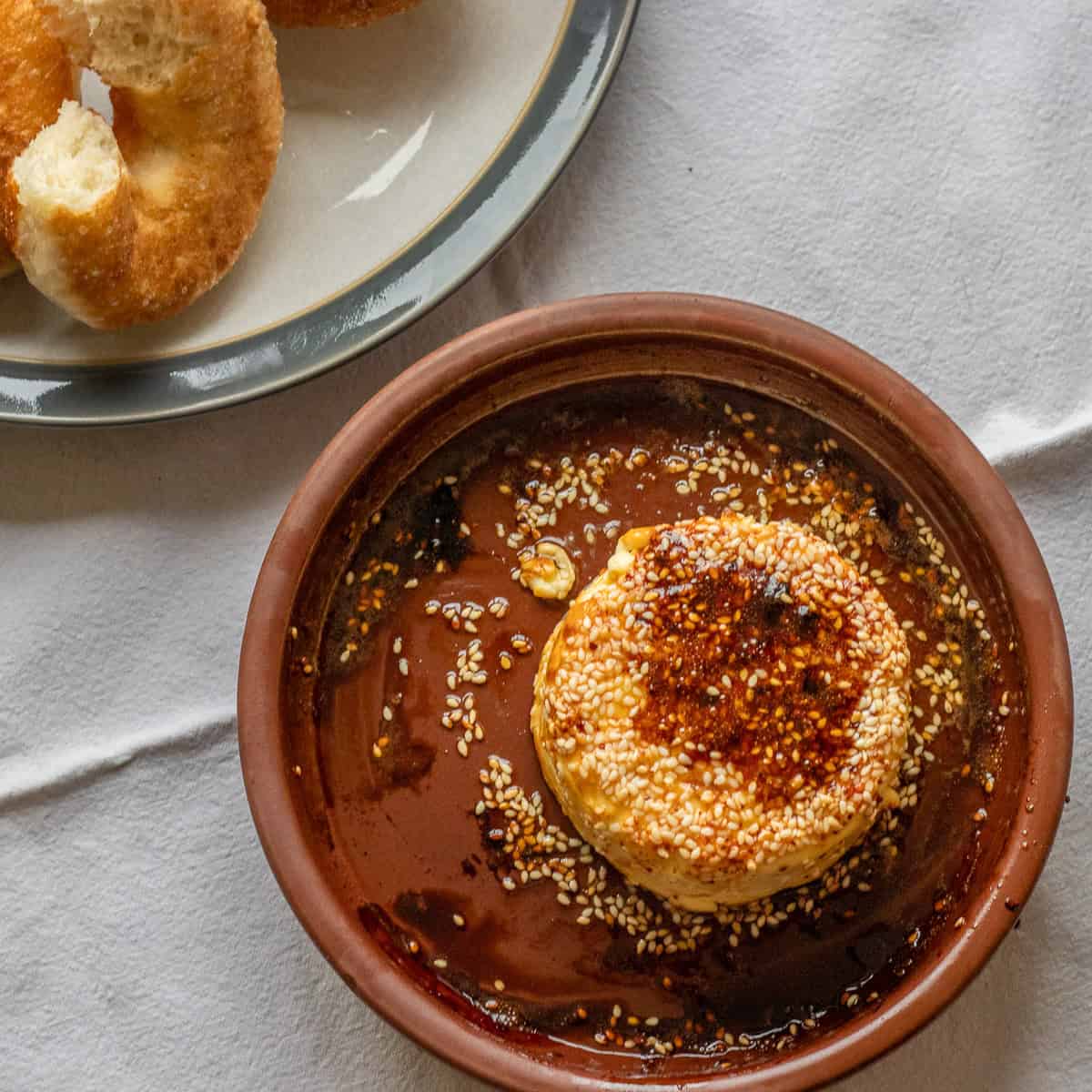
For a mezze-style table, serve it with olives, tzatziki, Greek Cucumber Salad, Baked Feta with Honey and Sesame Seeds, Beet Cucumber Salad, and grilled vegetables.
Make-Ahead, Storage, and Reheating
You can make the tomato sauce ahead and keep it in the fridge for up to 2 days. Add the shrimp and feta just before serving.
Store leftovers in an airtight container in the fridge for up to 2 days.
Reheat gently on the stove over low heat. Add a small splash of water if the sauce has thickened too much. Do not boil the shrimp when reheating. Warm them just until hot.
I do not recommend freezing cooked Shrimp Saganaki. The shrimp can turn rubbery, and the feta can become grainy.
If you use frozen shrimp, do not refreeze the cooked leftovers.
Recipe FAQs
Yes. Just make sure to thaw them completely and pat them dry before cooking. Also, do not freeze again if there are any leftovers.
No, ouzo is optional. White wine or even broth works well as a substitute.
You can use mussels, scallops, or even chunks of white fish for a similar preparation.
Related Recipes
For more delicious shrimp recipes, why not try:


Did you make this recipe? Please let me know how it turned out! Leave a comment below and tag @cookingorgeous on Instagram and hashtag it #cookingorgeous.
I hope you enjoy the process of making this delicious and healthy Greek Shrimp Saganaki - Garides Saganaki as much as you enjoy eating it! 🙂
Want to Save This Recipe?
Enter your email & I'll send it to your inbox. Plus, get great new recipes from me every week!
By submitting this form, you consent to receive emails from Cooking Gorgeous

Greek Shrimp Saganaki
Ingredients
- 2 tbsps olive oil
- 1 large banana shallot or onion
- 3 cloves garlic
- 1 chopped red chili or ½ teaspoon flaked chili
- 1 ½ tablespoon raki or ouzo
- 7 oz chopped tomatoes (200 g)
- ¾ teaspoon salt
- ½ teaspoon freshly ground black pepper
- 11 oz shrimp (peeled and deveined) (330 g)
- 2 oz feta (50 grams)
- 2 tablespoon chopped parsley and dill
Instructions
- If using fresh shrimp in the shell, which is my favorite, you'll need to peel and devein them before using. You can check my BBQ Grilled Shrimp Skewers recipe for detailed instructions on how to do it!
- After cleaning the shrimp, pat them dry and season lightly with salt and pepper. Set aside.
- In a large skillet or pan, warm the olive oil over medium heat. Sauté the chopped shallots until soft and translucent, then add the garlic and cook until fragrant.
- Add the ouzo or white wine, let it evaporate and then stir in the chopped tomatoes and fresh chillies. Season with the rest of the salt and black pepper.
- Let the sauce simmer gently for about 10–15 minutes until it thickens slightly.
- Add the shrimp to the sauce along with ¾ of the chopped herbs. Give them a good stir.
- Simmer gently for 3–5 minutes until the shrimp turn pink and opaque.
- Sprinkle the crumbled feta over the top. Cover the pan for 1–2 minutes to let the cheese soften.
- Finish with the remaining herbs and serve hot.
Notes
- Use raw shrimp for the best texture. Cooked shrimp can turn tough in the sauce.
- Thaw frozen shrimp fully before cooking. Pat them dry so they do not water down the sauce.
- Let the tomato sauce thicken before adding the shrimp. The sauce should coat the spoon but still be loose enough for dipping bread.
- Keep the heat gentle after the shrimp go in. A hard boil can make them rubbery.
- Remove the pan from the heat as soon as the shrimp are pink and opaque. They will continue to firm up slightly in the hot sauce.
- Use good feta if you can. Very soft supermarket-style feta can melt into the sauce too quickly.
- Taste before adding more salt. Feta is salty, and the sauce may not need extra seasoning.
- If the tomatoes taste sharp, add a tiny pinch of sugar or a small drizzle of honey.
- Serve soon after cooking. Shrimp Saganaki is best while the shrimp are freshly cooked.
- You can make the tomato sauce ahead. Add the shrimp and feta just before serving.
- Store leftovers in the fridge for up to 2 days. Reheat gently over low heat.
- Do not freeze cooked Shrimp Saganaki. The shrimp can turn rubbery, and the feta can become grainy.
Imogene says
The shrimp were juicy, and the tomato sauce was full of flavor. Great with crusty bread.