
This homemade Beet Hummus recipe is simple, reliable, and honestly comes out nicer than anything from a tub. It is one of those dishes that quietly becomes part of your regular rotation. Once you make it at home, it is hard to go back.
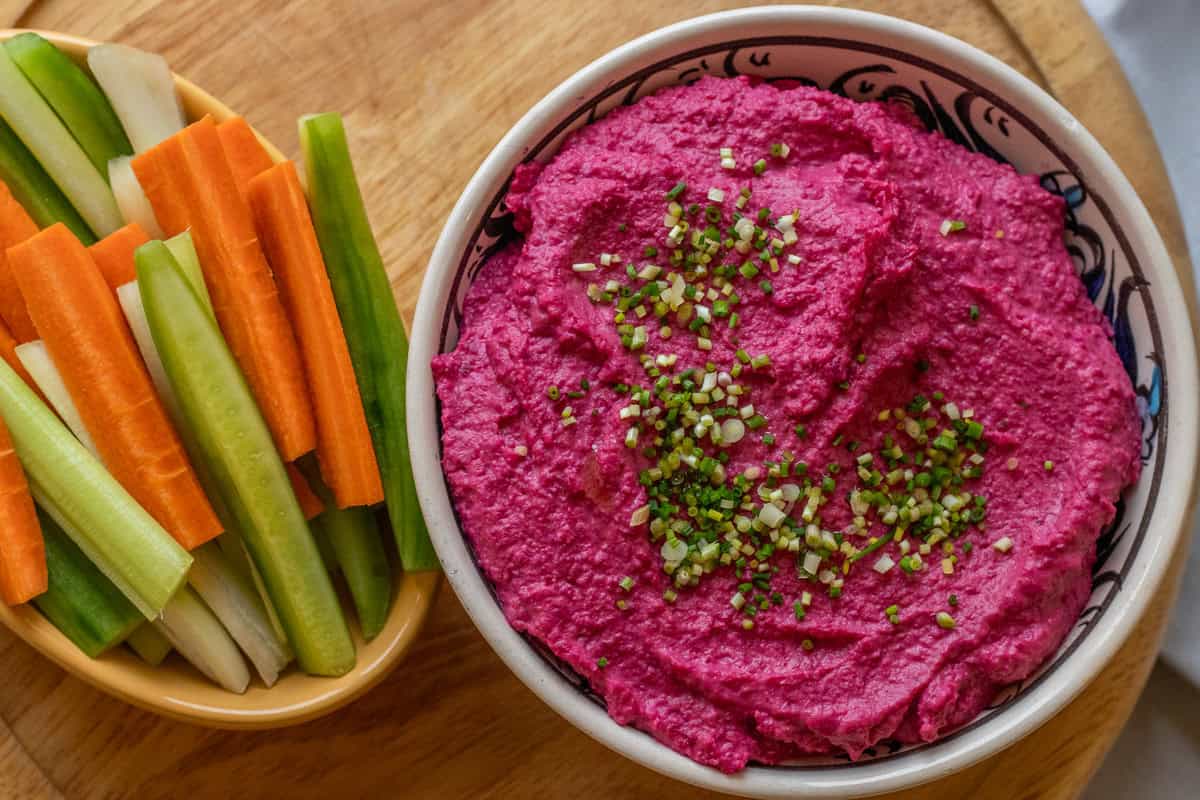
It starts with the classic Mediterranean Hummus ingredients: chickpeas, tahini, lemon, and garlic, then cooked beets are blended in for a soft sweetness and that beautiful pink colour.
Jump to:
You do not need exact measurements or any special know-how. You can taste as you go and adjust things to suit you. It works just as well as a dip for veggies as it does spread on a sandwich or spooned onto toast when you need something quick and easy.
Ingredients You'll Need
Please scroll down to the recipe card below for the full ingredients list with measurements, complete recipe method, recipe notes, and nutritional information.

- Chickpeas - I usually use canned chickpeas because they save time and taste just as good. If you prefer dried chickpeas, you can cook them from scratch instead. For a smooth, creamy hummus, the chickpeas need to be very soft. If you are using canned chickpeas, simmer them for another 15 to 20 minutes until they are close to mushy. This small step makes a big difference to the final texture.
- Beets - Roasted beets bring a deeper flavour, but boiled or steamed beets also work well. Store-bought vacuum-packed beets are fine too if they contain only beets and no vinegar.
- Fresh lemon juice - Adds brightness and balances the sweetness of the beets. Bottled juice works in a pinch, though fresh lemon juice tastes cleaner.
- Tahini - A few tablespoons of plain sesame paste. Stir it well before measuring, since it often separates in the jar. Place the leftover tahini in the fridge and keep it refrigerated until needed.
- Olive oil - It gives a smooth texture to hummus. I use mild-tasting extra virgin olive oil and also drizzle a little on top for garnish.
- Garlic - Using fresh garlic from the bulb instead of pre-peeled garlic improves the taste. One small clove is enough for a mild background note. Add more if you like a stronger garlic presence.
Optional extras
These are not required, but they can add a little interest:
- Ground cumin for warmth
- A pinch of smoked paprika for depth
- Extra lemon juice if you like sharper hummus
How to Make Beet Hummus
Making beet hummus is a simple process, but a few small choices along the way can affect texture and balance. Take your time with the blending and tasting. That is where the hummus really comes together.
If you are cooking beets from scratch, wash them well and trim the stems. Roasting brings out more sweetness. Wrap the beets in foil and roast at 200°C until tender, usually about 45 to 60 minutes depending on size. Let them cool, then peel. The skins should slide off easily.

For boiling or steaming, cook until a knife slides in without resistance. Drain well and let them cool. Excess water can thin the hummus too much.
You can also cook beets in an air fryer. Check out this Air Fryer Roasted Whole Beets in Foil recipe to learn how to use your air fryer to cook beets.
Cut the cooked beets into chunks so they blend evenly.
Add the beet chunks, chickpeas, tahini, lemon juice, garlic, and salt to the food processor. Blend for about one minute. The mixture will look thick and a bit grainy at this stage, which is normal.

Scrape down the sides of the bowl so everything mixes evenly, and blend for another minute. At this point, check the consistency. If it looks too thick, add a tablespoon or two of cold water while the processor is running.
With the machine running, drizzle in the olive oil slowly. This helps create a smoother texture. Stop and scrape down the sides once more, then blend until creamy.
Taste and adjust. Add more salt or lemon juice if needed. Blend again briefly to combine. Spoon the hummus into a bowl and smooth the top with the back of a spoon.
Garnish with chopped herbs, a drizzle of olive oil, and serve with crunchy vegetables or freshly baked Barbari bread.

Recipe Tips From the Chef
A few small adjustments can make a noticeable difference in beet hummus. These tips come from common mistakes and easy fixes that are not always mentioned.
- One helpful step is removing the skins from chickpeas. If you have the time, gently rub the drained chickpeas between your hands to loosen the skins, then rinse them away. This will give you a smoother hummus, though it is not required.
- Using room-temperature chickpeas and beets helps everything blend more evenly. Very cold ingredients can make the hummus feel stiff.
- Do not rush the blending. Let the food processor run for longer than you think you need. A full two to three minutes can turn a slightly grainy mixture into something much smoother.
- Adding cold water or ice cubes lightens the texture without making the hummus heavy. Oil adds richness, but too much can mute the beet flavour.
- Taste more than once. Beet sweetness can vary, and lemon juice levels may need adjusting. Small changes make a big difference.
How to Store the Leftover Beet Hummus
Transfer the hummus to an airtight container as soon as it is made. Smooth the top and drizzle a thin layer of olive oil over the surface. This helps protect it from drying out.
Store in the refrigerator for up to four days. Stir before serving since some separation is normal.
Freezing beet hummus is possible, though the texture may change slightly. Freeze in small portions for up to two months. Thaw in the refrigerator overnight and stir well before using.
Serving Ideas
Beet hummus works in many everyday meals. It does not need special treatment, and it pairs well with both simple and more filling foods.
Spread it on toast and top with sliced cucumber, avocado, or a soft-boiled egg. It also works well in wraps with greens and roasted vegetables.
Serve it as a dip with warm pita bread, crackers, or crunchy raw vegetables like carrots, bell peppers, and celery.
Use it as a base on sandwiches instead of mayonnaise. The colour adds interest without overpowering other ingredients.
It can also be part of a snack plate with olives, cheese, and nuts. The mild sweetness of the beets balances salty elements nicely.
For a quick dinner side, spoon it onto a plate, swirl the top, and add a drizzle of olive oil and a pinch of cumin.
Recipe FAQs
Yes, canned beets can work if they are packed in water without added sugar or vinegar. Rinse them well and pat dry before blending. Vinegar-heavy beets can throw off the balance.
A high-speed blender works, though you may need to stop and scrape the sides more often. A stick blender can work for small batches.
Blend longer, add cold water gradually, and remove chickpea skins if possible. These steps help improve texture without changing flavour.
Related Recipes
For more delicious dip recipes why not try:


Did you make this recipe? Please let me know how it turned out! Leave a comment below and tag @cookingorgeous on Instagram and hashtag it #cookingorgeous.
I hope you enjoy the process of making this delicious and colourful Beet Hummus Recipe as much as you enjoy eating it! 🙂
Bon appétit! / Afiyet olsun!
Want to Save This Recipe?
Enter your email & I'll send it to your inbox. Plus, get great new recipes from me every week!
By submitting this form, you consent to receive emails from Cooking Gorgeous

Beet Hummus Recipe
Equipment
- 1 kitchen scale
- 1 measuring spoons
- 1 Measuring cups
Ingredients
- 1 ¾ cups cooked chickpeas (350 grams)
- 5 ½ oz cooked beetroot (150 grams)
- 3 tablespoon tahini paste
- 2 tablespoon lemon juice
- 1 clove garlic
- ½ teaspoon salt
- 2 tablespoon olive oil
- cold water to adjust the texture
Instructions
- If you are cooking beets from scratch, wash them well and trim the stems.
- Roasting brings out more sweetness. Wrap the beets in foil and roast at 200°C until tender, usually about 45 to 60 minutes depending on size. Let them cool, then peel. The skins should slide off easily.
- For boiling or steaming, cook until a knife slides in without resistance. Drain well and let them cool. Excess water can thin the hummus too much.
- You can also cook beets in an air fryer. Check out this Air Fryer Roasted Whole Beets in Foil recipe to learn how to use your air fryer to cook beets.
- Cut the cooked beets into chunks so they blend evenly.
- Add the beet chunks, chickpeas, tahini, lemon juice, garlic, and salt to the food processor.
- Blend for about one minute. The mixture will look thick and a bit grainy at this stage, which is normal.
- Scrape down the sides of the bowl so everything mixes evenly, and blitz it for another minute or so.
- At this point, check the consistency. If it looks too thick, add a tablespoon or two of cold water while the processor is running.
- With the machine running, drizzle in the olive oil slowly. This helps create a smoother texture. Stop and scrape down the sides once more, then blend until creamy.
- Taste and adjust. Add more salt or lemon juice if needed. Blend again briefly to combine.
- Spoon the hummus into a bowl and smooth the top with the back of a spoon.
Notes
- One helpful step is removing the skins from chickpeas. If you have the time, gently rub the drained chickpeas between your hands to loosen the skins, then rinse them away. This will give you a smoother hummus, though it is not required.
- Using room-temperature chickpeas and beets helps everything blend more evenly. Very cold ingredients can make the hummus feel stiff.
- Do not rush the blending. Let the food processor run for longer than you think you need. A full two to three minutes can turn a slightly grainy mixture into something much smoother.
- Adding cold water or ice cubes lightens the texture without making the hummus heavy. Oil adds richness, but too much can mute the beet flavour.
- Taste more than once. Beet sweetness can vary, and lemon juice levels may need adjusting. Small changes make a big difference.



Jackie says
Beetroot adds such a pretty color and amazing flavor. A fun twist to classic hummus.