
Zeytoon Parvardeh is a Persian marinated olive dish made with walnuts, pomegranate molasses, garlic, and fresh herbs. It comes from Gilan in northern Iran, where the olives are grown. It takes ten minutes to make, then sits in the fridge overnight.

I make a jar most weeks and it never lasts. It goes on the table as a starter, next to rice and grilled meat, or with bread and cheese. The longer it sits the better it gets, up to a point.
Jump to:
- Why This Recipe Works
- Origins and Cultural Background
- Ingredients You'll Need
- How to Make Zeytoon Parvardeh - Persian Marinated Olives
- Recipe Tips From the Chef
- Common Mistakes to Avoid
- Serving Suggestions
- Variations
- Storage and Shelf Life
- Recipe FAQs
- Related Recipes
- Zeytoon Parvardeh - Persian Marinated Olives
Zeytoon Parvardeh is perfect as a quick appetizer, side dish, or even a fun way to dress up a simple snack board. Plus, it pairs really well with rice dishes, grilled meats, Fresh Watermelon Vodka Cocktail, or just some Laffa - Iraqi Flatbread or Barbari bread.
Why This Recipe Works
- Ground walnuts turn the marinade into a paste that clings to the olives instead of sliding off them.
- Ten minutes of work, then the fridge does the rest overnight.
- You decide how sharp it is. More pomegranate molasses makes it darker and sourer, more walnut makes it paler and milder.
- It keeps for a week and tastes better after the first day.
- No cooking, and nothing in it is seasonal.
Origins and Cultural Background
Zeytoon Parvardeh comes from Gilan, a green coastal region in northern Iran on the Caspian Sea. Rudbar, in the south of the province, is the center of Iranian olive growing, and its orchards were registered in 2025 as the world's fourth international olive collection. You will also see the name written as zeytoun, zeitoon, zaytoon or simply parvardeh.
You will see it at family gatherings and on shared tables all over the region, made with what grows there. The olives, the walnuts and the pomegranates all come from the same corner of Iran.
Ingredients You'll Need
Please scroll down to the recipe card below for the full ingredients list with measurements, complete recipe method, recipe notes, and nutritional information.

- Green Olives - Small, firm, pitted green olives are the ones to use. Cracked olives are worth looking for, since the pits come out easily and the marinade gets right inside. Taste one first and only rinse them if they are too salty, then drain them properly.
- Walnuts - Finely chopped or ground walnuts add a creamy texture and nutty flavor. Lightly toast them before using them to intensify the flavor.
- Pomegranate molasses - It is a thick syrup made with pomegranate juice, and I often use it in Middle Eastern recipes. It has an intense sweet-and-sour flavor and adds a sweet and tangy depth to green olives. You can buy it from most Turkish / Middle Eastern shops.
- Garlic - It is a great flavoring for marinating the green olives. You can turn it into a paste with a mortar and pestle or grate it with a Microplane.
- Herbs - Typically, the regional chuchagh herb is used, but if it is unavailable, you can use a mix of mint, coriander, and parsley to replicate its flavor.
How to Make Zeytoon Parvardeh - Persian Marinated Olives
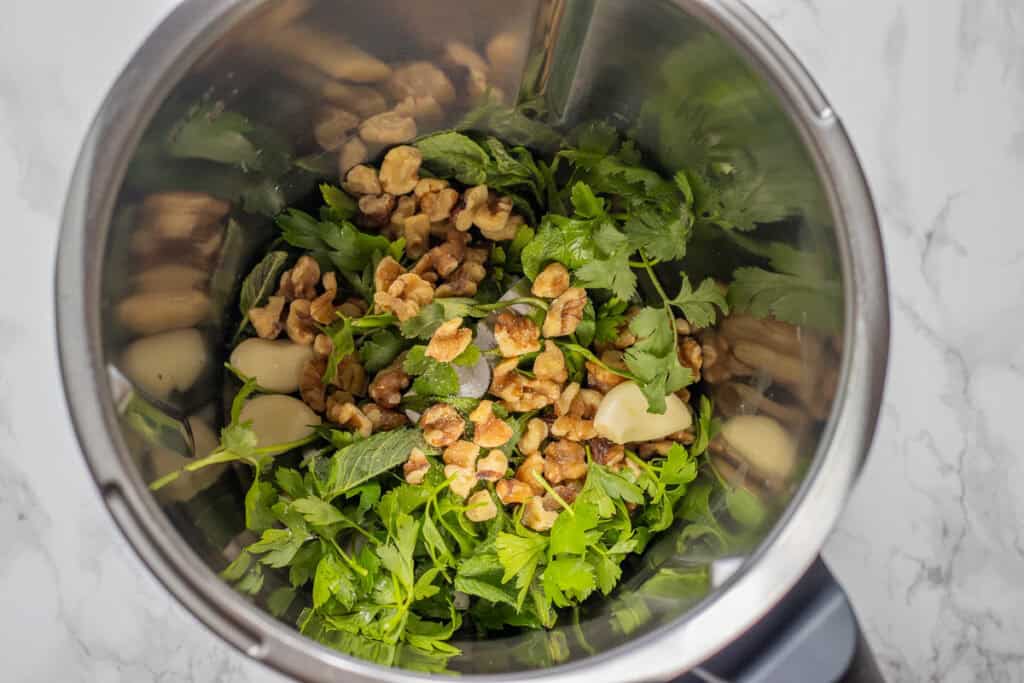
In a food processor, combine the walnuts, garlic, and fresh herbs. Pulse until a coarse paste forms.
Incorporate the pomegranate molasses and olive oil into the paste. Blend until smooth.
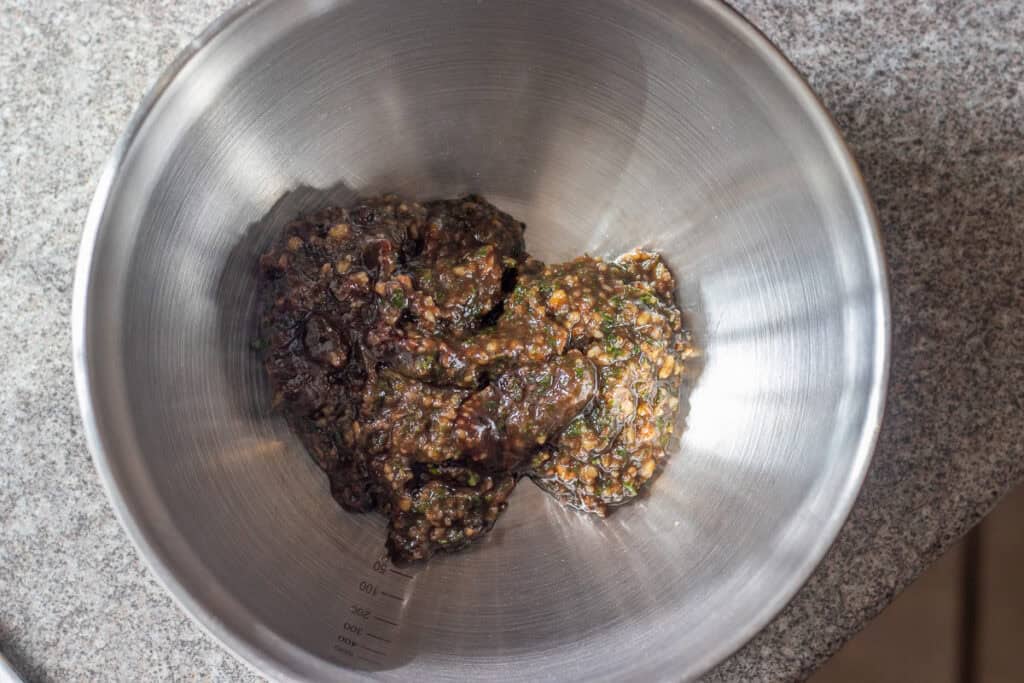
In a large bowl, mix the paste with pitted green olives and 2 tablespoons of pomegranate arils. Ensure all olives are thoroughly coated.
Cover the bowl and refrigerate for at least 2 hours, preferably overnight, to allow flavors to meld.
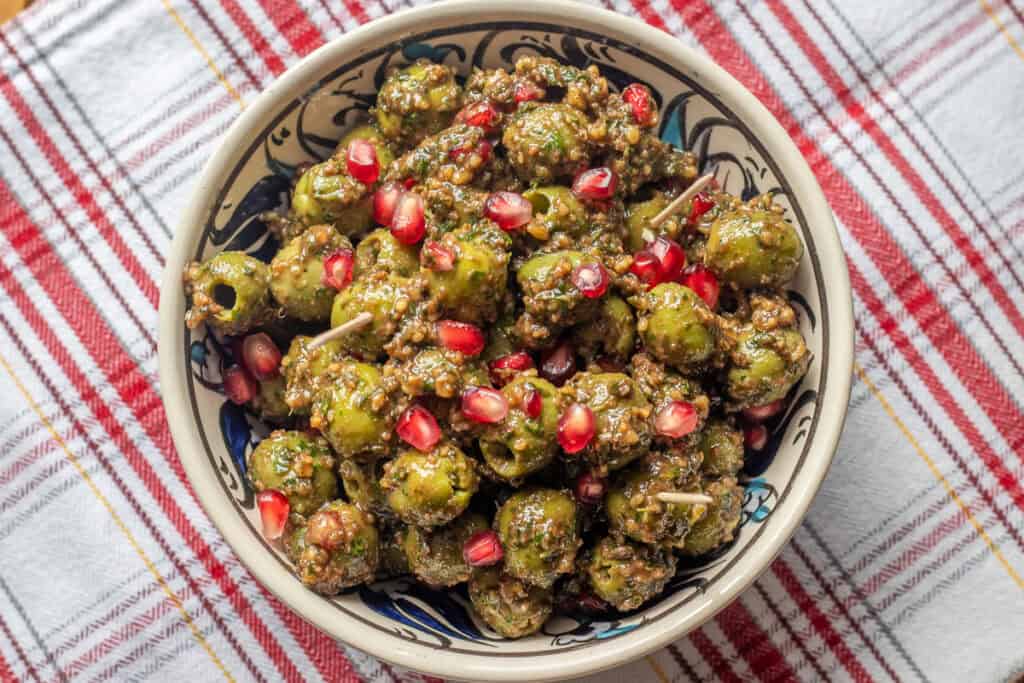
Garnish with pomegranate arils and/or chopped walnuts just before serving.
Recipe Tips From the Chef
- Taste your olives before you start. If they’re too salty, give them a quick rinse; if not salty enough, add a pinch of salt.
- Don't skip the marination time, as this dish really needs time to sit. Don’t rush it.
- Garlic is great, but too much can overpower everything. Start small, then adjust if needed.
- Walnuts can go rancid quickly. Make sure they’re fresh for the best flavor. I lightly toast them to bring out their natural oils and deepen the taste.
- Use a glass jar for storage. It helps keep the flavor more intact than plastic, and it looks nice too if you're serving straight from the fridge.
Common Mistakes to Avoid
- Adding wet olives. Drain them properly, because water left on them makes the whole jar go moldy. This is the mistake Iranian cooks warn about most.
- Using old walnuts. Stale ones turn the whole batch bitter and there is no fixing it.
- Buying the wrong pomegranate molasses. It should be sweet and sour, not sharply sour on its own.
- Eating it straight away. Give it a day in the fridge.
- Following the molasses quantity to the letter. Brands vary a lot in sourness, so taste as you go.
Serving Suggestions
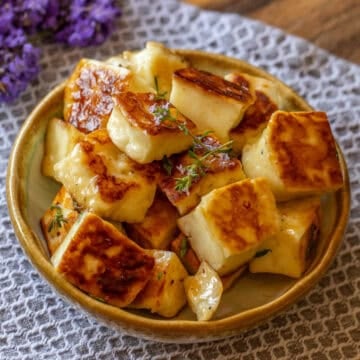
Zeytoon Parvardeh is super flexible when it comes to serving. You can spoon it into a small bowl as part of a mezze spread alongside Fried Halloumi, add it to salads, or serve it as a side with rice dishes like Hasweh - Lebanese Ground Beef and Rice or Zereshk Polo.
It works well as a no-fuss appetizer before a bigger meal or something to nibble on while chatting over tea or drinks. If you're putting together a snack board, it makes a great contrast to creamy cheeses, crackers, nuts, and dried fruit.
Variations
- Gilani cooks often use sour plum paste, rob-e aloocheh, in place of some or all of the pomegranate molasses. It is sharper and less sweet.
- A tablespoon of grated onion is standard in a lot of northern Iranian kitchens.
- Add a pinch of golpar, Persian hogweed, if you can find it. Most Iranian recipes list it as optional.
- Fresh pomegranate juice loosens the paste and turns it pink. Useful if your molasses is very thick.
- Mazandaran uses different local herbs again, so treat the herb mix as flexible.
Storage and Shelf Life
This dish stores really well, which is one of the best parts. Once it’s made, just pop it into a sealed container and keep it in the fridge. It stays fresh for about 7 to 10 days, and some say it even gets better after a day or two as the flavors have more time to mix.
It does freeze. Iranian cooks pack it into small single portion tubs and freeze it, which is worth doing if you have made a big batch. Use a clean spoon every time you take some out of the jar, and keep the lid on tight.
Recipe FAQs
Green olives are firmer and sharper, which is what balances the sweet and sour paste. Black olives go soft and the flavor turns muddy, so use green if you can.
Yes. Chop the walnuts, garlic and herbs as finely as you can, or pound them in a mortar, which is the traditional way. It only takes longer.
Look for one that is sweet and sour rather than sharply sour, with pomegranate juice as the main ingredient. Brands vary a lot, so add it a spoonful at a time and taste as you go.
Yes, and it is better if you do. Make it the day before and it will have settled by the time you serve it.
Almost always the walnuts. Stale ones turn the whole batch bitter and there is no fixing it once everything is mixed, so taste one before you start.
Golpar is Persian hogweed, a warm citrusy spice used across Iran. Most Iranian recipes list it as optional in this dish, so leave it out if you cannot find it.
Related Recipes
For more delicious traditional Persian recipes to serve with Zeytoon Parvardeh - Persian Marinated Olive, why not try:


Did you make this recipe? Please let me know how it turned out! Leave a comment below and tag @cookingorgeous on Instagram and hashtag it #cookingorgeous.
I hope you enjoy the process of making this delicious Zeytoon Parvardeh - Persian Marinated Olive dish as much as you enjoy eating it! 🙂
Want to Save This Recipe?
Enter your email & I'll send it to your inbox. Plus, get great new recipes from me every week!
By submitting this form, you consent to receive emails from Cooking Gorgeous

Zeytoon Parvardeh - Persian Marinated Olives
Ingredients
- 9 oz pitted green olives (250 grams)
- ⅓ cup crushed walnuts
- 3 cloves garlic
- 1 ½ tablespoon flat parsley leaves (chopped)
- 1 tablespoon fresh mint leaves (chopped)
- 1 tablespoon fresh coriander leaves (chopped)
- 3 tablespoon olive oil
- 2 tablespoon pomegranate molasses
- 2 tablespoon pomegranate arils
- pinch of salt
- ½ tablespoon pomegranate arils (to garnish)
Instructions
- In a food processor, combine the walnuts, garlic, and fresh herbs. Pulse until a coarse paste forms.
- Incorporate the pomegranate molasses and olive oil into the paste. Blend until smooth.
- In a large bowl, mix the paste with pitted green olives and 2 tablespoons of pomegranate arils. Ensure all olives are thoroughly coated.
- Cover the bowl and refrigerate for at least 2 hours, preferably overnight, to allow flavors to meld.
- Garnish with pomegranate arils and/or chopped walnuts just before serving.
Notes
- Buy small, firm, pitted green olives. Cracked ones are easiest, since the pits come out cleanly and the marinade gets inside.
- Taste an olive first. Only rinse them if they are too salty, and drain them properly afterwards. Water left on the olives will make the jar go moldy.
- Use fresh walnuts. Stale ones turn the whole batch bitter and there is no fixing it. I toast mine lightly to bring out the oils.
- Grind the walnuts fine so the marinade becomes a paste that clings to the olives. A coarser grind gives you more texture if you prefer that.
- Walnuts control the color. More walnut makes it paler and milder, more pomegranate molasses makes it darker and sharper.
- Use a sweet and sour pomegranate molasses, not a sharply sour one. Brands vary a lot, so add it gradually and taste as you go.
- If your molasses is very thick, loosen the paste with a spoonful of fresh pomegranate juice.
- Go easy on the garlic. It is raw here, so it gets stronger as the jar sits.
- Give it at least a few hours in the fridge, and a full day if you can. It is much better on day two.
- Swap in sour plum paste for some of the pomegranate molasses, or stir in a tablespoon of grated onion, both common in northern Iran.
- Serve it cold as a starter, with bread, or next to rice and grilled meat, with pomegranate seeds scattered over.
- Keep it in a sealed glass jar in the fridge and use a clean spoon each time. It also freezes well in small tubs.
Charlotte says
We enjoyed Zeytoon Parvardeh for the first time this fall while we were in Vancouver. The tangy, herbaceous appetizer was a real delight and we spoke of it often once we returned home to NC. I was looking at Persian recipes the other day and stumbled across Cookingorgeous.com. I decided to give this recipe a try while we’re were iced in for the weekend. What a wonderful discovery this recipe is! Try it, you’ll love it.
Ayla Clulee says
That makes me so happy to hear, Charlotte!. I love that you tried it again at home, and thanks so much for sharing your experience.
Best wishes
Ayla