
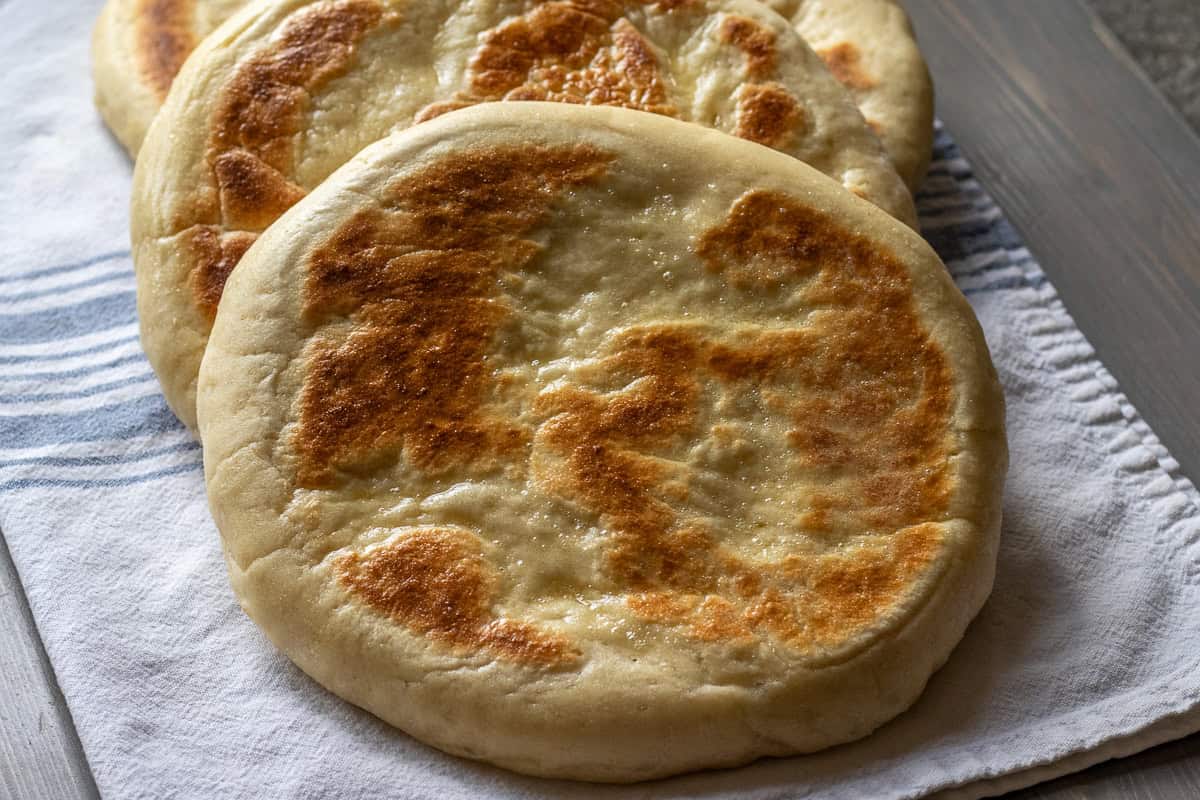
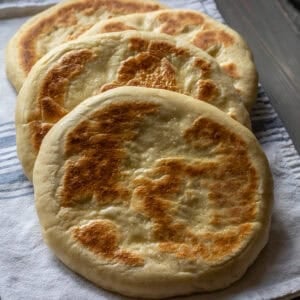
My Bazlama recipe is a simple Turkish flatbread made with yogurt and yeast for a soft, fluffy texture. It cooks in a hot pan in just a few minutes, with golden spots on the outside and a tender middle that is perfect for serving warm.
Jump to:
Bazlama is thick, soft, and slightly chewy, sitting somewhere between a flatbread and a small pan bread. It is especially delicious straight from the skillet, when the outside is lightly golden, and the inside is still warm and fluffy. I like serving it for breakfast with cheese and olives, or alongside dips, soups, grilled meat, and simple mezze dishes.
What Is Bazlama?
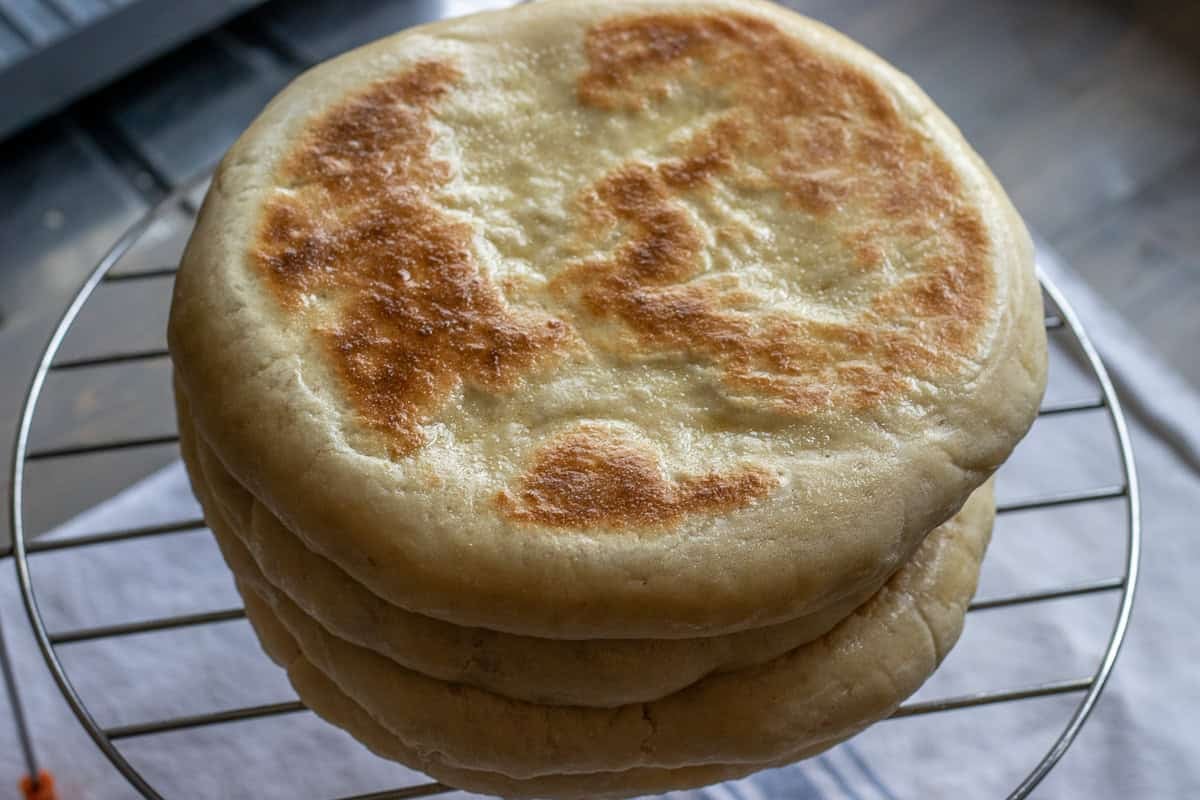
Bazlama is a soft and fluffy Turkish flatbread traditionally cooked on a hot griddle or pan. It is one of the oldest and most loved bread recipes in Turkey, especially in the villages of Anatolia, where it is often cooked on outdoor stoves over a wood fire. At home, you can easily make bazlama in a heavy-based frying pan or skillet, and the result is still deliciously soft, warm, and fluffy.
Bazlama is made with a simple yeasted dough, usually with flour, water, yogurt, salt, and a little sugar to help the yeast activate. The yogurt gives the bread a softer texture and a slight tang, while the yeast helps it rise and become fluffy. Unlike very thin unleavened flatbreads, bazlama has a bit of height and a soft, bread-like crumb.
It is best eaten warm, either plain, brushed with butter, or served with breakfast, dips, soups, stews, grilled meats, and salads. You can also use it for wraps or sandwiches, especially when it is freshly cooked and still flexible.
Why This Recipe Works?
- It uses simple pantry ingredients such as flour, yeast, water, yogurt, sugar, and salt.
- It is easy to make at home without an outdoor stove, bread oven, or special equipment.
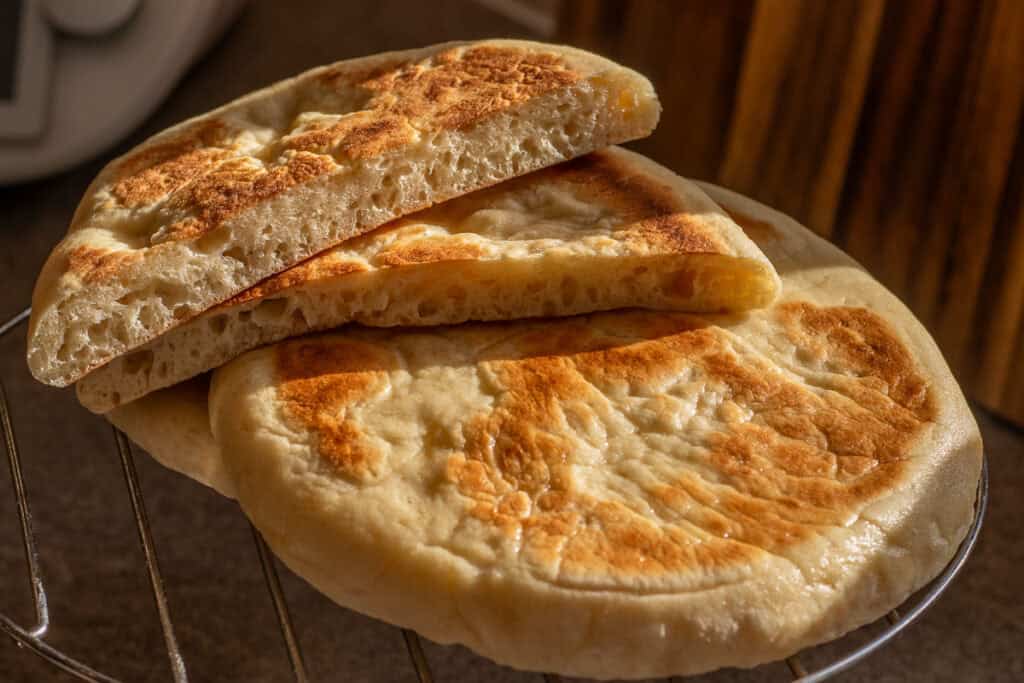
- The yogurt makes the bread soft and fluffy with a lovely tender texture.
- Bazlama is perfect for breakfast, brunch, soups, stews, kebabs, dips, and sandwiches.
- It freezes beautifully. You can keep the leftovers in the freezer for up to 3 months.
- The recipe is beginner-friendly with simple shaping and no complicated bread-making techniques.
Ingredients You'll Need
Please scroll down to the recipe card below for the full ingredients list with measurements, complete recipe method, recipe notes, and nutritional information.
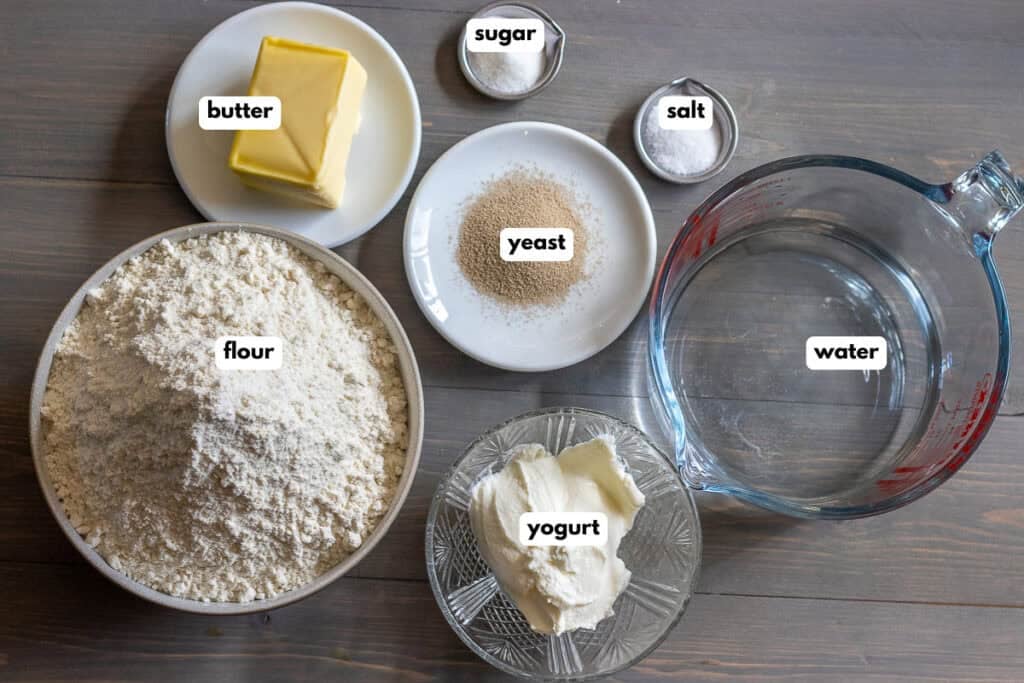
- Strong white flour (bread flour) - has a higher protein content than plain flour, which gives the bazlama a better texture and a slightly chewier bite. You can use all-purpose (plain white) flour if that is what you have, but the bread may be a little less chewy.
- Plain natural yogurt - Use plain natural yogurt or Greek yogurt with no added sugar or flavour. Yogurt helps create a soft, fluffy texture and adds a slight tang to the bread.
- Fast-action dried yeast - I use fast-action dried yeast for this recipe. You can also use fresh yeast if you prefer. For this recipe, use 1 teaspoon of fast-action dried yeast or 2 teaspoons of fresh yeast.
- Sugar - A little sugar helps feed the yeast and encourages the dough to rise. It also helps with flavour and gives the bread a gentle golden colour when cooked.
- Salt - Salt is necessary for the steady and slow rise of the dough to develop the flavor of the bread.
- Butter - It is used for brushing the bazlama after cooking. It keeps the bread soft and adds a lovely flavour, especially when served warm.
How to Make Bazlama (Turkish Flatbread) Recipe
Bazlama is surprisingly easy to make at home. The dough comes together quickly, rises until doubled in size, and is then divided, rolled, rested, and cooked in a hot pan. The most important part is getting the dough texture right. It should be soft and slightly sticky, not dry or stiff.
Prepare the Dough
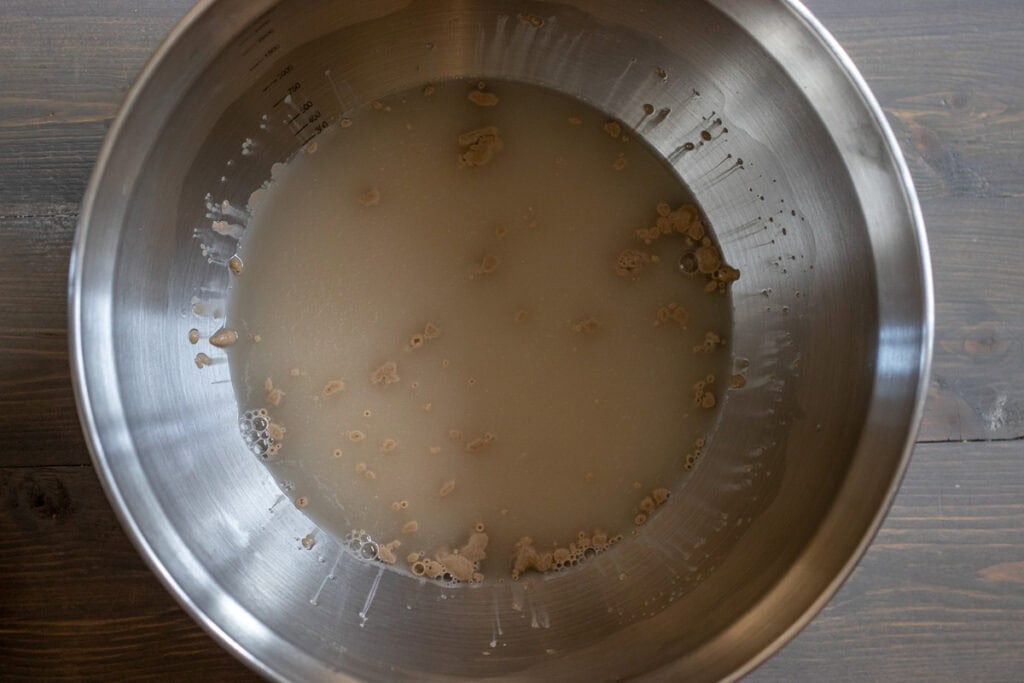
Combine the yeast, sugar, and warm water in a bowl, then stir well. Let the yeast activate for 5-10 minutes until the mixture is foamy and bubbly.
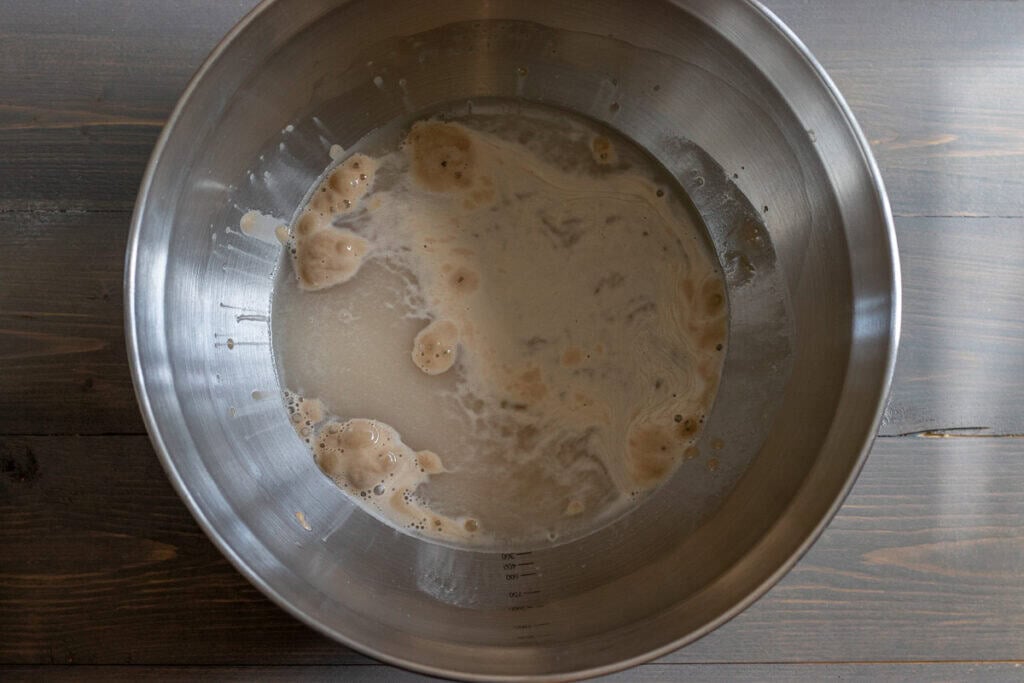
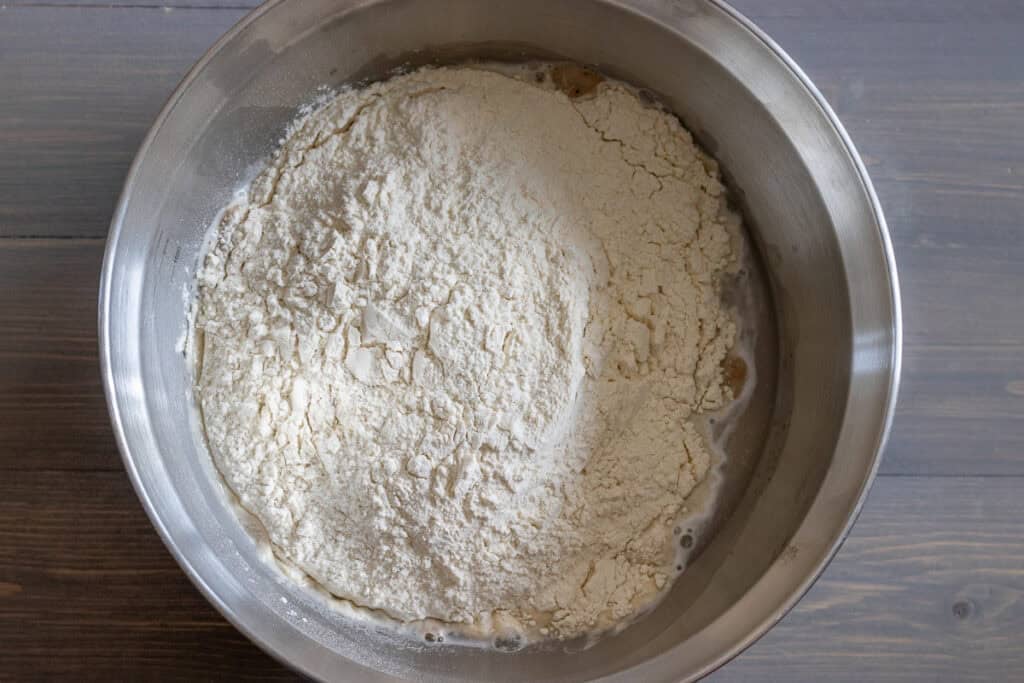
Whisk in the yogurt, and add the flour and salt. Mix all together to form a dough. Knead it for a few minutes until you get a soft and slightly sticky dough.
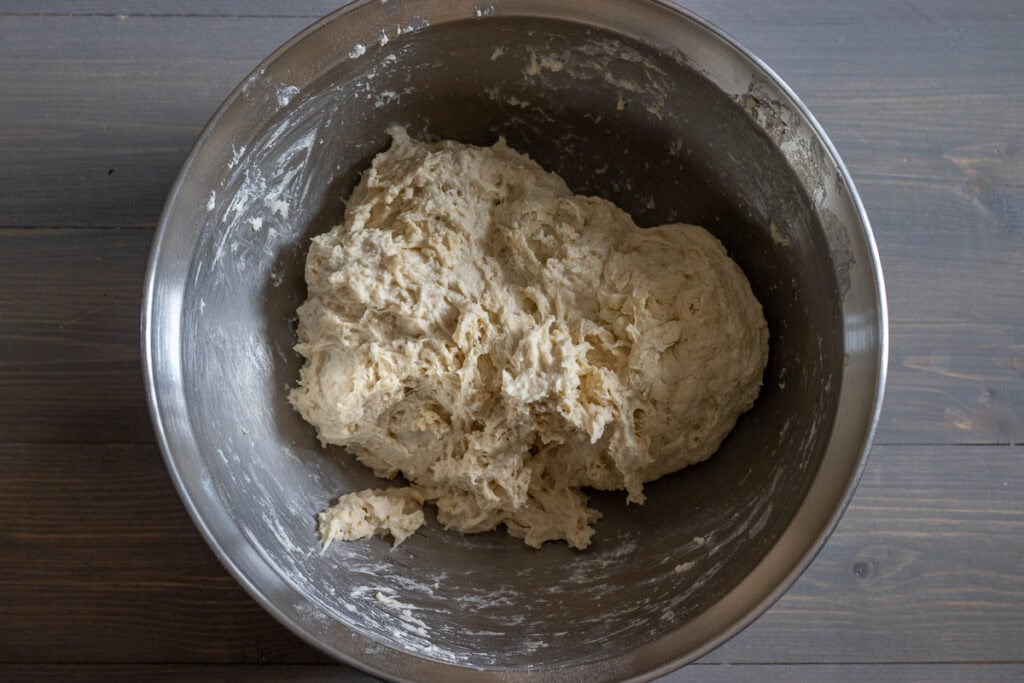
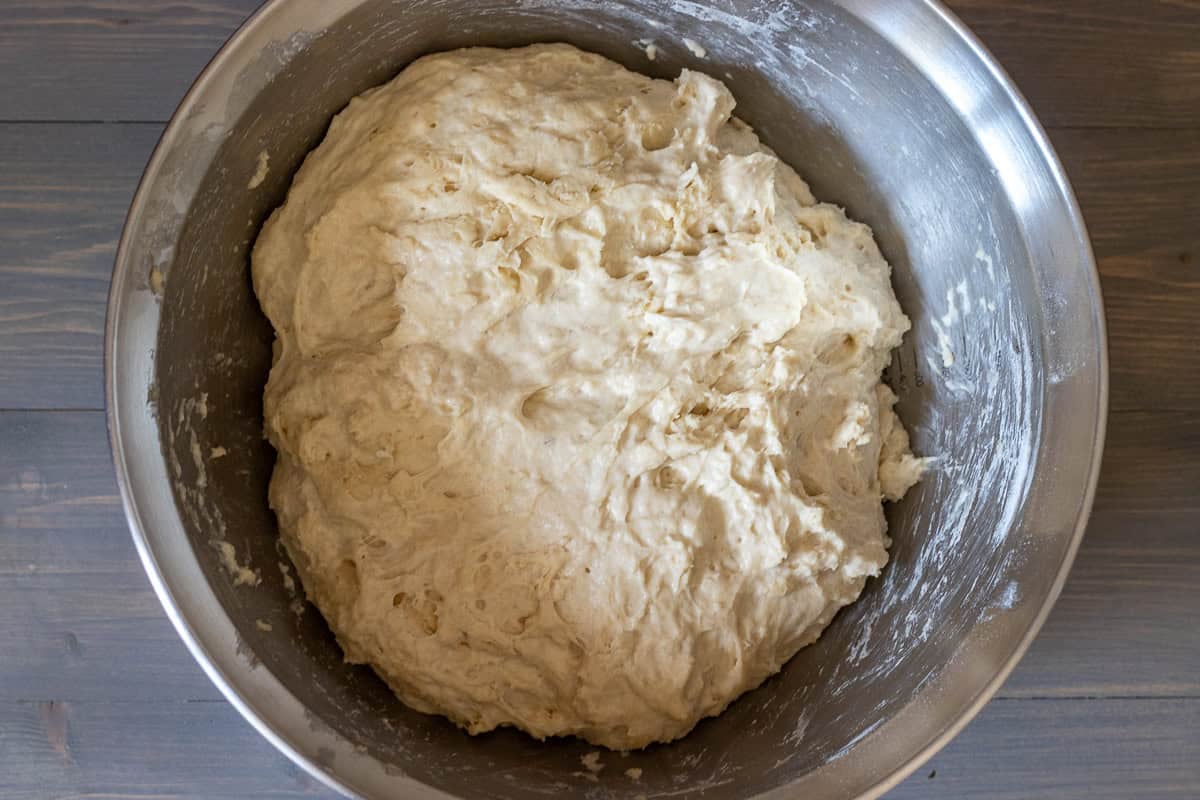
Cover the bowl and let the dough rise until it doubles the size. The rising time depends on the temperature of the room and it might take up to an hour.
Shape the Bazlama
Once the dough has doubled in size, transfer it to a lightly floured surface. Divide it into 4 equal pieces, around 8 ⅓ oz or 235 grams each. I suggest using an electronic kitchen scale for this step if you want evenly sized flatbreads, but you can also divide the dough by eye if you don’t mind slight differences.
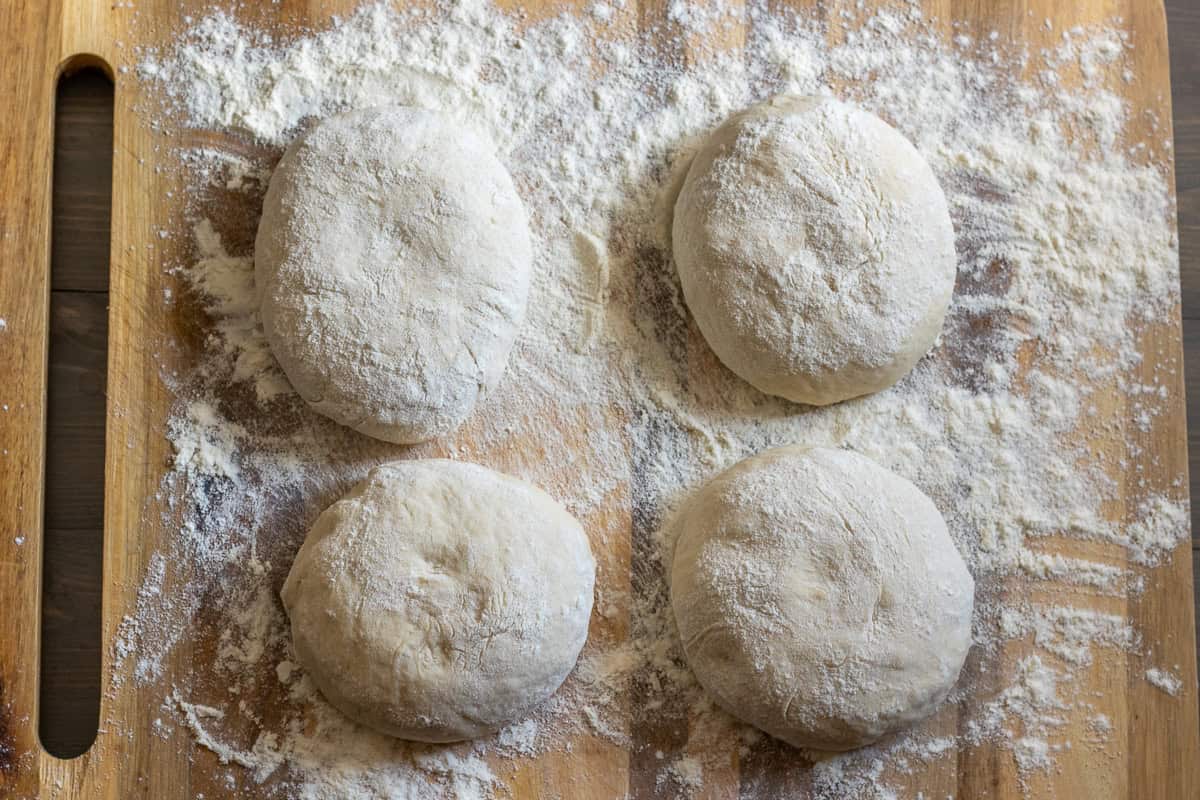
Shape each piece of dough into a ball and place it on a lightly floured surface. Sprinkle a little flour on top, cover with a clean kitchen cloth, and let them rest for 10 minutes. This short rest makes the dough easier to roll and helps stop it from springing back too much.
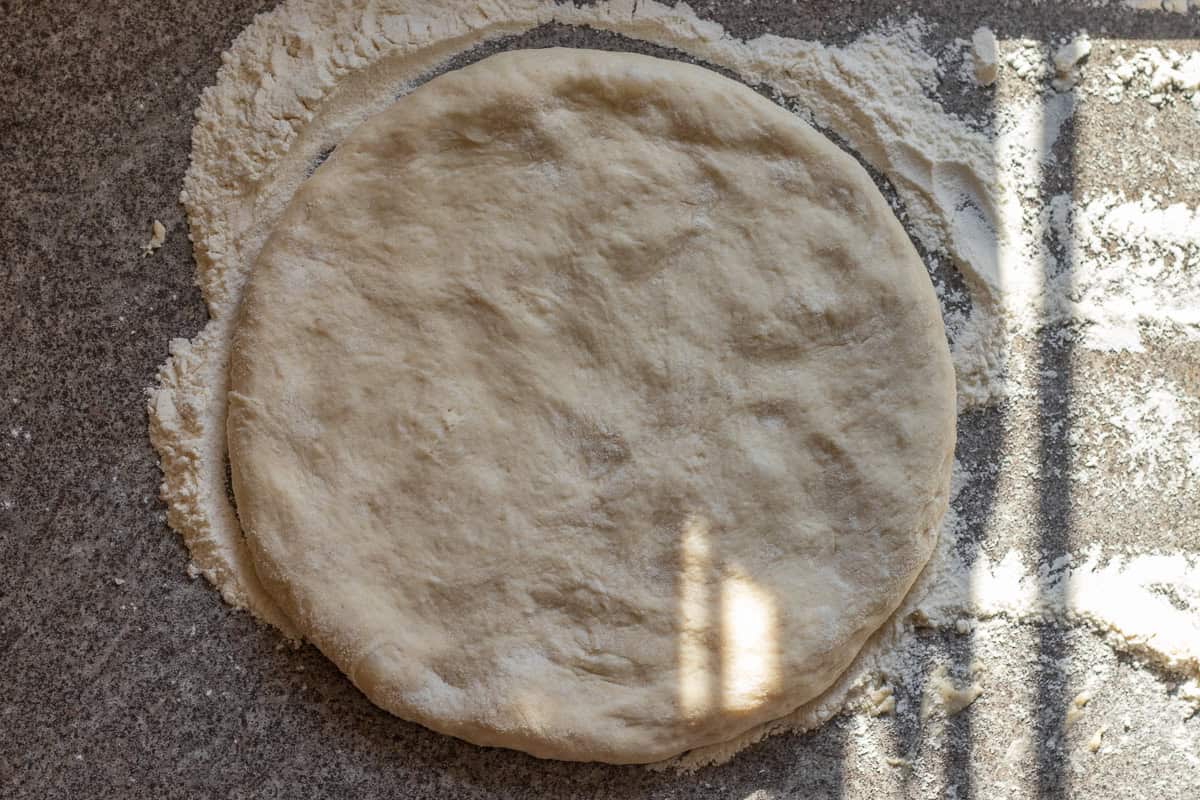
Take one dough ball and gently press it down with your hand. Roll it into a circle about 8 inches or 20 cm wide using a rolling pin or your fingertips. Repeat with the remaining dough balls. Let the rolled dough circles rest for another 10 minutes before cooking. This second rest helps the bazlama cook more evenly and puff up better in the pan.
Cook the Bazlama
Heat a heavy-based frying pan on medium heat. When the pan is hot, place the dough in the pan. Lower the heat and cook the bazlama until bubbles appear on the surface and the bottom of the dough is golden brown. This should take 4 to 5 minutes.
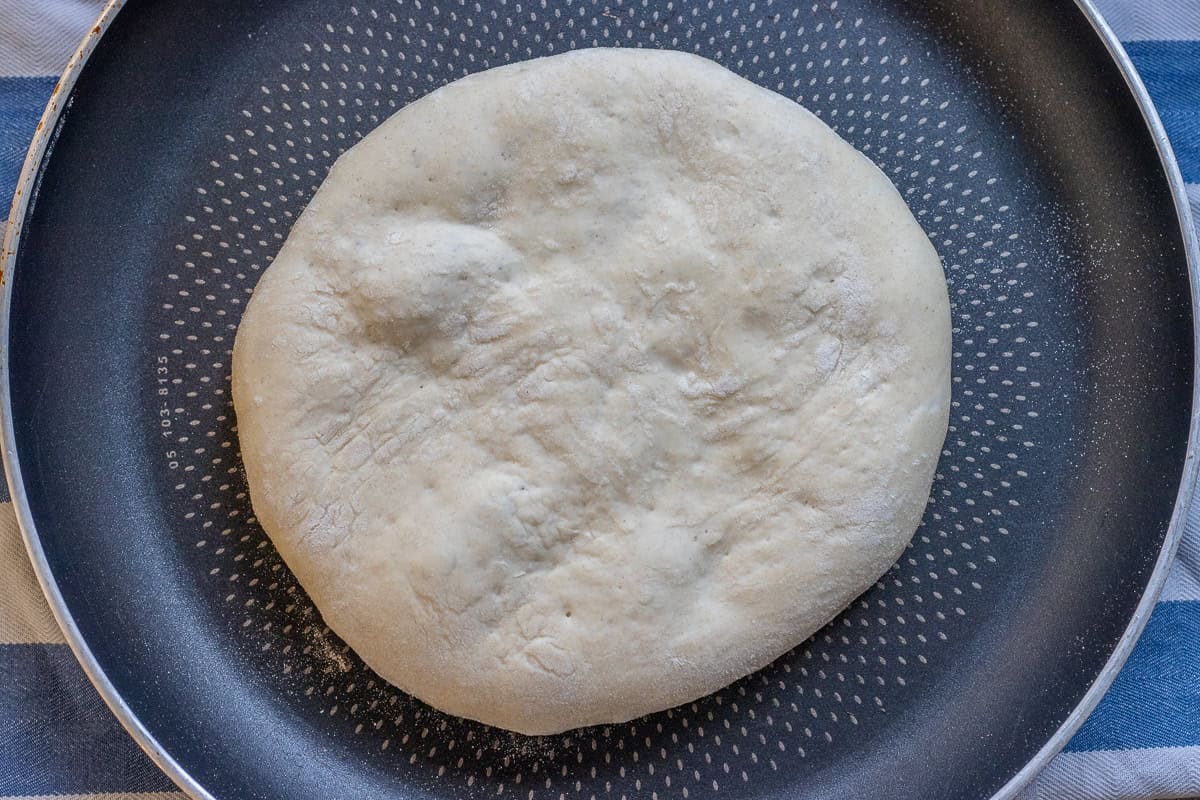
Flip the dough and bake for another 4 to 5 minutes.
Transfer the cooked bazlama to a plate and lightly brush it with butter while still warm. Cover it with a clean kitchen cloth or foil to keep it soft. Repeat with the remaining dough circles and serve them warm.
How Do You Know Bazlama Is Cooked
Bazlama should puff slightly and have golden brown spots on both sides. The inside should be soft and cooked through, not doughy.
If the outside is browning too fast and the middle still feels raw, the pan is too hot. Lower the heat and cook the next one more gently.
If the bread turns dry and pale, the pan is not hot enough. Let it heat a little longer before adding the next flatbread.
Recipe Tips From the Chef
- The most important step for fluffy bazlama is getting the dough consistency right. The dough should be soft and slightly sticky, not dry.
- Let the yeast become foamy and bubbly before adding the rest of the ingredients. This shows that it is active.
- Don’t skip the resting time after shaping the dough balls. It makes the dough easier to roll and helps the flatbreads cook better.
- Use a heavy-based frying pan or skillet for even heat.
- Adjust the heat as needed. If bubbles don’t appear after 45 seconds to 1 minute, increase the heat slightly. If the bottom browns too fast, lower the heat.
- Brush the cooked bazlama with butter while warm for extra flavour and softness.
- Keep the cooked flatbreads covered with a clean kitchen cloth or foil so they stay soft.
Serving Suggestions
The same as Easy Rustic Sourdough Flatbread Recipe, Bazlama is best served warm, and there are so many delicious ways to enjoy it. You can eat it as you would a dinner roll, tear it into pieces for dipping, or use it as a soft flatbread for wraps and sandwiches.
If you want another bread to serve with dips, my Pita Bread Recipe is quick to make and good for scooping.
Bazlama is especially good with soups and stews, or a bowl of Cucumber Tomato Feta Cheese Salad.
They are also perfect as a part of Turkish breakfast, whether you dip them in Shakshuka, have it with some delicious Turkish omelet Kaygana, and Healthy Mediterranean Egg Salad, or just spread homemade Strawberry and Rhubarb Jam on them.
Serve it with Chicken and Dumpling Soup, Ezogelin Corbasi (Ezogelin Soup), Kuzu Incik - Turkish Lamb Shank, or Slow Cooked Lamb Tagine With Apricots for a delicious meal. It also works beautifully with grilled meats such as Turkish Chicken Shish Kebab and Urfa Kebab - Turkish Ground Lamb Kebab.
Storage Instructions
Bazlama is best eaten freshly cooked while it is still warm and soft. If you have leftovers, let them cool completely, then place them in an airtight container or wrap them well. You can keep them in the fridge for up to 2 days.
To freeze bazlama, let the flatbreads cool completely first. Place parchment paper between each piece so they don’t stick together, then store them in a freezer-safe bag or container. They will keep well in the freezer for up to 3 months.
When ready to serve, defrost the bazlama and reheat it in the oven or on a pan. Once warmed through, it will taste almost freshly cooked again, especially if you brush it lightly with butter.
Recipe FAQs
The easiest way to reheat your leftover flatbreads is to place them in a preheated oven to 375° F (190°) wrapped in tin foil, and warm them up for 7-8 minutes.
You can also reheat your bazlama bread using a pan or skillet. Heat the pan/skillet to medium and warm the flatbread for 1 to 2 minutes on each side.
Yes, you can prepare the dough up to 3 days in advance. Simply let it rise and cover it with cling film before putting it in the fridge. When you want to cook, make sure you bring the dough back to room temperature before shaping and cooking.
Bazlama may not turn out fluffy if the dough is too dry, the yeast is not active, or the dough has not risen enough. The dough should be soft and slightly sticky before the first rise.
Another common reason is cooking the bread on the wrong heat. If the pan is too hot, the outside browns before the inside has time to puff and cook properly. If the pan is too cool, the bread can become dry and flat. Medium heat with small adjustments usually gives the best result.
Related Recipes
For more easy and delicious homemade bread recipes, why not try:



Did you make this recipe? Please let me know how it turned out! Leave a comment below and tag @cookingorgeous on Instagram and hashtag it #cookingorgeous.
I hope you enjoy the process of making this delicious Bazlama(Turkish Flat Bread) Recipe as much as you enjoy eating it! 🙂
Want to Save This Recipe?
Enter your email & I'll send it to your inbox. Plus, get great new recipes from me every week!
By submitting this form, you consent to receive emails from Cooking Gorgeous
Bazlama
Ingredients
- 1 ¼ cups tepid water (300 ml/10 fl oz)
- 1 teaspoon sugar
- 1 teaspoon fast action dried yeast (¼ oz/7g pack) (or ⅓ oz/10 grams of fresh yeast)
- ½ cup plain natural yogurt (100 g / 3½ oz)
- 4 ½ cups strong white flour (550 g / 19½ oz)
- ½ tablespoon salt
- butter (for brushing)
Instructions
- Combine the yeast, sugar, and water into a bowl, and stir them well.
- Let the yeast activate for 5-10 minutes until the mixture is foamy and bubbly.
- Whisk in the yogurt, and add the flour and salt. Mix all together to form a dough. Knead it for a few minutes until you get a soft and slightly sticky dough.
- Cover the bowl and let the dough rise until it doubles the size. The rising time depends on the temperature of the room and it might take up to an hour.
- Divide the dough into 4 equal pieces, around 8 ⅓ oz (235 grams) each, and turn them into balls. I suggest using an electronic kitchen scale in this step.
- Place the dough balls on a lightly floured surface, sprinkle some flour on top and let them rest for 10 minutes covered with a clean kitchen cloth.
- Take a dough ball and press it down. Roll it into a circle with a rolling pin about 8" (20 cm) wide.
- Repeat the same with the remaining dough balls. Let the dough circles rest for another 10 minutes before cooking.
- Heat a heavy-based frying pan on medium heat and place the dough in the pan when it is hot.
- Lower the heat and cook until bubbles appear on the surface and the bottom of the dough is golden brown. This should take 4 to 5 minutes. Flip it and cook it for another 4 to 5 minutes.
- Set it aside on a plate and lightly brush it with butter. Cover the cooked bazlama with a clean kitchen cloth or tin foil to keep them warm.
- Repeat the same process with the remaining dough and serve them when they are still warm.
Video
Notes
- The most important step for fluffy bazlama is getting the dough consistency right. The dough should be soft and slightly sticky, not dry.
- Let the yeast become foamy and bubbly before adding the rest of the ingredients. This shows that it is active.
- Don’t skip the resting time after shaping the dough balls. It makes the dough easier to roll and helps the flatbreads cook better.
- Use a heavy-based frying pan or skillet for even heat.
- Adjust the heat as needed. If bubbles don’t appear after 45 seconds to 1 minute, increase the heat slightly. If the bottom browns too fast, lower the heat.
- Brush the cooked bazlama with butter while warm for extra flavour and softness.
- Keep the cooked flatbreads covered with a clean kitchen cloth or foil so they stay soft.
- You can prepare the dough up to 3 days in advance. Simply let it rise and cover it with cling film before putting it in the fridge. When you want to cook, make sure you bring the dough back to room temperature before shaping and cooking.
- The easiest way to reheat your leftover flatbreads is to place them in a preheated oven to 190° (375° F), wrapped in tin foil, and warm them up for 7-8 minutes.


Anna says
I'd tried 3 different recipes for bazlama bread before yours and all three were not a patch on this one. This is excellent, the dough just soft enough and so tasty thanks to yoghurt! I've seen some Turkish YT recipes without yoghurt but that's just pita cooked on the hob in my view. This is so much better - and the bazlamas rise and inflate so gorgeously, you can never get bored of watching!
Ayla Clulee says
Thank you for sharing your feedback Anna!
I'm thrilled you enjoyed it and that it turned out better than the other recipes you've tried. I agree, there's something so satisfying about watching the bread rise and inflate in the pan, right? I hope you continue to enjoy making and eating bazlama bread!
Best wishes
Ayla x
Blair says
What a brilliant recipe. All my family loved it. Delicious. Thank you!
Roslyn says
I made this delicious bread this past weekend for my family cookout. What a wonderful recipe. I have not tried it before and just love the flavour! This is a keeper definitely !! My family loved it too!
Roberta says
I never realised that flat bread could taste this good. First time I made it it was too good to be true, so I made 2 more batches to be sure. Thank you for this wonderful recipe.