
Koledna Pitka is a Bulgarian Pull apart Christmas Bread made with a soft yeast dough, butter, and two kinds of cheese. Families in Bulgaria bake it for Christmas Eve, but it works for any special breakfast or dinner table. The dough needs very little kneading, and the shaping is easier than it looks.

Every family has its own Pitka Bread recipe and way of shaping it. I got this recipe from a Bulgarian friend after she baked it for us at dinner, and it is still the version I make. Serve it warm with soups and stews, or tear off a piece as it is. The leftovers freeze well, so nothing goes to waste.
Jump to:
If you like my Sourdough Rolls or Hokkaido Milk Bread, you will like these. They are all soft buns you tear apart at the table.
If you'd rather watch than read, here is a quick video that walks through the whole process.
We bake bread at home all the time, and you can find more of my recipes on the blog, including Sandwich Bread, Wheat Tortilla Bread, Sourdough Bread, and Banana Nut Bread.
What is Pitka?
Pitka is the everyday Bulgarian word for a small, round bread. Bulgarians bake it all year round, and it can be plain or layered with butter and cheese like this one.
Koledna Pitka means Christmas pitka, and it is the special one baked for Christmas Eve. In some regions people call it bogovitsa.
The Christmas Eve version is usually decorated with shapes made from dough, like wheat, flowers, or animals, and each shape stands for a wish for the new year.
Mine is the layered cheese version, shaped into buns you pull apart at the table. There is a coin tradition that goes with this bread, and I cover that next.

The Christmas Eve Coin Tradition
On Christmas Eve the eldest person at the table breaks the pitka by hand. The first pieces are set aside, one for the house and one for guests, and the rest go around the table.
A coin wrapped in foil is hidden in the dough before baking. Whoever finds it in their piece is said to have the luck for the coming year.
Some families bake in other small tokens as fortunes, and each one stands for a different wish, like health or a good harvest.
If you want to try it with this recipe, wrap a clean coin tightly in foil and press it into one of the buns before the final rise. Tell everyone at the table before they start eating, so nobody bites into it.
Why This Recipe Works
- You only need flour, milk, butter, and two kinds of cheese, all easy to find.
- The dough needs just a few minutes of kneading, so it is an easy bake even if bread usually scares you.
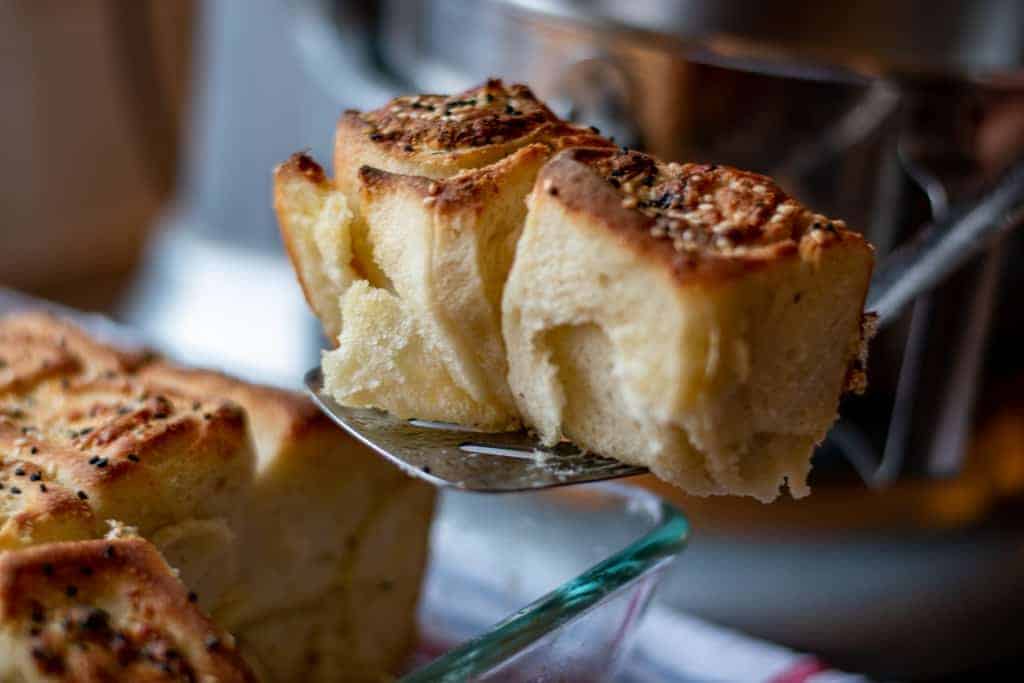
- Rolling the buns like cinnamon buns keeps the middles soft and the tops golden and crispy.
- It looks like a bakery centerpiece on a holiday table, and none of the steps are difficult.
- One batch makes 20 buns, so it feeds a full holiday table.
- The leftovers freeze well, so you can bake ahead for the holidays.
Ingredients You'll Need
Please scroll down to the recipe card below for the full ingredients list with measurements, complete recipe method, recipe notes, and nutritional information.

- All-purpose flour - Known as plain flour in the UK. Regular all-purpose flour is all you need for this dough.
- Milk - I use semi-skimmed milk in this recipe but full-fat milk would work as well. It gives the Pitka bread a soft texture.
- Eggs - They add color, structure, and flavor to the dough. Keep one egg yolk for egg washing the bread before baking them.
- Yeast - I use fast-action dry yeast for this recipe. You don't have to dissolve fast-action yeast first, but the bread turns out fluffier if you dissolve it in warm water and let it turn foamy.
- Sugar - I use granulated sugar. It feeds the yeast and helps the dough rise.
- Salt - It strengthens the dough and adds flavor.
- Feta cheese - I use creamy feta cheese for this recipe. If you can't get creamy feta, mozzarella, halloumi, or cheddar work well, and a mixture of cheeses is fine.
- Kasar cheese - Kasar is a semi-hard yellow cheese that tastes like a milder cheddar, and it is often made from sheep milk. It is a staple in Turkish and Balkan cooking and shows up in all kinds of pastries. You can find it at Turkish or Middle Eastern grocery stores. If you can't get kasar, mozzarella, gouda, or cheddar all work well instead.
- Butter - Make sure the butter is soft enough to spread it on the dough. Butter prevents the dough layers from interacting with each other. When you put the pastry in the oven, the butter in between the layers melts and creates air pockets. You can use hard margarine instead of butter.
How to Make Pitka Bread
Prepare the Dough
Before starting the dough, bring the eggs and butter to room temperature. Warm the milk up gently in a pan then add the sugar and the yeast. Mix them well and wait for 10 minutes until the yeast turns foamy.
Add the eggs, salt, and flour gradually until you get a soft and slightly sticky dough.


Pitka dough doesn’t need much kneading. I usually knead it for a few minutes and start shaping it straight after.

Shape the Pitka Bread
There are many ways of shaping Pitka bread. I prefer shaping them very similarly to cinnamon buns. This way of shaping keeps the inside of the buns soft and fluffy, and the outside still bakes up golden and crispy.
To shape the buns, cut the dough into 2 equal pieces, form them into balls, cover them with a clean kitchen towel, and let them rest for 10 minutes.
On a lightly floured surface, roll out the first ball into a rectangular shape, size of 18" x 10" (45cm x 25cm).


Spread half of the soft butter and then sprinkle half of the cheese on the dough.
Tightly roll the dough from the long side to the long side to turn it into a log. Using a serrated knife, divide the log into 10 equal pieces.


Repeat the same procedure for the other dough ball.
Place the buns on a lightly oiled baking tray, size of 12" x 8" (30cm x 21cm). If you use a smaller one, you will overload it, and the buns in the middle will stay undercooked.


When placing the buns on the baking tray, try to leave some space in between them. They will double the size during the rising and cooking period.
Eggwash them with one egg yolk using a brush.
Proof the Dough
Allow the buns to rise for 45 minutes to 1 hour, depending on the temperature and the humidity of the room. I typically use a preheated oven to raise the dough in cold weather.
If you want to use the oven for rising, place the tray in the warm oven and then leave them in for 30 minutes or until the buns double the size.
Sprinkle some sesame seeds and nigella seeds on.


Bake the Pitka Bread
When the buns double the size, preheat the oven to 180° C - 356° F fan oven, and cook them for about 35 - 40 minutes or until they are golden brown.

Recipe Tips From the Chef
- Make sure the butter is soft enough to spread on the dough easily, just like when making Acma. I take it out of the fridge an hour ahead.
- Warm the milk gently. If it is hot to the touch, it can kill the yeast and the dough will not rise.
- Do not add too much flour. The dough should stay soft and slightly sticky, and extra flour makes the buns dense.
- Leave some space between the buns on the tray. They double in size as they rise and bake.
- Use a tray around 12" x 8" (30 cm x 21 cm). If you overload a smaller one, the buns in the middle stay undercooked.
- In cold weather, let the buns rise in a warm oven for about 30 minutes, or until they double in size.
- Eggwash the buns just before they go into the oven, so the tops bake up deep golden.
- Pitka is at its best warm on the day it is baked. Give leftovers a few minutes in a low oven before serving.
Variations
- Turn the second dough ball into garlic bread. Add some garlic paste or my Wild Garlic Pesto to the soft butter before spreading it on.
- Make a sweet version. Spread the dough with tahini, Nutella, jam, or peanut butter, and sprinkle on some chopped nuts.
- Swap the seeds around. Sesame, nigella, and poppy seeds all work on top.
- Bake a plain fasting version the way many Bulgarian families do for Christmas Eve. Skip the cheese and butter layers and make the dough with oil and water instead of milk and eggs.
What to Serve with Pitka Bread?
Pitka goes with almost anything, and we eat it for breakfast, lunch, or dinner.
It is at its best next to soups and stews. I usually serve the buns with Chicken Sauté, Turkish Okra Stew, Meatball Soup, Ali Nazik, or Dolmas.
The garlic version is great with pasta dishes like Chorizo and Prawn Pasta and Pasta with Green Sauce.
Storage and Make Ahead Instructions
Pitka keeps in an airtight container at room temperature for about 2 days. You can bake it a day ahead for Christmas Eve and warm it in the oven before it goes to the table.
To freeze the buns, let them cool down completely, wrap them individually in plastic wrap or put them in freezer bags, and freeze for up to 3 months. They freeze well, just like my Paskalya Çöreği (Tsoureki) - Easter Bread.
Thaw them at room temperature and warm them in the oven for a few minutes before serving.
Recipe FAQs
Dense pitka usually comes from too much flour, milk that was too hot and killed the yeast, or buns that did not get a full rise. If the dough felt stiff rather than slightly sticky when you were working it, that is usually the reason.
The tray was probably too small. When the buns are packed in tightly, the heat cannot reach the middle ones properly, and they cook slower than the outer ones. Give them more room next time.
Yes, both work in this recipe, and so does fresh yeast. Dissolve it in the warm milk with the sugar and wait until it turns foamy before adding the rest of the ingredients.
Related Recipes
For more delicious savory baked goods why not try:


Did you make this recipe? Please let me know how it turned out! Leave a comment below and tag @cookingorgeous on Instagram and hashtag it #cookingorgeous.
I hope you enjoy the process of making this soft and buttery Pitka Bread as much as you enjoy eating it! 🙂
Want to Save This Recipe?
Enter your email & I'll send it to your inbox. Plus, get great new recipes from me every week!
By submitting this form, you consent to receive emails from Cooking Gorgeous

Pitka Bread
Ingredients
For the Dough
- 3 eggs (1 egg yolk kept for egg wash)
- 1 ⅔ cups lukewarm milk (400 ml)
- 2 ¼ teaspoon fast action dried yeast (7 grams/1 small pack)
- 1 tablespoon salt
- 1 teaspoon sugar
- 6 cups all purpose flour (plus extra for dusting) (750 grams)
For the Cheese Filling
- 1 ½ sticks butter (soft enough for spreading) (150 grams)
- ¾ cup crumbled feta cheese (100 grams)
- 1 cup shredded kashar or cheddar cheese (100 grams)
For the Top
- 1 egg yolk
- Sesame seeds or Nigella seeds
Instructions
Prepare the Dough
- Gently heat the milk until warm then mix it with the sugar and yeast in a large bowl. Leave for 10 mins to activate the yeast.
- Separate 1 egg yolk for the egg wash and add the egg white + 2 whole eggs into the mixture.
- Sift in the flour with the salt and mix all until you have a smooth dough. We are after a soft dough, slightly sticking to your hand. Add more water or more flour until you have the right consistency.
Shape the Pitka Bread
- To shape the buns, cut the dough into 2 equal pieces and form them into balls, cover them with a clean kitchen towel, and let them rest for 10 minutes.
- On a lightly floured surface, roll out the first ball to a large rectangular shape using a rolling pin. (Approximately 18" x 10" - 45 cm x 25 cm).
- Spread half of the soft butter on the dough.
- Mix feta cheese and kashar cheese for filling and sprinkle half of it on the dough.
- Tightly roll the dough from the long side to the long side to turn it into a log.
- Divide the log into 10 equal pieces with a serrated knife.
- Repeat the same procedure for the second dough ball and place the buns in a greased baking tray, size of 12" X 8" (30 cm x 21 cm). When placing the buns in the baking tray, try to leave some space in between them. They will double the size during the rising and cooking period.
Proof the Dough and Bake
- Egg wash the buns, cover the tray with plastic wrap or a damp cloth and leave it to rise in a warm place.
- Preheat the oven to 180° C - 356° F (fan oven).
- Sprinkle on sesame seeds or nigella seeds.
- Cook for 35 to 40 mins or until golden brown.
Video
Notes
- Make sure the butter is soft enough to spread on the dough easily. Take it out of the fridge an hour ahead.
- Warm the milk gently. If it is hot to the touch, it can kill the yeast and the dough will not rise.
- Do not add too much flour. The dough should stay soft and slightly sticky, and extra flour makes the buns dense.
- Leave some space between the buns on the tray. They double in size as they rise and bake.
- Use a tray around 12" x 8" (30 cm x 21 cm). If you overload a smaller one, the buns in the middle stay undercooked.
- In cold weather, let the buns rise in a warm oven for about 30 minutes, or until they double in size.
- For garlic bread, add garlic paste or wild garlic pesto to the butter before spreading it on.
- For a sweet version, spread the dough with tahini, Nutella, jam, or peanut butter and sprinkle on some chopped nuts.
- For the Christmas Eve tradition, wrap a clean coin tightly in foil and press it into one of the buns before the final rise. Tell everyone before they start eating.
- Pitka keeps at room temperature for about 2 days. Freeze cooled buns wrapped individually for up to 3 months, and warm them in the oven before serving.


Gail says
These turned out beautiful. They were perfectly risen. Texture was fluffy with a crisp top.
I will make this beautiful dough again without the cheese, and top the egg wash with sea salt. Can’t wait to try it!
Barbara says
So delicious. I served them with a bowl of homemade soup and got rave reviews from our dinner guests!
Marisa says
I just made two batches of these, and they are amazing. And my house smells so good right now!
Ezra says
That’s a delicious & fool proof recipe! My kids love this bread/buns.
Ayla says
Very satisfied with the result! tastes exactly like home