
Lebanese Falafel is a popular Middle Eastern street food made from dried chickpeas, fresh herbs and onion. These ones come out crisp and golden on the outside and soft and green in the middle, with plenty of fresh herb flavor.

It's vegan, high in protein, and it doesn't cost much to make. Serve them with Mediterranean Hummus Dip, Lebanese Fattoush Salad and warm Laffa Bread, and you’ve got a proper mezze.
Jump to:
People think falafel is hard, but there's nothing difficult in it. The mixture freezes well, so you can keep half for another week.

What is Falafel?
Falafel is a Middle Eastern street food made with soaked dried chickpeas, sometimes with fava beans, along with onion, fresh herbs and spices. You grind everything raw, shape it and fry it, so the chickpeas cook for the first time in the pan.
In Lebanon it is chickpeas, or chickpeas with a smaller amount of fava, and Egyptian taameya is made with fava alone.
It is sold everywhere in Lebanon, stuffed into flatbread with tahini sauce and Pickled Cabbage. I use my Shawarma White Sauce for that. It is one of the few street foods that happens to be vegan. Falafel goes soft within minutes of leaving the oil, so the ones you make at home are better than most you buy.
Why This Recipe Works
- These come out crisp and golden outside and soft and green inside.
- You only need dried chickpeas, a bunch of herbs, an onion and a few spices, and none of it is expensive.
- The recipe is vegan, gluten free and high in protein, and one batch makes about twenty.
- Homemade falafel tastes better than anything you buy, because you decide which oil it fries in and you eat it hot.
- I have written out three cooking methods, so you can deep fry, pan fry or bake them depending on what you want.
- The mixture freezes well, so you can make a batch now and fry the rest another week.
- People think falafel is difficult, and it is not. The only part that needs planning is the overnight soak.
- This is the recipe I make when we have people over, and everyone ends up asking how it is done.
Ingredients You'll Need
Please scroll down to the recipe card below for the full ingredients list with measurements, complete recipe method, recipe notes, and nutritional information.

- Dried chickpeas - Soak them yourself and never use canned or cooked ones. Soaked raw chickpeas hold the mixture together on their own, and cooked ones turn it into a paste that falls apart in the oil. They almost triple in size overnight, and a full 24 hours on the counter beats 12 hours in the fridge.
- Chickpea flour (gram flour) - Most falafel recipes use no flour, because soaked chickpeas bind themselves. Mine has a lot of herbs and lemon juice in it, so the chickpea flour is there to take that up. It absorbs nearly three times as much water as all-purpose flour, so I only need a small amount.
- Onion - I use yellow or white onions for a bit of punch! You can substitute it with the same amount of shallots or green onions. Roughly chop the onion before adding it to the food processor.
- Lemon zest and juice - Lebanese recipes do not traditionally put lemon in the mixture. I add both the zest and the juice, because I like the sharpness and brightness.
- Fresh herbs - I use a generous amount of fresh parsley and coriander (cilantro) leaves for extra flavor and authentic bright green color. Roughly chop them before adding them to the food processor. You can also use mint or dill as an addition to parsley and coriander.
- Green chili - It adds a bit of kick and green color to the falafel patties without overpowering the flavor!
How to Make Lebanese Falafel?
Soak the Chickpeas
This simple step needs to be done a day ahead and is necessary to achieve the best texture and flavor. Add dried chickpeas (garbanzo beans) to a large bowl and add the bicarbonate of soda.
Cover the bowl with plenty of water at room temperature and set it aside.
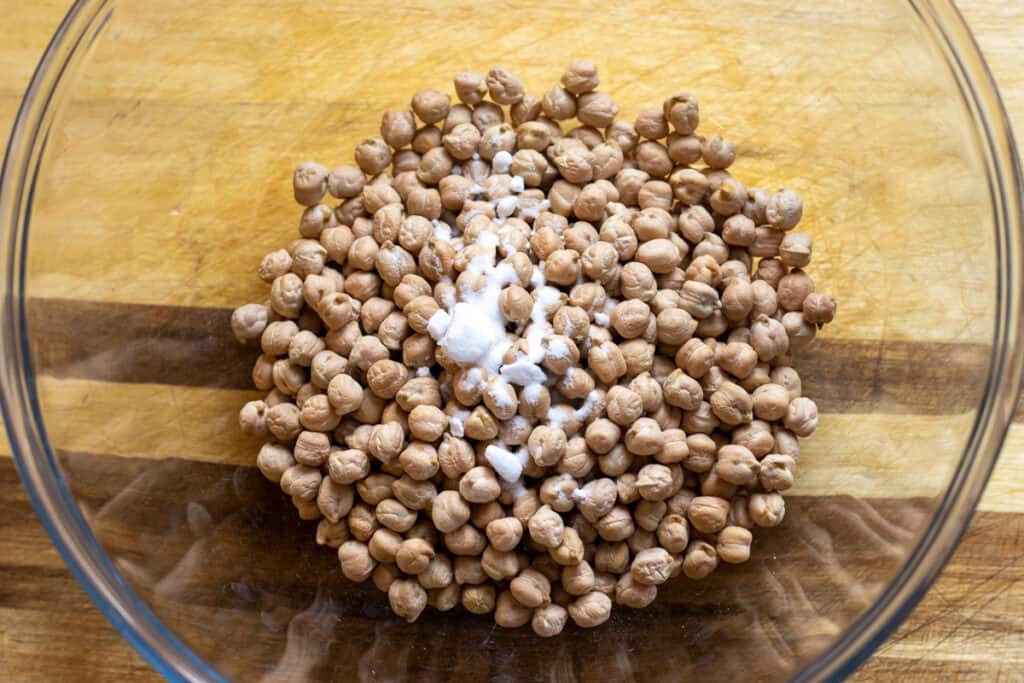
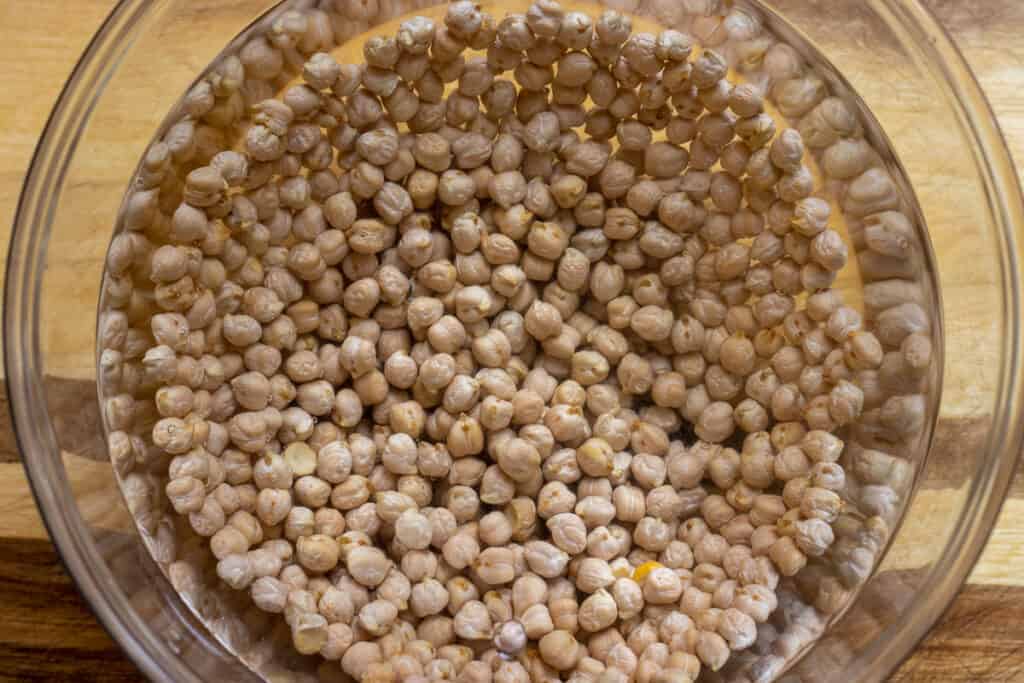
Let the chickpeas rehydrate overnight, or until they triple in size. You can leave them in water for up to 2 days. Simply refresh the water halfway through the process.

When ready to make your falafels, drain the water and give the chickpeas a quick wash under running water.
Prepare the Mixture
Place soaked chickpeas, roughly chopped fresh herbs, onions, green chili, and garlic along with the lemon zest, juice, salt, black pepper, cumin, coriander powder, chickpea flour (gram flour), baking powder, and flaked chili in a bowl of a food processor.

Blitz the mixture using the pulse function until it resembles a coarse sand texture. Transfer the mixture into a bowl and give it a good stir until all are combined.
Cover with a lid or plastic wrap and refrigerate it for a full hour until it's fully chilled.

Shape the Falafels
Once the falafel mixture has been fully chilled, scoop golf ball-sized balls and form them into balls or patties, depending on the cooking method. You can use a falafel mould/scoop if you have one, or just shape them with your hands.
Don't make your patties too flat if you want them nice and fluffy when cooked!

Set the shaped falafels aside and proceed with your preferred cooking method.
Cook the Lebanese Falafels - 4 Different Methods
Pan Fry the Falafels
This is my preferred method for cooking falafel. I added other cooking techniques as well, so feel free to choose your own style.
If you want to pan-fry falafels, shape them into patties. Place a heavy-based pan or a skillet over medium heat and add ½ cup (120 ml) of vegetable oil. When the oil is hot enough, carefully add the falafels without overcrowding the pan.

Fry the falafels for a few minutes on both sides, until golden brown and super crispy on the outside.

Transfer the falafels to a paper towel-lined plate to get rid of excess oil. Serve them immediately when still warm.
Deep Fry the Falafels
The most common and authentic way to cook falafels is by deep frying them in hot oil. Shape your falafels into golf-sized balls or patties for deep frying.
Place a heavy-based pan over medium heat and fill it up with 3" (8 cm) of vegetable, sunflower, or canola oil. When the oil reaches 356° F (180° C), gently drop the falafels into the oil, using a slotted spoon. Do not crowd the pan, because the oil temperature will drop and the falafels will fall apart.
Fry the falafels for 3 to 4 minutes, until golden brown and super crispy on the outside. Remove the falafels with a slotted spoon carefully and place them on a paper towel-lined plate to get rid of excess oil. Serve them immediately when still warm.
Oven Bake the Falafels
Shape your falafels into patties if you want to bake them. Preheat your oven to 425° F (220° C). Line a baking sheet with silicon paper and lightly spray with oil.
Place the falafel patties on baking paper and brush them with a generous amount of oil, preferably olive oil.
Bake the patties until golden brown on both sides, 20 to 25 minutes. Make sure to turn them over halfway through the baking time! Baked falafels come out drier and firmer than fried ones, so I serve those with extra tahini sauce.
Air Fry the Falafels
Shape the mixture into patties for the air fryer, the same as you would for baking.
Set the air fryer to 400° F (205° C) and brush the patties lightly with oil. Cook them for 12 to 15 minutes, turning them over halfway, until they are golden brown and crisp outside.
If you want the air fryer method step by step, with photos, have a look at my Vegan Air Fryer Falafel Recipe.
Recipe Tips From the Chef
- Use dried chickpeas that you soak yourself, never canned or cooked ones. Cooked chickpeas have already used up the starch that holds the mixture together, and your falafels will fall apart in the oil.
- Add a teaspoon of bicarbonate of soda to the soaking water. It softens the chickpeas and helps them set properly when they fry.
- Soak them on the counter rather than in the fridge, and give them a full 24 hours if you have the time.
- Drain the chickpeas and dry them well before they go into the processor. Wet chickpeas make a wet mixture, and a wet mixture breaks up.
- Pulse the mixture to coarse sand and stop there. If you run the processor until it turns into a paste, the falafels come out heavy.
- Chill the mixture for a full hour before you shape it. It firms up and it is much easier to handle.
- Shape them with a spoon or a falafel scoop instead of rolling them tight in your hands. Pressed falafels cannot puff up.
- Shape balls for deep frying and flat patties for pan frying and baking, and do not flatten the patties too much.
- Keep the oil at 356° F (180° C) and fry in small batches. Too many at once drops the temperature and the falafels break up.
- Change your frying oil regularly. Falafel fried in old oil tastes stale, and falafel shops in Lebanon are strict about changing it.
How to Serve Lebanese Falafel?
Falafel is best when served straight after cooking, when they are still warm and crispy.
I usually serve them as a main meal with some green salad, such as Lebanese Cabbage Salad - Malfouf Salad or Greek Cucumber Salad accompanied by some flat bread, such as Bazlama or my Pita Bread Recipe.
You can also serve Lebanese Falafel balls as an appetizer along with Mediterranean Hummus Dip, Spicy Feta Dip, Baba Ganoush Without Tahini, Homemade Labneh (Yogurt Cheese), or Haydari.
Falafel is great as a light lunch when added to salads. Try the leftover falafel patties with my Lebanese Tabbouleh Recipe (Tabouli Salad), Gavurdagi Salad - Turkish Tomato Walnut Salad, or Coban Salad - Çoban Salatası.
You can also make a falafel sandwich with your leftover falafels, my Pickled Cucumbers Recipe - Tursu and Toum - Lebanese Garlic Sauce.
Variations
- Use half chickpeas and half peeled dried fava beans, or swap the chickpeas for fava completely. Fava is sold split and skinned, so it grinds finer and the inside comes out softer and greener. Soak it the same way as the chickpeas.
- Dip one side of each shaped falafel into a plate of untoasted sesame seeds just before frying. The seeds go on the surface only, never into the mixture. This is standard in Egyptian taameya and optional in Lebanon.
- Add a small handful of fresh mint along with the parsley and coriander. It is common in Lebanese versions and it lightens the flavor.
- Leave out the green chili and the flaked chili if you are cooking for children, or use two green chilies if you want real heat.
Storage and Make Ahead Instructions
Falafel is at its best straight out of the pan, but leftovers keep in the fridge for up to 5 days in an airtight container. They lose their crisp outside once they cool, so I use cold ones in salads and wraps rather than trying to bring them back.
To reheat them, heat the oven to 350° F (175° C), spread the falafels on a baking sheet with some space between them, and give them 10 to 15 minutes. The exact time depends on how big and how thick they are.
You can get ahead at three different points. The mixture keeps in the fridge for up to 3 days before you shape it, and shaped falafels sit on a lined baking sheet in the fridge for the same length of time.
The uncooked mixture freezes for up to 5 months. Fry or bake shaped falafels straight from frozen and add a few extra minutes, and thaw unshaped mixture overnight in the fridge before you shape it.
If you want to freeze them cooked, part cook them first. Fry them for about half the usual time, until they are set but still pale, then cool them and freeze them.
Finish them in hot oil straight from frozen. They come out crisp outside and soft in the middle, which does not happen if you fully fry them and reheat them later.
Recipe FAQs
Yes. This Lebanese falafel recipe is gluten free and dairy free, because the only flour in it is chickpea flour. Some other recipes use wheat flour as a binder, so check the ingredients if you need a gluten free version.
A falafel mixture that falls apart is usually too wet. Never use canned or cooked chickpeas, drain the soaked ones well and pat them dry, and chill the mixture for a full hour before you shape it. Frying too many at once drops the oil temperature and breaks them up as well.
Egyptian falafel, called taameya, is made with dried fava beans instead of chickpeas. It is usually shaped into flat discs, coated in sesame seeds, and the inside is greener and softer. Lebanese falafel is made with chickpeas, or with chickpeas and a smaller amount of fava, and the inside is firmer. My recipe uses chickpeas only.
There is no separate binder in a traditional falafel. Soaked raw chickpeas hold themselves together, because the starch inside them sets as they fry, and that only works with dried chickpeas you have soaked yourself. I add a small amount of chickpea flour because my mixture has a lot of fresh herbs and lemon juice in it for extra flavor, and the gram flour takes up that extra moisture.
Pulse the mixture to coarse sand instead of grinding it to a paste, because a paste packs down and comes out heavy. Chill it for a full hour before you shape it. Shape it with a spoon rather than rolling it tight in your hands, and fry it at 356 F so the outside sets before the middle dries out.
Related Recipes
For more delicious and healthy vegan recipes why not try:


Did you make this recipe? Please let me know how it turned out! Leave a comment below and tag @cookingorgeous on Instagram and hashtag it #cookingorgeous.
I hope you enjoy the process of making this authentic street food "Falafel" as much as you enjoy eating it! 🙂
Want to Save This Recipe?
Enter your email & I'll send it to your inbox. Plus, get great new recipes from me every week!
By submitting this form, you consent to receive emails from Cooking Gorgeous

Lebanese Falafel Recipe
Ingredients
- 1 cup dried chickpeas (200 g) soaked overnight with the bicarbonate of soda, never canned
- 1 teaspoon bicarbonate of soda for the soaking water
- 1 cup flat-leaf parsley leaves roughly chopped
- 1 cup fresh coriander leaves roughly chopped
- 1 small onion roughly chopped
- 1 green chili
- 3 cloves garlic
- ¼ cup chickpea flour (gram flour) (21 g)
- 1 lemon zested and juiced
- 1 teaspoon cumin powder
- 1 teaspoon salt
- ½ teaspoon flaked chili (pul biber)
- ½ teaspoon coriander powder
- ¼ teaspoon freshly ground black pepper
- ¼ teaspoon baking powder
- ½ cup vegetable, canola or sunflower oil (120 ml) for pan frying, or enough for 3 inches (8 cm) to deep fry
Instructions
Soak the Chickpeas
- Start this a day ahead. Put the dried chickpeas in a large bowl, add the bicarbonate of soda, and cover them with plenty of cold water.
- Leave the bowl at room temperature overnight, until the chickpeas have tripled in size. You can leave them for up to 2 days, changing the water halfway through.
- Drain the chickpeas and rinse them under running water. Dry them well before you grind them.
Prepare the Mixture
- Put the soaked chickpeas, parsley, coriander, onion, green chili and garlic into a food processor, along with the lemon zest and juice, salt, black pepper, cumin, coriander powder, chickpea flour, baking powder and flaked chili.
- Pulse the mixture until it looks like coarse sand. Do not run the processor until it turns into a paste, or the falafels will come out heavy.
- Tip the mixture into a bowl and stir it through. Cover it and chill it in the fridge for at least 1 hour.
Shape the Falafels
- Scoop golf ball sized amounts of the chilled mixture. Shape them into balls for deep frying, or into flat patties for pan frying and baking.
- Use a spoon or a scoop rather than pressing them tight in your hands. Do not flatten the patties too much if you want them fluffy inside.
- Set the shaped falafels aside and carry on with the cooking method you want.
Pan Fry the Falafels
- Shape the mixture into patties for pan frying.
- Put a heavy based pan or a skillet over medium heat and add ½ cup (120 ml) of oil.
- When the oil is hot, add the falafels without crowding the pan.
- Fry them for a few minutes on each side, until they are golden brown and crisp outside.
- Lift them onto a paper towel lined plate to drain, and serve them warm.
Deep Fry the Falafels
- Falafel is deep fried in Lebanon, and this is the method I use most. Shape the mixture into balls or patties.
- Put a heavy based pan over medium heat and fill it with 3 inches (8 cm) of vegetable, canola or sunflower oil.
- When the oil reaches 356° F (180° C), lower the falafels in with a slotted spoon. Do not crowd the pan, because the oil temperature will drop and they will fall apart.
- Fry them for 3 to 4 minutes, until they are golden brown and crisp.
- Lift them out with a slotted spoon onto a paper towel lined plate, and serve them warm.
Oven Bake the Falafels
- Shape the mixture into patties for baking.
- Heat the oven to 425° F (220° C). Line a baking sheet with parchment paper and spray it lightly with oil.
- Put the patties on the paper and brush them generously with oil, preferably olive oil.
- Bake them for 20 to 25 minutes, turning them over halfway, until they are golden on both sides.
- Baked falafels come out drier and firmer than fried ones. I serve those with extra tahini sauce.
Air Fry the Falafels
- Shape the mixture into patties for the air fryer, the same as you would for baking.
- Set the air fryer to 400° F (205° C) and brush the patties lightly with oil.
- Cook them for 12 to 15 minutes, turning them over halfway, until they are golden brown and crisp outside.
Video
Notes
- Use dried chickpeas that you have soaked, never canned or cooked ones. Cooked chickpeas have already used up the starch that binds the mixture, and it will fall apart in the oil.
- Add a teaspoon of bicarbonate of soda to the soaking water. It softens the chickpeas and helps them set properly when they fry.
- Soak the chickpeas at room temperature rather than in the fridge, and give them a full 24 hours if you can.
- Drain and dry the chickpeas well. Wet chickpeas make a wet mixture.
- Pulse to coarse sand, not to a paste. If you grind it to a paste the falafels come out heavy.
- There is a lot of herb and lemon juice in this mixture, and the chickpea flour absorbs it. Chickpea flour takes up nearly three times as much water as all-purpose flour, so you only need a small amount.
- Chill the falafel mixture for at least an hour before you shape it. It makes shaping much easier.
- Shape them with a spoon or a scoop instead of rolling them tight in your hands.
- Do not crowd the pan. Too many at once drops the oil temperature and the falafels break up.
- To make them ahead, fry them for half the time until they are pale and set, then cool and freeze them. Finish them in hot oil straight from frozen.
Archie Velky says
This excellent website truly has all the information I wanted concerning this subject and didn’t know who to ask.
Ayla Clulee says
So glad to be a help! Thank you for your kind words 🙂
Anita says
Excellent recipe. My first time making falafel and it turned out delicious. Thank you for sharing this wonderful recipe. I will be sure to use it again and again.