
Muhallebi (or Mahalabia / Muhallabieh/Mouhalabieh) Dessert is a light, creamy, and delicious milk pudding that's popular throughout Turkey and the Middle East. This popular Muhallebi dessert recipe only requires 5 ingredients and comes together in just 20 minutes.

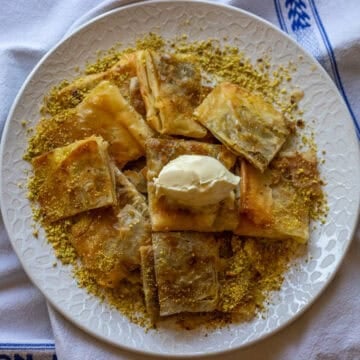
Same as Homemade Turkish Baklava, Qatayef - Middle Eastern Stuffed Pancakes, and Kunefe - Turkish Cheese Dessert, this creamy milk pudding is widely popular in Middle Eastern countries.
Muhallebi is perfect for making ahead and looks impressive enough to serve to your dinner guests.
The History of Muhallebi
The origins of this delightful milk pudding go back to the end of the 7th century. Mahalabia was first introduced to the Arab world by a Persian cook who prepared this dessert for a General named "Muhallab bin Abi Sufra ". The general loved it so much that he named it after himself.
During the Middle Ages, Muhallebi Dessert was made with shredded chicken - a popular Turkish dessert called Tavuk Göğsü - Turkish Chicken Breast Pudding. In the modern world, this traditional milk-based pudding is only available in Turkey.
Tavuk Göğsü is made of the breasts of very young chickens. The pudding doesn't taste like chicken at all but the shredded meat gives it a distinctive texture.
Kazandibi is a variation of the classic tavuk göğsü dessert where a thin layer of the pudding is caramelized before the custard is poured over it and allowed to set.
Mouhalabieh is also very similar to Keskul - Turkish Almond Pudding and Sutlac - Turkish Rice Pudding which is available in muhallebici shops in Turkey.
These shops serve a range of other Turkish desserts and are widely popular around the country, just like Bozahanes which sells Turkish Boza Drink.

Why This Recipe Works?
- This milk pudding of Persian origin is extremely easy to make at home with a handful of ingredients.
- Muhallebi takes only 20 minutes to make and is extremely delicious!
- You can double the amount of the ingredients if you want to feed a crowd. This Mouhalabieh recipe is enough for 4 large or 5 small portions.
Ingredients You'll Need
Please scroll down to the recipe card below for the full ingredients list with measurements, complete recipe method, recipe notes, and nutritional information.

- Milk - I prefer full-fat milk for milk-based desserts but you can substitute it with semi-skimmed or skimmed milk. If you want a richer texture, you can substitute half of the milk with double cream - heavy cream.
- Thickening agent - I use a mixture of plain flour and wheat starch. You can substitute the wheat starch with corn starch or rice flour.
- Butter - It is optional, use unsalted butter as the salted version would affect the taste of the pudding.
- Flavoring - I use mastic gum but you can substitute it with vanilla paste, rose water, or orange blossom to flavor your Muhallebi! You can buy mastic gum from Middle Eastern shops or online from Amazon.
How to Make Muhallebi (or Mahalabia / Muhallabieh) Dessert?
If using mastic gum, place it in a mortar and pestle with a teaspoon of sugar and turn it into a powder; set it aside. The sugar prevents the mastic from sticking to the mortar and pestle while grinding.

Pour the milk into a heavy-based pan and whisk in the sugar, flour, and starch until there are no lumps.

Place the pan on medium heat and bring the mixture to a boil, while stirring continuously.
When the pudding starts boiling, lower the heat and let it gently simmer for a few minutes until it thickens enough to cover the back of a spoon. Add the mastic gum along with the butter (optional) and continue stirring the pudding frequently to avoid it burning.

Divide the Muhallebi into individual serving bowls and let them cool down to room temperature. Transfer the bowls to the fridge and leave them to set for at least 4 hours, ideally overnight.
Garnish with pistachio nuts, berries, pomegranate seeds, or pine nuts before serving.
Top Tips From the Chef
- Keep the Muhallebi - Mahalabia dessert refrigerated, making sure it is covered with a piece of cling film or tin foil to avoid it from absorbing other odors/flavors in the fridge.
- Toast the pistachios in a pan for a few minutes to bring out their flavor. Finely chop them or blitz them in a food processor to turn them into a powder. Add them to the pudding last minute, just before serving to avoid them getting soft.
How to Serve Mahalabia?
Muhallebi is a perfect dessert to serve for family gatherings or special occasions. Similar to Turkish Fig Pudding, it is also perfect for serving during Ramadan as it won't fill heavy on the stomach!
You can garnish and serve your creamy milk pudding in individual bowls/cups after chilling it in the fridge for a couple of hours.
The most popular garnish is the pistachio, as it is widely available in Middle Eastern countries. You can also use other nuts, such as pine nuts, almonds, or walnuts, as well as rose petals, coconut shavings, pomegranate seeds, or berries.
Recipe FAQs
Milk is the main ingredient in this popular Middle Eastern recipe and I’d recommend using whole milk, for optimal texture and flavor. You can use almond milk or coconut milk if you want to make vegan muhallebi. The texture would be less rich and creamy than the original version.
Muhallebi is a light and creamy milk pudding made with whole milk, sugar, a thickening agent, and flavorings. It has a rich and silky texture and it will absorb any flavor you add to it.
Traditionally muhallebi is flavored with a few drops of rose water, giving a mildly perfumed flavor to the dessert. However, you can also use mastic gum, cardamom, vanilla paste, or orange blossom as a flavoring.
The best way to keep the milk pudding is to bring it to room temperature and refrigerate it for up to five days. Make sure the pudding is covered with a cling film or tin foil to avoid it absorbing the smell and the odor from the fridge!
Related Recipes
For more delicious Middle Easter recipes why not try:


Did you make this recipe? Please let me know how it turned out! Leave a comment below and tag @cookingorgeous on Instagram and hashtag it #cookingorgeous.
I hope you enjoy the process of making this light and creamy Middle Eastern milk pudding "Muhallebi" as much as you enjoy eating it! 🙂
Bon appétit! / Afiyet olsun!
Want to Save This Recipe?
Enter your email & I'll send it to your inbox. Plus, get great new recipes from me every week!
By submitting this form, you consent to receive emails from Cooking Gorgeous

Muhallebi - Mahalabia Dessert
Equipment
- 1 kitchen scale
- 1 measuring spoons
- 1 Measuring cups
- 1 Saucepan
Ingredients
- 5 cups full-fat milk (whole milk) (1200 ml)
- 1 cup caster or granulated sugar (200 grams)
- 3 tablespoon plain white flour / all-purpose flour (25 grams)
- ¼ cup wheat or corn starch (35 grams)
- 3 pieces mastic gum (optional)
- 2 teaspoon butter (10 grams)
- berries and ground pistachio (to garnish)
Instructions
- If using mastic gum, place it in a mortar and pestle with a teaspoon of sugar and turn it into a powder, set it aside. The sugar prevents the mastic from sticking to the mortar and pestle while grinding.
- Pour the milk into a heavy-based pan and whisk in the sugar, flour, and starch until there are no lumps.
- Place the pan on medium heat and bring the mixture to a boil, while stirring continuously.
- When the pudding starts boiling, lower the heat and let it gently simmer for a few minutes until it thickens enough to cover the back of a spoon.
- Add the mastic gum and continue stirring the pudding frequently to avoid it burning.
- Divide the Muhallebi into individual serving bowls and let them cool down to room temperature.
- Transfer the bowls to the fridge and leave them to set for at least 4 hours, ideally overnight.
- Garnish with pistachio nuts, berries, pomegranate seeds, or pine nuts before serving.
Notes
- Keep the Muhallebi - Mahalabia dessert refrigerated, making sure it is covered with a piece of cling film or tin foil to avoid it from absorbing other odors/flavors in the fridge.
- This recipe makes 4 large or 5 small portions, you can easily adjust the amount of the ingredients and double the recipe if you want to feed a crowd!
- Toast the pistachios in a pan for a few minutes to bring out their flavor. Finely chop them or blitz them in a food processor to turn them into a powder.
- Add the nuts to the pudding last minute, just before serving to avoid them getting soft.
- Grind the mastic gum in a mortar and pestle with a teaspoon of sugar to prevent it from sticking to the mortar and pestle.
- Use almond milk or coconut milk for the vegan version.
Nutrition
This post uses affiliate links. This means that if you click on them and then buy something, we get a small amount of commission to keep the site running, but it doesn’t cost you anything more.

Lisa says
I just made it this weekend for my guests, my new favorite dessert!! I added a teaspoon of rose water. Thank you so much for this wonderful recipe!