
My Chicken Bone Broth is a restaurant-style chicken stock made with chicken bones, vegetables, herbs, peppercorns, and a slow, gentle simmer. It has a clean, savory flavor that works as a base for soups, stews, sauces, risotto, rice, and bulgur.

In professional kitchens, I made chicken stock to use as a clean, well-flavored base for soups, sauces, risottos, and stews, not as a heavily seasoned broth to drink on its own.
Jump to:
- What is Chicken Bone Broth?
- Chicken Stock vs Chicken Broth vs Bone Broth
- Why This Recipe Works
- Ingredients You'll Need
- Should Chicken Bone Broth Gel?
- How to Make Chicken Bone Broth
- How Long to Simmer Chicken Bone Broth
- How to Keep Chicken Bone Broth Clear
- How to Use Chicken Bone Broth
- Recipe Tips From the Chef
- Storage and Freezing
- Recipe FAQs
- Related Recipes
- Chicken Bone Broth
Good chicken bone broth should taste like chicken, vegetables, and herbs without any one flavor taking over. It is cheaper than buying ready-made stock, easy to freeze, and a great way to use leftover roast chicken bones, wings, carcasses, and vegetable scraps.
What is Chicken Bone Broth?
Chicken bone broth is made by simmering chicken bones with water, vegetables, herbs, and aromatics until the liquid takes on flavor and body from the bones. It is very similar to chicken stock, especially in restaurant cooking, where bones are used for depth and natural gelatin.
The longer the bones simmer, the more flavor and body the liquid develops. Some bone broth recipes cook for many hours, especially if the goal is a sipping broth with a stronger flavor. This recipe is closer to a classic white chicken stock, simmered gently for 3 to 4 hours so it stays clean, useful, and not too strong.
You can use it anywhere you would normally use chicken stock or broth. It is especially good in sauces, soups, stews, rice dishes, risotto, bulgur pilaf, gravies, and casseroles.
Chicken Stock vs Chicken Broth vs Bone Broth
The names can be confusing because people often use them interchangeably. In cooking, the difference usually comes down to what goes into the pot and how the liquid is used.
Chicken stock is usually made with bones, vegetables, herbs, and water. It is often left unsalted or lightly seasoned because it is used as a base for other dishes. When chilled, a good stock may turn slightly jelly-like because of the gelatin from the bones.
Chicken broth is usually lighter and often made with meat as well as vegetables. It is normally seasoned and can be served on its own as a drink or soup base.
Chicken bone broth is also made with bones, but it is often simmered for longer than a standard stock. Many recipes treat it as a sipping broth, while restaurant-style stock is usually kept more neutral so it can be used in cooking. Stock is generally bone-based and broth is usually more meat-based, while bone broth sits close to stock but is often cooked longer.
For this recipe, you can call it chicken bone broth or chicken stock. The method gives you a clean, bone-based liquid with enough body for cooking.
Why This Recipe Works
- The stock has enough chicken flavor to improve a dish, but it stays neutral enough for sauces, soups, rice, risotto, and stews.
- Starting with cold water gives the bones, vegetables, and herbs time to release their flavor as the water heats.
- Wings, carcasses, joints, and connective tissue help the broth set slightly once chilled.
- You can make a large batch from chicken bones, carcasses, wings, and vegetable trimmings, then freeze it in portions for later.
Ingredients You'll Need
Please scroll down to the recipe card below for the full ingredients list with measurements, complete recipe method, recipe notes, and nutritional information.
Best Bones for Making Stock
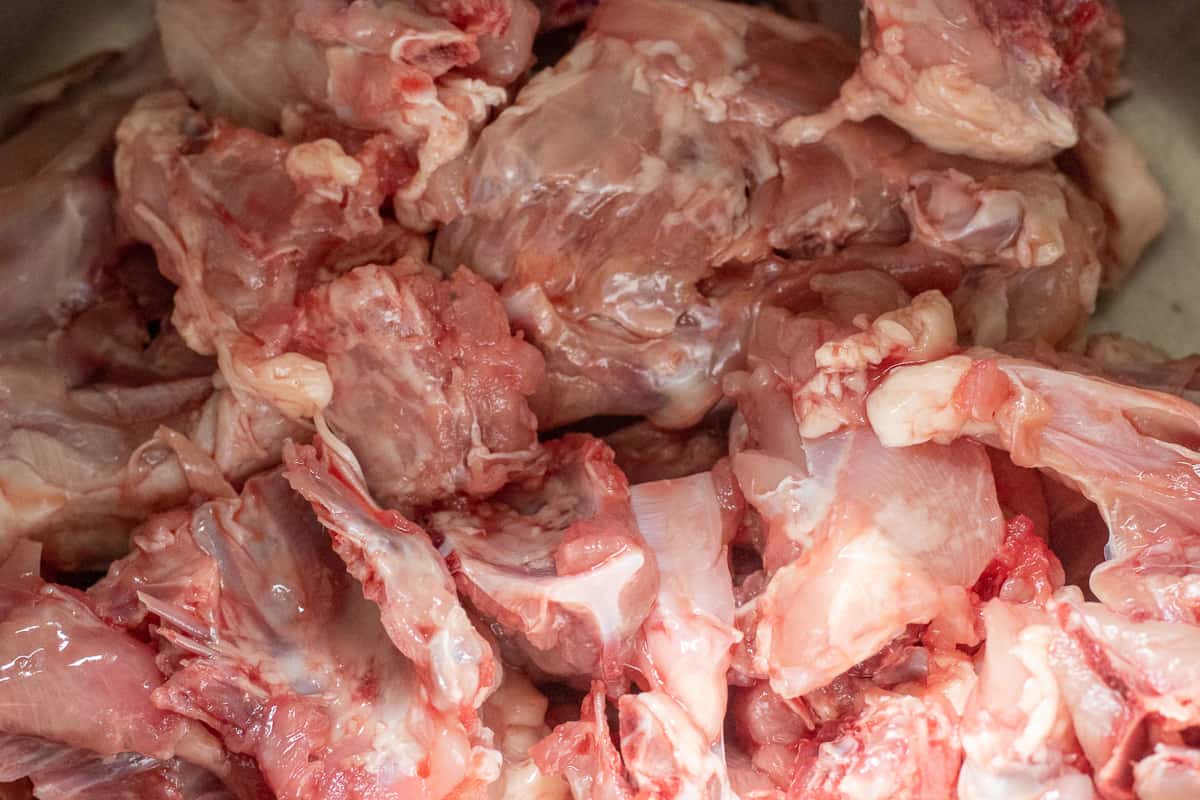
Use chicken carcasses, wings, necks, backs, or a mix of bones. Wings are especially good because they contain skin, cartilage, and connective tissue, which help give the broth body and can help it set slightly once chilled.
Leftover roast chicken carcasses also work well. The flavor may be a little lighter than stock made with raw bones, but it is still great for soups, stews, sauces, rice, and bulgur. If the bones are very bare, add a small piece of chicken meat for more flavor.
Chicken feet are optional, but they are very useful if you want a broth with more gelatin. You do not need them, but adding a few can help the broth gel once it has cooled.
Mirepoix
Mirepoix is the classic mix of onion, carrot, and celery. Cut the vegetables into chunks or rough dice so they release flavor while the stock simmers.
You can also add leek if you have some. Avoid adding too much carrot, as it can make the stock taste sweet.

Herbs and Aromatics
Bay leaves, thyme, parsley stalks, and black peppercorns are enough for a clean restaurant-style chicken stock. Mushroom stems and tomato peels can also be added if you have them, but keep the amounts small so they do not dominate the stock.
Avoid strong herbs such as rosemary or too much sage unless you know you want that flavor in every recipe you make with the broth.
Water
Start with cold water. Use about twice as much water as chicken bones by weight. For 1 kg / 2⅕ lb chicken bones, use about 2 liters / 8 cups water.
Do not add too much water, or the stock will taste weak. Add just enough to cover the bones and vegetables.
Should Chicken Bone Broth Gel?
A good chicken bone broth may turn jelly-like when chilled, but it does not always happen. Gel depends on the bones you use, the water ratio, and how long the broth simmers.
If your broth does not gel, it does not mean it has failed. It can still taste good and work perfectly in soups, sauces, stews, rice, and risotto.
For a better chance of gelling, use wings, feet, necks, backs, or bones with connective tissue. Avoid adding too much water, and simmer the broth gently long enough to extract gelatin from the bones.
How to Make Chicken Bone Broth
Prepare the Bones and Vegetables
Cut the chicken bones into smaller pieces if needed, then place them in a large stockpot.
Roughly chop the onion, carrot, and celery, then add them to the pot with the bones. Add the bay leaves, thyme, black peppercorns, parsley stalks, and mushroom stems if using.
Pour in cold water. The water should cover the bones and vegetables, but the pot should not be overfilled.

Simmer Gently
Place the pot over medium heat and bring it slowly to a gentle boil. As the water heats, foam and scum will rise to the surface.
Skim this off with a ladle or large spoon. This helps keep the stock cleaner and improves the final flavor.
Reduce the heat to very low and let the stock simmer gently for 3 to 4 hours. You should see small bubbles breaking the surface, not a rolling boil.

Do not stir the stock too much while it cooks. Stirring can break the vegetables and bones down into the liquid and make the stock cloudy. If the water level drops too much, add a little more hot water.
Strain, Cool, and Store
Remove the pot from the heat and let it cool for about 10 minutes. This makes it safer to handle.
Strain the stock through a fine sieve into a large bowl or jug. Do not press hard on the solids if you want a clearer stock, as this can push cloudy bits through. Discard the bones and vegetables.

Let the stock cool, then transfer it to glass jars or airtight containers. Chill it in the refrigerator.
As it cools, fat will rise to the top and set into a layer. You can remove it before using the stock, or leave it in place while storing because it helps protect the surface.
How Long to Simmer Chicken Bone Broth
For this restaurant-style chicken bone broth, simmer for 3 to 4 hours. That gives you a clean stock with good flavor and enough body for cooking.
Some bone broth recipes simmer chicken bones for 5 hours or longer, and some go much longer for a stronger sipping broth. That is fine, but it is not always what you want for everyday cooking. A very strong broth can take over sauces, risotto, and delicate soups. Competitor recipes range from about 3 hours for chicken stock to 5 hours or more for chicken bone broth.
If you want a stronger broth for sipping, you can simmer it for longer. Keep the heat very low and add water only if needed.
How to Keep Chicken Bone Broth Clear
For a clearer chicken bone broth, start with cold water, bring it up slowly, skim the foam, and keep the heat low.
Do not boil the stock hard. Boiling breaks fat and impurities into the liquid, which can make the stock cloudy and give it a heavier taste.
Do not press the bones and vegetables when straining. Let the liquid drain naturally through the sieve.
How to Use Chicken Bone Broth
Chicken bone broth is one of the most useful things to keep in the freezer. Use it as a base for soups, stews, sauces, gravies, risotto, rice, bulgur, couscous, casseroles, and braised dishes.
It is also good for cooking grains because it adds more flavor than water. Use it for Hot and Sour Chicken Soup, Braised Beef Cheeks, Orman Kebabi, Kuru Fasulye, Potato Boulangere, Bulgur Rice Pilaf, Creamy Mushroom Sauce for Steak, or any recipe that needs chicken stock.
If you want to sip it as a drink, warm it gently and season it with salt, lemon, herbs, or a little grated ginger.
Recipe Tips From the Chef
- Use bones with connective tissue, such as wings, feet, necks, backs, and joints, if you want the broth to gel.
- Add a little meat if the bones are very bare.
- Start with cold water and bring it up slowly. Use about 2 liters / 8 cups of water for 1 kg / 2⅕ lb of chicken bones.
- Keep the stock at a gentle simmer, not a hard boil.
- Skim the foam from the surface during the first part of cooking.
- Do not add salt if you plan to use the stock for cooking.
- Avoid strong herbs unless you want that flavor in every dish.
- Let the stock cool slightly before straining so it is safer to handle.
- Chill the stock fully before freezing.
Storage and Freezing
Let the chicken bone broth cool, then transfer it to clean jars or airtight containers.
Store it in the refrigerator for up to 5 days. Some sources suggest up to a week, but I prefer 5 days for safety and freshness.
For longer storage, freeze it for up to 3 months. You can freeze it in containers, freezer bags, ice cube trays, or silicone molds.
If freezing in glass jars, leave at least 1 inch / 2½ cm of space at the top because the liquid expands as it freezes. Let the broth cool completely before freezing.
Frozen broth cubes are useful for sauces and small dishes, while larger portions are better for soups, stews, and rice.
Recipe FAQs
It may not have enough connective tissue, or you may have used too much water. Wings, feet, necks, backs, and joints help the broth gel. Even if it does not gel, it can still taste good and work well in cooking.
Cloudiness usually comes from boiling the stock too hard, stirring too much, or pressing the solids when straining. Keep the heat low and strain gently for a clearer result.
You can make a second, lighter stock from the same bones, but it will be much weaker. Use it for cooking grains or as a light soup base.
Related Recipes
More delicious recipes you can use your homemade chicken bone broth:


Did you make this recipe? Please let me know how it turned out! Leave a comment below and tag @cookingorgeous on Instagram and hashtag it #cookingorgeous.
I hope you enjoy the process of making this delicious Homemade Chicken Stock from scratch as much as you enjoy using it in your recipes! 🙂
Want to Save This Recipe?
Enter your email & I'll send it to your inbox. Plus, get great new recipes from me every week!
By submitting this form, you consent to receive emails from Cooking Gorgeous

Chicken Bone Broth
Ingredients
- 2 ⅕ lbs chicken carcass, wings or bones (cut in chunks) (1 kilo)
- 1 large onion (roughly chopped)
- 1 large carrot (roughly chopped)
- 2 celery sticks (roughly chopped)
- 3 bay leaves
- 5 sprigs thyme
- 6 black peppercorns
- 8 cups water
- few parsley stalks (optional)
- few mushroom stems (optional)
Instructions
- Place the chicken bones in a large stockpot.
- Add the onion, carrot, celery, bay leaves, thyme, peppercorns, parsley stalks, and mushroom stems if using.
- Pour in the cold water. Place the pot over medium heat and bring it slowly to a boil.
- Skim off any foam or scum that rises to the surface.
- Reduce the heat to very low and simmer gently for 3 to 4 hours. Do not let it boil hard.
- Remove the pot from the heat and let the broth cool for about 10 minutes.
- Strain through a fine sieve into a large bowl or jug. Do not press hard on the bones and vegetables if you want a clearer broth.
- Pour into clean jars or airtight containers. Let it cool completely, then store in the refrigerator or freezer.
Notes
- Use bones with connective tissue, such as wings, feet, necks, backs, or joints, if you want the broth to gel.
- If the bones are very bare, add a small piece of chicken meat for more flavor.
- Start with cold water and bring it up slowly.
- Use about 8 cups / 2 liters water for 2⅕ lb / 1 kg chicken bones.
- Keep the broth at a gentle simmer. Boiling can make it cloudy and heavy.
- Skim the foam during the first part of cooking for a cleaner broth.
- Do not add salt if you plan to use the broth for sauces, soups, rice, or stews.
- Let the fat set on top as the broth chills. You can remove it before using, or leave it in place while storing.
- Store in the refrigerator for up to 5 days.
- Freeze for up to 3 months. Leave at least 1 inch / 2½ cm of space at the top if freezing in glass jars.


Kristin says
Homemade stock is easy to make and your recipe looks so good!