
Bulgur Rice Pilaf is a Turkish side dish made with bulgur wheat, tomatoes, butter and toasted orzo. In Turkey, it's called bulgur pilavi, and we often serve it instead of rice with stews, kebabs and grilled chicken. It's heartier, with a nutty taste and a fluffy, slightly chewy texture.

This recipe needs just a few pantry staples and one pan, and it's ready in about 30 minutes. It keeps well, so it's easy to make ahead. I think it tastes much better than plain rice.
Jump to:
Why This Recipe Works?
- It takes about 30 minutes, and everything cooks in one pan.
- Bulgur is a whole grain, so this pilaf has far more fiber than white rice.
- It goes with almost any Turkish main, including beans, meatballs and vegetable dishes.
- Swap the butter for olive oil and use vegetable stock to make it vegan.
- With a bowl of yogurt and some pickles, it's filling enough for a main meal.
- You can make it ahead, and the leftovers freeze well.
- I think it's one of the easiest Turkish side dishes you can make.
What Is Bulgur Rice Pilaf
Bulgur rice pilaf is a simple side dish made with bulgur wheat cooked in stock or water, often with tomatoes, onions, butter, olive oil, or tomato paste.
It is very popular in Turkish, Middle Eastern, and Mediterranean cooking. There are many different versions, but tomato bulgur pilaf is one of the most common.
What Is Bulgur Wheat
Bulgur wheat is a whole grain made from cracked wheat that has been parboiled, dried, and crushed into different sizes.
It is widely used in Turkish, Middle Eastern, and Mediterranean recipes such as Kisir (Spicy Turkish Bulgur Salad), Icli Kofte (Turkish Kibbeh), and Lebanese Tabbouleh (Tabouli Salad).
Bulgur has a mild nutty flavor and a pleasant chewy texture when cooked. It comes in different grinds, including fine, medium, coarse, and extra coarse.
Fine bulgur is best for salads, soups, and kofte-style recipes. Coarse or extra coarse bulgur is best for pilaf.
Ingredients You'll Need
Please scroll down to the recipe card below for the full ingredients list with measurements, complete recipe method, recipe notes, and nutritional information.
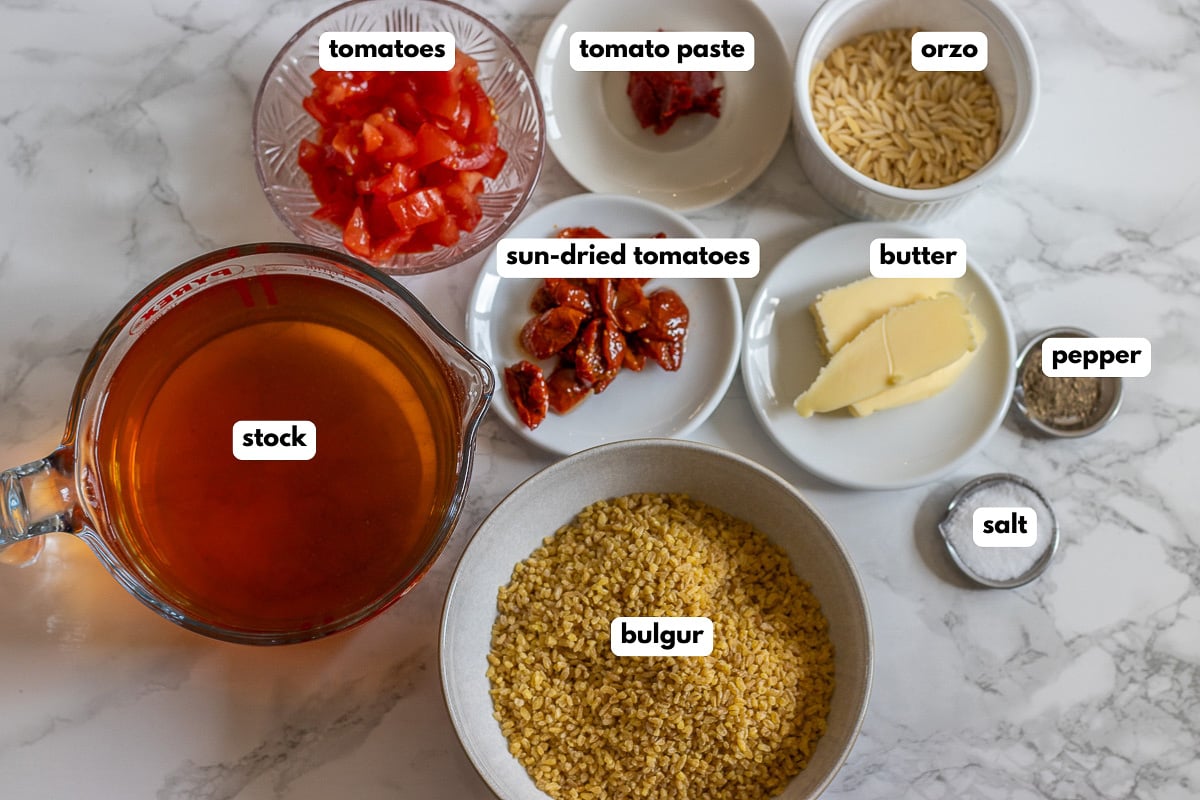
- Bulgur - Use coarse or extra coarse bulgur for the best texture. Fine bulgur is not suitable for this recipe because it can turn soft and mushy.
- Butter - It adds extra flavor and nuttiness to bulgur pilav.
- Tomato paste - It is the staple of Turkish cooking. It adds an umami flavor and a bright red color to the dishes. You can find it in Turkish or Middle Eastern shops or make my Homemade Tomato Paste.
- Sun-dried tomatoes - You can omit and add extra fresh tomatoes. It adds umami flavor to the pilaf.
- Vermicelli or Orzo - Vermicelli or orzo is often used in Turkish pilaf recipes. It adds texture and flavor after being toasted in butter. You can leave it out and use a little extra bulgur if you prefer.
- Stock - I prefer using Chicken Bone Broth or Basic Homemade Vegetable Stock, but you can use bouillon cubes if you don't have any stock on hand. Make sure you don't add too much salt, as ready-made stocks and bouillon cubes contain salt already.
How to Make Turkish Bulgur Rice Pilaf
This easy Turkish-style bulgur rice pilaf is cooked in one pan and comes together quickly. The main things to remember are to use coarse bulgur, add hot stock, and cook it gently.

Wash the Bulgur
Place the bulgur in a fine mesh strainer and rinse it under cold running water. This helps remove any dust and keeps the pilaf cleaner in flavor.
Let it drain well before adding it to the pan. You don’t need to soak the bulgur for this recipe. A quick rinse is enough, as the bulgur will cook in the hot stock.
Toast the Vermicelli or Orzo
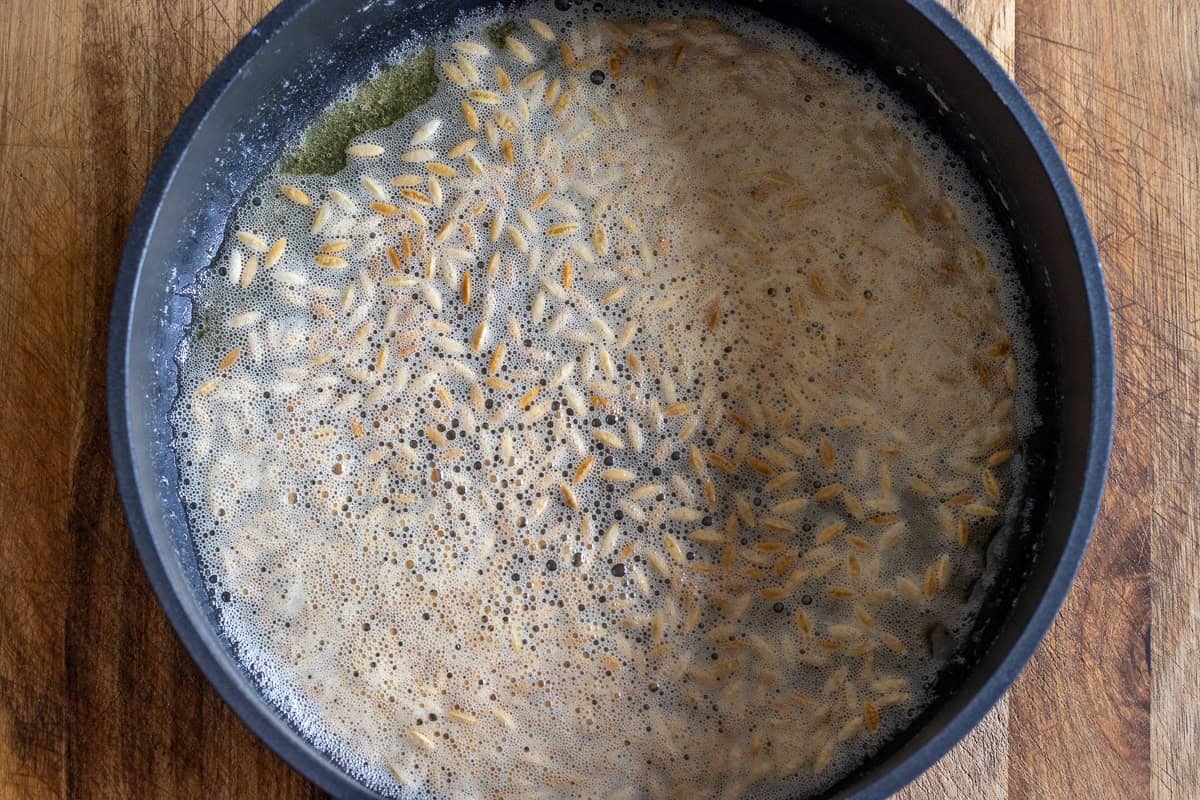
Melt the butter in a pan over medium heat. Add the vermicelli or orzo and fry until golden brown, stirring often. Keep an eye on it because butter and small pasta pieces can brown quickly.
This step adds a nutty flavor to the pilaf. It also gives it a texture closer to my Turkish Rice.
Add the Tomatoes and Bulgur
Add the tomato paste, sun-dried tomatoes, and chopped or grated tomato to the pan. Cook for a few minutes, stirring often, until the tomato paste softens and the tomatoes start to release their juices.
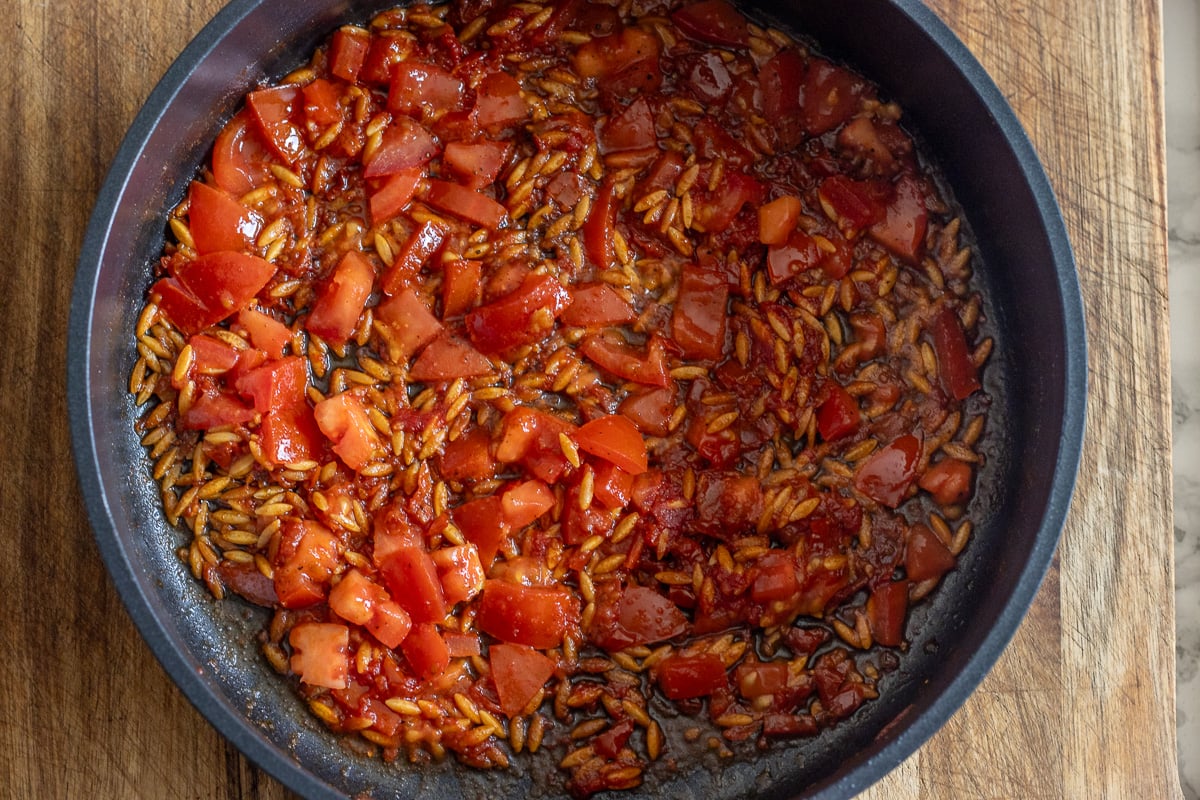
Add the drained bulgur and stir until everything is nicely combined. Let it cook for a couple of minutes so the bulgur absorbs some of the butter and tomato flavor.

Cook the Bulgur Rice Pilaf
Pour in the hot chicken stock or vegetable stock, then add the salt and freshly ground black pepper. Give everything a good stir and put the lid on.
Bring the pan to a boil, then lower the heat and let it simmer gently for about 15 minutes, or until the liquid is absorbed and the bulgur is tender. Try not to stir it too much, as this can make the pilaf heavy.
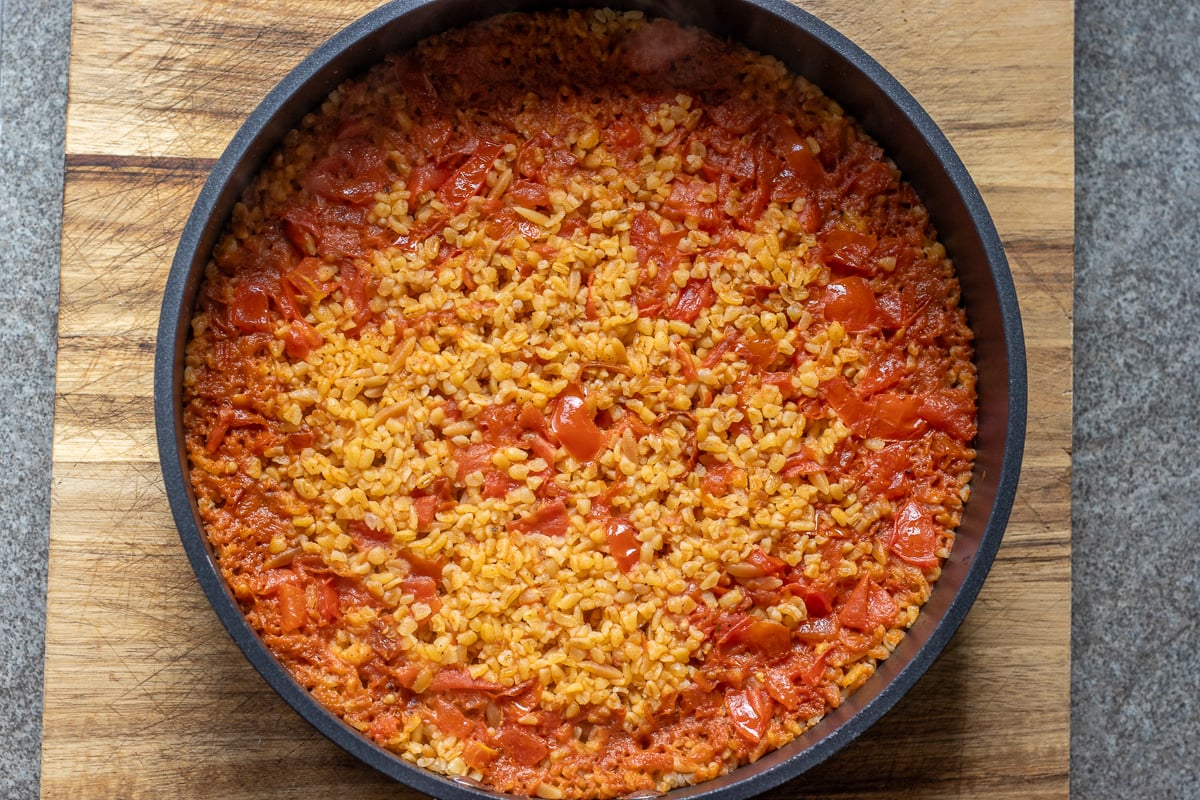
Once the liquid is absorbed, the pilaf is cooked and ready to eat. If you have time, take the pan off the heat, put a paper towel under the lid and leave it to rest for 10 minutes.
Fluff it gently with a fork before serving.
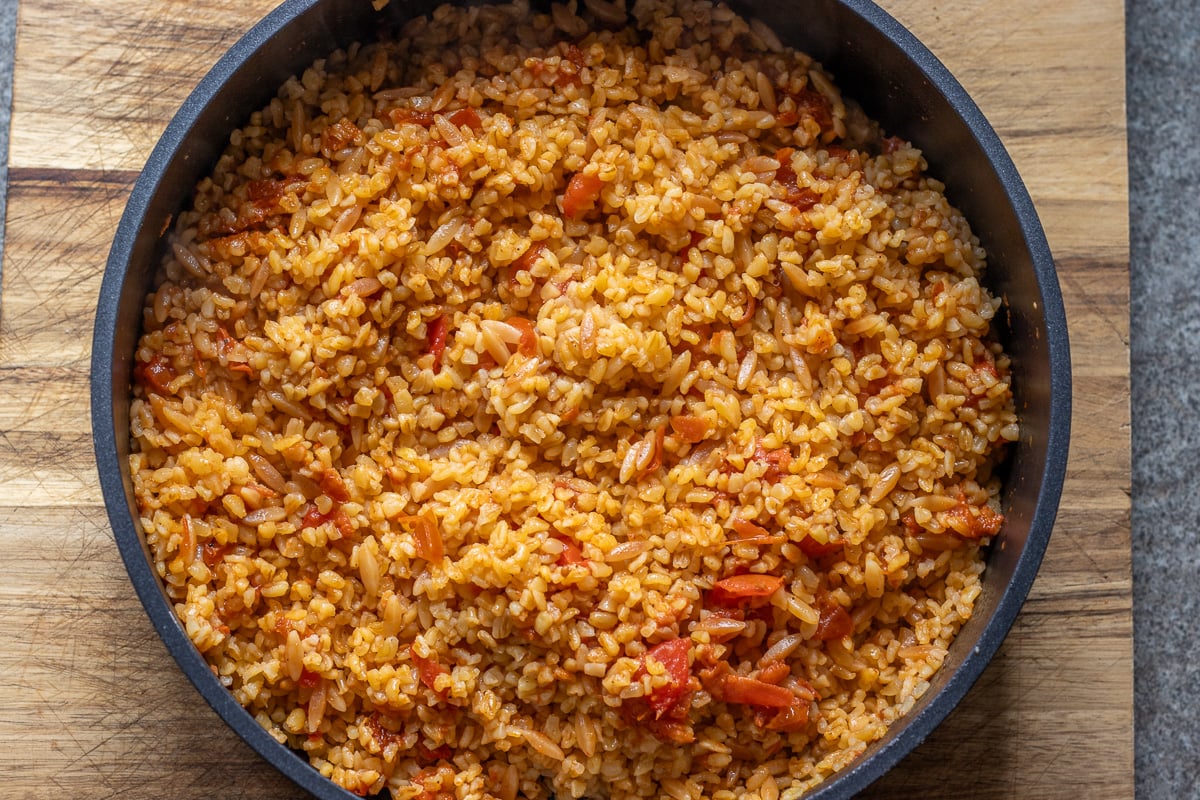
Bulgur to Water Ratio
For this bulgur rice pilaf recipe, I use 1 ⅓ cups (270 g) coarse bulgur to 2 ¼ cups (540 ml) hot stock. That's about 1 ¾ times as much stock as bulgur, which is enough to cook it through and keep it fluffy.
The amount of liquid can vary slightly depending on the type and brand of bulgur. Most recipes for coarse bulgur use 1 ½ to 2 times as much liquid as bulgur.
If the liquid has been absorbed but the bulgur is still firm, add a small splash of hot stock or water and cook for a few more minutes. When your tomatoes are very juicy, use a little less stock.
Always use hot stock when adding it to the pan. Cold stock can slow down the cooking and affect the texture of the pilaf.
Recipe Tips From the Chef
- Make sure the stock is hot before adding it to the bulgur.
- Use coarse or extra coarse bulgur for the best fluffy texture. Don’t use fine bulgur for pilaf, as it can become mushy.
- Rinse the bulgur under cold water before cooking and let it drain well.
- Toast the vermicelli or orzo in butter until golden for extra flavor.
- Use a heavy-bottomed pan, and keep the lid closed as the pilaf simmers.
- The pilaf is ready once the stock is absorbed. If you have time, let it rest for 10 minutes with a paper towel under the lid to catch the steam.
- Fluff the pilaf with a fork rather than stirring it heavily with a spoon.
Serving Suggestions
Serve bulgur rice pilaf with stews, beans and vegetable dishes. Try it with Tas Kebabi, Turkish Lamb Stew with Chickpeas, Kuru Fasulye, Zeytinyagli Taze Fasulye, Stuffed Eggplant or Islim Kebabi.
It's just as good with meat and chicken, like Lamb Shish Kebab, Inegol Kofte, İzmir Köfte, Kadınbudu Köfte - Turkish Meatballs with Rice, Musakhan or Harissa Chicken.
For a simple main meal, serve it with a bowl of Cacik, a Cucumber Tomato Feta Cheese Salad and some Pickled Cucumbers - Tursu. A cold glass of Ayran goes well with it.
I like to press the warm pilaf into a small bowl and turn it out onto the plate, like in the photo below. For more ideas, have a look at my 25 Turkish Side Dishes.

Bulgur Pilaf Variations
This recipe is for tomato bulgur pilaf, but you can change it slightly depending on what you are serving it with. For a vegan version, replace the butter with olive oil and use vegetable stock.
The pilaf will still be delicious and full of flavor. To make it more filling, stir in a can of drained chickpeas with the bulgur.
You can add finely chopped onion or green pepper before adding the tomatoes. Cook them gently in the butter or olive oil until soft, then continue with the recipe. This is a common way to make bulgur pilaf in many Turkish homes.
If you want a spicier version, add a pinch of pul biber, Aleppo pepper, or chili flakes with the tomato paste.
A spoonful of Turkish red pepper paste works well at the same time. Stir in fresh herbs such as parsley or mint before serving, or add a pinch of dried mint.
Storage and Reheating
Leftover bulgur rice pilaf keeps well in the fridge for up to 5 days. Let it cool completely, then place it in an airtight container before refrigerating.
To reheat, warm it gently in a pan over low heat or in the microwave until hot. If it looks a little dry, add a small splash of water or stock before reheating.
You can also freeze bulgur pilaf for up to 3 months. Let it cool completely, then place it in a freezer-safe container. Thaw overnight in the fridge before reheating.
Recipe FAQs
Bulgur rice isn't rice at all. It's the name many people use for bulgur pilaf, because you cook and serve bulgur the same way as rice.
Bulgur has much more fiber than white rice and fewer calories. According to USDA figures, a cup of cooked bulgur has 151 calories, about 8 g of fiber and 6 g of protein. The same amount of cooked white rice has 205 calories, less than 1 g of fiber and 4 g of protein. The final nutrition depends on how much butter or oil you use and what you serve it with.
No. Bulgur is made from wheat, so it contains gluten, and the vermicelli and orzo are wheat pasta. If you need a gluten-free side, quinoa is naturally gluten free.
Yes, you can use water instead of stock, but stock gives the pilaf much better flavor. Chicken stock or vegetable stock both work well. If you use water, add a little extra seasoning or a small amount of olive oil or butter.
Related Recipes
For more recipes made with bulgur, try these:


Did you make this recipe? Please let me know how it turned out! Leave a comment below and tag @cookingorgeous on Instagram and hashtag it #cookingorgeous.
I hope you enjoy the process of making this delicious side dish Bulgur Rice Pilaf (Bulgur Pilavı) as much as you enjoy eating it! 🙂
Want to Save This Recipe?
Enter your email & I'll send it to your inbox. Plus, get great new recipes from me every week!
By submitting this form, you consent to receive emails from Cooking Gorgeous
Bulgur Rice Pilaf
Ingredients
- ⅓ stick butter (40 g)
- 1 ¾ oz vermicelli or orzo (50 g)
- 1 large tomato (grated or finely chopped)
- 1 ¾ oz finely chopped sun-dried tomatoes (50 g)
- ½ tablespoon tomato paste
- 1 ⅓ cups coarse bulgur (270 g)
- 2 ¼ cups chicken stock or vegetable stock (hot) (540 ml)
- 1 teaspoon salt
- ⅓ teaspoon freshly ground black pepper
Instructions
Wash the Bulgur
- Place the bulgur in a fine mesh strainer and rinse it under cold running water. This helps remove any dust and keeps the pilaf cleaner in flavor. Let it drain well before adding it to the pan.
- You don’t need to soak the bulgur for this recipe. A quick rinse is enough, as the bulgur will cook in the hot stock.
Toast the Vermicelli or Orzo
- Melt the butter in a pan over medium heat. Add the vermicelli or orzo and fry until golden brown, stirring often. Keep an eye on it because butter and small pasta pieces can brown quickly.
Add the Tomatoes and Bulgur
- Add the tomato paste, sun-dried tomatoes, and chopped or grated tomato to the pan. Cook for a few minutes, stirring often, until the tomato paste softens and the tomatoes start to release their juices.
- Add the drained bulgur and stir until everything is nicely combined. Let it cook for a couple of minutes so the bulgur absorbs some of the butter and tomato flavor.
Cook the Bulgur Rice Pilaf
- Pour in the hot chicken stock or vegetable stock, then add the salt and freshly ground black pepper. Give everything a good stir and put the lid on.
- Bring the pan to a boil, then lower the heat and let it simmer gently for about 15 minutes, or until the liquid is absorbed and the bulgur is tender. Try not to stir it too much, as this can make the pilaf heavy.
- Once the liquid is absorbed, the pilaf is cooked and ready to eat. If you have time, take the pan off the heat, put a paper towel under the lid and leave it to rest for 10 minutes. Fluff it gently with a fork before serving.
Notes
- Make sure the stock is hot before adding it to the bulgur. If your tomatoes are very juicy, use a little less stock.
- Use coarse or extra coarse bulgur for the best fluffy texture. Don’t use fine bulgur for pilaf, as it can become mushy. Rinse the bulgur under cold water before cooking and let it drain well.
- Toast the vermicelli or orzo in butter until golden for extra flavor.
- Use a heavy-bottomed pan, and keep the lid closed as the pilaf simmers.
- The pilaf is ready once the stock is absorbed. If you have time, let it rest for 10 minutes with a paper towel under the lid, then fluff it with a fork.
- For a vegan version, use olive oil instead of butter, and vegetable stock.
- You can leave out the vermicelli or orzo and use a little extra bulgur. If you don’t have sun-dried tomatoes, use an extra fresh tomato.
- You can use water instead of stock, with a little extra seasoning.
- For a spicier pilaf, add a pinch of pul biber or chili flakes with the tomato paste. A can of drained chickpeas, added with the bulgur, makes it more filling.
- Leftovers keep in the fridge for up to 5 days and in the freezer for up to 3 months. Reheat gently with a splash of water or stock.



Sharon says
This was so delicious and even enjoyed by my fussy kids! Thank you.
Cara says
Such a fantastic bulgur pilaf! I absolutely love that colour from the tomato and all the tips to help make it perfect.
Ruby says
Awesome! This was so delicious that we started eating it without the side dishes!
Christine says
This is a great idea for a side dish! I love bulgur and this looks delicious. Can't wait to try your recipe.
Nick says
Very good and easy to make!
Ben Merriman-Johnson says
I didn’t have all the ingredients however the directions and the finish was superb. Definitely going out to get all the ingredients. For a great tasting meal.
Ayla Clulee says
Hi Ben
I am glad you enjoyed it 🙂
julia says
So delicious and simple to make
Ayla Clulee says
Thank you Julia, it is indeed !