
Irmik Helvasi, or Turkish Semolina Halva, is a simple stovetop dessert made with about five ingredients in 40 minutes. Semolina and pine nuts toast in butter, then soak in a sugar syrup until the mixture turns soft and fragrant.

It's simple enough to make any night of the week, no special occasion needed.
Jump to:
Helva (or Halva) has an important place in Turkish culture. It symbolizes good fortune and is made not only during religious holidays like Ramadan, but also during important life events like moving houses, births, deaths, or marriages.
It is still a tradition to make helva and share it with family and friends on such occasions.

What is Helva?
Helva or halva is a dessert that originates from the Ottomans usually made with semolina, flour, or tahini paste cooked with butter and nuts and then soaked in syrup. This delicious dessert varies from region to region or even from family to family and is a good example of traditional Turkish cuisine.
Every cook has a slightly different way of flavoring their helva and the most common flavorings are vanilla, cinnamon, dried fruits & nuts, honey, and orange zest.
Helva also has a distinct place in Turkish mourning customs. It's traditionally toasted on the day of a death, then again on the seventh, fortieth, and fifty-second days after, and shared with everyone who comes to pay their respects.
Many families trace this back to old Turkic beliefs that the scent of semolina toasting in butter reaches the soul of the person who died, while the helva itself feeds and comforts those left behind.
Why This Recipe Works?
- This delicious semolina halva is full of Mediterranean flavors, very easy to make, and has a great ending to our favorite Turkish meals.
- All you need is five basic ingredients you might already have in hand to make this special dessert.
- Just like Un Helvasi - Turkish Flour Halva, you can serve your Turkish Semolina Halva on every special occasion and at all kinds of dinners.
- Create your version by adding or excluding flavorings such as walnuts, honey, vanilla, coconut milk, lemon or orange zest, and currants.
- It is a crowd-pleaser, this recipe will give you around 6 to 8 portions!
Ingredients You'll Need
Please scroll down to the recipe card below for the full ingredients list with measurements, complete recipe method, recipe notes, and nutritional information.

- Semolina - Semolina is the coarse, purified wheat middlings from durum wheat, the same flour used to make couscous, pasta, and sweet puddings. I use coarse semolina, which can be found in Turkish or Middle Eastern shops. You can also buy it online.
- Butter - Use good quality unsalted butter for the best results. Although you can substitute it with olive oil for a dairy-free / vegan version, butter is the most significant flavoring for this Turkish dessert.
- Milk - You can use low-fat or whole milk. Replace it with water for a dairy-free / vegan version.
- Pine nuts - In Turkey, Irmik helvasi is traditionally made with pine nuts. However, you can use any nuts you prefer such as pistachio nuts or walnuts.
- Sugar - Both superfine sugar and granulated sugar work perfectly for the syrup.
how to make irmik helvasi - semolina halva
In a medium saucepan, combine the milk, water, and sugar. Place the pan on medium heat and stir it occasionally until the sugar dissolves, then remove it from the heat.

Place the butter in a wok or non-stick pan and put it on medium-low heat. When the butter melts, add the pine nuts and sauté for a few minutes until it starts changing color.
Lower the heat, and add the semolina to the pan.
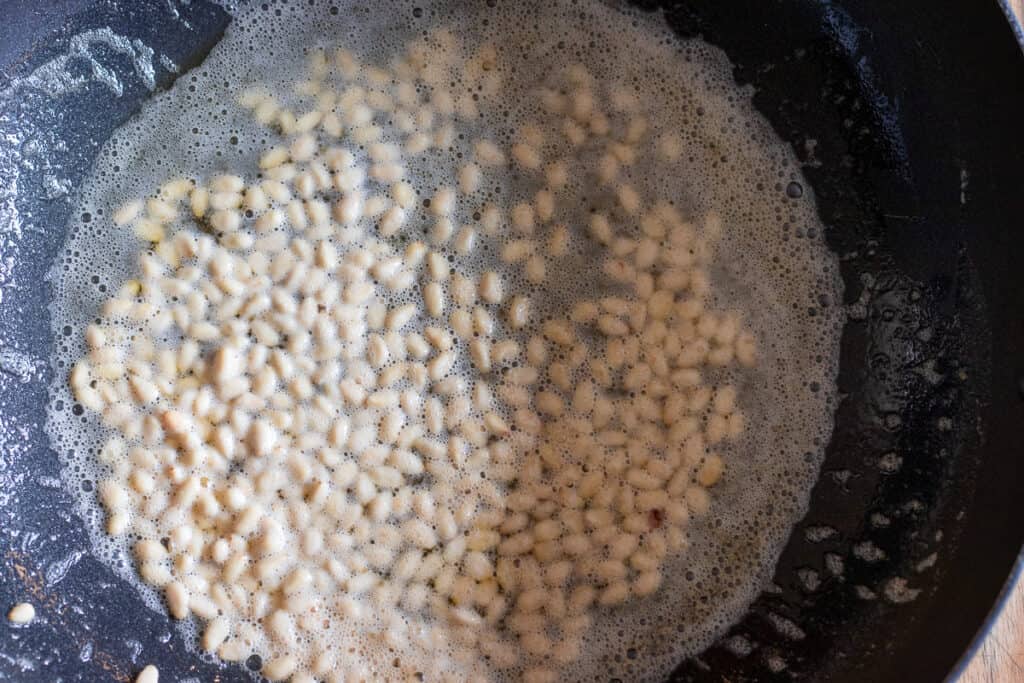

Cook the semolina for approximately 15 minutes, until it is golden brown, stirring occasionally to prevent the mixture from burning.
Allow the semolina to brown and get fragrant without burning it, or else the halva will become bitter.


When you notice the color of the semolina begins to brown, add milk and water and stir.
Cook the halva over low heat until the syrup is absorbed and the helva is thickened, then remove the pan from the heat.


Let the helva rest until all the liquid is absorbed and it's cool enough to handle.
When you're ready to serve it, you can shape your helva into quenelles using two spoons.
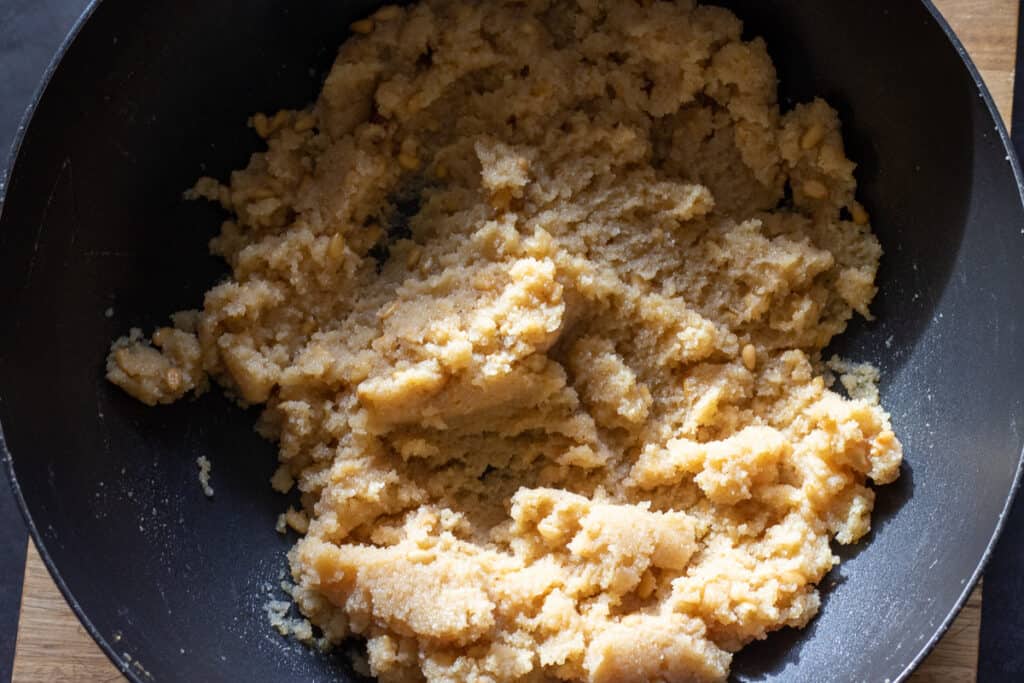
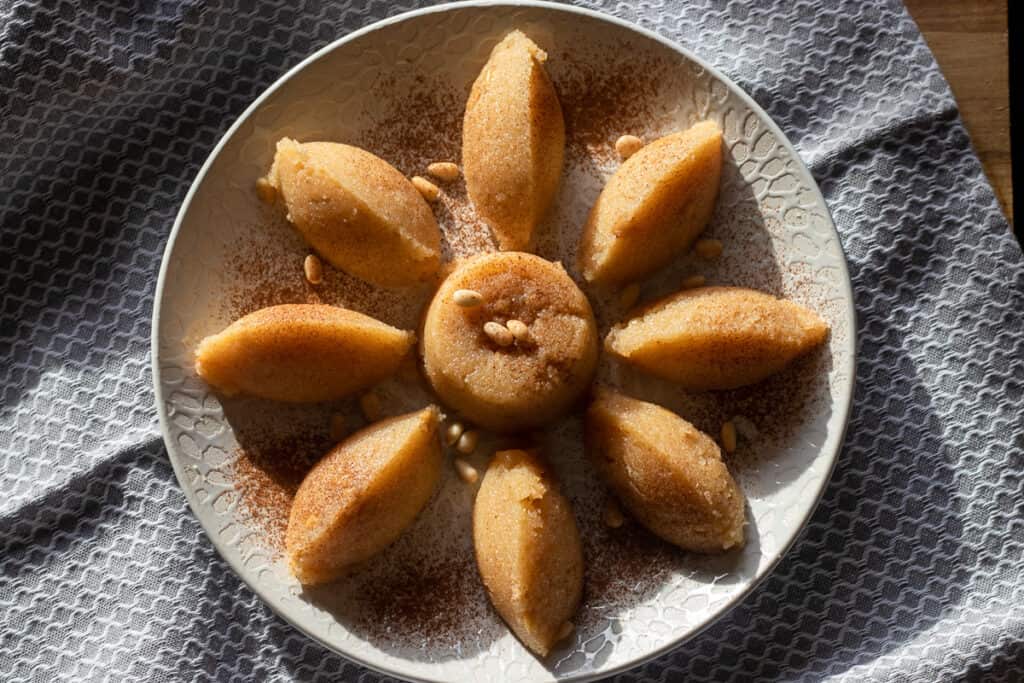
For an easier option, use a small bowl to shape them or simply spoon them into individual bowls. Sprinkle some cinnamon on top before serving.
For an extra-special presentation, line a small bowl with plastic wrap and press warm helva up the sides to form a shell. Fill the center with a scoop of vanilla ice cream, then cover with more helva and press to seal. Chill briefly, then unmold onto a plate for a warm-and-cold dessert that's especially popular in the summer months.
Recipe Tips From the Chef
- Making Irmik Helvası is very easy but you'll need to stay near the stove to make sure the pine nuts and the semolina are cooked for just the right amount of time. They should turn golden but not brown. If the semolina burns, your pudding is destroyed, and you'll have to start over.
- Use coarse semolina rather than fine. Fine semolina turns gluey instead of giving you the distinct, separate grains that make this dessert's texture so good.
- The semolina will look pale for the first several minutes of toasting, then the color can shift quickly. Once you see it start to change, stir constantly and pull the pan off the heat for a few seconds if it's coloring too fast.
- Make sure your milk mixture is hot, not lukewarm, when you add it to the toasted semolina. Pouring a hot liquid into the hot pan helps the semolina absorb it evenly instead of clumping.
How to Eat Irmik Helvasi (Turkish Semolina Halva)?
You can serve your helva warm or cold. Sprinkle it with cinnamon and some more chopped nuts or serve it with a dollop of Turkish Ice Cream Recipe - Maras Dondurma or Kaymak when it is still warm.
And of course, the same as Baklava Cheesecake and Kadaif - Turkish Tel Kadayif, this nutty and sweet dessert pairs perfectly with a nice cup of Turkish Tea or Salep - Turkish Hot Milk Drink (Sahlab)!
Storage Instructions
You can store the leftover Irmik Helvasi in an airtight container at room temperature for up to 3 days. If you want to store it for a longer period, you can refrigerate it for up to a week. Before serving, let it come to room temperature and fluff it up with a fork. Don't freeze Irmik Helvasi, as the texture turns grainy and doesn't bounce back well once thawed.
If the texture has become hard or dry, you can reheat it gently in a non-stick pan or the microwave with a little bit of milk or water.
Make Ahead
Irmik Helvasi is a good make-ahead dessert for guests. Make it up to a day before serving, let it cool completely, cover, and refrigerate. Bring it to room temperature and fluff it with a fork before serving, then reheat gently with a splash of milk or water if it's firmed up.
Recipe FAQs
It's part of a long-held mourning custom. Sharing helva after a death lets family, friends, and neighbors support each other and honor the person who died together, instead of the grieving family having to cook for guests. The practice is thought to trace back to old Turkic customs and has stayed part of Turkish life for centuries.
Irmik Helvasi is made with semolina, while Un Helvasi is made with flour. Semolina halva has a lighter, more granular texture, while flour halva is denser and has a deeper, more toasted flavor from browning the flour itself.
Yes. Replace the milk with water and the butter with olive oil for a dairy-free version. The texture will be a touch lighter, but it's just as delicious.
This usually means the semolina wasn't toasted long enough, or the syrup wasn't fully absorbed before you stopped cooking. Make sure the semolina turns a deep golden color before you add the liquid, and let the halva cook until the mixture pulls away from the sides of the pan before resting it.
Related Recipes
For more delicious dessert recipes why not try:


Did you make this recipe? Please let me know how it turned out! Leave a comment below and tag @cookingorgeous on Instagram and hashtag it #cookingorgeous.
I hope you enjoy the process of making this scrumptious Turkish Semolina Halva Dessert as much as you enjoy eating it! 🙂
Want to Save This Recipe?
Enter your email & I'll send it to your inbox. Plus, get great new recipes from me every week!
By submitting this form, you consent to receive emails from Cooking Gorgeous

Irmik Helvasi - Semolina Halva
Ingredients
- 3 ½ oz unsalted butter (100 grams)
- ½ cup pine nuts (50 grams)
- 1 cup coarse semolina (200 grams)
- ¾ cup low-fat or whole milk (200 ml)
- ¾ cup water (200 ml)
- 1 ¼ cup superfine or granulated sugar (250 grams)
- cinnamon (optional) (for dusting)
Instructions
- In a medium saucepan, combine the milk, water, and sugar.
- Place the pan on medium heat and stir it occasionally until the sugar dissolves, then remove it from the heat.
- Place the butter in a wok or non-stick pan and put it on medium-low heat.
- When the butter melts, add the pine nuts and sauté for a few minutes until it starts changing color.
- Lower the heat, add the semolina into the pan, and cook for approximately 15 minutes, until it is golden brown, stirring occasionally to prevent the mixture from burning.
- When you notice the color of the semolina begins to brown, add milk and water and stir. Allow the semolina to brown and get fragrant without burning it, or else the halva will become bitter.
- Cook the halva over low heat until the syrup is absorbed and the helva is thickened, then remove the pan from the heat.
- Let the helva rest until all the liquid is absorbed and it's cool enough to handle.
- When you're ready to serve it, you can shape your helva into quenelles using two spoons. For an easier option, use a small bowl to shape them or simply spoon them into individual bowls.
- Sprinkle some cinnamon and more nuts on top before serving.
Notes
- You can serve your Irmik Helva warm or cold.
- This recipe will give you 6 to 8 portions (depending on how much of a sweet tooth you have). Each helva portion has 352 kcal, and each piece of quenelle has 105 kcal.
- Ensure the pine nuts and the semolina are cooked for the right amount of time. They should turn golden but not brown. If the semolina burns, your pudding is destroyed, and you'll have to start over.
- Use coarse semolina rather than fine for the best texture. Fine semolina turns gluey instead of giving you distinct, separate grains.
- Create your version by adding or excluding flavorings such as walnuts, honey, vanilla, coconut milk, lemon or orange zest, and currants.
- Replace the milk with water and butter with olive oil for a dairy-free / vegan version. Some regions use water only for a lighter, more traditional texture, even without the dairy-free swap.
- In Hatay (Antakya), cooks stir shredded mozzarella into the helva right after the syrup is absorbed for a melty, cheesy version closer to künefe.

Sabina Husain says
Lovely easy recipe. I used dark brown sugar instead and it gives it a toffee like flavour and comes out dark but great.
Ayla Clulee says
I am so happy to hear that Sabina!
Jonathan says
Followed directions exactly and it came out perfectly, Flaky texture and all.
Pam says
This was so delicious and even enjoyed by my fussy kids! Thank you.
Pam says
I followed the instructions in the recipe and it turned out amazing!
Rona says
This was very easy and is delicious.
Mina says
Perfect recipe for semolina helva made it and turned out excellent.
Dona says
I’ve never made helva before but with your instructions it was so easy and delicious. Will be doing this dessert regularly.