
This Burnt Basque Cheesecake, also known as San Sebastian Cheesecake, comes from a small bar in Spain's Basque Country. It's the easiest cheesecake you'll ever bake: no crust, no water bath, and no worrying about cracks. You just bake it at a very high heat until the top turns dark and caramelized while the center stays soft and creamy.

This baked cheesecake has a unique flavor and an incredibly smooth texture. All you need are 6 simple ingredients.
Jump to:
- What is Burnt Basque Cheesecake?
- Why This Recipe Works?
- Ingredients You'll Need
- How to Make Burnt Basque Cheesecake (San Sebastian Cheesecake)?
- Recipe Tips From the Chef
- Troubleshooting
- Serving Suggestions
- Storage Instructions
- Make Ahead
- Recipe FAQs
- Related Recipes
- Burnt Basque Cheesecake (San Sebastian Cheesecake)
Chef Santiago Rivera created the original at La Viña in San Sebastian's old town. He started serving this burnt-topped cheesecake with a silky, custardy center back in the 1990s.

The recipe spread far beyond Spain. Today you'll find versions of it in bakeries and cafes all around the world, from Madrid to Istanbul.
What is Burnt Basque Cheesecake?
Burnt Basque Cheesecake is a crustless baked cheesecake with a smooth, custardy interior and a distinctive burnt top. In Spain, it is simply known as "tarta de queso", which means cheesecake. You may also see it called simply burnt cheesecake.
In Turkey, where it has become one of the most popular cafe desserts of the last decade, everyone knows it as San Sebastian Cheesecake.
Same as my other cheesecake recipes Baklava Cheesecake and Cranberry Cheesecake Brownies, this unique Spanish dessert is very easy to make yet extremely impressive. This Burnt Basque Cheesecake is quite different from the American-style baked cheesecakes or no-bake cheesecakes.
If you'd like to see the whole process in action, watch the short recipe video below before you start.
Why This Recipe Works?
- This recipe is foolproof and almost impossible to fail! It is really hard to mess up this Burnt Basque Cheesecake recipe. Even if you are a first-time cheesecake maker.
- You only need 6 simple ingredients you might already have in hand.
- It is adjustable. You can make the texture firmer or runnier by increasing or reducing the baking time.
- You can bake it days before you need it, so it is ideal for dinner parties and celebrations.
Ingredients You'll Need
Please scroll down to the recipe card below for the full ingredients list with measurements, complete recipe method, recipe notes, and nutritional information.

- Cream cheese - The same as I use for making cream cheese frosting for my Easy Carrot Cake Recipe, I use full-fat cream cheese (Philadelphia) for the cheesecake filling. I don't recommend reduced-fat versions. Bring it to room temperature before using it.
- Powdered sugar - I prefer using powdered sugar for the cheesecake filling as it dissolves quicker than superfine sugar. However, superfine sugar works well too if you prefer.
- Eggs - Use large-size fresh, free-range eggs at room temperature.
- Vanilla paste - I use vanilla bean paste or extract for deep, delicious vanilla flavor. Avoid using artificial vanilla for this recipe. You can substitute it with lemon zest or skip it.
- Cream - I prefer using heavy cream (called double cream in the UK), but whipping cream also works. Let it sit on the counter ahead of time so it is not fridge-cold when you mix.
- Flour - I use all-purpose (plain) white flour for the cream cheese filling.
How to Make Burnt Basque Cheesecake (San Sebastian Cheesecake)?
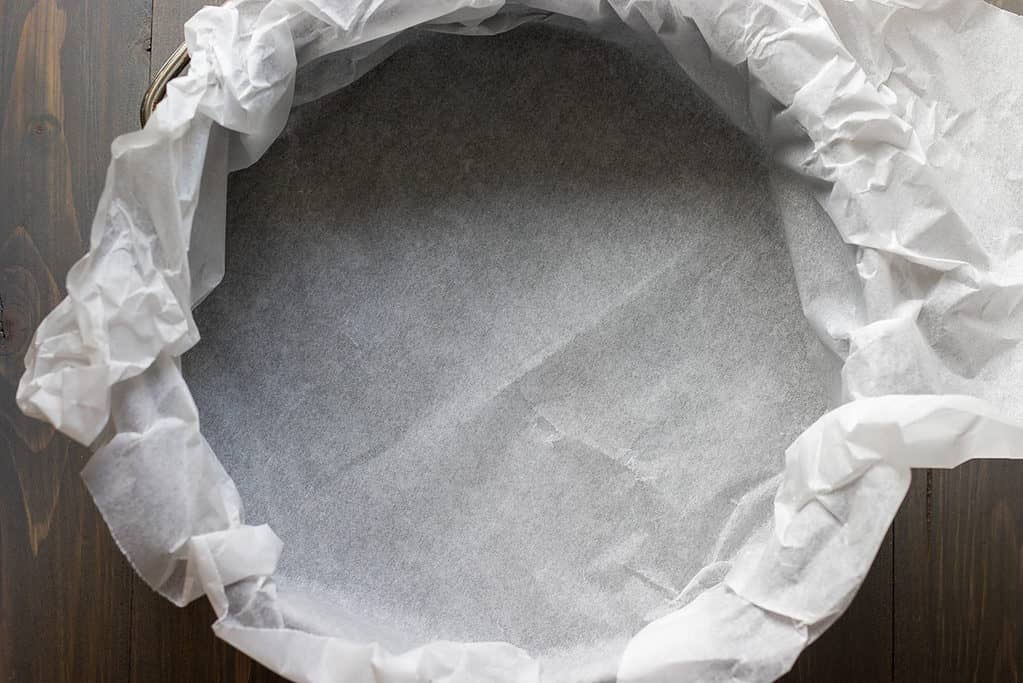
Preheat the oven to 200° C (390° F). Line your 23 cm (9") springform cake tin with parchment paper. Make sure that all the edges of the tin are covered by parchment paper. Set it aside.
Place the cream cheese and powdered sugar in a bowl and whisk together until fluffy. I prefer using my kitchen aid for this stage but you can also use a hand-held mixer.
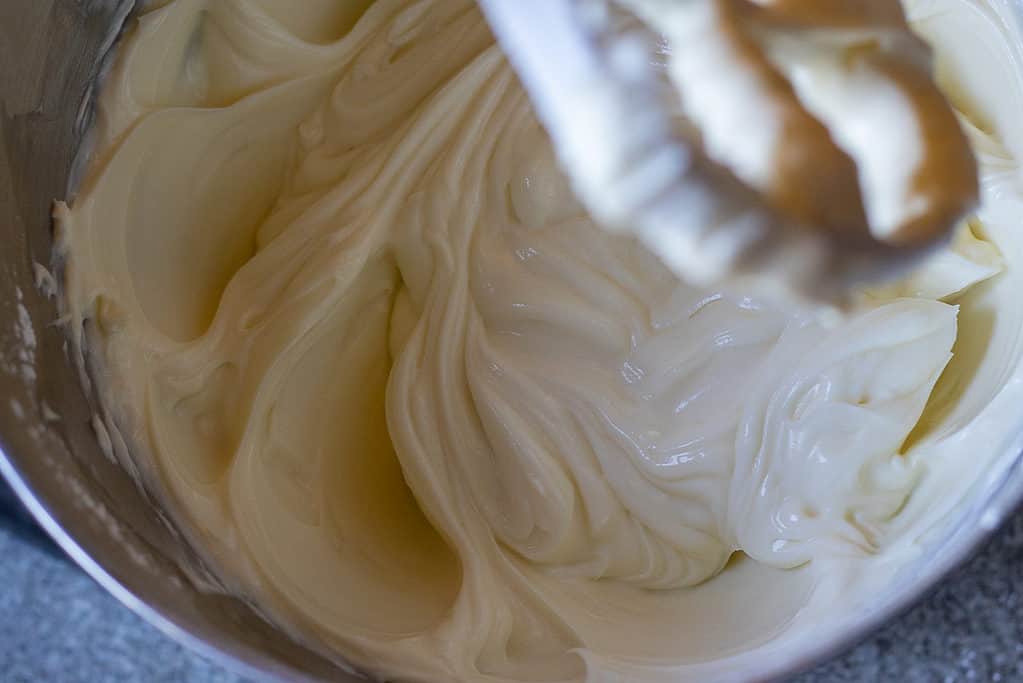
Add the vanilla and then the eggs, one at a time, and keep whisking until nicely combined.
Sift the flour and then add it to the mixture along with the salt, and heavy cream, and beat just enough to combine without overmixing it at that stage.
We don't want to incorporate too much air into the cheesecake, we just want to mix it until it is smooth.
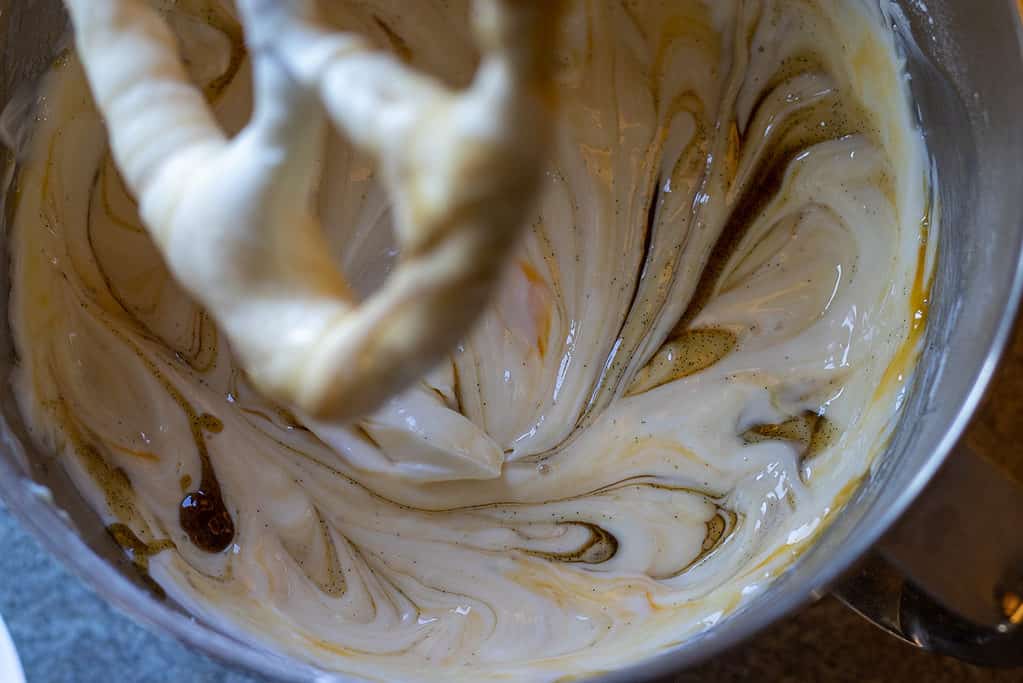
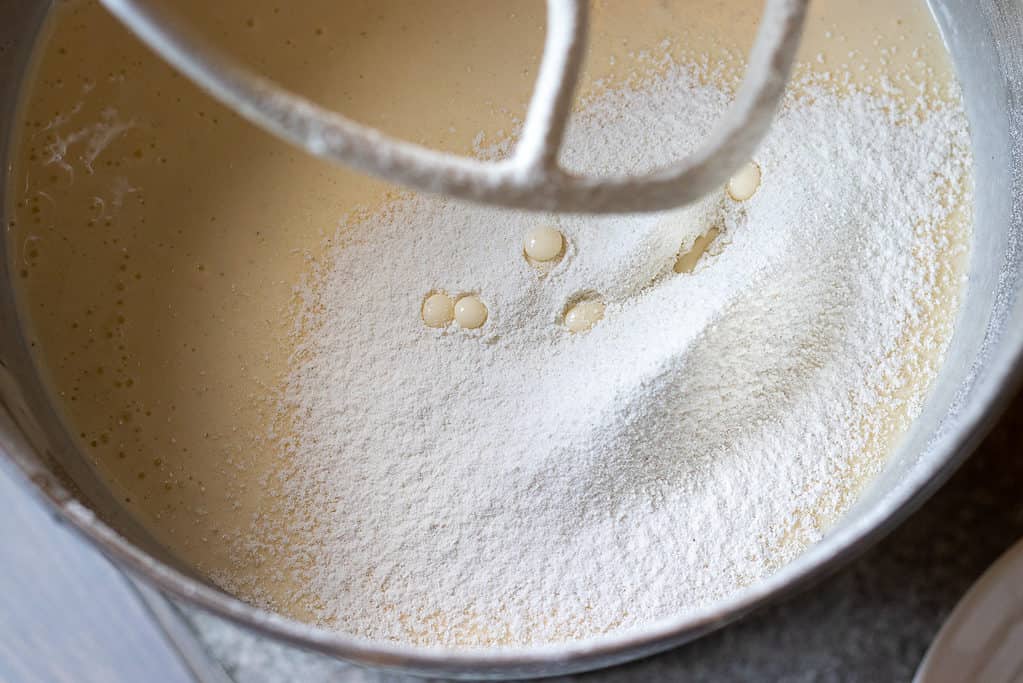
Scrape down the sides of the bowl with a rubber spatula, and give it one last good mix until everything is entirely mixed.
Pour the mixture into your prepared cake tin, knock the cake tin on the countertop a few times to remove any air bubbles, then put it into the preheated oven.
Bake it for 35 to 40 minutes, until the top is dark brown, the edges are set, and the middle is still very wobbly. The center should jiggle like set jelly when you gently shake the tin. It will firm up as the cheesecake cools. The top should end up somewhere between milk chocolate and dark chocolate in color.
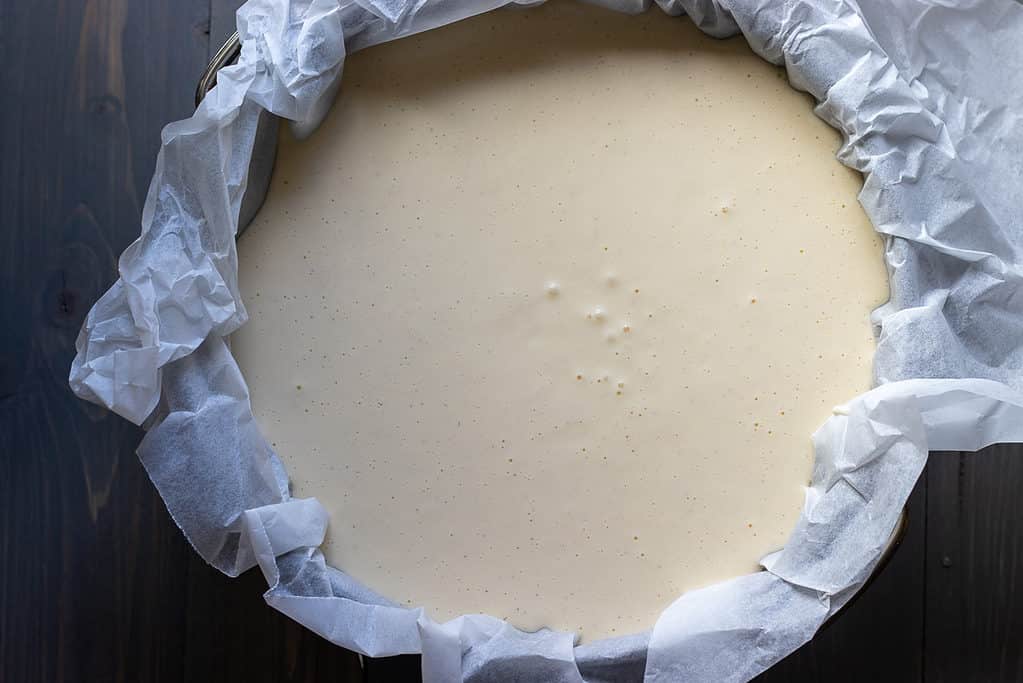
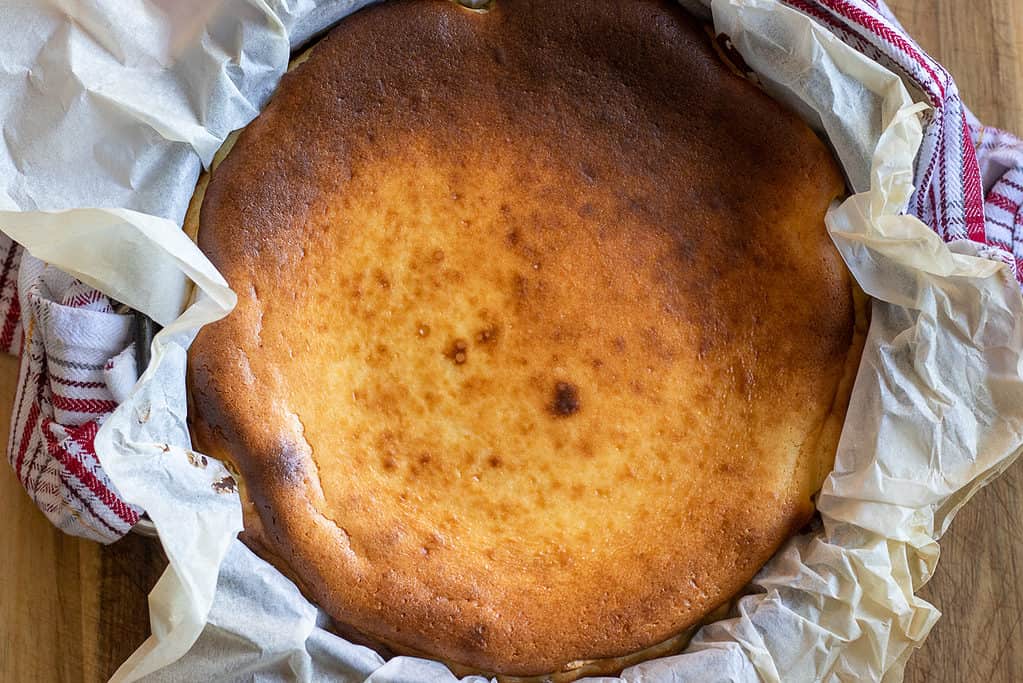
Remove it from the oven and let your Burnt Basque Cheesecake cool down to room temperature. It will puff up in the oven and sink back down as it cools, so don't panic when the middle collapses.
You can serve it at room temperature if you like the center slightly creamy and custardy, or refrigerate it for at least 4 hours, ideally overnight, if you want a firmer texture and clean slices.

Recipe Tips From the Chef
- Make sure the eggs, cream cheese, and heavy cream are at room temperature before whisking them.
- Line your springform cake pan with parchment paper, letting it extend about 5 cm (2") above the rim. Don't worry about neat folds, the creases give the cheesecake its signature rustic look.
- Beat in the eggs one by one, mixing just enough to bring each one in.
- Don't overmix the cheesecake batter. Stop as soon as everything is smooth and combined, as extra whisking works too much air into the filling.
- Scrape down the bowl with a rubber spatula a couple of times while mixing, so no pockets of cream cheese hide at the bottom.
- If you spot any lumps in the finished batter, pass it through a sieve before pouring it into the tin. This little step guarantees a silky, smooth filling.
- Every oven is different, so treat the baking time as a guide. An oven thermometer helps you check that yours actually runs at the temperature it claims.
- If the top isn't dark enough at the end of baking, a few seconds under a hot broiler will deepen the color. Watch it the whole time.
- Let the cheesecake totally cool down before removing it from the baking pan and cutting it into portions.
- Chill the cheesecake uncovered in the fridge. Covering it while still warm traps condensation, which leaves wet patches on the caramelized top.
- To get clean cuts, use a thin, sharp knife. Run the knife under hot water between each cut, wiping it clean with a kitchen cloth to prevent any sticking.
- If you like precision, an instant-read thermometer pushed into the center should read about 165°F (74°C) when the cheesecake is ready to come out.
- No stand mixer? A food processor makes the batter beautifully smooth and glossy in a couple of minutes.
- Set the cake tin on a baking sheet before it goes into the oven. It makes sliding the wobbly cheesecake in and out much safer.
Troubleshooting
The top isn't dark enough: Ovens vary a lot. If your cheesecake is baked but still pale, place it under a hot broiler for a few seconds. Watch it constantly, as it can go from golden to black very quickly.
The center is too runny: The middle should wobble, but it shouldn't be liquid once fully chilled. If yours turns out too loose, bake it 5 to 10 minutes longer next time. Chilling the cheesecake overnight also firms the center up a lot.
The batter is lumpy: This usually means the cream cheese was too cold. Let all the ingredients come to room temperature before mixing. If you still see lumps, strain the batter through a fine sieve to catch them.
The texture is grainy: A grainy or curdled texture means the cheesecake was overbaked. Take it out while the middle still has a generous wobble. It will keep cooking in the residual heat as it cools.
There is liquid on the parchment: A little syrupy liquid sometimes seeps out during baking. It is harmless and won't affect the finished cheesecake. Mixing the batter gently helps keep it to a minimum.
Serving Suggestions
The best and most popular accompaniment to this delightful and unique cheesecake is a glass of sweet Pedro Ximenez sherry.
This cheesecake is perfect when served plain, but you can garnish it with some fruit compote, fresh berries, or chocolate sauce if you wish.
A sour cherry sauce is another lovely option, as its sharpness balances the rich, creamy filling.
Storage Instructions
Store leftover cheesecake in an airtight container in the fridge for up to 5 days. The texture actually improves after a night in the fridge, as the flavors settle and the center firms up slightly.
This cheesecake also freezes well. Let it cool completely, slice it into portions, wrap each slice in plastic wrap, and freeze for up to 3 months. Thaw the slices overnight in the fridge before serving.
Make Ahead
Burnt Basque Cheesecake is a great make-ahead dessert. You can bake it up to 3 days in advance and keep it covered in the fridge. Take it out of the fridge about an hour before serving if you prefer a softer, creamier center.
Recipe FAQs
No, it doesn't taste burnt or acrid. The dark top tastes like dark caramel, similar to the crust of a creme brulee. That gentle caramel note balances the sweet, creamy filling underneath.
Basque cheesecake doesn't have a base and is much lighter than New York-style baked cheesecake. Also, it has a caramelized top with a silky, gooey middle.
New York Cheesecake is neat in appearance and tastes creamy with a dense and thick texture.
Yes. Lemon zest, a little cinnamon, or a spoonful of cocoa powder all work well stirred into the batter. Add zest or spices with the vanilla so they blend in evenly.
Yes. The recipe only uses a small amount of flour, so you can swap it for the same amount of cornstarch. You can also leave it out completely for a slightly softer set.
Yes, but the baking time changes with the pan. A smaller pan gives a taller cheesecake that needs longer in the oven. A larger pan gives a thinner cheesecake that bakes faster, so start checking it early. You can also halve all the ingredients and bake a smaller cheesecake in a 15 cm (6") tin, checking it early.
Related Recipes
For more simple yet delicious dessert recipes why not try:


Did you make this recipe? Please let me know how it turned out! Leave a comment below and tag @cookingorgeous on Instagram and hashtag it #cookingorgeous.
I hope you enjoy the process of making this unique Burnt Basque Cheesecake recipe as much as you enjoy eating it! 🙂
Want to Save This Recipe?
Enter your email & I'll send it to your inbox. Plus, get great new recipes from me every week!
By submitting this form, you consent to receive emails from Cooking Gorgeous

Burnt Basque Cheesecake (San Sebastian Cheesecake)
Ingredients
- 2 lbs full-fat cream cheese (900 grams)
- 12 oz powdered sugar (350 grams)
- 6 large free range eggs
- 1 cup heavy cream (double cream)
- ¼ cup all-purpose flour (plain white flour)
- 2 teaspoon vanilla bean paste
- ½ teaspoon salt
Instructions
- Preheat the oven to 200° C (390° F).
- Line your 23 cm (9") springform cake tin with parchment paper. Make sure that all the edges of the pan are covered by parchment paper.
- Place the cream cheese and powdered sugar in a bowl and whisk together until fluffy. I prefer using my kitchen aid for this stage but you can also use a hand-held mixer.
- Add the eggs, one at a time, and keep whisking until nicely combined.
- Sift the flour and add it to the mixture along with the salt, heavy cream, and vanilla, and beat just enough to combine without overmixing it at that stage. We don't want to incorporate too much air into the cheesecake, we just want to mix it until it is smooth.
- Scrape down the sides of the bowl and give it one last good mix until everything is fully mixed.
- Pour the mixture into your prepared cake tin, knock the cake tin on the countertop a few times to remove any air bubbles, then put it into the preheated oven.
- Bake it for 35 to 40 minutes, until the top is dark brown, the edges are set, and the middle is still very wobbly. It will firm up as the cheesecake cools. The top should end up somewhere between milk chocolate and dark chocolate in color.
- Remove it from the oven and let your Basque Cheesecake cool down to room temperature.
- You can serve the cheesecake at room temperature if you like the center slightly creamy and custardy, or refrigerate it for at least 4 hours, ideally overnight, if you want it firmer.
Video
Notes
- Make sure the eggs, cream cheese, and heavy cream are at room temperature before mixing.
- Line the pan with parchment paper extending about 5 cm (2") above the rim. Creases in the paper are part of the signature rustic look.
- Add the eggs one at a time. Don't overmix the batter, and if you see lumps, pass it through a sieve for a silky filling.
- Bake until the top is dark brown and the middle still jiggles like set jelly. It firms up as it cools. If the top stays pale, a few seconds under a hot broiler deepens the color.
- A grainy texture means the cheesecake was overbaked. A liquid center after chilling means it needed 5 to 10 more minutes in the oven.
- Let the cheesecake cool completely in the pan, then chill it uncovered so condensation doesn't mark the caramelized top.
- Substitutions: whipping cream works instead of heavy cream. Swap the flour for the same amount of cornstarch, or leave it out, to make the cheesecake gluten-free. Superfine or granulated sugar works instead of powdered sugar. Always use full-fat block cream cheese, not spreadable or reduced-fat versions.
- Flavor variations: stir in lemon zest, a little cinnamon, or a spoonful of cocoa powder with the vanilla.
- Make ahead: bake up to 3 days in advance and keep covered in the fridge.
- Storage: keep leftovers in an airtight container in the fridge for up to 5 days. Freeze cooled slices, wrapped in plastic wrap, for up to 3 months. Thaw overnight in the fridge.
- To get clean cuts, use a thin, sharp knife dipped in hot water, wiping it clean between cuts.

Anton says
Without doubt this is a wonderful recipe and a winner! With a ‘melt in your mouth’ texture, it really cannot be faulted. I’ve baked many burnt basque cheesecakes and this is definitely the best.
Ayla Clulee says
Hi Anton,
I'm so glad you loved the recipe! It’s great to hear that the texture turned out perfectly and that it stands out among the ones you’ve tried. Thank you for your kind words!
Best wishes
Ayla
John S. says
The cake was very nice and also looked gorgeous. I added orange zest and served with a simple berry compote. I have a question. When baking it rose to be huge and then sunk quite a lot in the middle. It was still very nice, but how could I avoid this high rise and then sinking - reduce the eggs? Or could there be another reason? Many thanks!
Ayla Clulee says
Hi John,
I’m so glad to hear you enjoyed the cheesecake—it really is a wonderful dessert! Basque Burnt Cheesecakes do tend to sink a little as they cool, but if yours sank more than usual, here are a few tips that might help:
Ensure the eggs, cream cheese, and double cream are at room temperature before you start.
Avoid overmixing the batter—mix just until everything is combined and smooth. Incorporating too much air can cause sinking.
You could also try baking the cheesecake in a water bath, but be sure not to use a springform pan for this method.
I hope these suggestions make a difference for you.
Best wishes
Ayla
John S. says
Thank you!
Ayla Clulee says
My pleasure 🙂
Tara S says
This is a beautiful cheesecake. Does not taste eggy at all! Great for a big gathering of friends or family.