
My Turkish Pide - Kiymali recipe is made with soft homemade dough and a savory ground meat topping with peppers, onions, tomatoes, and parsley. It has crisp golden edges, a juicy filling, and the classic boat shape you see in Turkish pide bakeries.

You don’t need a wood-fired oven or any special equipment. This easy recipe uses simple ingredients and gives you delicious homemade pide with clear step-by-step instructions.
Jump to:
- What is Pide?
- What Does Kiymali Pide Mean?
- Turkish Pide vs Lahmacun
- Why This Recipe Works?
- Ingredients You'll Need
- How to Make Turkish Pide - Kiymali
- Can You Make Turkish Pide Without a Wood-Fired Oven?
- Popular Turkish Pide Variations
- Recipe Tips From the Chef
- Serving Suggestions
- Storage and Reheating
- Recipe FAQs
- Related Recipes
- Turkish Pide - Kiymali
Turkish pide is often called Turkish pizza, but it has its own style. The dough is soft and slightly chewy, the topping is spread thinly, and the edges are folded in to hold everything together. This version is called kiymali pide, which means pide with ground meat.
It is perfect for lunch, dinner, or sharing as part of a Turkish-style meal with Turkish Red Lentil Soup - Kirmizi Mercimek Corbasi, Cacik (Turkish Yogurt Dip), Turkish Acili Ezme Salad, or Ayran (Turkish Yogurt Drink).
What is Pide?
Turkish pide is a traditional boat-shaped flatbread baked with savory toppings. It is usually made with a simple yeasted dough and filled with meat, cheese, vegetables, eggs, or Turkish cured meats.
In Turkey, pide is often baked in hot stone or wood-fired ovens. At home, you can get very good results with a hot oven and a baking tray. The crust turns golden, the filling stays juicy, and the dough bakes into a soft flatbread with crisp edges.
This recipe is for kiymali pide, one of the most popular Turkish pide varieties. It is topped with seasoned ground beef or lamb mixed with onions, peppers, tomatoes, parsley, and tomato paste.
What Does Kiymali Pide Mean?
Kiymali pide means Turkish pide with ground meat.
“Kiyma” means ground meat in Turkish. “Kiymali” means made with ground meat. The topping is usually made with ground beef, ground lamb, or a mixture of both.
The meat mixture is added raw to the dough and baked in the oven. This keeps the topping juicy and helps the flavor soak into the bread.
Turkish Pide vs Lahmacun
Turkish pide and lahmacun are both popular Turkish flatbreads, but they are different.
Pide is made with a soft yeasted dough. It is usually shaped into a long oval or boat shape, with folded edges and a thicker crust. It can be topped with ground meat, diced meat, cheese, vegetables, eggs, sucuk, or pastirma.
Lahmacun is much thinner and rounder. It has no folded edge and is usually topped with a very thin layer of spiced ground meat. It is often served with parsley, onion, lemon, and salad, then rolled up before eating.
Pide is softer, thicker, and more filling. Lahmacun is thinner, lighter, and crispier.

Why This Recipe Works?
- You can make authentic Turkish pide at home without a wood-fired oven.
- The dough is simple, soft, and easy to shape.
- The ground meat topping is added raw, so it stays juicy as it bakes.
- You can make Kiymali Pide with ground beef, lamb, or a mixture of both.
- You can freeze the leftovers for up to 3 months.
- Just like Fatayer - Homemade Lebanese Pies, Pide is versatile, you can create your own version with different toppings such as cheese, vegetables, eggs, or cured meat.
Ingredients You'll Need
Please scroll down to the recipe card below for the full ingredients list with measurements, complete recipe method, recipe notes, and nutritional information.
Ingredients for the Dough

- Bread flour / strong white flour - Bread flour gives the dough a soft, chewy texture and makes it easier to roll and shape. You can use all-purpose flour if needed, but bread flour gives the best result.
- Fast-action dry yeast - This helps the dough rise and gives the pide its soft bread texture. You can use active dry yeast, but you may need to activate it in warm water first.
Ingredients for Meat Topping

- Ground beef or lamb - Use beef, lamb, or a mixture of both. Meat with a little fat gives the best flavor. Very lean meat can turn dry.
- Turkish green peppers - These are commonly used in Turkish cooking. Some are mild and some are spicy, so taste them first. You can use green bell pepper or Padron peppers instead.
- Tomato paste - Adds color, depth, and a rich, savory flavor.
- Fresh parsley - Use flat-leaf parsley and chop it by hand for the best texture.
How to Make Turkish Pide - Kiymali
Prepare the Dough
Combine the yeast and warm water in a bowl, then stir well. Let the yeast activate for 5-10 minutes until the mixture is foamy and bubbly. Add the flour and salt. Gently mix with your fingers to form a dough; it will be sticky at that stage.
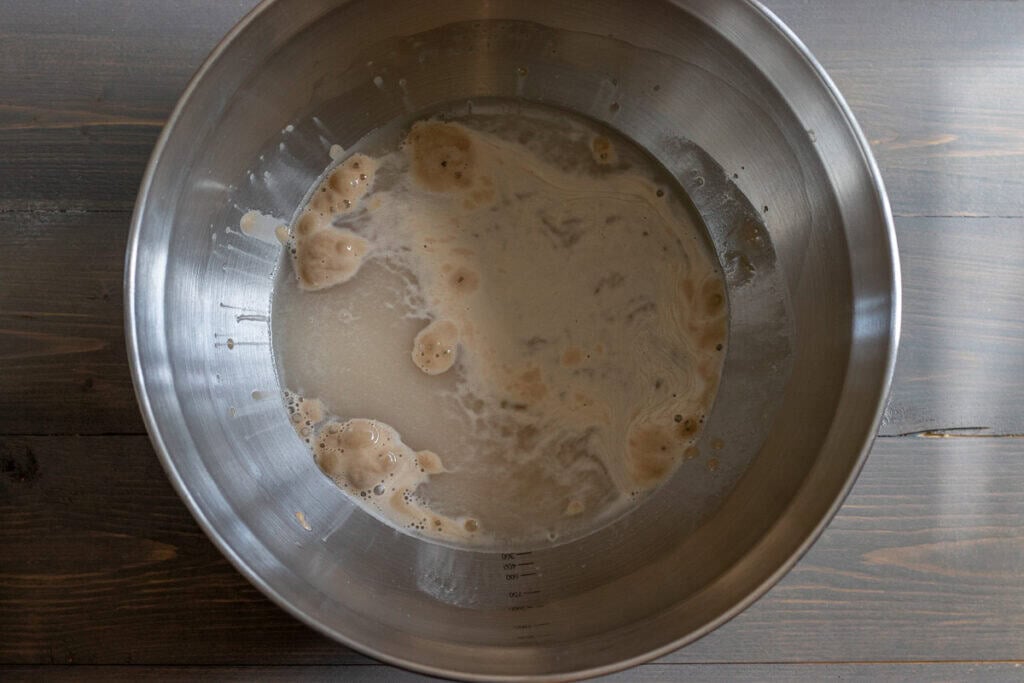
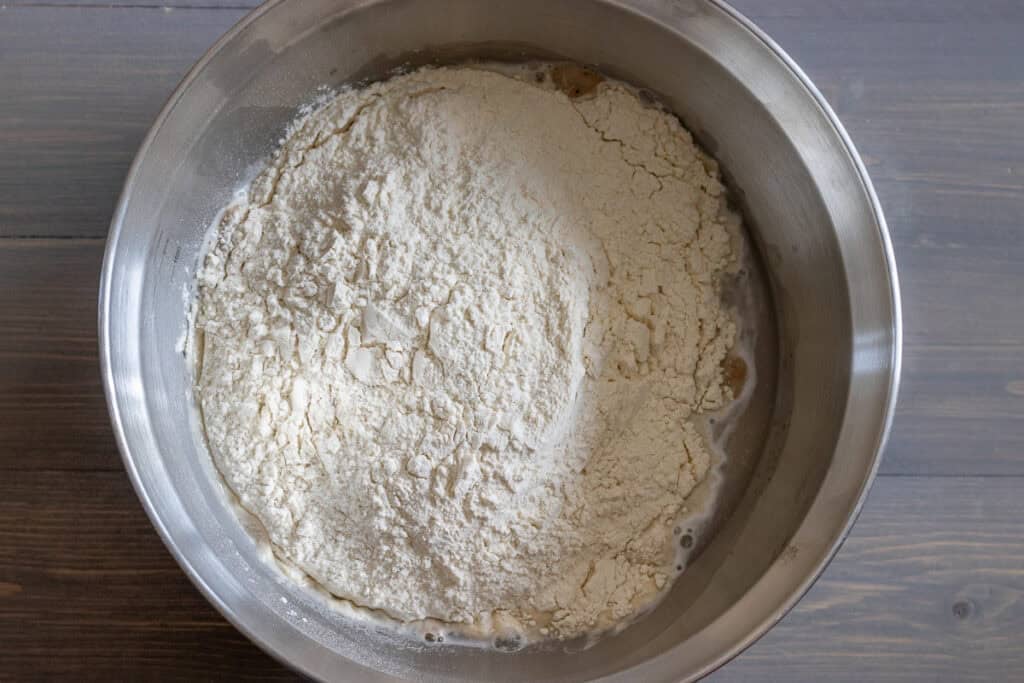
Transfer the dough to a lightly floured surface. Knead it for 4 to 5 minutes, or until it feels soft, smooth, and elastic. Add a little extra flour only if the dough is too sticky to handle. Shape the dough into a ball and place it back into the bowl.

Cover with plastic wrap or a clean kitchen towel. Leave it in a warm place for about 1 hour, or until doubled in size.

Prepare the Ground Meat Topping
Place the onion, tomato, peppers, and chili in a food processor. Pulse a few times until finely chopped.
Do not blend the vegetables into a puree. The topping should have a little texture. If the vegetables become too wet, the filling can make the pide soggy.

Place the ground beef or lamb in a large bowl. Add the chopped vegetables, tomato paste, parsley, salt, black pepper, and chili flakes if using.

Mix everything with a spoon or spatula until well combined. Cover and keep it in the fridge until the dough is ready.

Shape the Pide
Preheat the oven to 430°F / 220°C. Line two large baking trays with parchment paper.
Divide the dough into 4 equal pieces, about 5½ oz / 160 g each. Place them on a lightly floured surface, cover with a clean kitchen towel, and let them rest for 10 minutes.

Roll one piece of dough into a long oval, about 6 x 13 inches / 15 x 35 cm. It should be about ¼ inch / ½ cm thick. Spread one quarter of the meat topping over the dough, leaving about ½ inch / 1½ cm empty around the edges.
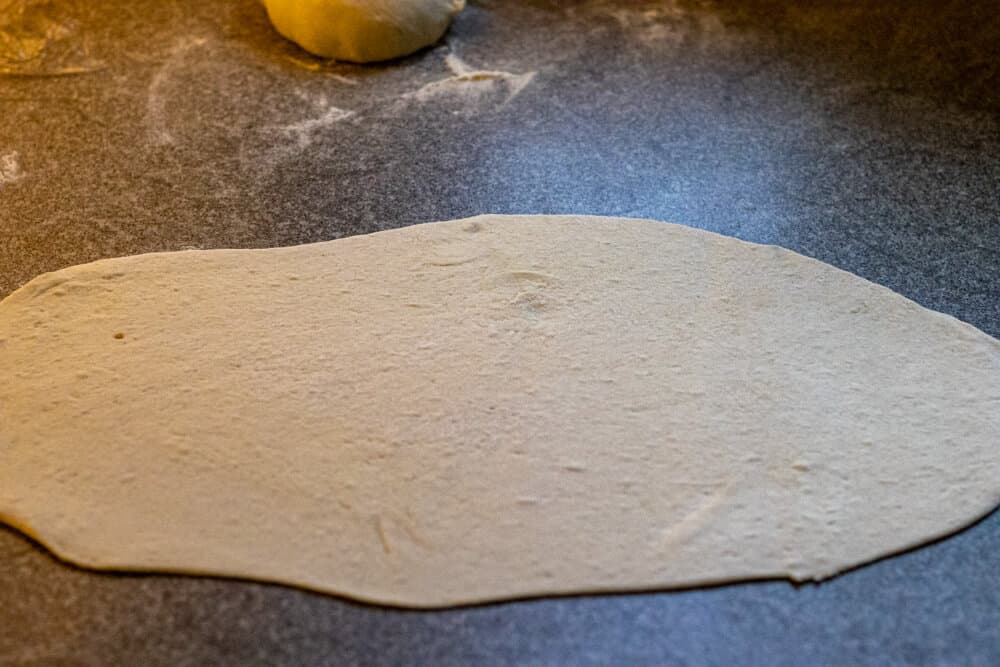

Fold the long edges over the filling. Pinch the two ends together to make the classic boat shape. Repeat with the remaining dough and filling.
If the dough is difficult to move after shaping, roll it directly on the prepared baking tray and add the topping there.

Repeat the same for the remaining 3 dough balls.
Line 2 large baking trays with parchment paper and gently transfer 2 pides on each tray. You can use small individual trays if you don't have a large one as I did in the video.
When the oven is hot enough, place the trays in the oven and then cook them for 20 minutes or until the filling is cooked and the pastry is lightly browned.

Take them out of the oven and then generously brush the dough with butter. Slice and serve when still hot.

Can You Make Turkish Pide Without a Wood-Fired Oven?
Yes, you can make Turkish pide at home without a wood-fired oven.
A hot oven is enough for this recipe. For a better base, preheat the baking tray before adding the pide. You can also use a pizza stone or pizza steel if you have one.
If using a pizza stone, preheat it well before baking. The pide may cook a little faster, so check it before the full baking time.
You can also sprinkle a little semolina or fine cornmeal under the dough before baking. This helps stop sticking and gives the base a slightly crispier texture.
Popular Turkish Pide Variations
Kusbasili Pide
Kusbasili pide is made with small pieces of lamb or beef instead of ground meat. The meat is usually mixed with peppers, onions, tomatoes, and spices.
Peynirli Pide
Peynirli pide is made with cheese. Turkish kasar cheese is traditional, but mozzarella, feta, or halloumi can also work well.
Ispanakli Pide
Ispanakli pide is made with spinach and often mixed with cheese. It is a lovely vegetarian option.
Sucuklu Pide
Sucuklu pide is made with sliced Turkish sucuk, a spicy cured beef sausage. It is often made with cheese and sometimes finished with an egg.
Pastirmali Pide
Pastirmali pide is made with thin slices of Turkish cured beef. It is usually paired with cheese and has a rich, salty flavor.
Yumurtali Pide
Yumurtali pide is finished with an egg. The egg is usually added near the end of baking so the white sets but the yolk stays slightly soft.
Karadeniz Pidesi
Karadeniz pidesi comes from the Black Sea region of Turkey. It is often richer and may include cheese, butter, ground meat, or egg.
Ramazan Pidesi
Ramazan pidesi is different from the filled boat-shaped pide in this recipe. It is a round, fluffy Turkish bread usually baked during Ramadan and topped with sesame or nigella seeds.
Recipe Tips From the Chef
- Use bread flour or strong white flour for the best dough texture.
- Do not add too much flour while kneading. A soft dough gives a better pide.
- Use warm water, not hot water, when making the dough. Hot water kills the yeast, and cold water prevents the yeast from activating.
- If your dough is sticky, add a little flour to it. As you knead it, make sure to coat your hands and your work surface with a light dusting of flour. Add a few teaspoons of flour at a time to get rid of the stickiness.
- Let the dough rest after dividing it. This makes it easier to roll out.
- Do not puree the vegetables for the topping. Finely chopped vegetables give a better texture.
- Use ground meat with a little fat. Lean meat can dry out in the oven.
- Spread the topping thinly and evenly so it cooks at the same time as the dough.
- Shape the pide on the baking tray if you find it difficult to move.
- Brush the crust with butter as soon as it comes out of the oven.
Serving Suggestions
Turkish pide is usually sliced into strips and eaten hot. You can eat it with your hands or with a knife and fork.
For a simple meal, serve it with Cucumber Tomato Feta Cheese Salad, Greek Cucumber Salad, or Arugula Spinach Salad. A fresh salad works beautifully with the rich meat topping.
It also goes well with soup. Try it with Arpa Şehriye Çorbası - Turkish Orzo Soup, or Red Pepper and Tomato Soup for a filling lunch or dinner.
For a bigger Turkish-style meal, serve it with Haydari - Turkish Yogurt Dip, Mutabal - Roasted Eggplant Dip, Beet Hummus, and a cup of Turkish Tea - Cay.
You can also serve it with Gozleme (Turkish Pancakes) or Lahmacun if you are making a Turkish flatbread spread.
Storage and Reheating
How to Store Turkish Pide
Let leftover pide cool to room temperature before storing.
Wrap it tightly in aluminum foil or place it in an airtight container. Store it in the fridge for up to 2 days.
Can You Freeze Turkish Pide?
Yes, Turkish pide freezes well for up to 3 months.
Let it cool completely, then wrap each piece tightly in plastic wrap or aluminum foil. Place the wrapped pieces in a freezer bag and squeeze out as much air as possible.
You can freeze pide whole or sliced. Sliced pieces are easier to reheat for quick lunches.
How to Reheat Turkish Pide
The best way to reheat pide is in the oven. Preheat the oven to 350°F / 180°C. Wrap the pide loosely in aluminum foil and heat for 6 to 7 minutes, or until hot all the way through.
You can also reheat it in a covered pan over low heat for 5 to 6 minutes.
Avoid microwaving pide if possible. It can make the crust soft and chewy.
Recipe FAQs
Turkish pide is often called Turkish pizza, but it is not the same. Pide has a soft bread dough, a long boat shape, and folded edges. Pizza is usually round and flatter, with the toppings spread across the whole base.
Kiymali pide can be mild or spicy. It depends on the peppers and chili you use. For a mild pide, use green bell pepper and leave out the chili. For a spicier version, add fresh red chili, pul biber, or chili flakes.
No, you do not need to cook the meat first. The ground meat topping is spread thinly over the dough and cooks in the oven. This keeps it juicy and helps it stick to the bread.
The filling can become watery if the vegetables are blended too much or the tomato is very juicy. Pulse the vegetables briefly instead of pureeing them. If the mixture looks too wet, drain off a little liquid before adding it to the dough.
Related Recipes
For other delicious authentic Turkish recipes why not try:


Did you make this recipe? Please let me know how it turned out! Leave a comment below and tag @cookingorgeous on Instagram and hashtag it #cookingorgeous.
I hope you enjoy the process of making this delicious Turkish Kiymali Pide as much as you enjoy eating it! 🙂
Want to Save This Recipe?
Enter your email & I'll send it to your inbox. Plus, get great new recipes from me every week!
By submitting this form, you consent to receive emails from Cooking Gorgeous

Turkish Pide - Kiymali
Ingredients
For the Pide Dough
- 3 ¼ cups bread flour (strong flour) (400 grams)
- ½ teaspoon fast action dry yeast (3 grams)
- ⅔ teaspoon salt (4 grams)
- 1 cup tepid water (250 ml)
For the Ground Meat Filling
- 10 ½ oz ground beef or lamb (300 grams)
- 1 large onion (roughly chopped)
- 1 large tomato (roughly chopped)
- 3 Turkish green peppers (or 1 green bell pepper) (roughly chopped)
- 1 red chilli (or ½ teaspoon chilli flakes) (roughly chopped)
- 2 tablespoon tomato paste
- ½ cup chopped parsley
- 1 TSP salt
- ½ TSP freshly ground black pepper
- 1 tablespoon butter for brushing
Instructions
Preparing the Dough
- Combine the yeast and warm water in a bowl, then stir well. Let the yeast activate for 5-10 minutes until the mixture is foamy and bubbly.
- Add the flour and salt. Gently mix with your fingers to form a dough; it will be sticky at that stage.
- Transfer the dough to a lightly floured surface and knead it for 4-5 minutes or until it doesn't stick to your hands anymore. You can use a bit of extra flour if needed. It should feel soft and elastic at that stage.
- Turn the dough into a ball and return it to the bowl. Cover with a cling film or clean kitchen cloth and let it rise for an hour until it doubles the size up.
- Proceed to prepare the meat filling while the dough is rising.
Preparing the Ground Meat Filling
- Place the onions, tomatoes, peppers, and chili in a food processor.
- Gently and quickly blitz the vegetables using the pulse function of the food processor. Try and avoid turning them into a mash. We need finely chopped vegetables not puréed. You can also chop by hand but it would take much longer.
- Place the ground meat into a bowl and add finely chopped vegetables, tomato paste, chopped parsley, salt, chili flakes (if using), and freshly ground black pepper.
- Combine all together using a spoon or a spatula, and keep refrigerated until the dough has doubled up in size.
Making the Pide
- Preheat the oven to 220° C - 430° F (fan oven).
- Divide the dough into 4 equal pieces (approx 5 ½ oz/160 grams each) and place them on a lightly floured surface. Cover with cling film or a damp kitchen cloth and let it rest for another 10 minutes.
- Roll one of the dough balls into an oval shape of 15 cm x 35 cm (about 6”x13”) in size and ½ cm (0.2”) in thickness.
- Spread ¼ of the ground meat filling evenly over the dough, leaving a ½ inch (1 ½ cm) border at the edges.
- Fold the long edges over the filling. Pinch the two ends together to make the classic boat shape. Repeat with the remaining dough and filling.
- If the dough is difficult to move after shaping, roll it directly on the prepared baking tray and add the topping there.
- Line 2 large baking trays with baking paper and gently transfer 2 pides on each tray.
- When the oven is hot enough, place the trays in the oven and cook for 20 minutes or until the filling is cooked and the pastry is lightly browned.
- When the pides are cooked, generously brush the crust with butter and slice before serving.
Video
Notes
- Use bread flour or strong white flour for the best dough texture.
- Do not add too much flour while kneading. A soft dough gives a better pide.
- Use warm water, not hot water, when making the dough. Hot water kills the yeast, and cold water prevents the yeast from activating.
- If your dough is sticky, add a little flour to it. As you knead it, make sure to coat your hands and your work surface with a light dusting of flour. Add a few teaspoons of flour at a time to get rid of the stickiness.
- Let the dough rest after dividing it. This makes it easier to roll out.
- Do not puree the vegetables for the topping. Finely chopped vegetables give a better texture.
- Use ground meat with a little fat. Lean meat can dry out in the oven.
- Spread the topping thinly and evenly so it cooks at the same time as the dough.
- Shape the pide on the baking tray if you find it difficult to move.
- Brush the crust with butter as soon as it comes out of the oven.
- To add an egg, crack it over the pide during the last 5 to 7 minutes of baking.
- Reheat leftovers in a covered pan or in a 350°F / 180°C oven.


Jale Bailey says
That's great! Thank you Ayla.
Ayla Clulee says
My pleasure xx
Jale Bailey says
Hello Ayla,
Can I prepare the dough and put in the fridge to make the pides next day?
Thank you.
Ayla Clulee says
Hello Jale,
You can prepare the dough in advance and keep refrigerated overnight. Simply leave the dough at room temperature for 30- 40 minutes before making your pides.
Hope this helps
Ayla
Melody says
Sunday night is homemade pizza night for my husband and me, but then I saw this recipe and I happened to have some lamb so I thought what the heck. Exquisite! A step above pizza and, lamb. Did I mention lamb? Since it is just the two of us and I wanted to use up the whole pound of lamb, I did a 1 1/2 size batch. Then I divided the filling into six equal portions, flattened them out a bit and froze four of them on a cookie sheet. You can do the same with the dough creating little flat ovals, freezing on a tray, and then double wrapping in plastic wrap. However, I just cut your dough recipe in half and did enough dough for two of them. This was so easy and I really liked the video because I’m not sure that I would’ve come up with the same look even though you had pretty good directions.
Ayla Clulee says
I am so glad you enjoyed it, Melody, and thank you for sharing your experience.
Best wishes
Ayla x
Damiene says
Thanks for the recipe it turned out great.
Brenda says
These are awesome. The whole family devoured them. Thanks for another amazing recipe. We also loved your gozleme.
Rebecca says
Easy recipe, especially if you have made bread before. Tasted amazing with pumpkin soup.
Daniel says
I have made this recipe twice and it has come out really good both times. Thank you so much for the recipe.
Melinda says
I came across your recipe and decided to give it a try… the dough is absolutely the best!! Perfect texture and really good! Thank you
Jon says
I can’t believe how easy and fun this was to make. The video within the recipe also helped keep this fun and stress free.
I will definitely be referring back to this recipe next time as well.
Ainur says
I would like to thank you so so much for this recipe! It tasted exactly how i remembered it and exactly how i wanted it to look and taste like!
Brenda says
They are beyond delicious! The dough is perfectly crispy and the filling is so good! Very different flavour but absolutely delicious!
Melissa says
They tasted great, and the leftovers made jealous my colleagues. Thanks for the recipe!
Matt says
They look very tasty , definitely worth to try