
Biber Salçası is a rich, peppery, and deeply red Turkish condiment made from fresh red peppers. It is one of my favorite ingredients that I use for traditional Turkish recipes such as Biberli Ekmek and Chicken Shish Kebab. You can cook it slowly on the stovetop or bake it in the oven until thick and concentrated.
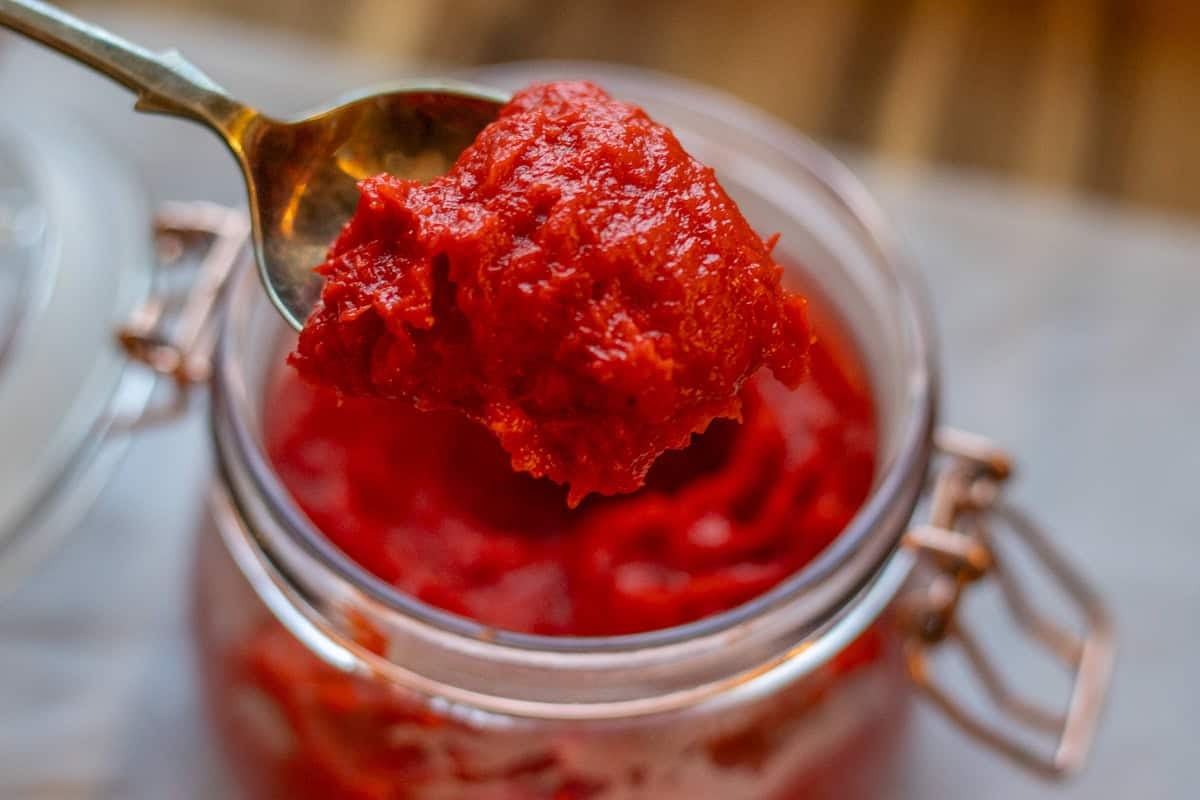
This Turkish red pepper paste is thick and has a gentle sweetness with a touch of warmth. It is my secret ingredient that adds depth to everything from soups and stews to spreads and marinades. You only need red peppers, salt, and a little time. No fancy equipment or complicated steps. Once you try homemade, the jarred version will never taste the same again.
Jump to:
What is Red Pepper Paste
Red pepper paste, or biber salçası in Turkish, is made by cooking down fresh red peppers until they become thick and smooth. Some versions include a few hot chillies for extra heat, while others stay sweet and mild. The texture is similar to tomato paste but the taste is more earthy and pepper forward.
In Turkey, it is often used as a base for sauces, soups, and vegetable dishes. A spoonful can completely change the depth and colour of a meal.

Why Make Red Pepper Paste at Home
Making it yourself means you get a fresher, cleaner paste without preservatives or packaging. You can adjust the salt level, choose the type of peppers, and control the heat exactly how you like it. Homemade paste also keeps well, so you can make a batch and use it for months.
It is a simple way to preserve the last of the red peppers before the cold sets in. You end up with something that brings a touch of warmth and flavour to your cooking all through the season.
Ingredients You'll Need
Please scroll down to the recipe card below for the full ingredients list with measurements, complete recipe method, recipe notes, and nutritional information.
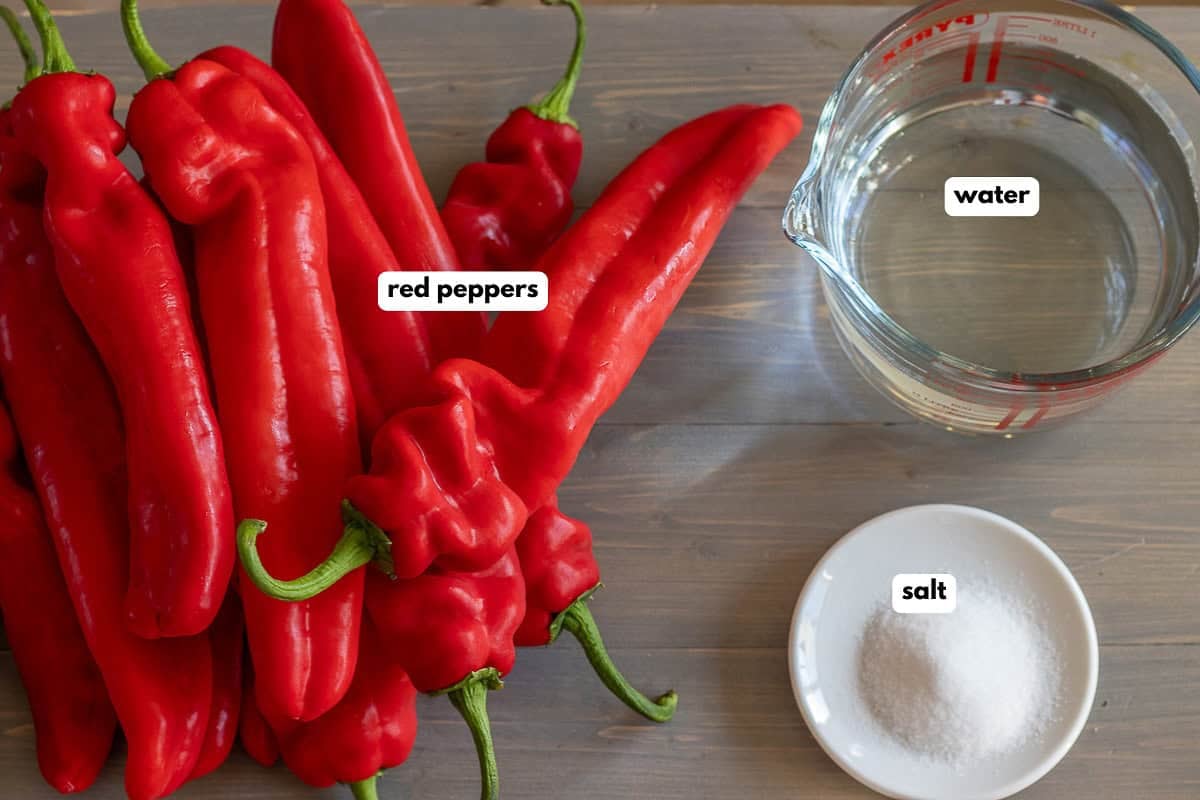
- Red peppers - I use romano peppers, but you can use bell peppers or any other sweet peppers that are available to you. This recipe uses 1.4 kg washed, stemmed and seeded red peppers, but you can scale the recipe up or down easily. Add chilli peppers to add some heat to your pepper paste.
- Water - To cook down the peppers until softened.
- Salt - To add taste and also help preserve red pepper paste for longer storage.
How to Make Biber Salçası - Turkish Red Pepper Paste
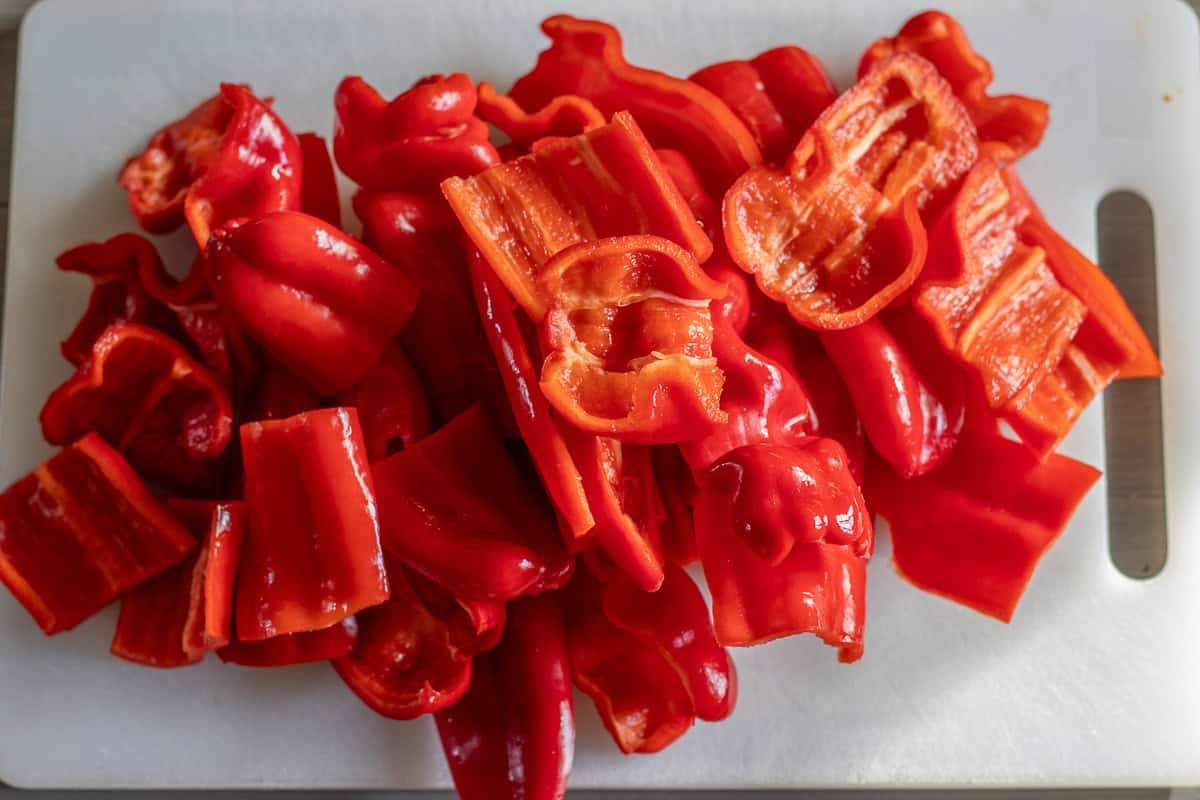
Wash the red bell peppers and remove stems and seeds. Cut into chunks (about 1½-2 inches / 4-5 cm). Wash and seed the chillies if using.
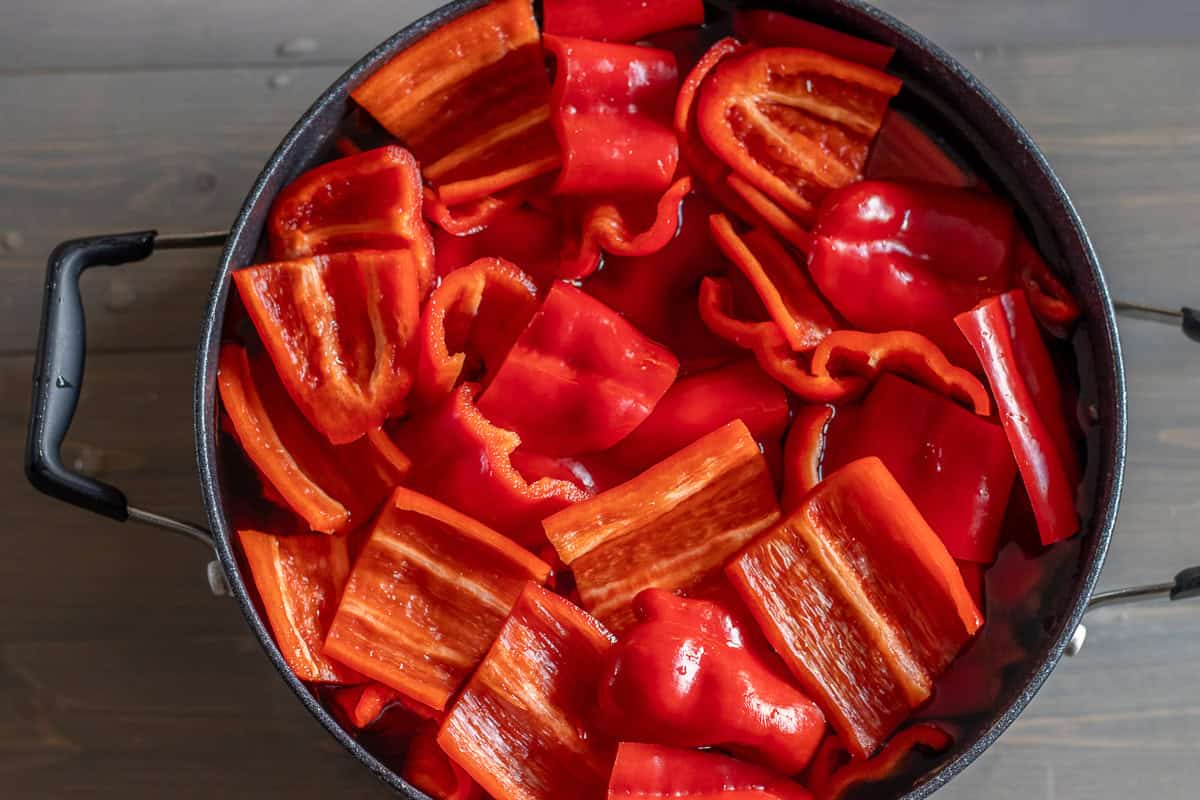
In a wide, heavy pan, add the pepper chunks and hot water. Cook over medium heat, stirring often, pressing gently so peppers break down, until they soften and most of the liquid is absorbed (about 25 minutes in my experience).
If using, add the chopped chillies and continue over medium-low heat for another 8-12 minutes until the chillies are cooked and moisture has mostly evaporated. Drain any extra liquid. Let the mixture cool slightly, then transfer it into a food processor or blender, and process until it becomes an almost smooth purée.
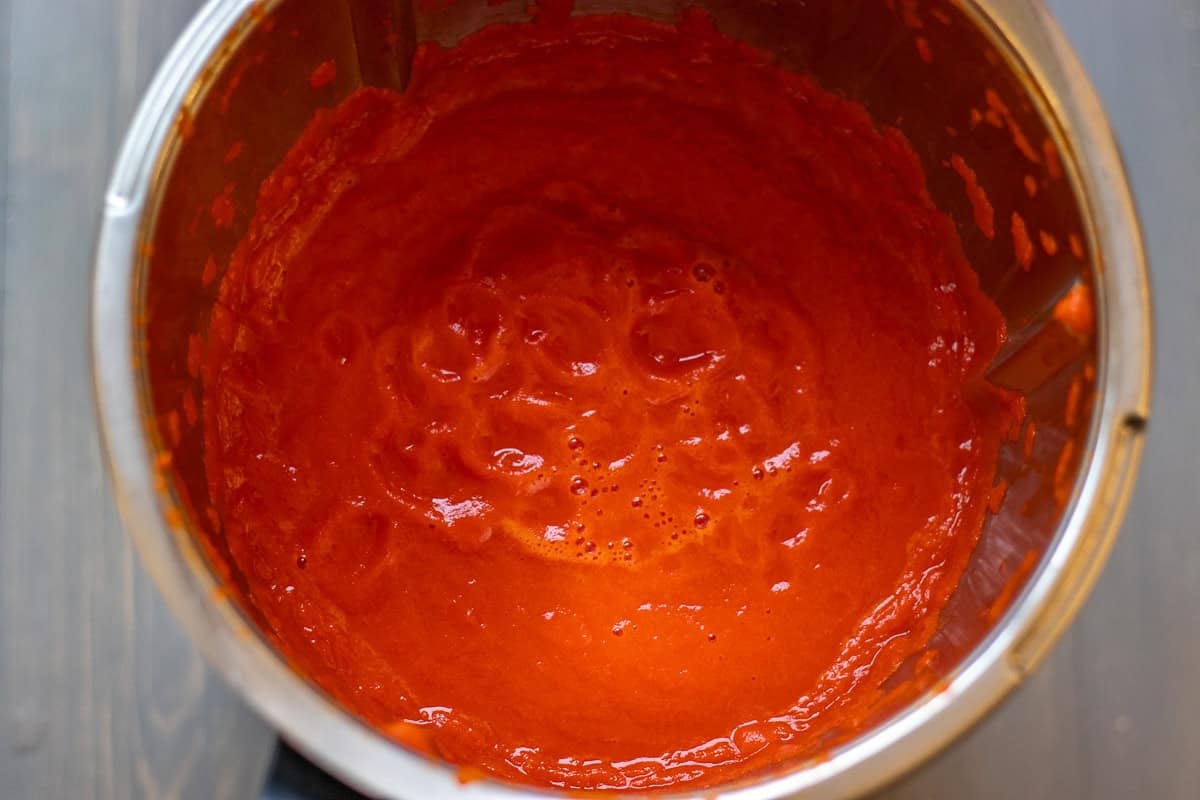
Leaving a little texture is fine if you like. Return the purée to the pan and add the salt.
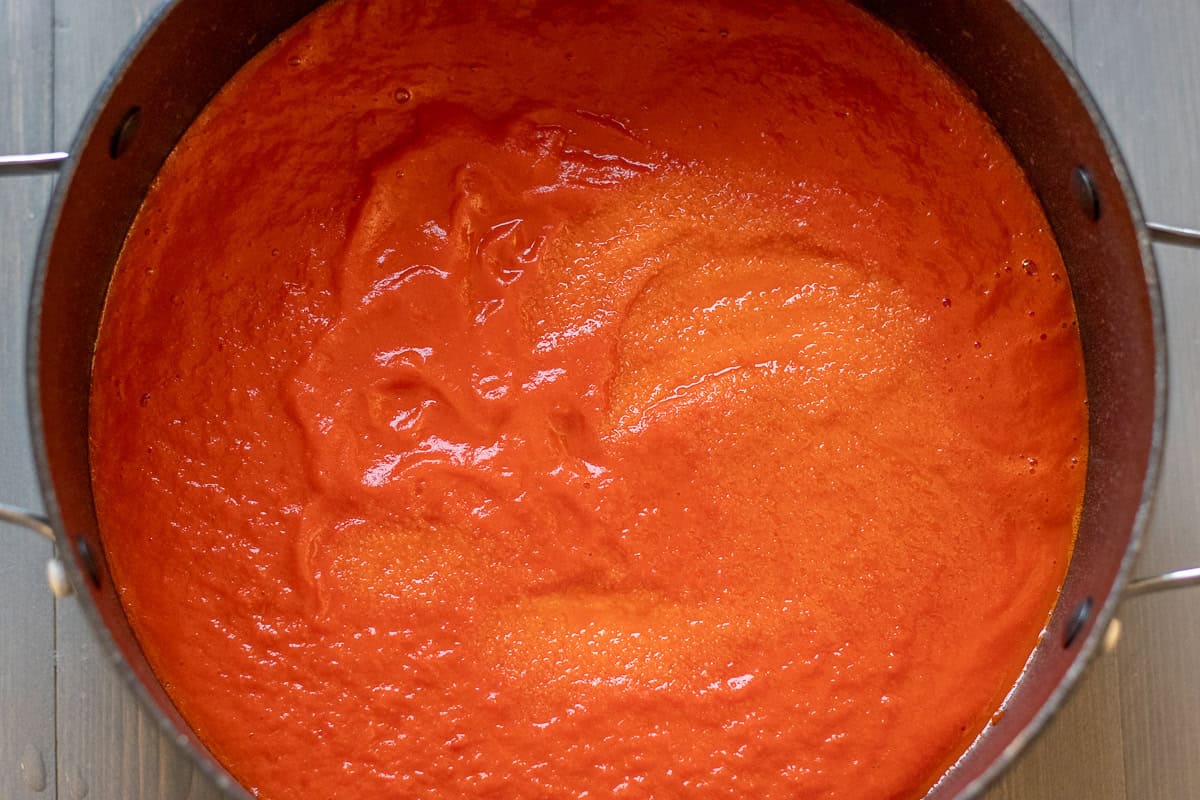
Over low heat, stir continuously so it does not stick or burn. Cook until it thickens and reduces roughly by half, and the paste darkens slightly. This takes about 60-75 minutes, depending on volume.
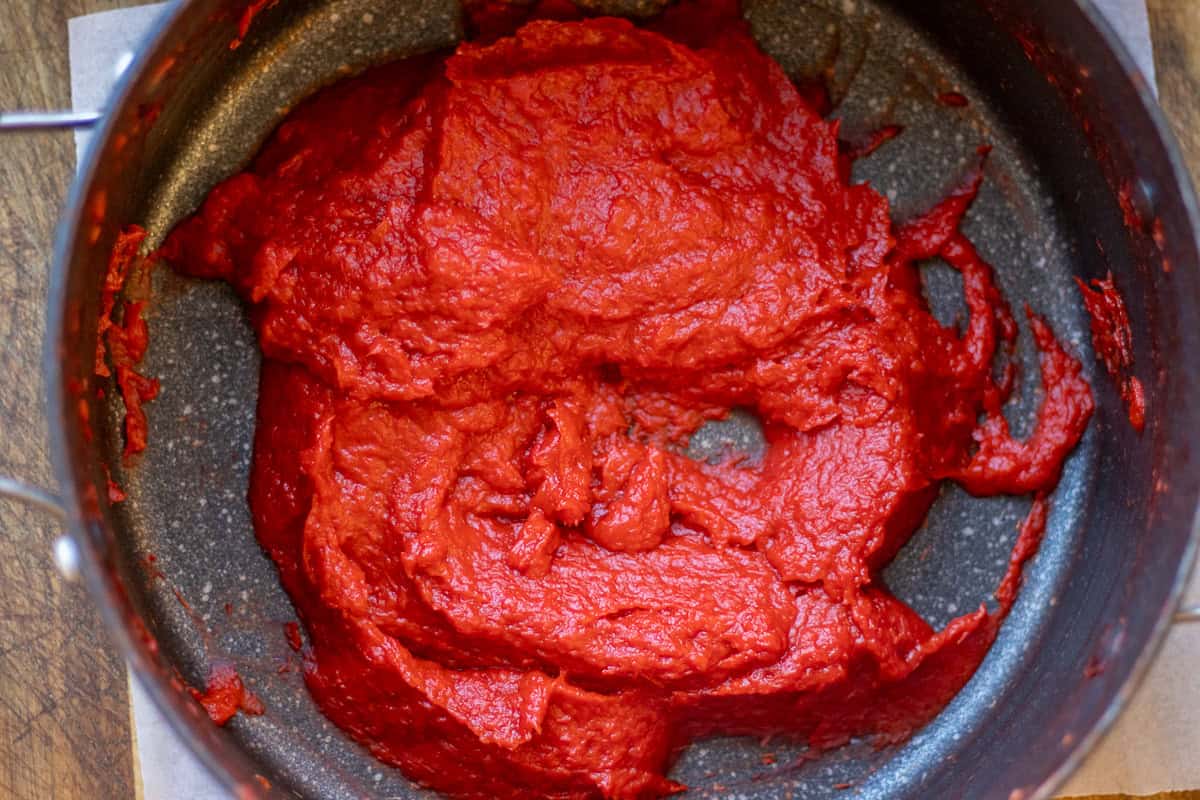
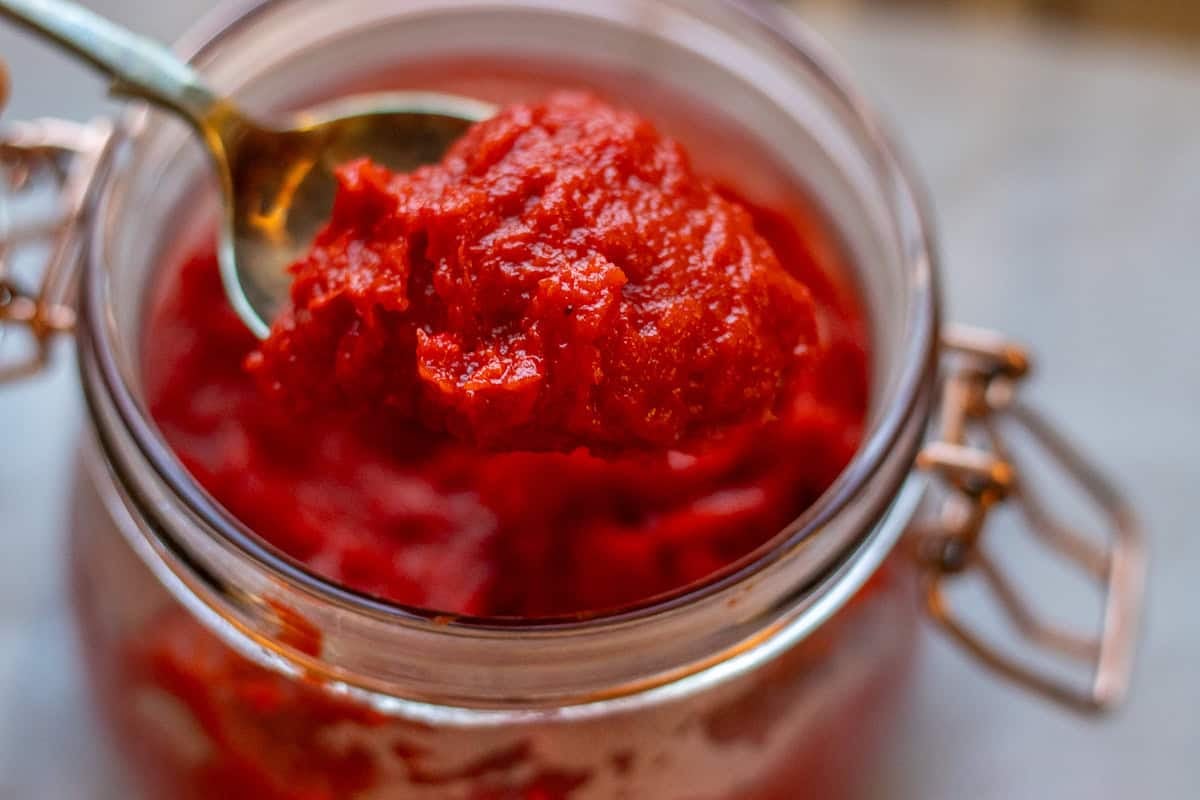
While still warm, spoon the paste into a clean, sterilised glass jar. Top with a thin layer of olive oil all over the surface to help preserve it. Seal the jar and let it cool. Then store in the fridge.
Recipe Tips From the Chef
- Use fresh, firm red peppers. Soft or nearly ripe ones will give more moisture to reduce and make the process longer.
- Adjust the heat of red pepper paste to your liking; remove seeds from chillies and/or reduce the number of chillies (or skip entirely) for a milder paste.
- Wear kitchen gloves if handling a lot of chillies—pepper oils linger.
- Sterilise your jars and lids properly to avoid spoilage; wash in hot soapy water, rinse well and dry, or place in a low oven for some minutes.
- Always top the jar with olive oil so the paste stays sealed from air. This helps extend shelf life.
- Use a clean spoon every time you scoop from the jar. Contaminated utensils shorten shelf life.
- If you see mould or an off smell, discard the batch. Even a small spot of mould can mean the whole jar is compromised.
- You can make larger batches in summer when peppers are abundant and cheaper, then store smaller jars through the year.
Storage Instructions
After sealing the jar with the olive oil top, place it in the refrigerator. It keeps for several months when stored this way. The olive oil layer is key: every time you open the jar, top up the oil to maintain the seal from air. Otherwise, oxidation or spoilage risk increases. If you plan to consume it within a few weeks, fridge-only is fine.
Freezing is a very good option for longer storage. Some recipes suggest freezing in ice-cube trays, then transferring to storage bags once solid. You can pull out one cube at a time for cooking. The paste can keep for up to 9 months when frozen and sealed well. Defrost overnight in the fridge or use directly in cooking (if added to a hot pan).
Things to watch
- Colour change: The paste should remain a deep red. If you see it go dull brownish with mould on surface, discard.
- Smell check: If it smells off or sour, don’t take the risk.
- Always use clean, dry utensils. Moist spoons or fingers introduce water and bacteria.
- If the oil layer gets cloudy or you see bubbles, it may signal spoilage.
Where to Use Red Pepper Paste
- Spread over toast with a drizzle of olive oil and a handful of cracked pepper. Works brilliantly with feta or goat cheese.
- Stir a spoon into Kuru Fasulye, Turkish Meatball Soup - Sulu Kofte or Turlu - Mediterranean Roasted Vegetables for a pepper-rich base.
- Use it to marinate Turkish Chicken Shish Kebab, Lamb Shish Kebab or add it to Adana Kebab mixture.
- Use in dips such as Muhammara (Red Pepper Dip) or Turkish Acili Ezme Salad.
- Bake it into Biberli Ekmek - Turkish Pepper Bread: One of the classics from southern Turkey is the flatbread with pepper paste, feta and sesame seeds.
Recipe FAQs
I make my Homemade Tomato Paste in the same weeks, with two easy methods.
Yes. Bell peppers (capsicum) work well for the sweet version. If you want heat, mix in red chillies. The key is firm, ripe peppers. Some traditional recipes use Turkish long red peppers (such as “acı kapya biber”) or varieties local to Turkey. If your local red peppers are very large and watery, you may need a bit more cooking time to reduce them.
If the paste is watery or has a raw pepper flavour, chances are you haven’t reduced enough. It should thicken significantly and the moisture should largely evaporate.
Stirring continuously during reduction helps. If you stop too early, the paste will have less concentrated flavour and less preservation capacity.
Related Recipes
For more delicious recipes that you can use red pepper paste, why not try:


Did you make this recipe? Please let me know how it turned out! Leave a comment below and tag @cookingorgeous on Instagram and hashtag it #cookingorgeous.
I hope you enjoy the process of making this homemade Biber Salçası - Turkish Red Pepper Paste as much as you enjoy using it in your recipes! 🙂
Bon appétit! / Afiyet olsun!
Want to Save This Recipe?
Enter your email & I'll send it to your inbox. Plus, get great new recipes from me every week!
By submitting this form, you consent to receive emails from Cooking Gorgeous
Biber Salçası - Turkish Red Pepper Paste
Equipment
- 1 kitchen scale
- 1 measuring spoons
- 1 Hand blender
Ingredients
- 1400 g red pepper (sweet Romano or bell pepper)
- 1½ teaspoon salt
- water (enough to cover peppers)
- 1 tablespoon olive oil
Instructions
- Wash the red bell peppers and remove stems and seeds. Cut into chunks (about 1½-2 inches / 4-5 cm). Wash and seed the chillies if using.
- In a wide, heavy pan, add the pepper chunks and hot water.
- Cook over medium heat, stirring often, pressing gently so peppers break down, until they soften and most of the liquid is absorbed (about 25 minutes in my experience).
- If using, add the chopped chillies and continue over medium-low heat for another 8-12 minutes until the chillies are cooked and moisture has mostly evaporated.
- Drain any extra liquid. Let the mixture cool slightly, then transfer it into a food processor or blender, and process until it becomes an almost smooth purée. Leaving a little texture is fine if you like.
- Return the purée to the pan and add the salt. Over low heat, stir continuously so it does not stick or burn.
- Cook until it thickens and reduces roughly by half, and the paste darkens slightly. This takes about 60-75 minutes, depending on volume.
- While still warm, spoon the paste into a clean, sterilised glass jar. Top with a thin layer of olive oil all over the surface to help preserve it.
- Seal the jar and let it cool. Then store in the fridge.
Notes
- Use fresh, firm red peppers. Soft or nearly ripe ones will give more moisture to reduce and make the process longer.
- Adjust the heat of red pepper paste to your liking; remove seeds from chillies and/or reduce the number of chillies (or skip entirely) for a milder paste.
- Wear kitchen gloves if handling a lot of chillies—pepper oils linger.
- Sterilise your jars and lids properly to avoid spoilage; wash in hot soapy water, rinse well and dry, or place in a low oven for some minutes.
- Always top the jar with olive oil so the paste stays sealed from air. This helps extend shelf life.
- Use a clean spoon every time you scoop from the jar. Contaminated utensils shorten shelf life.
- If you see mould or an off smell, discard the batch. Even a small spot of mould can mean the whole jar is compromised.
- You can make larger batches in summer when peppers are abundant and cheaper, then store smaller jars through the year.
Lisa says
Great guide for making pepper paste at home. The flavor was rich and very useful in Middle Eastern recipes.