
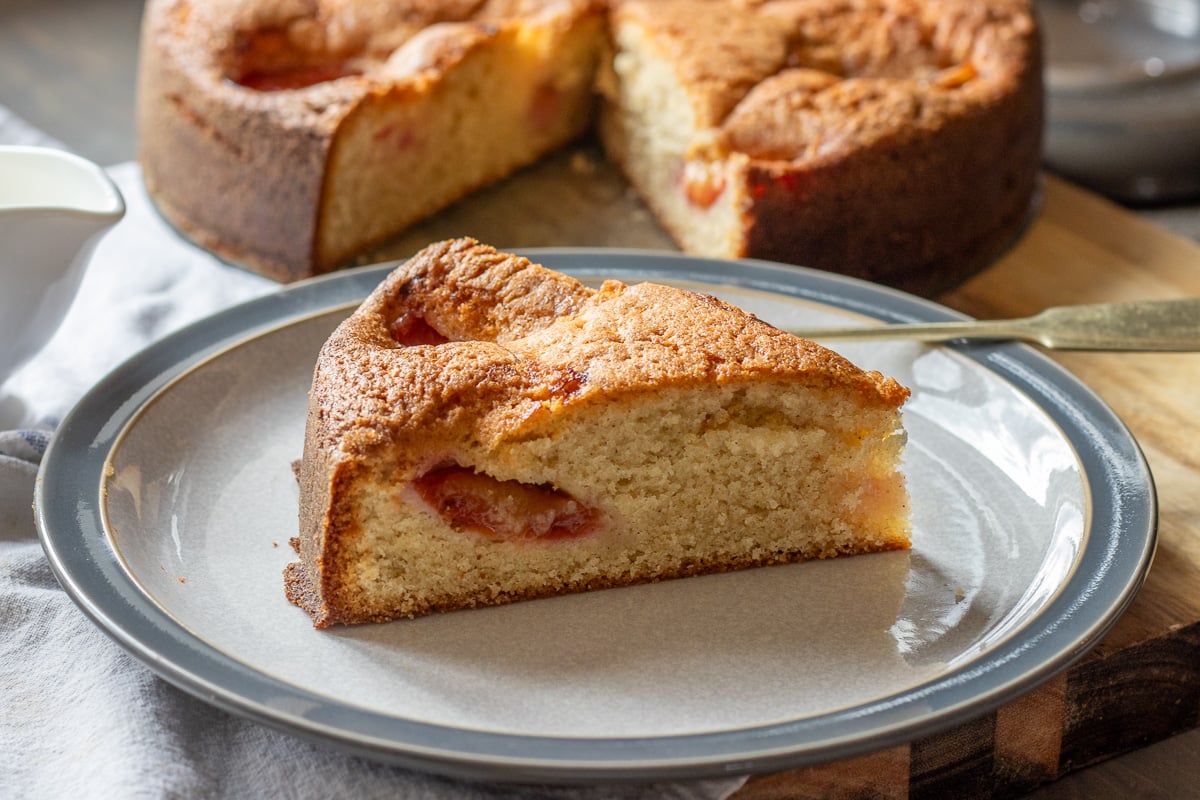
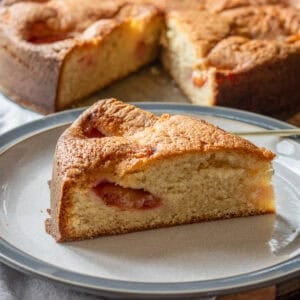
This Plum Cake Recipe is my favorite way to bake with late summer fruit. The sponge is soft and buttery, and the fruit goes jammy on top as the cake bakes. It's an easy cake, made with fresh plums and a handful of pantry ingredients.
Jump to:
The sugar topping turns into a thin, crunchy crust. You can bake it a day ahead, and it keeps for a couple of days. I use Victoria plums when they're in season, but any ripe plums work. A warm slice with ice cream or custard is hard to beat.
Why This Recipe Works
- It's an easy bake with everyday ingredients, and there's nothing complicated in the method.
- The fruit goes jammy in the oven, so even slightly tart plums bake up sweet.
- You can bake the plum cake a day ahead, and it stays moist.
- Any ripe plums work, and peaches or apricots make a good swap.
- It looks impressive enough for guests, but it's simple enough for a weekday bake.
- A slice works for brunch, afternoon tea, or dessert with a spoon of ice cream.
Ingredients You'll Need
Please scroll down to the recipe card below for the full ingredients list with measurements, complete recipe method, recipe notes, and nutritional information.
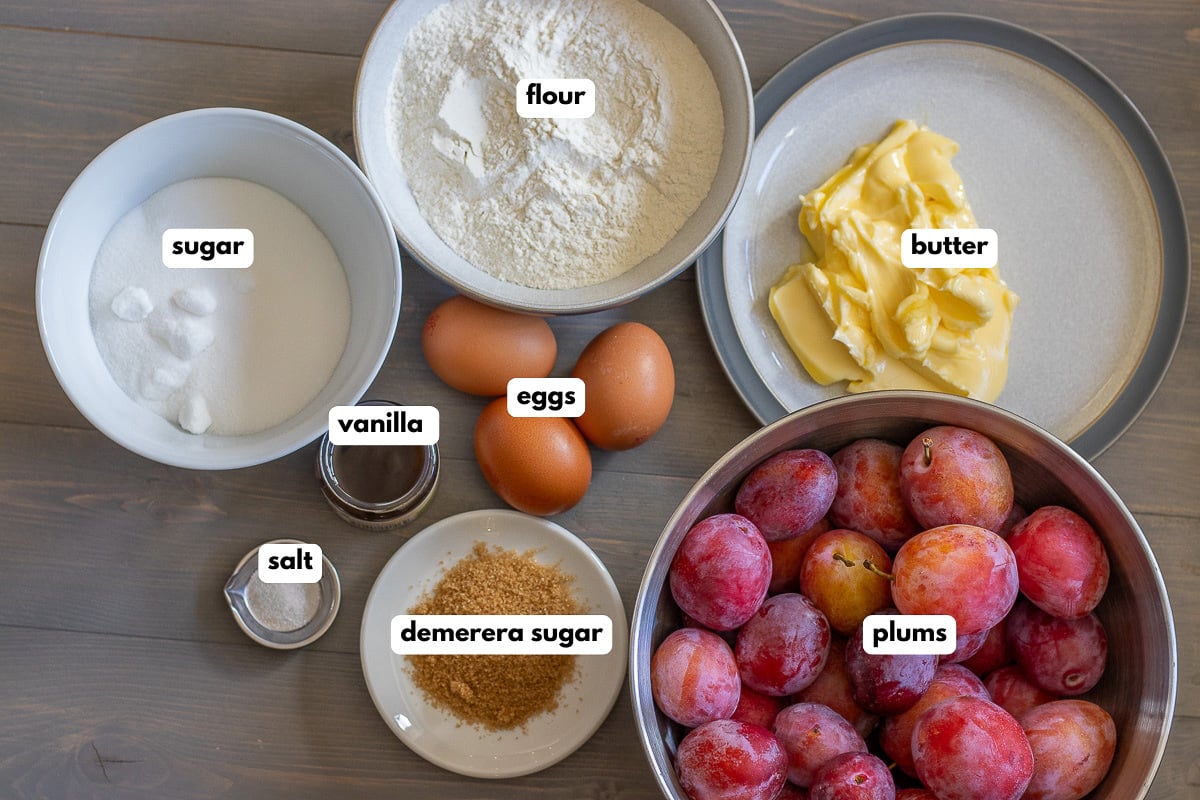
- Plums - Ripe but firm fruit holds its shape in the oven. I use Victoria plums, and any variety works as long as the fruit gives a little when you press it.
- Butter - Unsalted and softened, so it creams easily with the sugar. Take it out of the fridge an hour ahead.
- Granulated sugar - For the sponge. Superfine sugar works the same if that's what you have in the cupboard.
- Self-rising flour - It has the raising agent already in it. If you only have all-purpose flour, the FAQ below covers the swap.
- Eggs - Large eggs at room temperature mix into the batter without curdling it.
- Vanilla and cinnamon - A little of each goes into the batter. The cinnamon is really good with baked plums.
- Turbinado sugar - Coarse golden sugar for the topping. It's sold as demerara in the UK, and it keeps its crunch in the oven.
Equipment You'll Need
This plum cake needs an 8-inch (20 cm) round pan and some parchment paper for lining.
A hand mixer or a stand mixer makes creaming the butter and sugar quick, but a wooden spoon and a strong arm work fine.
You'll want a wire rack at the end, so the bottom doesn't go soggy as the cake cools.
How to Make Plum Cake?
Make the Batter
Heat the oven to 180° C - 356° F. Butter an 8-inch (20 cm) round cake pan and line it with parchment paper.
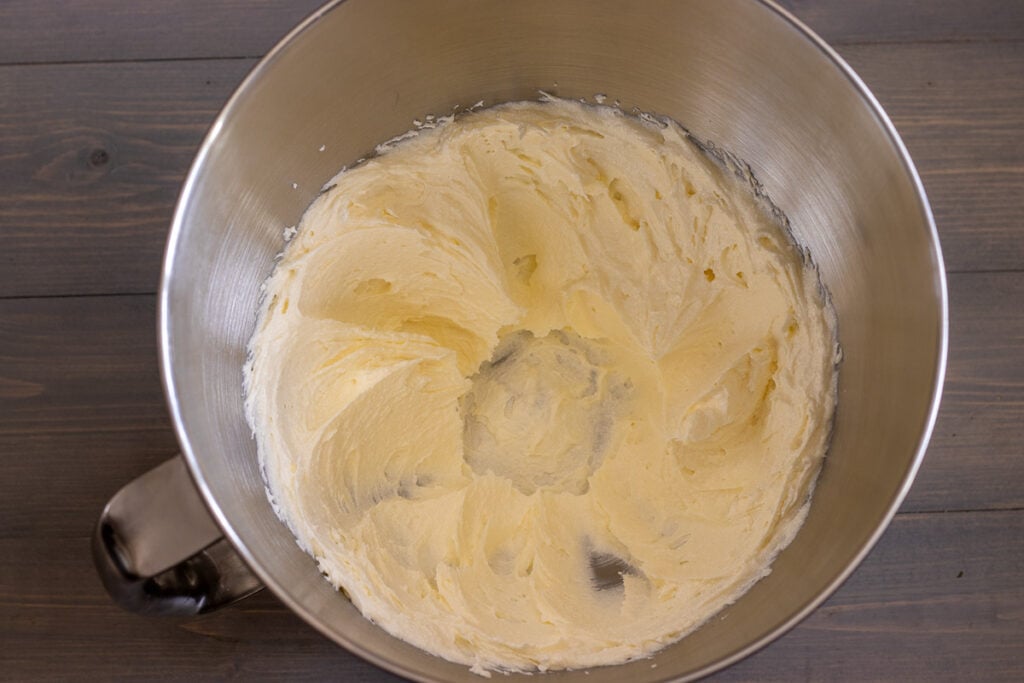
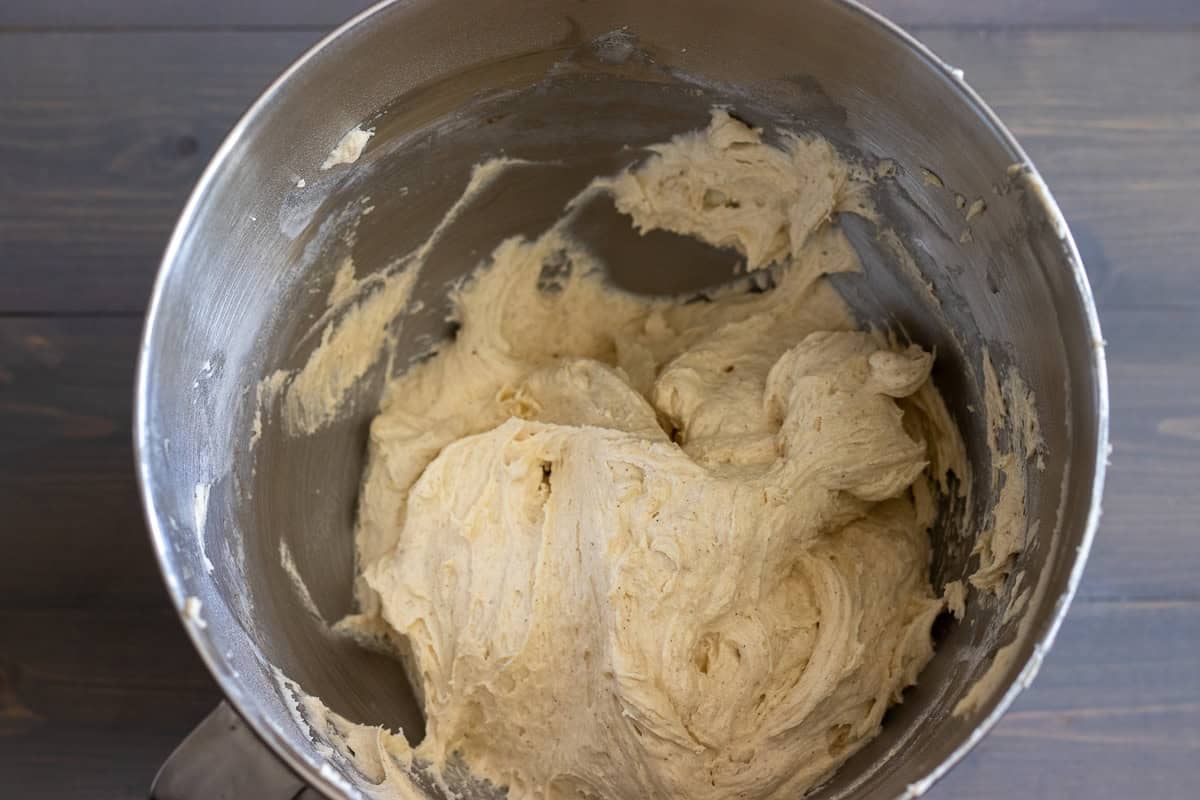
Beat the softened butter and sugar together for about 3 minutes, until light and fluffy. Add the eggs one at a time, and beat well after each one. Mix in the vanilla extract.
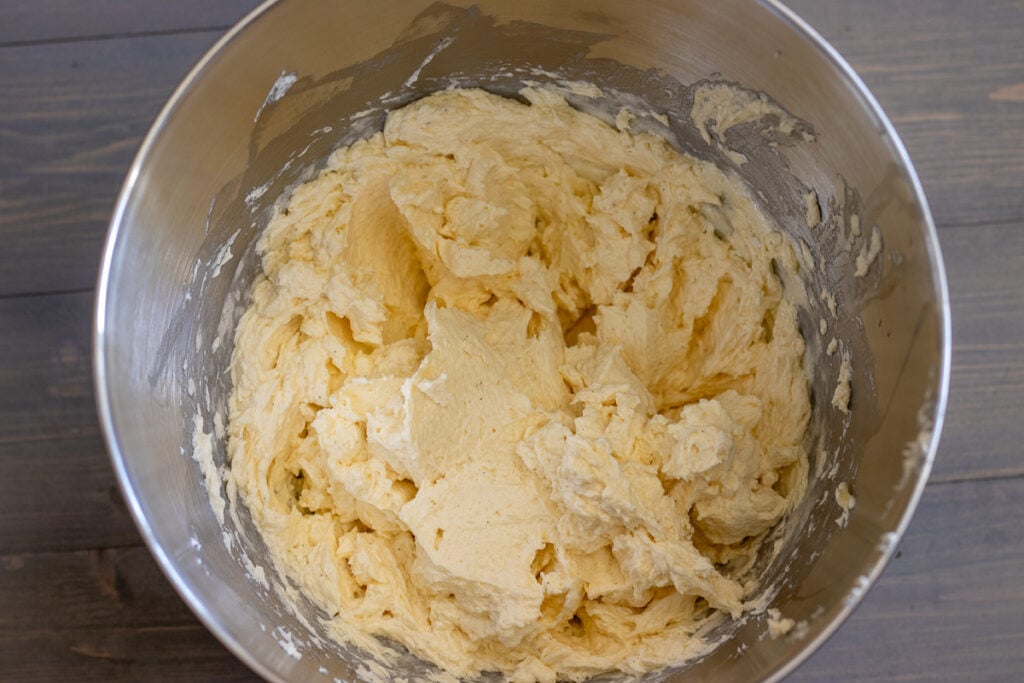
Sift in the flour, cinnamon, and salt, then fold gently until just combined.
Top with the Plums
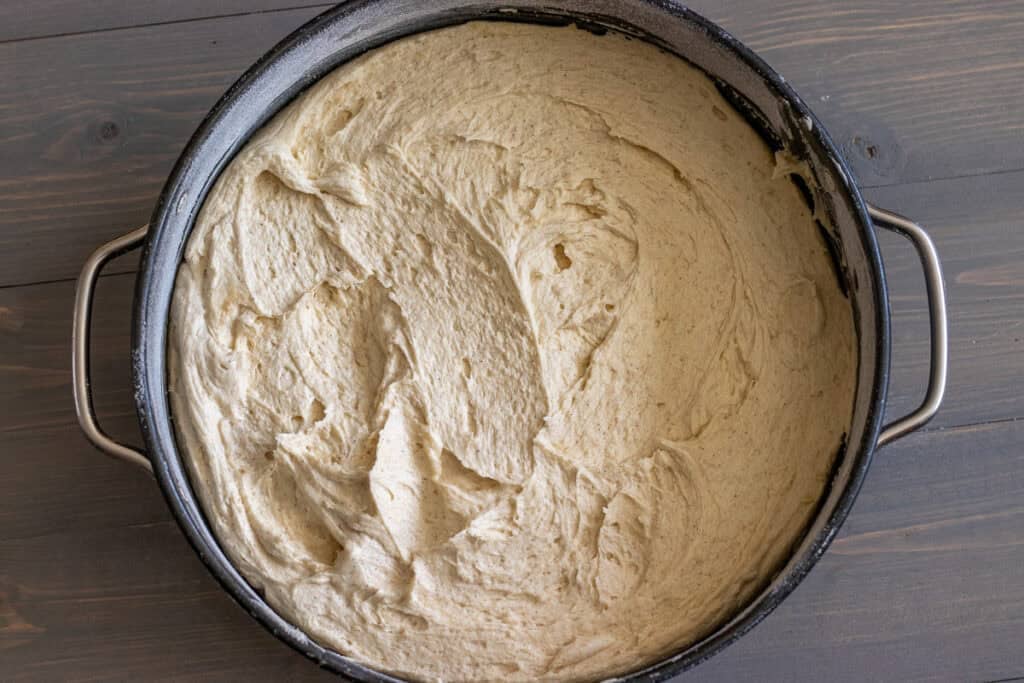
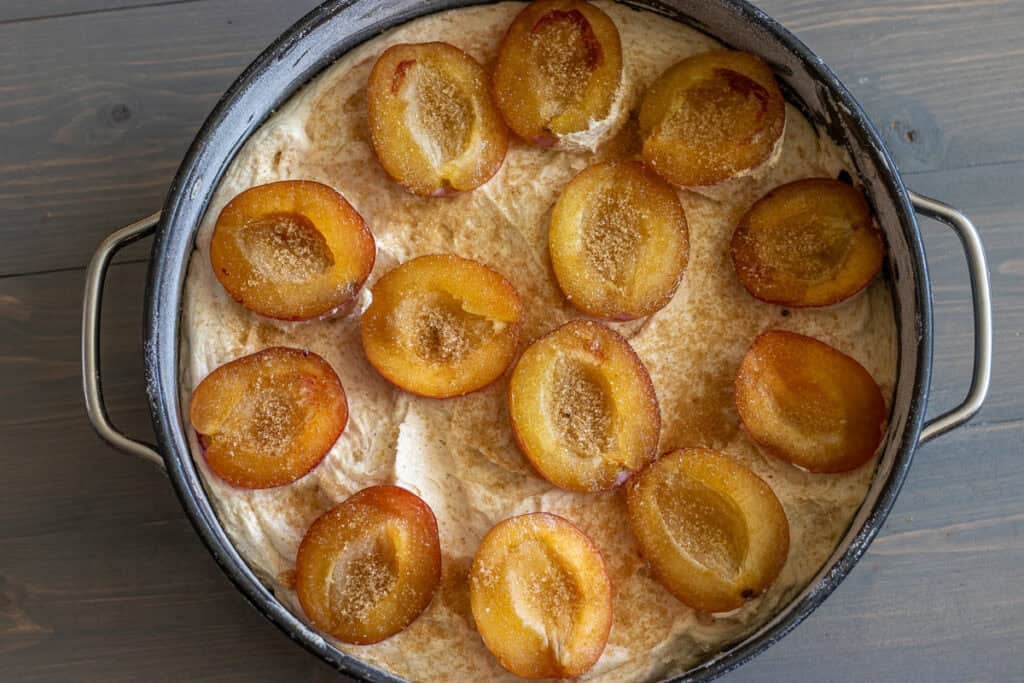
Spread the batter into the pan and level the top. Halve and pit the plums, then arrange them cut-side up over the batter, pressing them in slightly. Scatter the turbinado sugar evenly over the top.
Bake and Cool
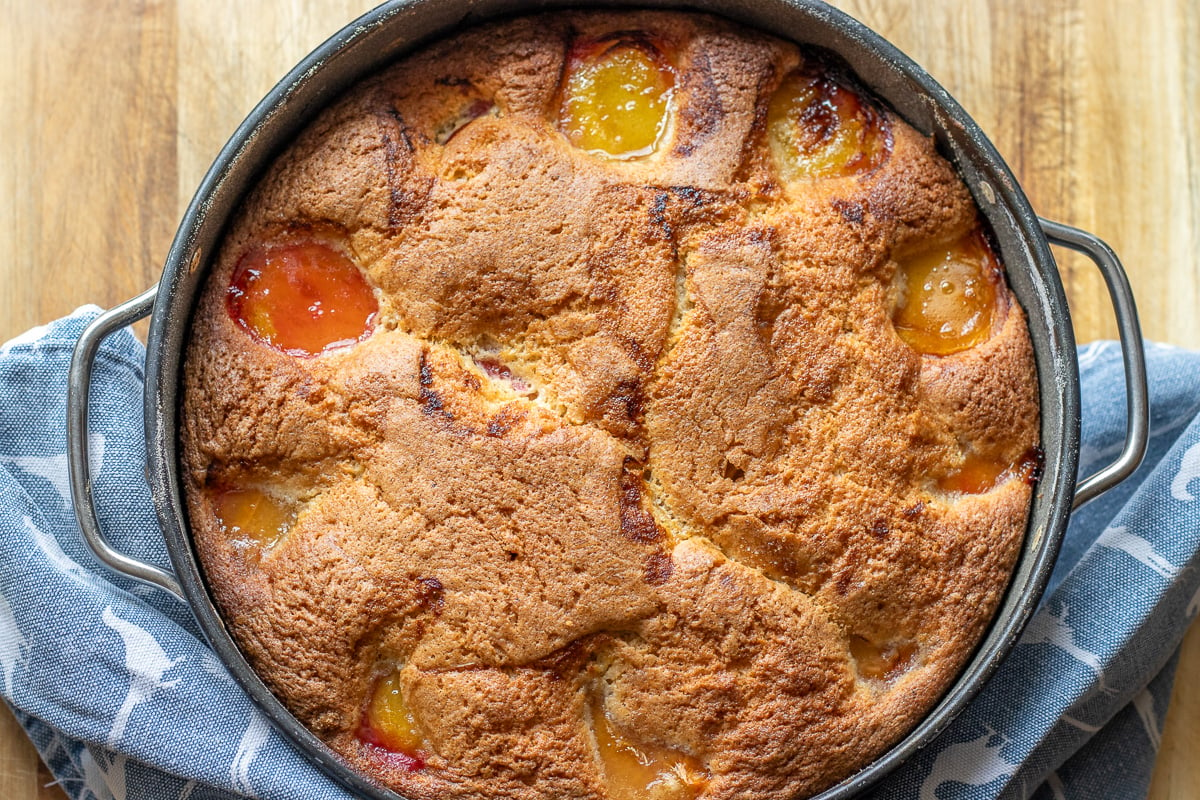
Bake for 40 to 45 minutes, until the cake is golden and a skewer comes out clean. Let it cool in the pan for 10 minutes, then move it to a wire rack to cool fully.
Recipe Tips From the Chef
- Use butter that's properly softened. Cold butter won't cream, and the sponge comes out dense.
- Add the eggs one at a time. If the mixture starts to curdle, mix in a spoonful of the flour.
- Fold the flour in gently and stop as soon as it disappears. Overmixing makes the sponge tough.
- Place the plums cut-side up, so the juice stays in the fruit instead of soaking into the batter.
- Pick ripe but firm plums. Very soft fruit releases too much juice and can leave the middle soggy.
- Check the plum cake at 40 minutes. If the top is browning too fast, cover it loosely with foil for the last few minutes.
- The plum cake is delicate when it's still warm. Leave the parchment paper on until it has cooled fully.
Variations
- Swap the plums for peaches, nectarines, apricots, or pitted cherries.
- Scatter a handful of flaked almonds over the batter with the sugar topping for extra crunch.
- Use ground ginger or mixed spice in place of the cinnamon.
- For a gluten free plum cake, use a 1-to-1 gluten free flour blend and add 2 teaspoons of baking powder.
Storage and Make Ahead Instructions
You can bake the cake a day ahead. Keep it covered at room temperature, and the sugar top stays crunchy.
Store leftover plum cake in an airtight container in the fridge for up to 2 days, and let cold slices come back to room temperature before you serve them.
For longer storage, wrap slices well and freeze them for up to 3 months. Defrost the slices at room temperature, and warm them in a low oven before serving if you like.
How to Serve Plum Cake
A warm slice with vanilla ice cream or a jug of custard is my favorite way to serve this plum cake. A spoonful of Kaymak on top works really well, and so does a light dusting of powdered sugar with whipped cream.
It's just as good cold, with a glass of Turkish Tea or a small cup of Turkish Coffee in the afternoon.
If you enjoy baking with fall fruit, my Ayva Tatlisi and Kabak Tatlısı are both worth trying.
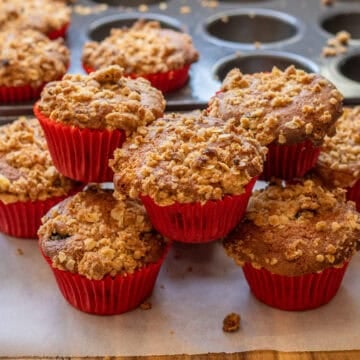
If you want another easy bake with fresh fruit, try my Blackberry Streusel Muffins.
FAQs
Very ripe fruit is heavy with juice and sinks more easily. Press the halves into the surface only lightly, and pick plums that are ripe but still firm. The thick batter holds them near the top as the cake rises.
No. The skins soften in the oven and hold the fruit together, so the halves keep their shape on top of the plum cake.
Yes. Add 2 teaspoons of baking powder to the flour and carry on with the recipe as written. Self-rising flour is all-purpose flour with the raising agent already mixed in.
The plums were probably too ripe. Soft fruit releases a lot of juice into the batter as it bakes. Use ripe but firm plums, and check the middle with a skewer before you take the cake out.
You can, but the plum cake is better with fresh fruit. Drain canned plums really well and pat them dry, or the extra juice makes the top wet.
Any variety that is ripe but still firm, with smooth, unwrinkled skin. I use Victoria plums in the UK, and Italian prune plums are the usual choice elsewhere. Plum season runs from July to September.
Yes. A springform bakes in the same time and releases more easily. A 9-inch pan gives a thinner cake, so start checking a few minutes earlier.
Related Recipes
For more delicious cake recipes why not try:


Did you make this recipe? Please let me know how it turned out! Leave a comment below and tag @cookingorgeous on Instagram and hashtag it #cookingorgeous.
I hope you enjoy the process of making this soft and buttery Plum Cake as much as you enjoy eating it! 🙂
Want to Save This Recipe?
Enter your email & I'll send it to your inbox. Plus, get great new recipes from me every week!
By submitting this form, you consent to receive emails from Cooking Gorgeous
Plum Cake Recipe
Ingredients
- 1½ sticks unsalted butter softened (175 g)
- ⅞ cup granulated sugar (175 g)
- 3 large eggs
- 1⅓ cups self-rising flour (175 g)
- 1 teaspoon vanilla extract
- 1 teaspoon ground cinnamon
- 1 pinch salt
- 7 Victoria plums halved and pitted (about 1 lb - 450 g)
- 2 tablespoon turbinado sugar for the topping
Instructions
Make the Batter
- Heat the oven to 180° C - 356° F. Butter an 8-inch (20 cm) round cake pan and line it with parchment paper.
- Beat the softened butter and sugar together for about 3 minutes, until light and fluffy.
- Add the eggs one at a time, and beat well after each one. Mix in the vanilla extract.
- Sift in the flour, cinnamon, and salt, then fold gently until just combined.
Top with the Plums
- Spread the batter into the pan and level the top.
- Halve and pit the plums, then arrange them cut-side up over the batter, pressing them in slightly.
- Scatter the turbinado sugar evenly over the top.
Bake and Cool
- Bake for 40 to 45 minutes, until the cake is golden and a skewer comes out clean.
- Let it cool in the pan for 10 minutes, then move it to a wire rack to cool fully.
Notes
- Use properly softened butter at room temperature; cold butter won't cream, and the sponge comes out dense.
- If the mixture curdles when you add the eggs, mix in a spoonful of the flour.
- Fold the flour in gently and stop as soon as it disappears, or the sponge turns out tough.
- Place the plums cut-side up, so the juice stays in the fruit.
- Pick ripe but firm plums; very soft fruit can leave the middle soggy.
- No self-rising flour? Use all-purpose flour and add 2 teaspoons of baking powder. For a gluten free cake, a 1-to-1 gluten free flour blend with the same baking powder works.
- Check at 40 minutes, and cover the top loosely with foil if it's browning too fast.
- Peaches, nectarines, apricots, or pitted cherries work in place of the plums.
- Make ahead: bake the cake a day ahead and keep it covered at room temperature.
- The cake is delicate when warm; leave the parchment paper on until it has cooled fully.
- Leftovers keep 2 days in the fridge in an airtight container, or 3 months in the freezer, well wrapped. Defrost at room temperature, and let cold slices come back to room temperature before serving.


Sophie says
My favorite way to bake with late summer plums and this recipe is a keeper!