
Julia Child's Beef Bourguignon, or Bœuf à la Bourguignonne, is one of the most famous beef stews in French cooking. It's made with red wine, bacon, mushrooms and pearl onions, and it's sometimes called Beef Burgundy.

The recipe is adapted from her book, Mastering the Art of French Cooking, with a few steps simplified. The beef needs three slow hours in the oven, but almost none of that time is hands on.
It's even better made a day ahead, so it's a good one for having people over. It looks like a restaurant dish, but there's nothing difficult in it.
Jump to:
- Where Beef Bourguignon Comes From
- What's The Best Wine For Bourguignon?
- Why This Recipe Works?
- Do You Need to Marinate the Beef?
- Ingredients You'll Need
- How to Make Julia Child's Beef Bourguignon
- Serving Suggestions
- Recipe Tips From the Chef
- Storage Instructions
- Make Ahead
- Recipe Variations
- Troubleshooting
- Recipe FAQs
- Related Recipes
- Julia Child's Beef Bourguignon Recipe
It suits any occasion, from family gatherings to Thanksgiving dinner to a get together with friends.
The sauce is the best bit. A whole bottle of red wine cooks down with the bacon and the stock until it is thick enough to coat the back of a spoon.

Where Beef Bourguignon Comes From
The name turns up in print earlier than most people expect. Pierre Larousse listed it in his dictionary in 1867, using bourguignon simply to describe dishes cooked in wine. By 1878 it was being served at the Bouillons Duval in Paris. Through the 1880s it was a fixture on Parisian restaurant menus.
Escoffier wrote it down properly in Le Guide Culinaire in 1903, and Auguste Colombié did the same in La Cuisine Bourgeoise three years later. Between those two, the recipe turned into the one we still cook.
You will often read that it started as a peasant dish, a way of using up the tough cuts. It is a good story, and stewing beef in wine really is that old. But what was actually written down points somewhere else: a Paris restaurant dish of the 1800s, named after the wine and the garnish rather than a farmhouse in Burgundy.
What's The Best Wine For Bourguignon?
This world-famous beef stew takes its name from the Burgundy region of France. It is traditionally cooked with the red wine from this region, which is made from Pinot Noir grapes. This is a wine lower in alcohol, with overtly fruity ripeness and higher acidity.
There are other substitutes, such as Cabernet Sauvignon or Merlot, if you don’t want to spend too much on wine, but make sure you use a good enough quality that you would enjoy drinking. When serving, always pair it with the same wine you used for cooking.
Why This Recipe Works?
- You do not need to be an experienced cook for this one. Every stage has a step by step photo so you can see exactly what it should look like.
- It is a dinner party dish that does not keep you in the kitchen. Once it goes into the oven you have three hours free.
- You can double the whole thing if you are feeding a crowd.
- Cheap cuts are the right cuts here. Chuck, shin and cheek all cost less than steak and end up softer than any steak would.
- The sauce thickens on its own from the flour and the long reduction. There is no cream and no cornstarch in it.
Do You Need to Marinate the Beef?
I marinate the beef in red wine overnight, which is not part of Julia's recipe. She does use a marinade a few pages earlier in the same book, for her Boeuf à la Mode, where the beef sits in wine for 12 to 24 hours. Every French recipe I looked at marinates as well. Most English recipes leave it out.
It is worth knowing what it actually does, because it is not what most people think. It will not make the beef more tender. Three hours in a low oven does that. What you get is beef seasoned all the way to the middle instead of just on the outside.
By morning the wine itself tastes of the carrot, onion, garlic and herbs it has been sitting with. You are not pouring plain wine into the pot.
If you are short on time, cook it on the day. The stew is still very good.
Ingredients You'll Need
Please scroll down to the recipe card below for the full ingredients list with measurements, complete recipe method, recipe notes, and nutritional information.
Marinade For the Beef

- Beef - Chuck is what I usually buy. Shin and cheek both work, and brisket is fine too.
- Wine - A full-bodied red you would happily drink. A good quality Cabernet Sauvignon or Merlot works just as well.
- Vegetables - I use roughly chopped carrots and onions. You can add a celery stick if you prefer.
- Aromatics - Lightly crushed garlic, bay leaves, thyme, and peppercorns work perfectly with this dish. You can make a bouquet garni to remove them easier out of the marinade.
Ingredients for the Beef Bourguignon

- Marinated Beef - Drained and patted dry so it browns properly. Keep the strained marinade liquid, it gets used in the braise.
- Vegetables - All you need is roughly chopped onions, carrots, and some small shallots or button onions.
- Aromatics - Traditionally bay leaves, thyme, finely chopped garlic, and freshly ground pepper are used for this French stew.
- Tomato paste - It adds an umami flavor and a bright red color. You can find it in Turkish or Middle Eastern shops. You can also buy it online from Amazon.
Garnishes
In French cooking those three together have a name of their own. They are the garniture bourguignonne, and they are what turn a pot of beef and red wine into a bourguignon.

- Mushrooms - You can use any mushrooms you like or you have in hand.
- Bacon - Smoked bacon adds a slightly smoky flavor but you can leave it out for non-pork eaters.
- Garlic - Use finely chopped fresh garlic to sauté the mushrooms for extra flavor.
- Butter - It adds richness to the dish. You can use olive oil if you prefer.
How to Make Julia Child's Beef Bourguignon
You shouldn’t rush cooking this iconic Beef Burgundy dish. It takes time and patience to get the best result. When you want to make Beef Bourguignon, make sure you start a day ahead. Don’t be tempted to skip the overnight marinating because it really makes a big difference to the taste.
Marinating the Beef
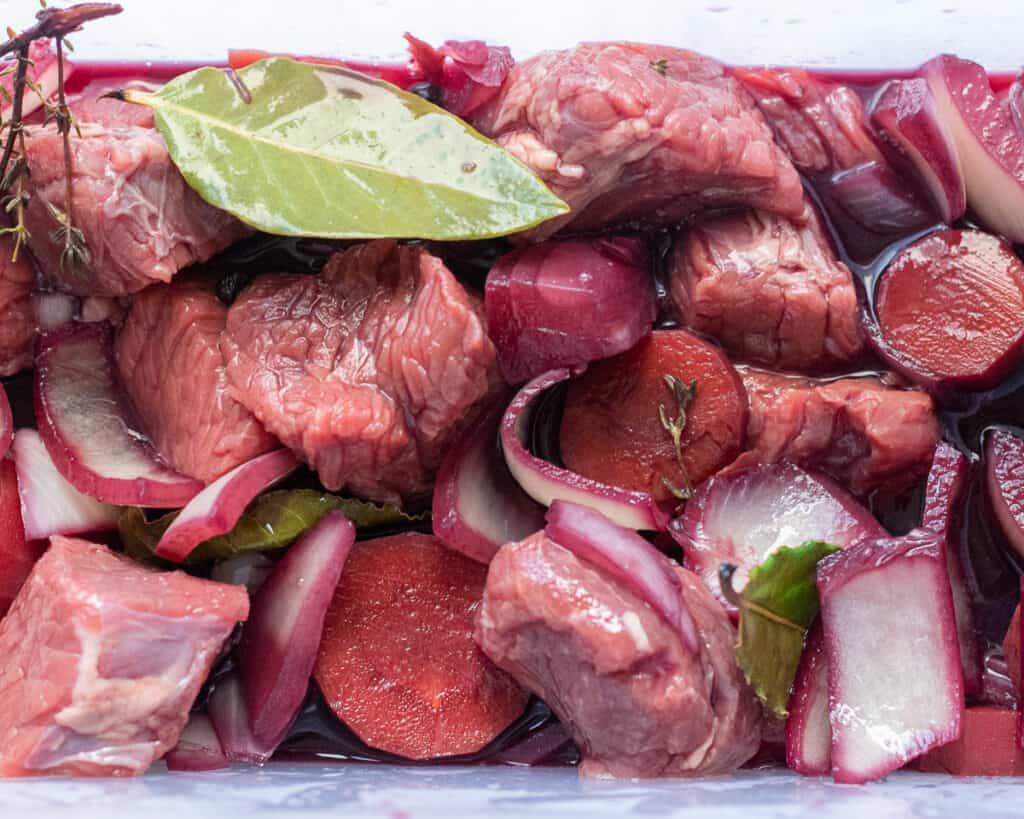
Roughly chop the onion and carrot, and crush the garlic. Put them in a saucepan with the wine, bay leaves, thyme, and peppercorns.
Put the saucepan on medium heat and bring the marinade to a boil. Let it boil for 5 minutes and take the pan off the heat. When cooled down, add the meat to the marinade and keep it in the fridge overnight.

Cooking the Beef Bourguignon
The next day, remove the meat from the marinade and then pat dry with a paper towel.

Strain the marinade and discard the vegetables and herbs, reserving the liquid.
Transfer the liquid to a saucepan and simmer for 5 minutes over low-medium heat. Skim off the scum as it rises, until the wine runs clear. Set the wine aside to go into the stew later.
Preheat the oven to 170° C (340° F) heat your Dutch oven or oven-safe heavy-based pan on medium to high heat, and put the oil in.
Make sure your pan is hot enough before adding the meat, as we need a quick caramelization. Don’t put the meat all together in one batch, as a large amount of cold meat will cool the pan down and will stop the caramelization.

Add them in 2 or 3 batches, depending on the size of your pan and the amount of meat. Transfer the meat onto a plate and then use the same pan to brown your vegetables.
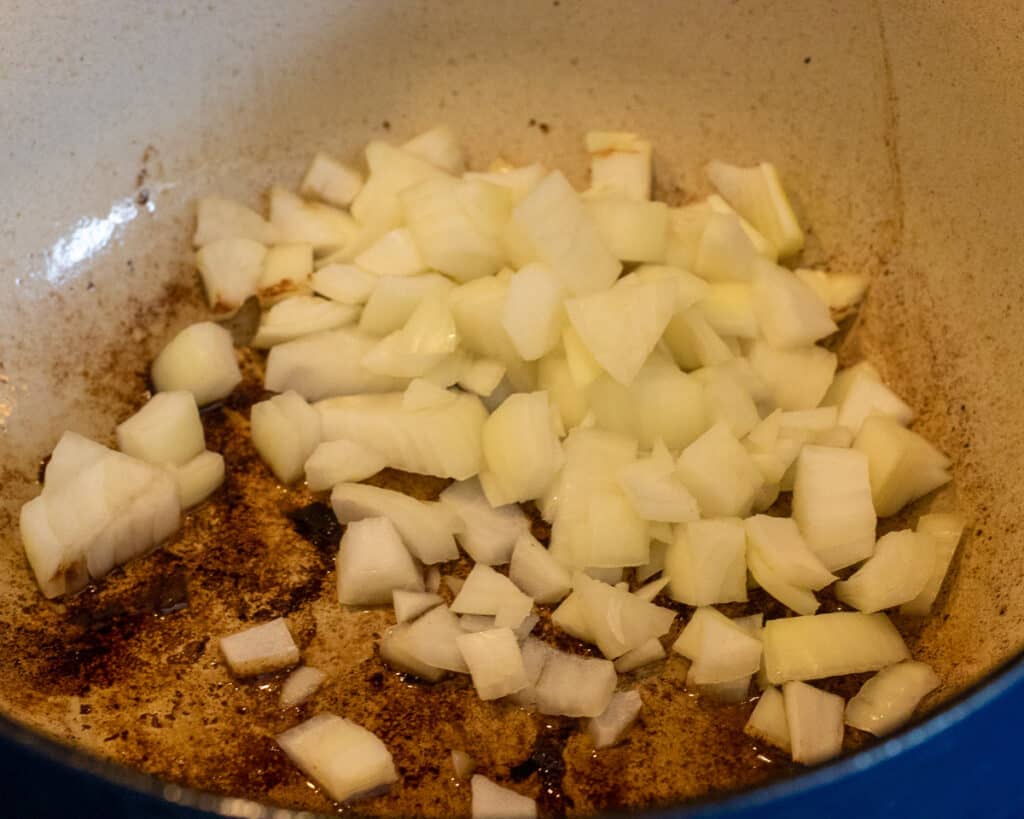
Turn the heat down to medium and then add more oil to the pan if needed. Add the diced onions and then sauté for a few minutes.
Add the carrot and garlic and cook for a few minutes more.
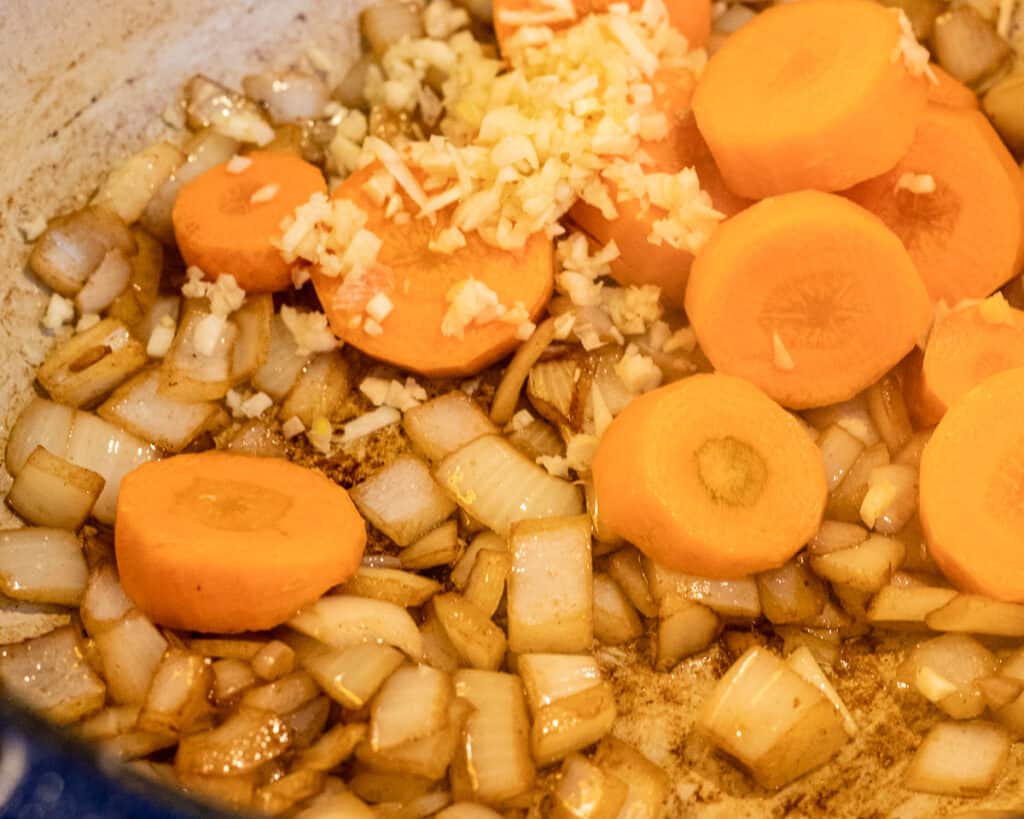
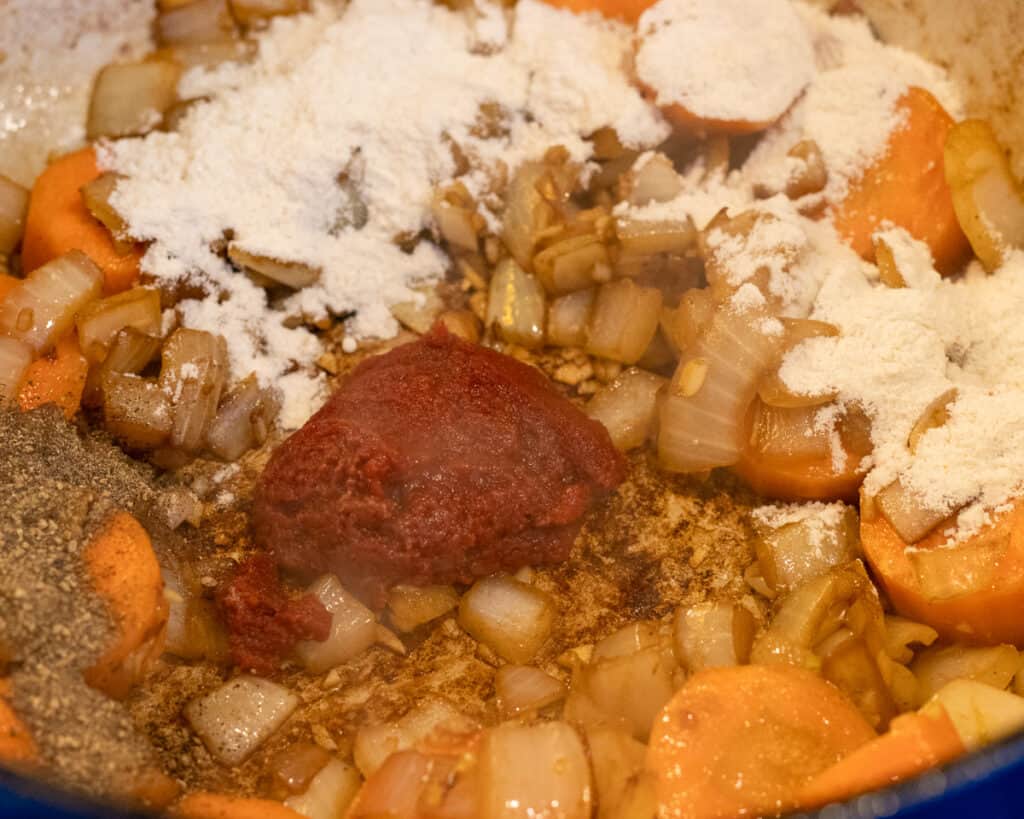
Gently brown the vegetables for 5 minutes, and stir in the flour along with the tomato paste and black pepper.
Add button onions (or shallots) and return the meat to the pan. I like my button onions nicely cooked and soft so I add them to the stew at this stage.
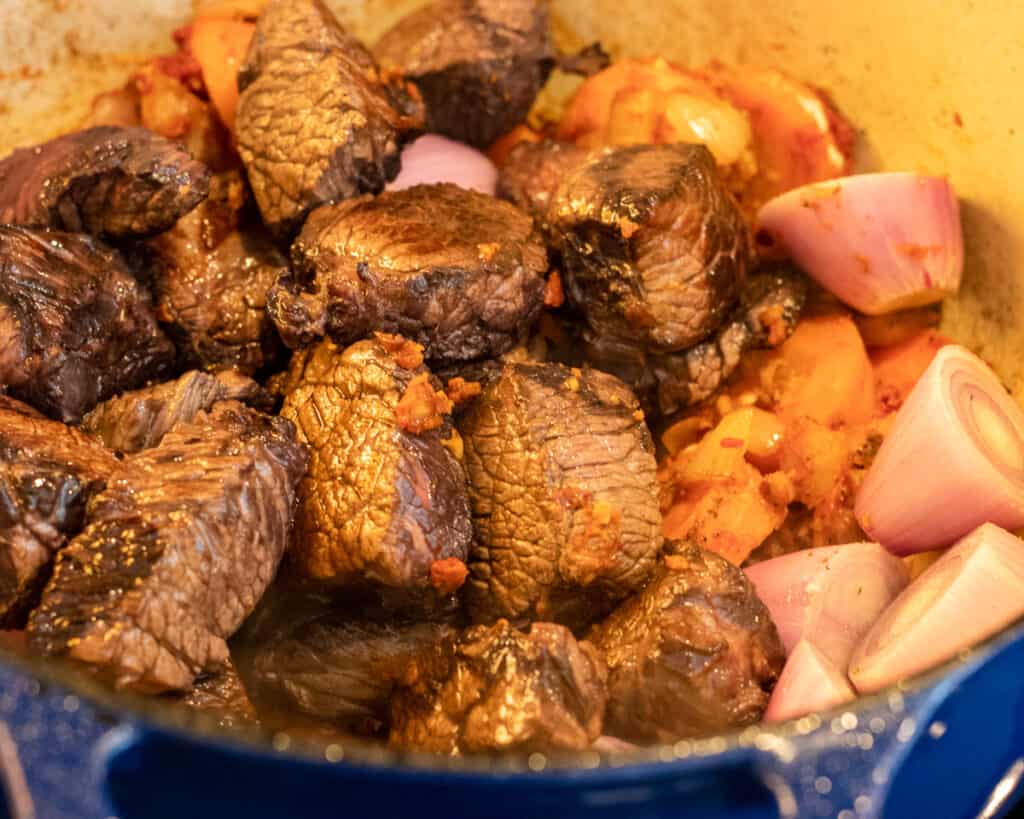
If you like your button onions crispy, skip adding them to the stew at this stage and add them with the garnishes.
Mix well and add some of the wine from the marinade. Deglaze the pan, and add the rest of the wine, beef stock (just enough to cover the meat), thyme, and bay leaves.

Bring it to a boil, cover it with a lid or tin foil, and put the pan or Dutch oven in the preheated oven. The cooking time depends on the type and size of the meat. I usually check after 2 hours, and after that every half an hour until the meat is tender and falling apart easily when touched with a fork.
In the last 45 minutes of cooking time, you can start preparing your garnishes.
Cooking the Garnish
For cooking the garnish, heat a pan and then add the butter. Add bacon and cook until crispy.

Add the mushrooms and then cook for a few more minutes. If you like your button onions crunchy and didn’t add them to the stew already, add them to the pan as well. Stir in the garlic and cook for another minute before taking the pan off the heat.

Finishing the Beef Bourguignon
To finish the dish, add your garnishes to the pan or Dutch oven and then return it to the oven.
Cook for another 30 to 45 minutes, remove the pan from the oven, and check the thickness of the gravy. It should be thick enough to cover the back of the spoon.
If the gravy is too thin, add some cornstarch mixed with a little cold water and stir in.

Return the Dutch oven to the stove and then simmer for a few more minutes until the gravy has thickened to the desired consistency.
Check the seasoning and add salt if needed. Sprinkle chopped parsley on the top to garnish.
Serving Suggestions
Beef Bourguignon is traditionally served with boiled potatoes in France. I usually serve it along with Pomme Puree - Creamy Mashed Potatoes and steamed green vegetables.
It is just as good with Turkish Rice, Crispy Sauté Potatoes with Garlic, Swede and Carrot Mash, a bowl of plain pasta, or a nice crusty Sandwich Bread.
Recipe Tips From the Chef
- You can cook the Beef Bourguignon on the stovetop instead of the oven. If you choose to cook it on the stovetop, make sure to stir every 15 to 20 minutes to avoid it sticking to the bottom of the pan.
- Cut the beef into 2 inch pieces. Smaller cubes dry out over three hours in the oven.
- Sear the beef in small batches. A crowded pan full of cold meat drops in temperature and the beef steams instead of browning.
- The overnight marinade is worth the planning if you have the time. It is not compulsory.
- Julia adds the button onions and mushrooms near the end rather than braising them for hours. They stay whole that way instead of collapsing into the sauce.
Storage Instructions
Let it cool, then keep it in an airtight container in the fridge for 3 to 4 days. You will see 5 or even 7 days quoted elsewhere. Ignore that. The guidance for cooked meat is 3 to 4 days.
It freezes well for up to 3 months. Freeze it in portions so you only thaw what you need, and let it thaw overnight in the fridge before reheating.
Reheat it gently on the stovetop over low heat with the lid on, loosening it with a splash of stock if it has thickened up. Do not let it boil. Boiling tightens the meat again and splits the sauce.
Make Ahead
This one is genuinely better on day two. It is how I cook it whenever people are coming over.
Two things happen overnight. The gelatin sets in the fridge, then melts again when you warm it up, and the sauce ends up thicker for it. The fat rises and sets in a solid layer too. You can lift it straight off with a spoon, which beats trying to skim a hot pot.
If you are serving on day two, cook the mushrooms and the pearl onions fresh on the day rather than reheating them with the stew. They go soft and lose their shape otherwise.
Recipe Variations
- Slow cooker. Brown the beef and the bacon first, then cook on low for about 8 hours or high for 5 to 6.
- Pressure cooker or Instant Pot. Brown on the sauté setting, then 20 to 30 minutes at high pressure with a natural release. Cut the wine back by about a third, since nothing evaporates.
- Without wine. Use beef stock with a splash of balsamic vinegar. It is a different dish, but a good one.
- Different cuts. Shin and cheek both go even softer than chuck. Avoid lean cuts like round, which dry out over a long braise.
- Add baby potatoes or parsnips for the last hour if you want it to stretch further.
- No pork. Leave the bacon out and use butter instead.
- Marinate and freeze. You can freeze the raw beef in its marinade, then thaw it and cook the recipe another day.
Troubleshooting
- The beef is still tough after three hours. It needs longer, not hotter. Tough nearly always means undercooked in a stew, so give it another 30 to 45 minutes at the same low heat.
- The sauce is thin. Lift the meat out and boil the liquid down, or whisk in a paste of equal parts soft butter and flour and simmer for a couple of minutes.
- The sauce is greasy. Chill it and lift the set fat off the top. This is the best argument there is for making it the day before.
- It tastes sharp or bitter. Either the wine was too tannic, or the pot boiled instead of barely bubbling. A pinch of sugar will rescue it. Lower heat next time will do more.
- The meat came out dry. The cubes were cut too small, or the cut was too lean. Stick to chuck, shin or cheek in 2 inch pieces.
Recipe FAQs
The best choice for slow-cooked stews should always be cut with lots of connective tissue and some fat, like brisket, chuck, shin, or cheeks. Lean beef doesn’t work very well with this dish as it will get tough and dry when cooked slowly.
No, it is not compulsory. Cook it on the day and you will still eat well. If you do have the time, four hours helps and a full night is better. Go no longer than 24 hours.
Yes. Salt is the one thing that genuinely travels into the meat overnight, roughly an inch in 24 hours. That is why a marinated batch tastes seasoned right through rather than just on the outside.
Yes, and you should. Strain it, then bring it to a boil before it goes back into the pot. Boiling deals with anything the raw meat left behind and takes the harsh edge off the alcohol at the same time.
That is normal. The wine pigments and the acid change the color of the surface of the meat. It looks alarming in the bowl and disappears the moment the beef hits a hot pan.
It is too wet. Drain it, pat every piece dry with paper towel, and sear it in small batches in a properly hot pan. Crowding a pan with wet meat steams it instead of browning it.
Related Recipes
For more delicious French recipes why not try:


Did you make this recipe? Please let me know how it turned out! Leave a comment below and tag @cookingorgeous on Instagram and hashtag it #cookingorgeous.
I hope you enjoy the process of making this famous French stew 'Julia Child's Beef Bourguignon' as much as you enjoy eating it! 🙂
Want to Save This Recipe?
Enter your email & I'll send it to your inbox. Plus, get great new recipes from me every week!
By submitting this form, you consent to receive emails from Cooking Gorgeous

Julia Child's Beef Bourguignon Recipe
Ingredients
For the Marinade
- 1 ⅔ cups red Burgundy wine (400 ml)
- 1 ¾ lbs chunky diced beef (chuck, shin or cheek) (800 grams)
- 1 onion (roughly chopped)
- 1 carrot (roughly chopped)
- 2 cloves garlic (lightly crushed)
- 3 bay leaves
- 3 sprig thyme
- 6 black peppercorn
For the Beef Bourguignon
- 1 tbsp olive oil
- 1 large onion (diced)
- 1 large carrot (diced)
- 2 cloves garlic (finely chopped)
- ½ teaspoon freshly ground black pepper
- 1 ½ tablespoon all-purpose flour
- 1 tablespoon tomato paste
- 10 button onions or small shallots (peeled)
- 2 bay leaves
- 6 sprigs thyme (finely chopped)
- 1 ⅔ cups wine from the marinade (400 ml)
- 2 ½ cups beef stock (600 ml)
For the Garnish
- 1 tablespoon butter
- 3 ½ oz chopped smoked bacon (100 grams)
- 7 oz sliced button or chestnut mushroom (200 grams)
- 1 clove garlic (finely chopped)
- 1 tablespoon parsley (chopped)
Instructions
Marinate the Beef
- Roughly chop the onion, and carrot, and crush the garlic. Put them in a saucepan with the wine, bay leaves, thyme, and peppercorn.
- Put the saucepan on medium heat and bring the marinade to a boil. Let it boil for 5 minutes and take the pan off the heat.
- When cooled down, add the meat to the marinade and keep it in the fridge overnight.
Cook the Marinated Beef
- The next day, remove the meat from the marinade and then pat dry with a paper towel.
- Strain the marinade and discard the vegetables and herbs, reserving the liquid.
- Transfer the liquid into a saucepan and simmer for 5 minutes over low-medium heat.
- Skim off the scum as it rises, until the wine runs clear. Set the wine aside to go into the stew later.
- Preheat the oven to 170° C (340° F) and heat your Dutch oven or oven-safe heavy-based pan on medium to high heat, and put the oil in.
- Fry the meat in the pan in three batches until nicely browned on all sides. Make sure your pan is hot enough before adding the meat as we need a quick caramelization. Don’t put the meat all together in one batch as a large amount of cold meat will cool the pan down and will stop the caramelization.
- Transfer the meat onto a plate and then use the same pan to brown your vegetables.
- Turn the heat down to medium and then add more oil to the pan if needed. Add the diced onions and then sauté for a few minutes.
- Add the carrot and garlic and then sauté for a few more minutes.
- Gently brown the vegetables for 5 minutes, and stir in the flour along with the tomato paste and black pepper.
- Add button onions (or shallots) and return the meat to the pan. I like my button onions nicely cooked and soft so I add them to the stew at this stage. If you like your button onions crispy, skip adding them to the stew at this stage and add them with the garnishes.
- Mix well and add some of the wine from the marinade. Deglaze the pan, and add the rest of the wine, beef stock (just enough to cover the meat), thyme, and bay leaves.
- Bring it to a boil, cover it with a lid or tin foil, and put the Dutch oven in the preheated oven. The cooking time depends on the type and size of the meat. I usually check after 2 hours and after that every half an hour until the meat is tender and falling apart easily when touched with a fork.
- 45 minutes before the end of the cooking time, start preparing your garnishes.
Cook the Garnish
- For cooking the garnish, heat a pan and then add the butter. Add bacon and cook until crispy.
- Add the mushrooms and then cook for a few more minutes. If you like your button onions crunchy and didn’t add them to the stew already, add them to the pan as well.
- Stir in the garlic and cook for another minute before taking the pan off the heat.
Finish the Beef Bourguignon
- To finish the Beef Bourguignon, add your garnishes to the pan or dutch oven, and then return it to the oven.
- Cook for another 30 to 45 minutes, remove the pan from the oven and check the thickness of the gravy. It should be thick enough to cover the back of the spoon. If the gravy is too thin, add some cornstarch mixed with a little cold water and stir in.
- Return the Dutch oven to the stove and then simmer for a few more minutes, until the gravy has thickened.
- Check the seasoning and add salt if needed. Sprinkle chopped parsley on the top to garnish.
Notes
- Storage. Cool it down, then keep it in an airtight container in the fridge for 3 to 4 days, or freeze it for up to 3 months. Freeze it in portions and thaw overnight in the fridge.
- Reheating. Warm it gently on the stovetop over low heat with the lid on, loosening it with a splash of stock if it has thickened. Do not let it boil, or the meat tightens and the sauce splits.
- Make ahead. It is better on day two. Chilling it overnight lets you lift the set fat straight off the top. If you are serving on day two, cook the mushrooms and pearl onions fresh on the day rather than reheating them with the stew.
- The marinade is optional. The recipe works cooked straight through on the day. If you do marinate, keep the beef in the fridge, use glass or stainless steel rather than aluminum, and go no longer than 24 hours. Salt the beef in the marinade, since salt is the one thing that travels into the meat overnight.
- Reuse the marinade. Strain it and bring it to a boil before it goes back into the pot. That deals with anything the raw meat left behind and takes the harsh edge off the alcohol.
- Pat the beef dry before it goes into the pan. Wet meat steams instead of browning.
- Beef. Use a cut with plenty of connective tissue and some fat, such as chuck, shin, cheek or brisket, in 2 inch pieces. Avoid lean cuts like round, which dry out over a long braise.
- Wine. A good quality full-bodied red that you would happily drink.
- Sear in small batches in a hot pan. A pan crowded with cold meat drops in temperature and the beef will not caramelize.
- Stovetop instead of the oven. Keep it barely simmering with the lid on and stir every 15 to 20 minutes so it does not catch.
- Slow cooker. Brown everything first, then low for about 8 hours or high for 5 to 6. Pressure cooker. 20 to 30 minutes at high pressure with a natural release, with about a third less wine.
- Without wine. Use beef stock with a splash of balsamic vinegar.
- If the sauce is thin, lift the meat out and boil the liquid down, or whisk in a paste of equal parts soft butter and flour. If it is greasy, chill it and lift the fat off.




Ayla says
Made this tonight. First time ever, it is absolutely delicious