
Homemade Tomato Paste, known as Domates Salçası in Turkey, is made with ripe tomatoes and rock salt. It goes into soups, stews, and rice all year round, and there is always a jar of it in my fridge.
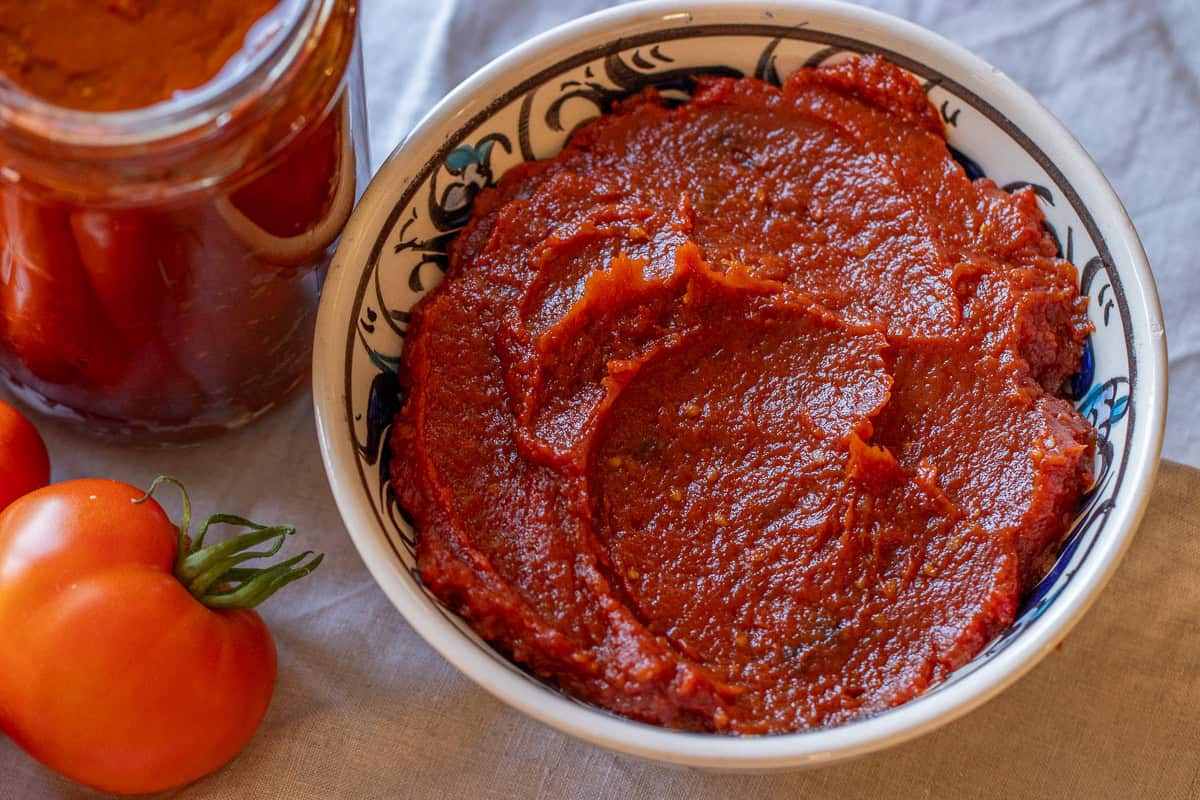
It tastes so much better than the canned paste from the supermarket. There are two ways to make it. You can blitz the tomatoes raw in a powerful blender, or boil them first to soften them.
Jump to:
I'll walk you through both. The paste needs a few hours to reduce, and you do have to stir it, but the work is easy. I make mine every summer with tomatoes from the garden. With a layer of olive oil on top, the jars keep for up to 4 months in the fridge.
Why This Recipe Works
- A few kilos of cheap summer tomatoes replace a whole year of buying tiny cans.
- The powerful blender method gets more paste out of the same tomatoes than the boiling method.
- Finishing the reduction in the oven means you're not standing over a spitting pan for hours.
- Rock salt preserves the paste naturally, without any canning equipment.
- It freezes in cubes, and a big batch never goes to waste.
- Ripeness matters more than variety. Garden tomatoes and market boxes both work.
Ingredients You'll Need
Please scroll down to the recipe card below for the full ingredients list with measurements, complete recipe method, recipe notes, and nutritional information.
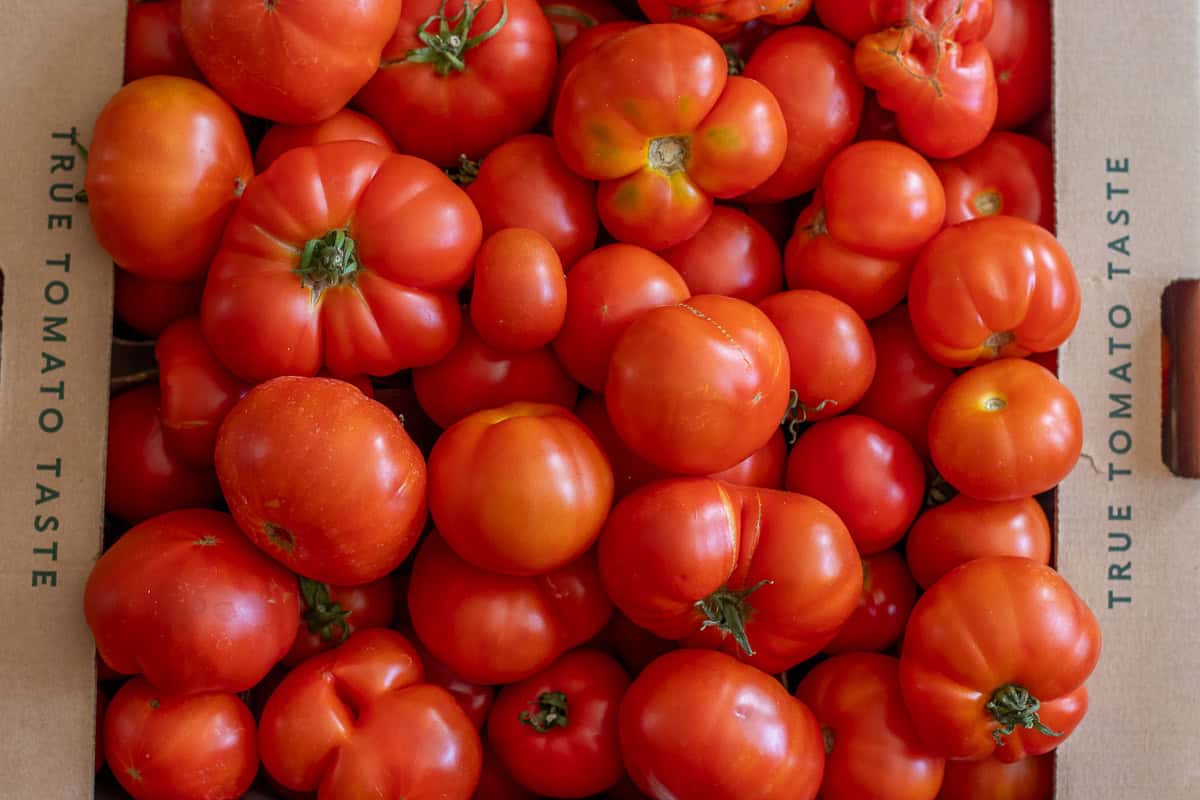
- Tomatoes - Ripe and meaty is what counts. Plum tomatoes give the biggest yield, but my garden beef tomatoes worked great too. Pick ripe fruit, not overripe.
- Rock salt - It seasons and preserves the paste at the same time. Don't swap in table salt, since iodized salt thins the paste and shortens its shelf life.
- Olive oil - A thin layer on top of each jar keeps air out and mold away.
Equipment You'll Need
Making salça at home needs less equipment than you'd think.
For the boiling method, a large pot, a fine sieve, a wide pan, and a deep tray are enough.
Stir with a wooden spoon, since metal can discolor the paste. The second method needs a powerful blender, like a Thermomix. A stick blender isn't strong enough for raw tomatoes.
You'll want clean jars at the end, and a hot dishwasher cycle sterilizes them well.
How to Make Homemade Tomato Paste?
Method 1: Boil and Sieve the Tomatoes
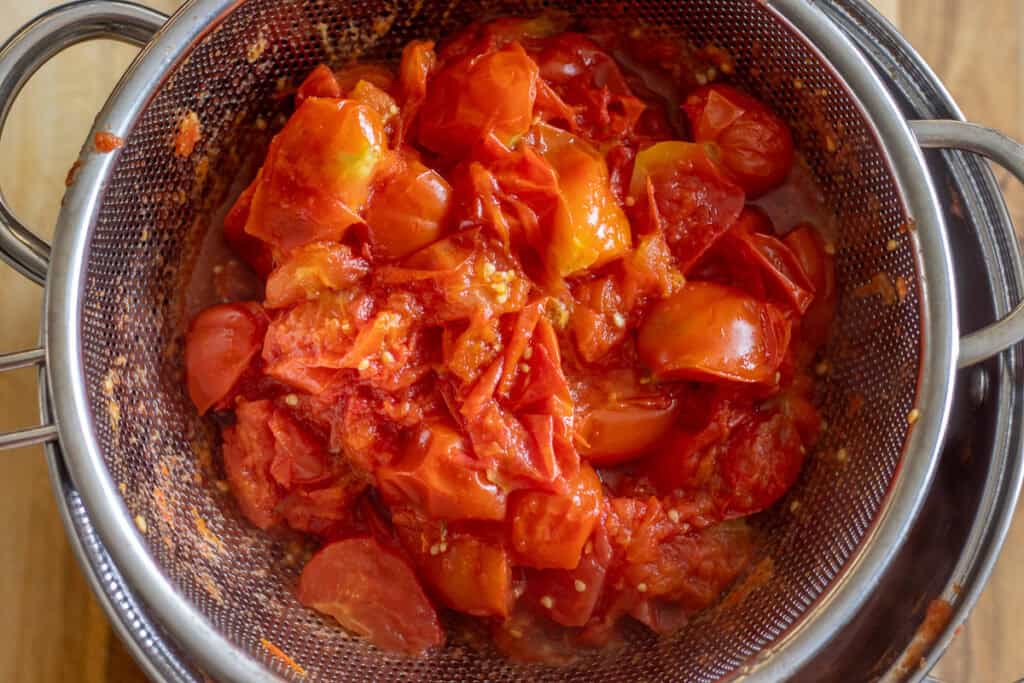
Wash the tomatoes and cut them into quarters. Put them in a large pot and boil them until soft.
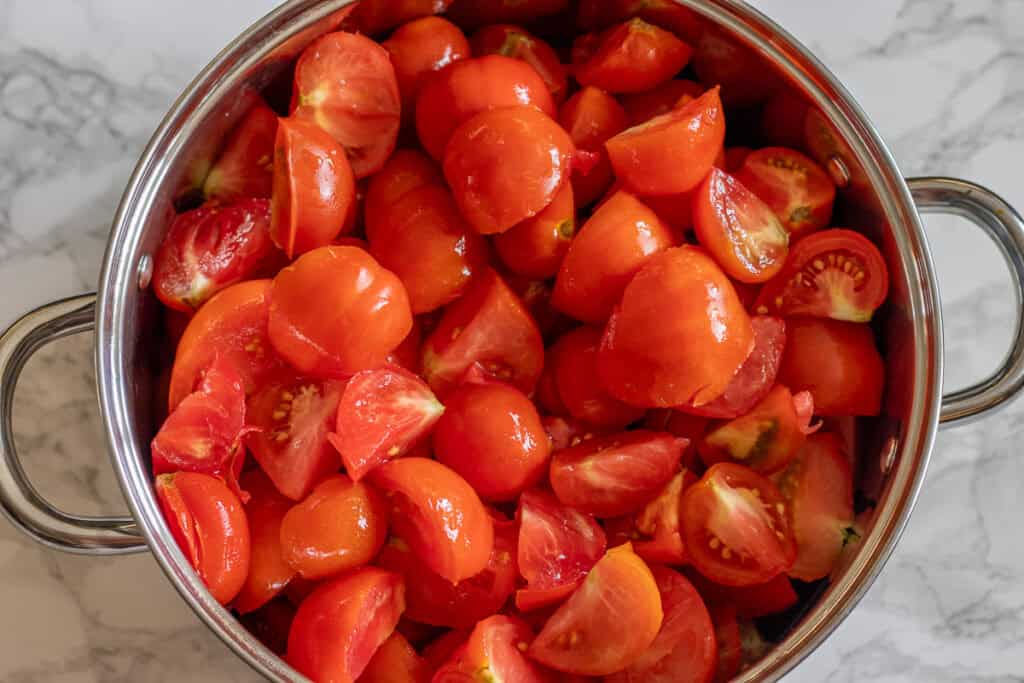
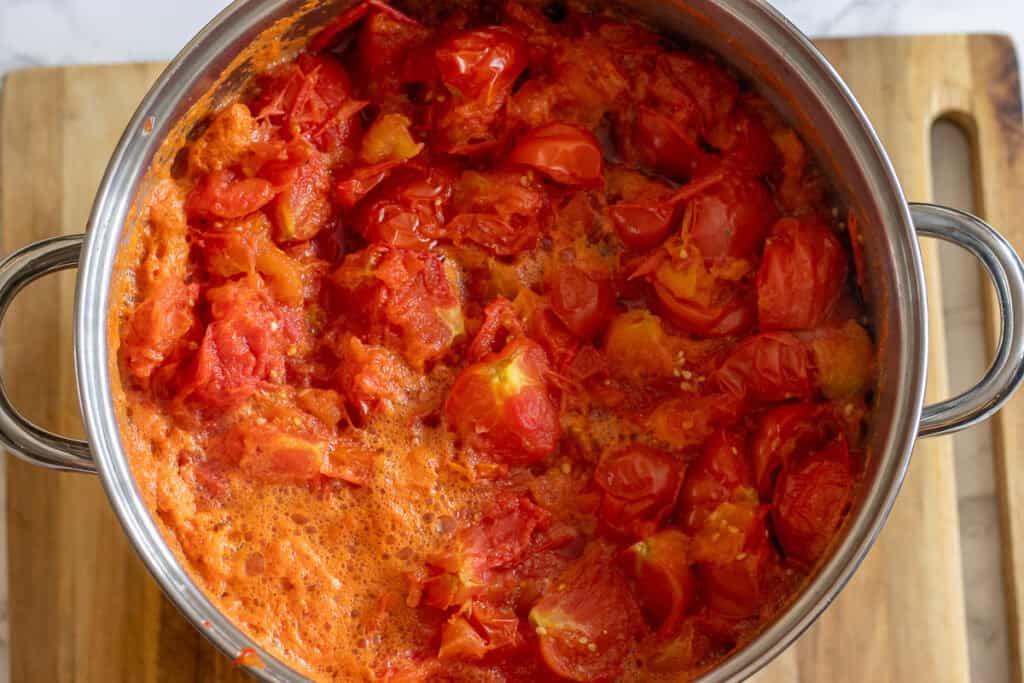
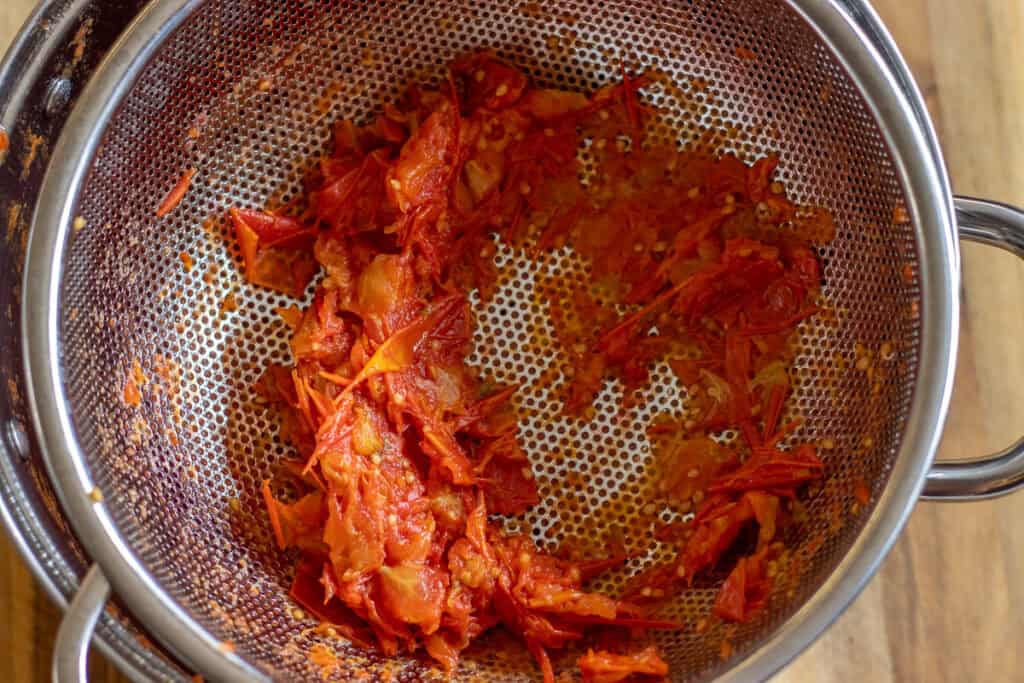
Pass them through a fine sieve to leave the skins and seeds behind. This method takes longer and gives a little less paste, but it needs no special equipment.
Method 2: Blitz Them Raw in a Powerful Blender
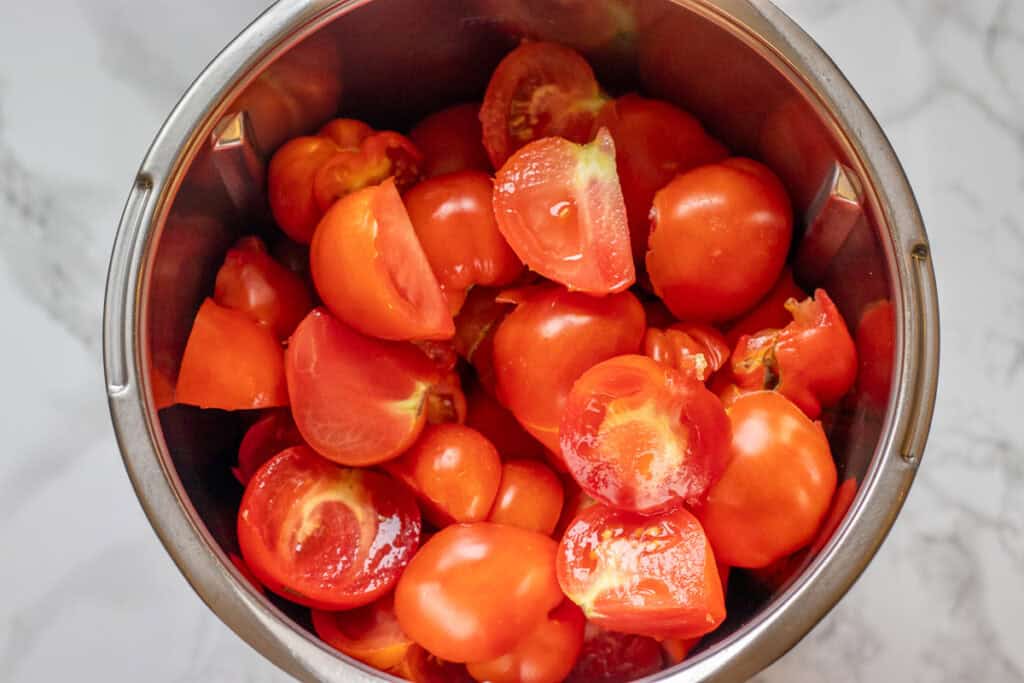
Cut the raw tomatoes into quarters and blitz them smooth in a powerful blender.
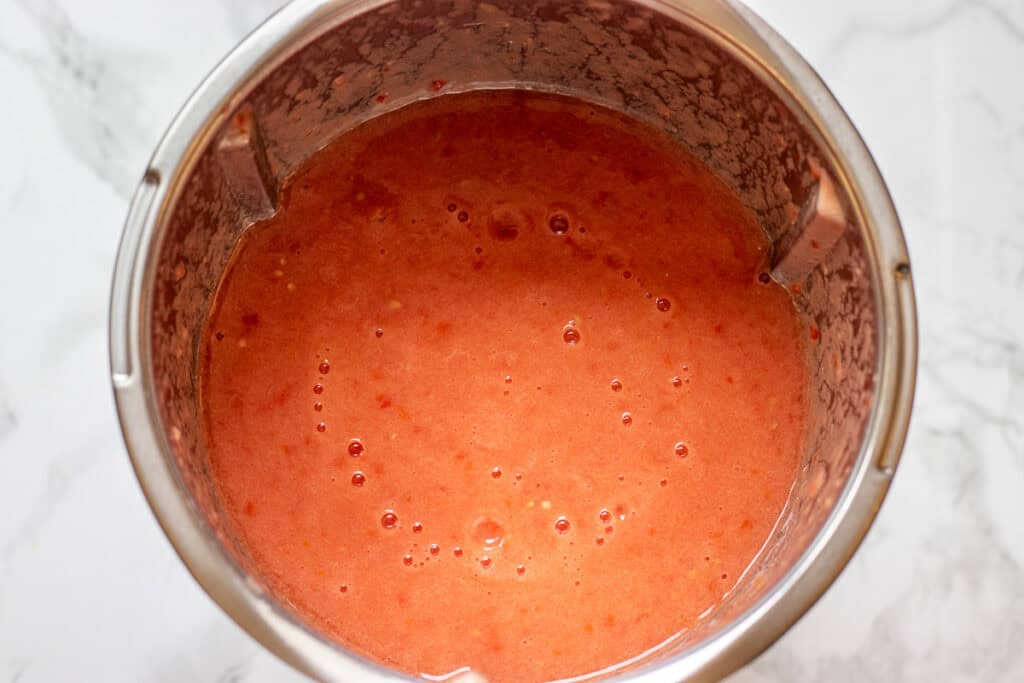
Pass the blended tomatoes through the sieve in batches. This way is quicker, and it gets more out of the fruit.
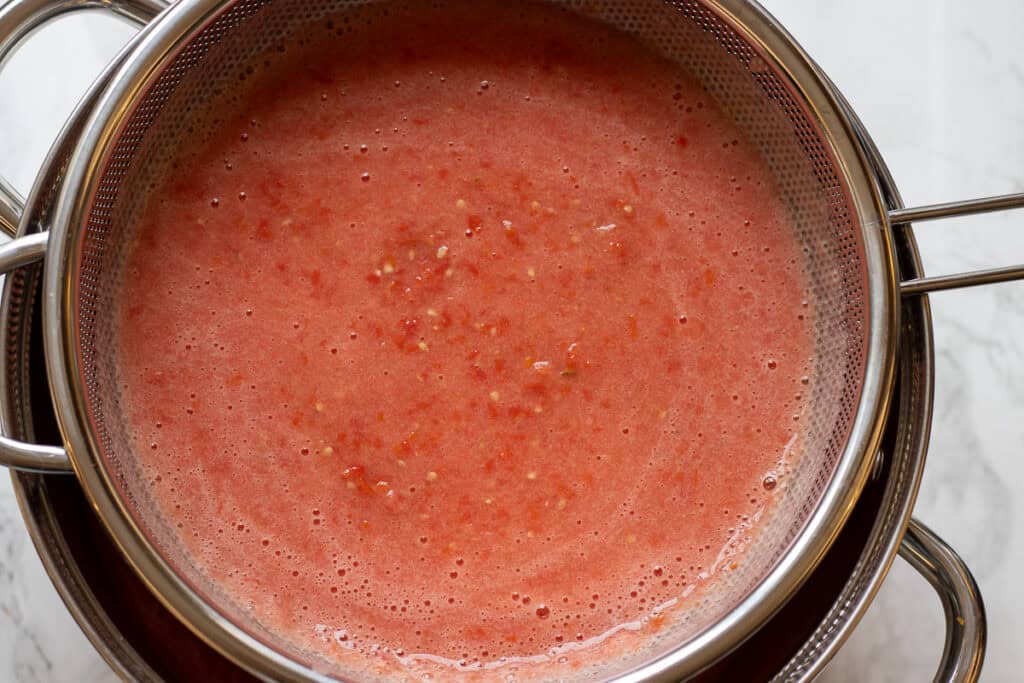
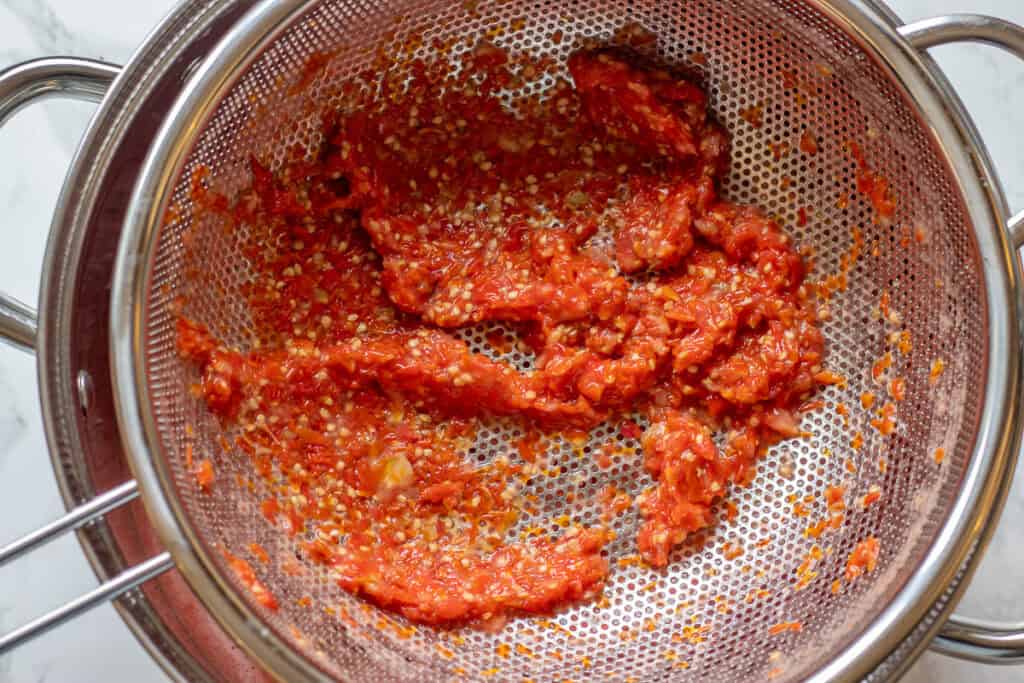
My 7 kilo batch gave nearly 1 ½ kilos of paste. The boiled batch started with 8 kilos and gave just over 1 kilo.
Reduce the Paste
Pour the sieved tomatoes into a wide pan and add the rock salt. Simmer for 1.5 to 2 hours, and stir from time to time.
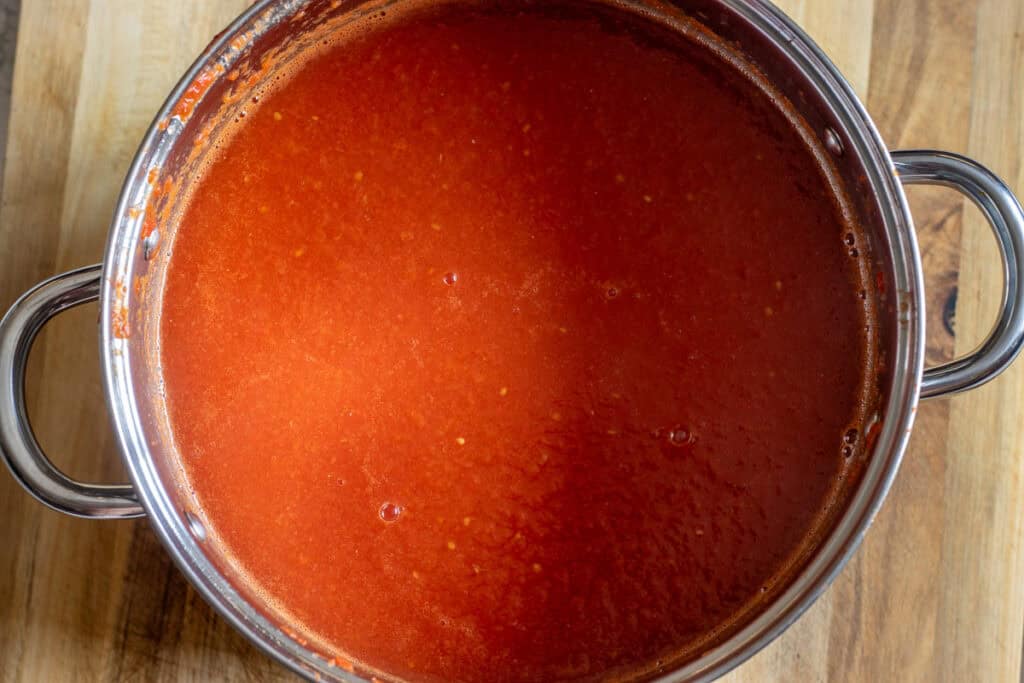
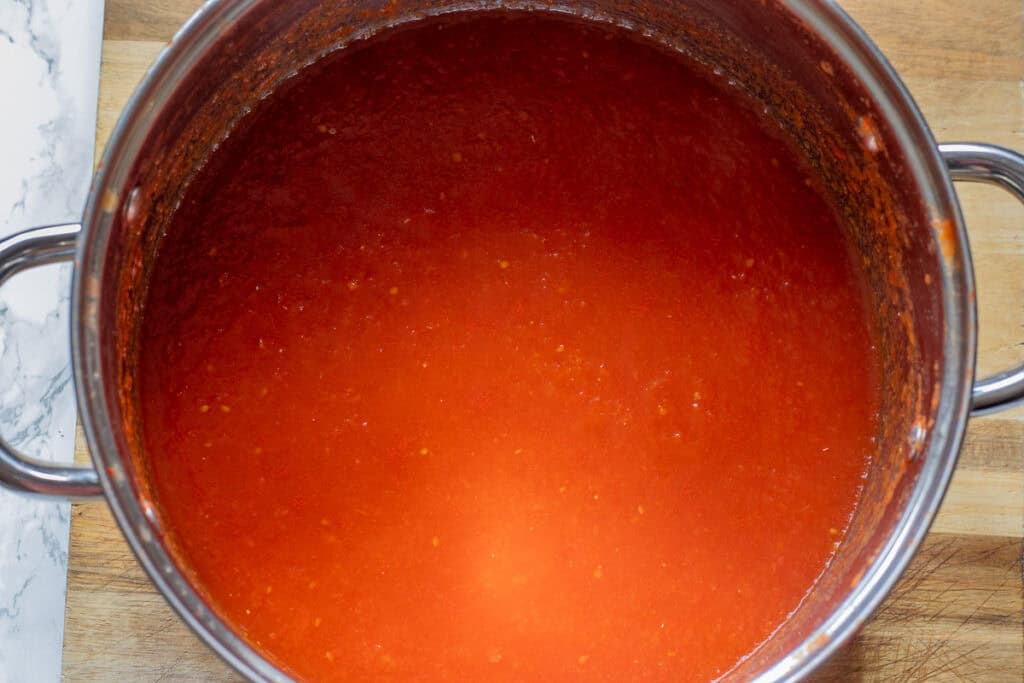
Once it thickens and starts to spit, move it to a large tray. Continue in the oven at 150-160° C (302-320° F) for another 2 to 3 hours.
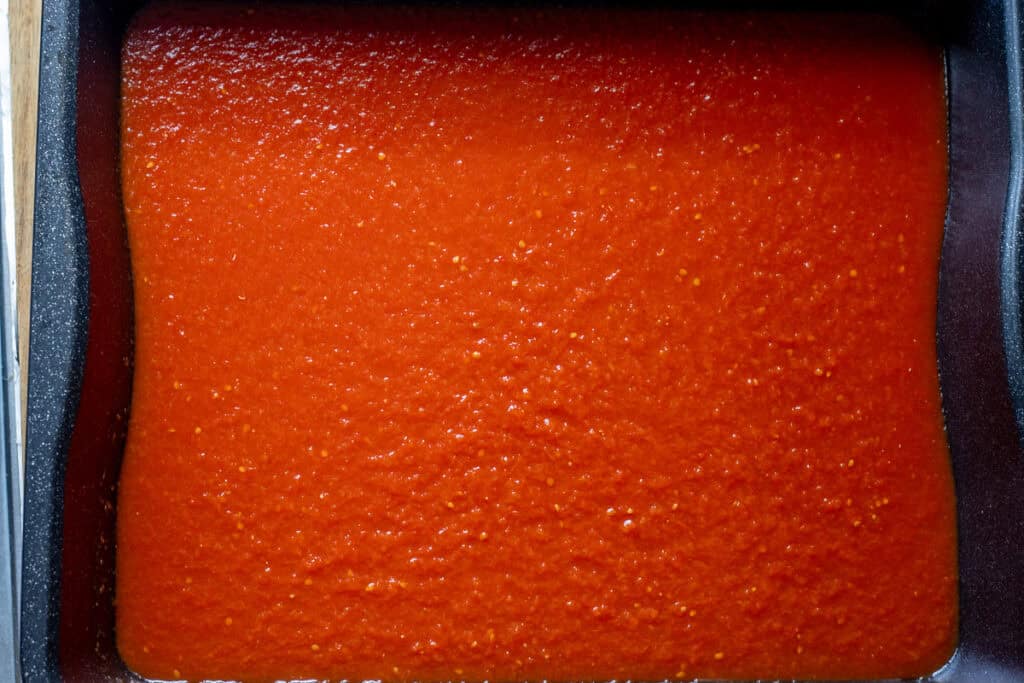
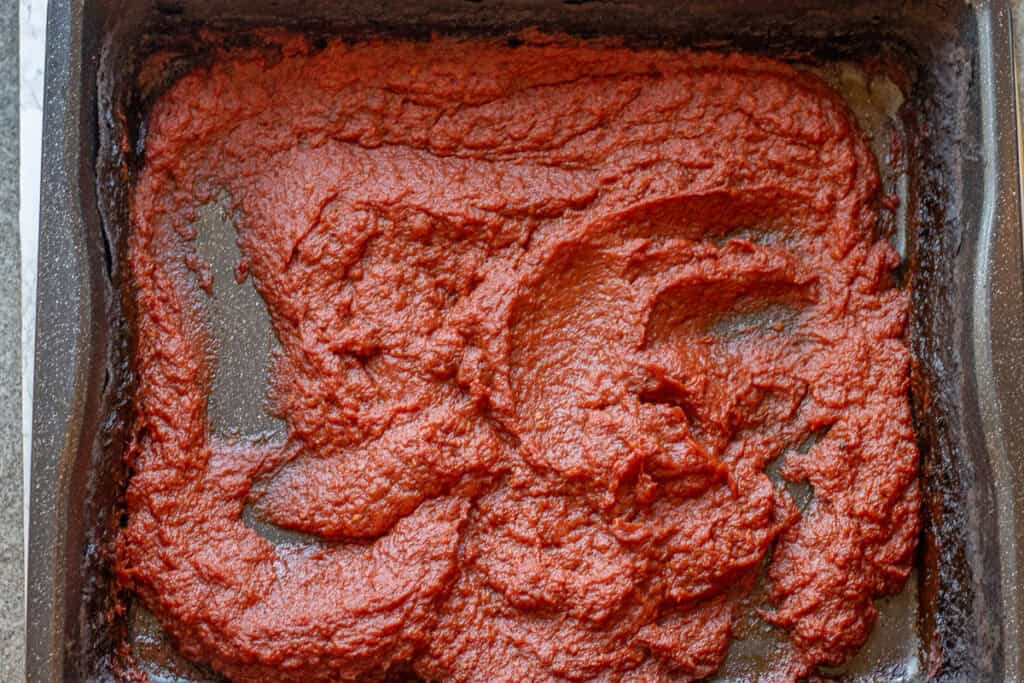
Stir it regularly, especially the sides of the tray. You can stay on the stove instead, but then it needs constant stirring.
Fill the Jars
Sterilize the jars first. I run mine through the dishwasher on a hot cycle.
Fill them with the warm paste and press it down to push out air pockets. Pour a thin layer of olive oil on top and close the lids. I put my jars straight in the fridge. If fridge space is tight, turn the filled jars upside down overnight instead, so the lids seal as they cool, and keep them somewhere cool and dark.
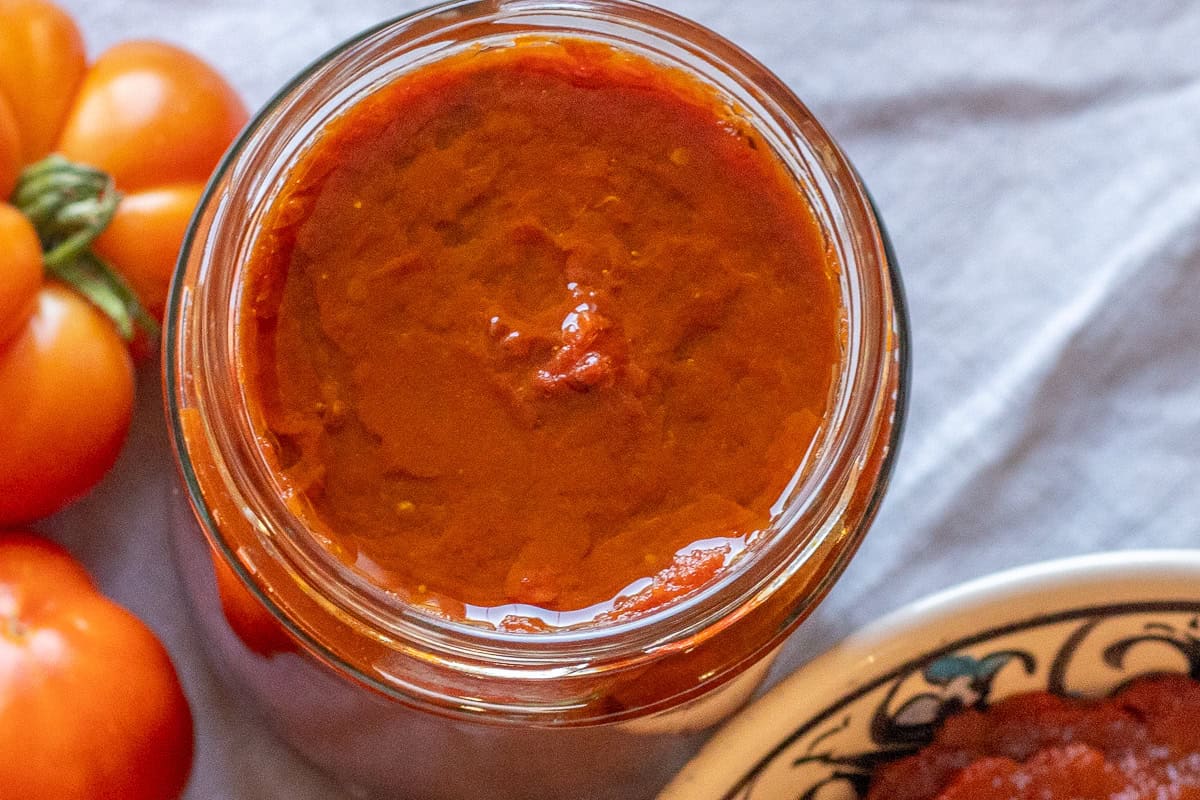
Either turn the filled jars upside down overnight, so the lids seal as they cool, or put them straight in the fridge.
Recipe Tips From the Chef
- Use rock salt at 1% of the tomato weight. That's 10 g for every kilo of tomatoes.
- Stir with a wooden spoon. Metal can discolor the paste.
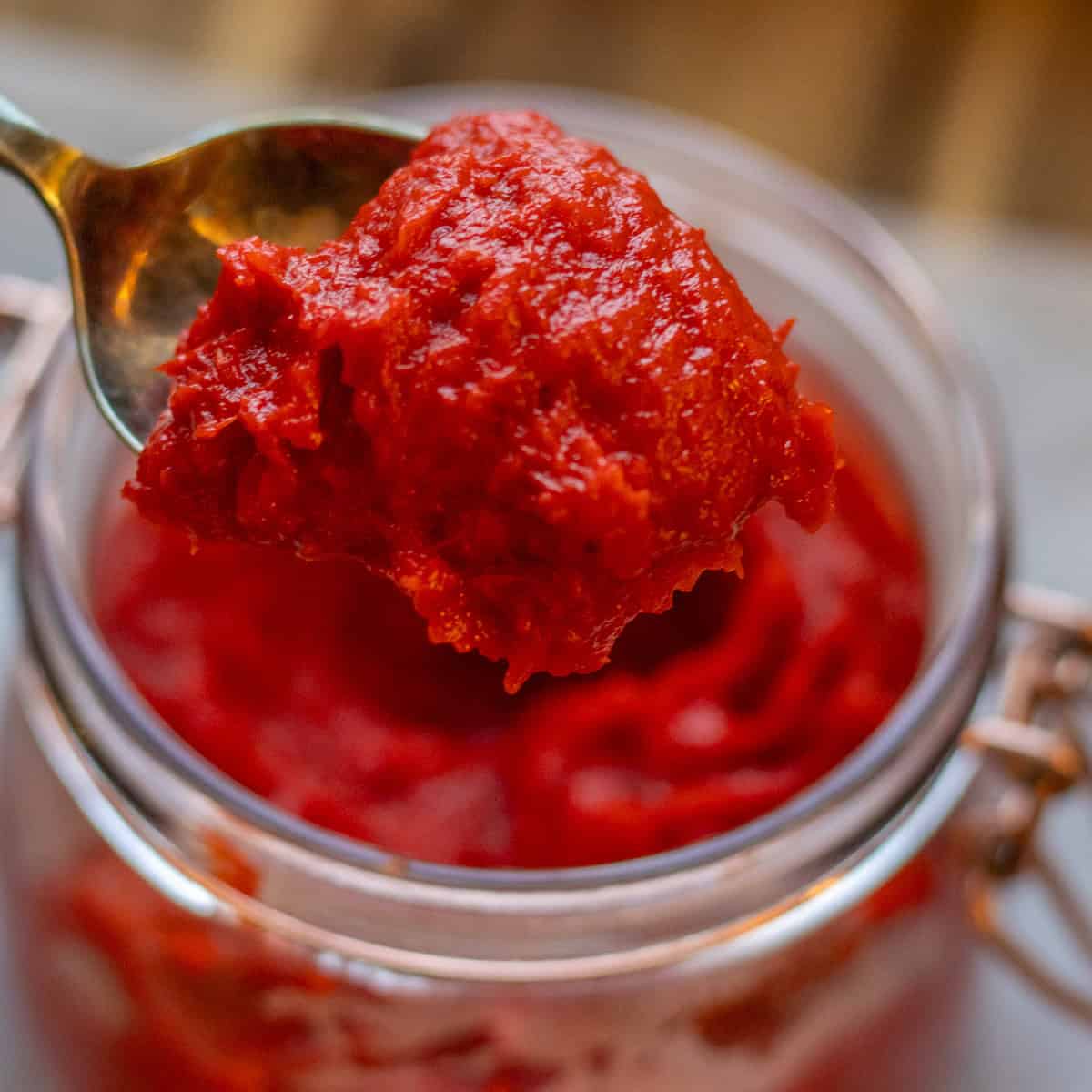
- The paste is ready when it's thick and dark red, and the spoon leaves a trail in the pan.
- Once it starts to spit on the stove, move it to the oven and let it finish there.
- Take paste from the jar with a clean, dry spoon, and top up the oil layer after each use.
- The paste is already salted, so taste your cooking before adding more salt.
Variations
- Make a mixed salça with half tomatoes and half red peppers. For the pure pepper version, follow my Biber Salçası recipe.
- If you live somewhere with strong summer sun, dry the sieved pulp outside the traditional way. Spread it on trays, cover it with cheesecloth, and stir it twice a day for 3 to 4 days.
Storage and Make Ahead Instructions
Keep the jars in the fridge, where the paste stays good for up to 4 months. The olive oil layer keeps air off the surface, so top it up whenever you take some out.
For longer keeping, freeze the paste in ice cube molds, then tip the frozen cubes into a freezer bag. It takes a little patience, but the cubes keep for 8 months. Each one is a ready portion for a pot of food.
I don't can mine for the pantry. The salt, the oil layer, and the fridge do the job.
How to Use Tomato Paste
A spoonful of salça goes into the pot at the start of most Turkish dishes, right after the onions.
I use it in my Ezogelin Corbasi, in Etli Bezelye, and in my Kisir, where it colors the bulgur. In Turkey it even goes on bread with a drizzle of olive oil as a snack.
It's not just for Turkish food. The same spoonful deepens my Lamb Goulash and my Harira Soup. I stir it into the filling for Zucchini Boats with Ground Beef, and it gives my Mediterranean Lentil Soup its color. Swap it in wherever a recipe asks for canned tomato paste.
It even goes into the marinade for my Chinese-style Chicken Wings.
Recipe FAQs
Mold means air or moisture got into the jar. Fill sterilized jars when the paste is still warm and keep the top covered with olive oil. Never dip a wet or dirty spoon into the jar.
It's better not to. Iodized table salt thins the paste and shortens its shelf life. Rock salt keeps the texture thick and preserves it for months.
It needs more time. The paste thickens as the water evaporates, and watery tomatoes take longer than meaty ones. Spread it thinner on the tray and give it more time in the oven.
No. The skins and seeds stay behind in the sieve, so there's no peeling at all. That's true for both methods.
Puree is just cooked, sieved tomatoes, still loose and pourable. Paste is the same thing cooked down for hours, until most of the water is gone. It's much stronger, so you only need a spoonful.
It started to ferment. That happens when the paste wasn't cooked down enough, the tomatoes were bruised or damaged, or the jar let air in. Use ripe, healthy tomatoes, reduce the paste properly, and keep the jars airtight.
Related Recipes
For more delicious condiment recipes, why not try:



Did you make this recipe? Please let me know how it turned out! Leave a comment below and tag @cookingorgeous on Instagram and hashtag it #cookingorgeous.
I hope you enjoy the process of making this delicious Homemade Tomato Paste - Domates Salcasi as much as you enjoy using it in yout cooking! 🙂
Want to Save This Recipe?
Enter your email & I'll send it to your inbox. Plus, get great new recipes from me every week!
By submitting this form, you consent to receive emails from Cooking Gorgeous
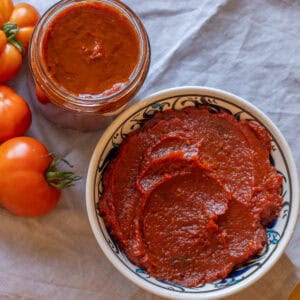
Homemade Tomato Paste
Ingredients
- 15 ½ lbs ripe tomatoes 7 kg cut into quarters
- 4 ⅔ tablespoon rock salt 70 g
- olive oil to seal the jars
Instructions
Method 1: Boil and Sieve the Tomatoes
- Choose one of the two methods. For this one, wash the tomatoes and cut them into quarters.
- Boil them in a large pot until soft, then pass them through a fine sieve to leave the skins and seeds behind.
Method 2: Blitz Them Raw in a Powerful Blender
- Cut the raw tomatoes into quarters and blitz them smooth in a powerful blender. A stick blender is not strong enough.
- Pass the blended tomatoes through the sieve in batches.
Reduce the Paste
- Pour the sieved tomatoes into a wide pan and add the rock salt. Simmer for 1.5 to 2 hours, stirring from time to time.
- Once it thickens and starts to spit, move it to a large tray.
- Continue in the oven at 150-160° C (302-320° F) for another 2 to 3 hours, stirring regularly, especially the sides of the tray.
Fill the Jars
- Sterilize the jars. Fill them with the warm paste and press it down to push out air pockets.
- Pour a thin layer of olive oil on top and close the lids. Put the jars straight in the fridge, or, if fridge space is tight, turn them upside down overnight to seal and keep them somewhere cool and dark.
- Put the jars straight in the fridge, or, if fridge space is tight, turn them upside down overnight to seal and keep them somewhere cool and dark.
Notes
- Makes nearly 1 ½ kg of paste; a serving is 1 tablespoon.
- Use rock salt at 1% of the tomato weight; iodized table salt thins the paste and shortens its shelf life.
- Stir with a wooden spoon; metal can discolor the paste.
- A stick blender is not strong enough for the raw method; use a powerful blender like a Thermomix.
- The paste is ready when it is thick and dark red, and the spoon leaves a trail in the pan.
- If it spits on the stove, finish the reduction in the oven instead.
- Plum tomatoes give the biggest yield; ripe summer beef tomatoes work well too.
- Keeps up to 4 months in the fridge with a layer of olive oil on top; top the oil up after each use, with a clean, dry spoon only.
- For longer storage, freeze in ice cube molds; the cubes keep for 8 months.
- The paste is already salted, so season dishes carefully when cooking with it.
- For a mixed salça, use half tomatoes and half red peppers.
- Fill the jars when the paste is still warm. If fridge space is tight, turn them upside down overnight to seal, and keep them somewhere cool and dark.
Leave a Reply