
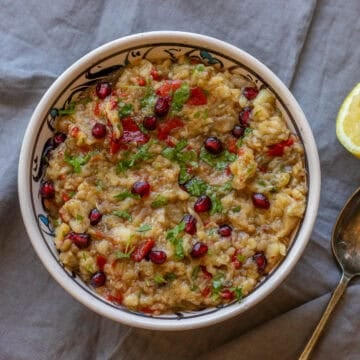
Saksuka (Turkish Eggplant Meze), spelled şakşuka in Turkish, is golden fried eggplant (aubergine), peppers, and potatoes topped with a simple garlicky tomato sauce. On a meze table, it's usually the first dish to empty.

One bowl makes everyone happy: vegans, vegetarians, and the committed meat eaters too. Serve it at room temperature; it tastes even better the next day.
Jump to:
- What is Turkish Saksuka?
- Difference Between Şakşuka and Shakshuka?
- Why This Recipe Works?
- Ingredients You'll Need
- How to Make Saksuka (Turkish Eggplant Meze)
- Recipe Tips From the Chef
- Recipe Variations
- Serving Suggestions
- Storage Instructions
- Make Ahead
- Recipe FAQs
- Related Recipes
- Saksuka (Turkish Eggplant Meze)

What is Turkish Saksuka?
Saksuka is a Turkish vegetarian dish of fried eggplant, peppers, and potatoes cooked in olive oil. The vegetables are cut into small chunks, fried until tender, then dressed with a garlic and tomato sauce. Nothing else is needed; the vegetables and good olive oil carry the dish.
Just like Mutabal (Roasted Eggplant Dip), şakşuka can be served as part of a meze spread, as a side dish, or as an appetizer.
You can watch how the whole dish comes together in the short video below.
Difference Between Şakşuka and Shakshuka?
Şakşuka and shakshuka sound almost identical, and they even share a name origin. They are still two completely different dishes.
Şakşuka is the Turkish dish on this page: fried vegetables in olive oil with a tomato sauce, and not an egg in sight. It's served as a meze, an appetizer, or a side dish next to grilled meat or fish.
Shakshuka on the other hand is a North African and Middle Eastern egg dish made with poached eggs in a tomato sauce that is often seasoned with chili peppers and spices.
Shakshuka is often served as a breakfast item or a light dinner with bread for dipping. Check out my Traditional Shakshuka Recipe recipe if you want to learn how to make this delicious North African egg dish.
The mix-up is easy to understand. Both names trace back to a North African Arabic word meaning "mixed", but the two dishes went their separate ways a long time ago. If anything, Turkish şakşuka is closer to Italian caponata or Greek briam than to the egg dish that shares its name.
Why This Recipe Works?
- A short soak in salted water stops the eggplant from drinking up the oil, so the dish tastes clean rather than greasy.
- It's a dish for every season. Use whatever vegetables are good right now; only the eggplant and tomatoes are essential.
- Thos saksuka recipe is easy to follow, with step-by-step pictures and a video right here in the post.
- The whole dish is naturally gluten-free, with nothing to swap.
Ingredients You'll Need
Please scroll down to the recipe card below for the full ingredients list with measurements, complete recipe method, recipe notes, and nutritional information.

- Eggplants - Pick slightly firm but not hard eggplants when buying them. Peel them in stripes like a zebra pattern and cut them into bite-sized chunks.
- Potatoes - Use potatoes with high starch content such as Russets, Desire, King Edwards, Maris Piper, or Gold Rush potatoes.
- Peppers - I prefer using Turkish green peppers for this dish. They are one of the most popular peppers used in Turkish cuisine. They are usually mild but some of them can be quite hot. You can replace them with bell pepper or Spanish Padron peppers.
- Tomatoes - Red and juicy summer tomatoes are always the best option, but you can use any type of tomatoes you have on hand.
- Olive oil - The oil is half the flavor here, so use a good one. I prefer extra virgin olive oil.
- Garlic - It gives a great flavor to the simple tomato sauce. Finely chop or grate using a Microplane zester before adding it to the sauce.
How to Make Saksuka (Turkish Eggplant Meze)
Prepare the Vegetables
Cut off both ends of the eggplants using a paring knife and peel the skin in strips, going from top to bottom. Do this carefully, making sure you save as much flesh as you can.
Cut the eggplants into bite-sized chunks that are approximately half an inch/one centimeter in length, similar to when making my Mediterranean Roasted Eggplant Recipe.

Put the eggplant chunks in a bowl of salted water and let them soak for 15 to 20 minutes while you prepare the rest of the vegetables. Drain them well, then dry them thoroughly with a clean kitchen towel. Dry eggplant fries better and takes in less oil.
Peel the potatoes and then cut them similar in size to the eggplants.

Slice the Turkish peppers into chunky sizes (or dice the bell pepper), similar in size to the potatoes and eggplants.

Grate or chop the tomatoes, and set them aside.
Fry the Vegetables
Place a large frying pan on medium-high heat and then add the olive oil to the pan. Make sure all of your vegetables are totally dry before starting to fry them.
When the oil is hot, lower the heat to medium, place the potatoes carefully in the pan, and then fry them until golden outside and soft inside. Remove the potatoes in a colander or on a thick paper towel to get rid of excess oil.

Carefully add the peppers to the pan and then fry them for a few minutes, until they are slightly softened. Put them on a colander together with the potatoes.

Add the eggplants to the pan, and fry them until tender and just beginning to brown at the edges. Don't be tempted to add more olive oil! Remove the eggplants onto a thick paper towel as well.

Prepare the Tomato Sauce
Put a little olive oil into the same pan you fried your vegetables (if needed) and then quickly sauté the garlic. Add the chopped/grated tomatoes, tomato paste (optional), sugar, vinegar, and salt.
Give it a stir, and then let the sauce simmer for 15 minutes, or until most of the liquid has been reduced.

Place the potatoes, peppers, and eggplants in a serving bowl/plate and then give them a gentle mix. Pour the tomato sauce on top and then let it cool down to room temperature before serving.

You can stir the tomato sauce with the vegetables if you prefer and then top it with some garlicky yogurt sauce before serving.
Recipe Tips From the Chef
- Use a good olive oil. Its flavor carries the whole dish, the same as in other olive oil-based Turkish vegetable dishes.
- Don't skip the salted-water soak for the eggplant. It keeps bitterness away and stops the chunks from drinking up the oil.
- Dry every vegetable thoroughly before frying. Wet vegetables make the oil spit and turn soggy instead of golden.
- Fry in batches and don't crowd the pan; crowded vegetables steam rather than fry.
- Resist adding extra oil while frying the eggplant. It soaks oil up at first, then releases it back as it browns.
- Serve saksuka at room temperature, not hot. The flavors are much clearer once it has cooled.
Recipe Variations
Every region of Turkey makes şakşuka a little differently. A few versions worth knowing:
- In Balıkesir, şakşuka is made with green tomatoes instead of the usual red.
- Some regions add zucchini or carrots to the frying pan alongside the eggplant and potatoes.
- For a lighter version, roast the vegetables in a hot oven instead of frying. The character changes a little, but it works well.
Serving Suggestions
If you want to serve saksuka as a starter, you can serve it with Bazlama or Pita Bread.
If you want to serve it as a side dish, you can serve it with Chicken Shish Kebab, Rice Stuffed Chicken, or Mince Beef Pie.
You can also serve it as a part of a meze spread along with Spicy Feta Dip, Haydari, Mercimek Köftesi (Vegan Lentil Meatballs), Authentic Homemade Lebanese Falafel, or Mediterranean Hummus Dip.
Storage Instructions
Store leftovers in an airtight container in the refrigerator for up to a week. For longer storage, freeze for up to 3 months. Thaw overnight in the fridge and bring it back to room temperature before serving; the texture stays surprisingly good.
Make Ahead
Saksuka is an ideal make-ahead dish. Cook it up to two days in advance and keep it covered in the fridge, then take it out an hour before serving.
In Turkey, many home cooks fry big batches at the end of summer, when eggplants are at their best, and jar the finished dish for winter.
Recipe FAQs
Yes, saksuka itself is completely vegan; it is vegetables, olive oil, and tomato sauce. Just skip the garlicky yogurt topping, or use a plant-based yogurt instead.
Three usual reasons: the soak was skipped, the eggplant went in wet, or the oil was not hot enough when it hit the pan. Soaked, dried eggplant added to properly hot oil takes in far less than you would expect.
Not traditionally. Turkish green peppers are mostly mild, though the odd one surprises you. If you like heat, add a chopped chili to the vegetables or a pinch of pul biber to the tomato sauce.
No. Peeling them in zebra stripes is the classic approach. You lose the toughest parts of the skin while the remaining strips hold the chunks together during frying.
Related Recipes
For more delicious and healthy eggplant/aubergine recipes why not try:


Did you make this recipe? Please let me know how it turned out! Leave a comment below and tag @cookingorgeous on Instagram and hashtag it #cookingorgeous.
I hope you enjoy the process of making this tasty eggplant meze as much as you enjoy eating it! 🙂
Want to Save This Recipe?
Enter your email & I'll send it to your inbox. Plus, get great new recipes from me every week!
By submitting this form, you consent to receive emails from Cooking Gorgeous

Saksuka (Turkish Eggplant Meze)
Ingredients
- ¾ cup extra virgin olive oil
- 2-3 Turkish green peppers (or 1 bell pepper) (approx ½ lbs/200 grams)
- 2 medium eggplants (aubergines) (approx 1 lbs/500 grams)
- 2 medium potatoes (approx ⅔ lbs/350 grams)
- 3-4 medium tomatoes (approx ½ lbs/400 grams)
- 2 cloves garlic (finely chopped)
- 1 tablespoon tomato paste (optional)
- ½ teaspoon salt
- ½ teaspoon sugar
- ½ tablespoon cider vinegar or white wine vinegar
Instructions
Prepare the Vegetables
- Cut off both ends of the eggplants using a paring knife and peel the skin in strips, going from top to bottom. Do this carefully, making sure you save as much flesh as you can.
- Cut the eggplants into bite-sized chunks, a size of ½ inch/one centimetre long.
- Put the eggplant chunks in a bowl of salted water and soak them for 15 to 20 minutes. Drain and dry them thoroughly with a clean kitchen towel.
- Peel the potatoes and cut them similar in size to the eggplants.
- Slice the Turkish peppers into chunky pieces (or dice the bell pepper similar in size to the potatoes and eggplants).
- Chop or grate the tomatoes, and set them aside.
Fry the Vegetables
- Place a large frying pan on medium-high heat and add the olive oil to the pan.
- Make sure all of your vegetables are totally dry before starting to fry them.
- When the oil is hot, lower the heat to medium, place the potatoes carefully in the pan and fry them until golden outside and soft inside.
- Remove the potatoes in a colander or on a thick paper towel to get rid of excess oil.
- Carefully add the peppers to the pan and fry them for a few minutes, until they are slightly softened. Put them on a colander together with the potatoes.
- Add the eggplants to the pan and fry them until tender and just beginning to brown at the edges. Don't be tempted to add more olive oil!
- Remove the eggplants from the pan on a thick paper towel to get rid of excess oil.
Prepare the Tomato Sauce
- Put a little olive oil into the same pan you fried your vegetables (if needed) and quickly sauté the garlic.
- Add the chopped/grated tomatoes, tomato paste (optional), sugar, vinegar, and salt, give it a stir, and then let the sauce simmer for 15 minutes, until most of the liquid is reduced.
- Place the potatoes, peppers, and eggplants in a serving bowl/plate and give them a gentle mix.
- Pour the tomato sauce on top and let it cool down to room temperature before serving.
- You can stir the tomato sauce with the vegetables if you prefer and top it with some garlicky yogurt sauce before serving.
Video
Notes
- The star ingredient is the eggplant. Pick slightly firm but not hard eggplants when buying them, and peel them in zebra stripes.
- Soak the eggplant chunks in salted water for 15 to 20 minutes, then dry them thoroughly. The soak keeps bitterness away and stops the eggplant from drinking up the oil.
- Use a very good quality olive oil; the oil carries the flavor of the whole dish.
- Make sure all the vegetables are totally dry before frying, and fry in batches so they turn golden instead of steaming.
- Don't add more olive oil than stated while frying the eggplant. It absorbs oil at first, then releases it back as it browns.
- Serve at room temperature, not hot; the flavors are much clearer once it has cooled.
- Variations: in Balıkesir it is made with green tomatoes; some regions add zucchini or carrots; for a lighter version, roast the vegetables in a hot oven instead of frying; add a chopped chili or a pinch of pul biber for heat.
- Saksuka is vegan as long as you skip the garlicky yogurt topping, or use a plant-based yogurt. It is also naturally gluten-free.
- Make ahead: cook up to 2 days in advance and keep covered in the fridge. Bring back to room temperature before serving.
- Storage: keep leftovers in an airtight container in the fridge for up to a week, or freeze for up to 3 months. Thaw overnight in the fridge.
Laura says
Made this delicious colourful meze a day in advance and served it at room temperature with a mixed grill. The guests licked their plates clean of it! Thank you.
Ayla Clulee says
Hi Laura, thank you so much for your lovely comment! I am so pleased to hear that your guests loved Saksuka, it is one of our favourites as well.