
My Peshwari Naan Recipe is a soft, slightly chewy flatbread stuffed with coconut, sultanas, flaked almonds and honey. It is much easier to make at home than most people expect, and you need a hot frying pan rather than a tandoor.

This is the sweet coconut naan you order with a curry. It makes four naan and needs about ten minutes of real work, with resting time in between. They taste far fresher than the takeaway ones, which is the main reason I make them.
Jump to:
- What Is Peshwari Naan?
- Why This Recipe Works?
- Ingredients You'll Need
- How to Make Peshwari Naan
- How To Cook Peshwari Naan Without A Tandoor
- Recipe Tips From the Chef
- Variations
- What To Serve With Peshwari Naan
- Storage and Make Ahead Instructions
- Peshwari Naan vs Other Naan Breads
- Recipe FAQs
- Related Recipes
- Peshwari Naan
If you would rather watch than read, the short video below walks you through the whole thing.
What Is Peshwari Naan?
If you have ever wondered what that sweet bread on an Indian menu is called, it is Peshwari Naan. It is a soft flatbread with coconut, dried fruit and nuts sealed inside the dough, then rolled out and cooked in a very hot pan.
Menus spell it Peshwari or Peshawari, and plenty of people just call it coconut naan or sweet naan.
The name means “from Peshawar”, a city in northwest Pakistan. Pakistani and Indian writing about naan does describe a Peshawari Naan stuffed with nuts and raisins, so the stuffed part is real.
The coconut and the sugar belong to British curry houses. None of the Pakistani recipes I read use either one. In Pakistan, a Peshawari Naan is often a plain tandoor bread with nothing inside it.
Why This Recipe Works?
- The dough is soft and sticky, and it barely needs kneading. You do not have to be good at bread to get this right.
- You need a bowl and a frying pan. No mixer and no food processor.
- It takes about an hour and a half from start to finish, and most of that is resting. You are only busy for ten minutes or so.
- You get four big naan from one batch, the same size as the ones from an Indian restaurant.
- The step photos cover the sealing and the rolling, which is the part people get wrong.
- I would rather make these than plain naan. They are barely more work and everyone notices.
Ingredients You'll Need
Please scroll down to the recipe card below for the full ingredients list with measurements, complete recipe method, recipe notes, and nutritional information.
Dough Ingredients for Naan

- Plain white flour or all-purpose flour - It gives you a soft naan. Bread flour works too, it just comes out chewier.
- Fast-action dried yeast - One teaspoon is all you need. It goes into the water with half the flour first, and that half hour head start is what makes the dough so easy to work with.
- Plain yogurt - Yogurt softens the dough and adds a little tang. Use plain natural yogurt with nothing added to it.
- Baking powder - This goes in alongside the yeast and gives the naan its puff in the pan. Do not swap it for baking soda.
- Ghee - It has a rich buttery taste and handles high heat well. Melted butter is fine if you don’t have ghee.
Ingredients for Filling

- Melted butter - It binds the filling together and carries the sweetness right through the naan.
- Cream - I use full-fat heavy cream, or double cream. It takes the edge off the sweetness and keeps the filling spreadable, which matters a lot when you roll the naan out.
- Flaked almonds - These give the filling its nutty taste and a bit of bite. Use plain unsalted ones.
- Honey - It sweetens the filling and helps hold it together, and it stops the naan drying out.
- Sultanas or raisins - They add soft, sweet pockets of fruit. Soak them in warm water for a few minutes and drain them well if they look dry.
- Desiccated coconut - This is what turns it into a coconut naan rather than a plain one. Use the unsweetened kind, since there is already honey in the filling.
How to Make Peshwari Naan
There are four stages here: the dough, the filling, the shaping and the cooking. Three of them are quick. The shaping is the one to slow down for, because that is where a badly sealed naan turns into a pan full of filling.
Make the Naan Dough
Pour the lukewarm water, yeast, and half of the flour into a large bowl. Mix everything together, cover the bowl, and leave it to rest in a warm place for 30 minutes.


Add the yogurt to the bowl, then add the remaining flour, salt, and baking powder. Mix with your hands until a soft and sticky dough forms.
The dough should not be dry or stiff, so don’t add too much extra flour. A slightly sticky dough gives you softer naan once cooked.

Add 2 teaspoons of melted ghee or butter and rub it over the dough. Gently squeeze the dough a few times, then cover the bowl with cling film or a clean, damp kitchen cloth. Leave it to rise for another 15 minutes.

Add the remaining teaspoon of ghee or melted butter to the dough and spread it over the surface. Turn the dough out onto a work surface and knead it for about 30 seconds.
Return it to the bowl, cover it again, and leave it to rise for another 15 minutes. The dough should look smoother and feel easier to handle.

Make the Filling
Mix the melted butter, honey, cream, sultanas, flaked almonds, and desiccated coconut in a bowl. The mixture should hold together lightly, but doesn’t need to be completely smooth. If it looks dry and crumbly, add another teaspoon of cream. A crumbly filling is the thing most likely to tear the dough when you roll it out.
If the sultanas are very dry, you can soak them in a little warm water for a few minutes, then drain them well before mixing. This makes the filling softer and stops it from feeling too dry inside the naan.
Set the filling aside while you divide and shape the dough.
Shape the Naan
After the dough has rested, lightly oil your work surface and gently knead the dough for a minute. Divide it into four equal pieces, around 4 oz or 112 grams each. Roll each piece into a ball and lightly dust with flour.

Cover the dough balls and let them rest for 5 minutes before shaping. This short rest makes the dough easier to roll and helps stop it from shrinking back.
Divide the filling into four equal portions. Roll out one dough ball to the size of a small plate. Keep the remaining dough balls covered while you work. Place one portion of the filling in the center of the rolled-out dough.

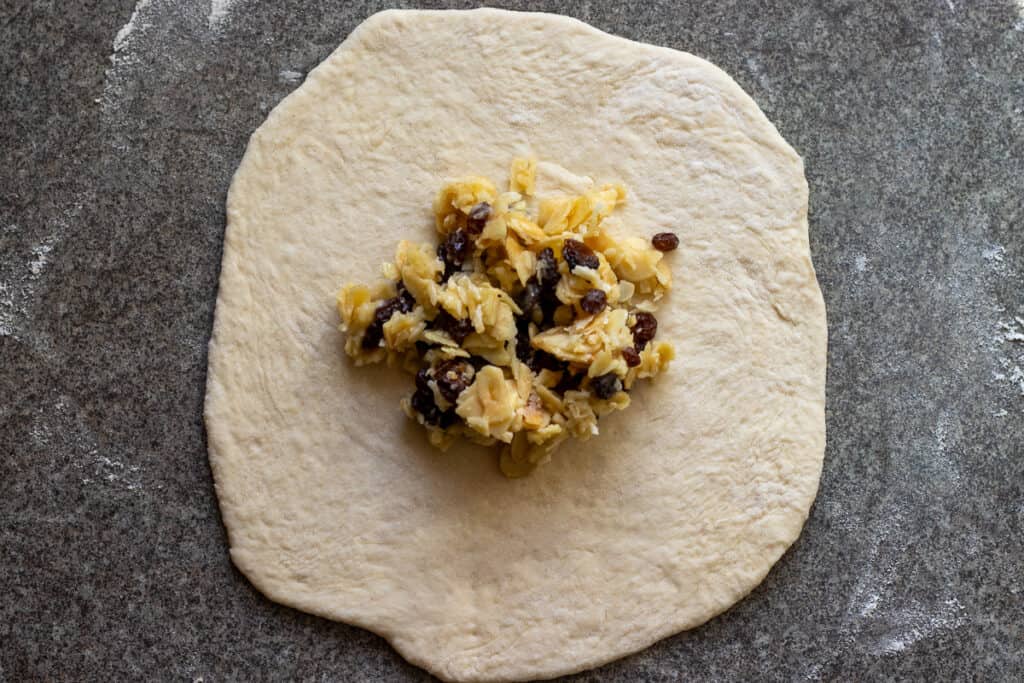
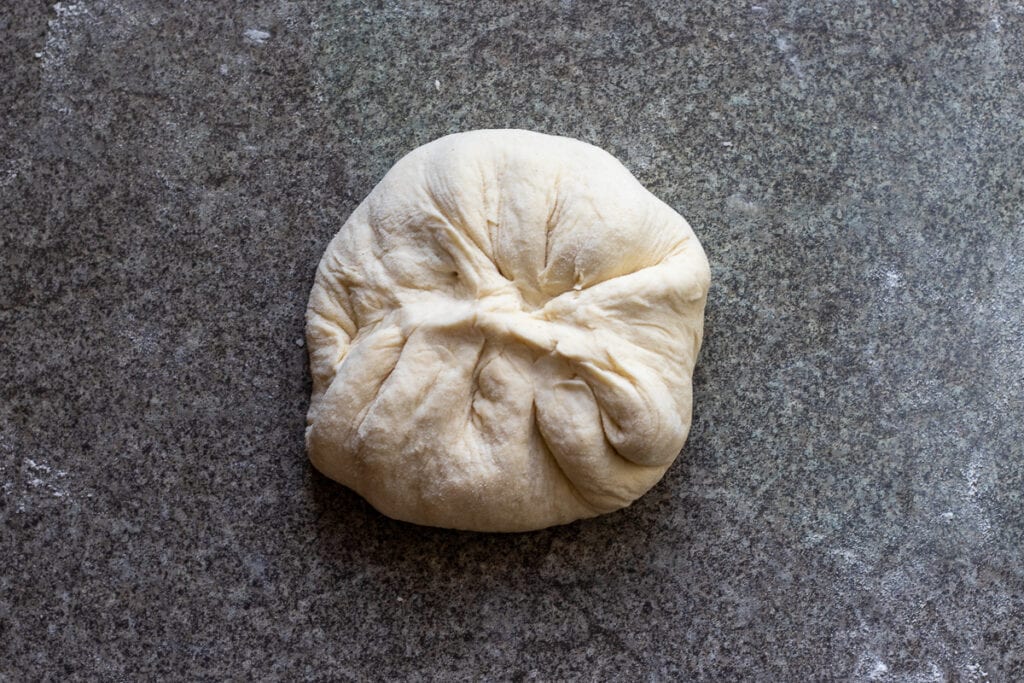
Pull the edges up and over the filling, then seal them well to make a ball again. Check there are no gaps or thin patches before you go any further, because that is where the filling escapes.
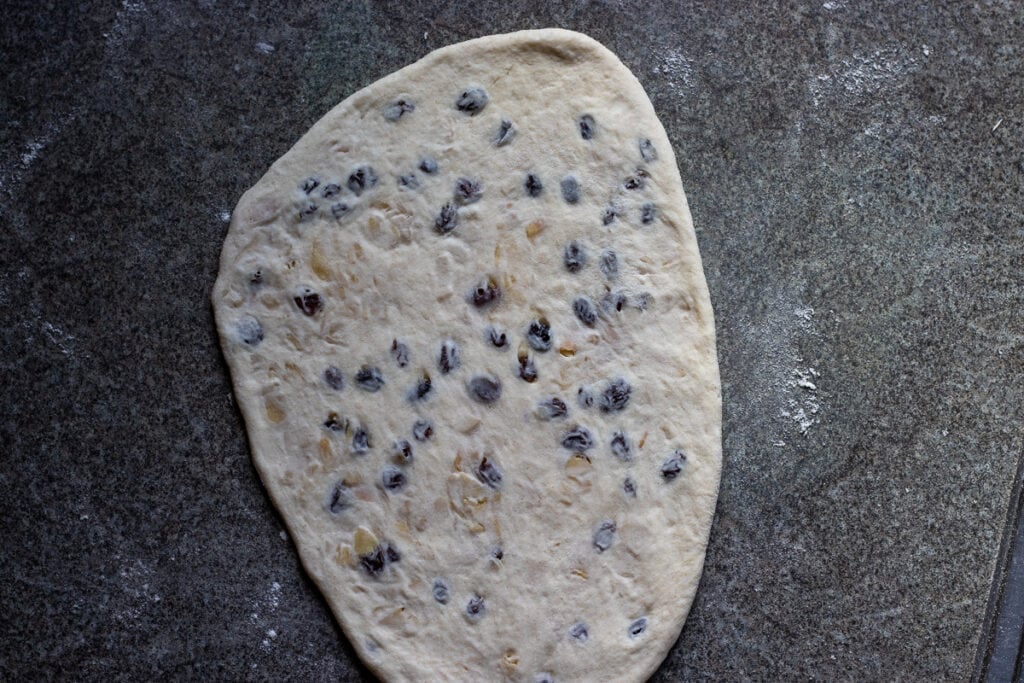
Dust the ball lightly with flour, then roll or press it into a teardrop or oval shape, about ⅛ inch or 3 mm thick. Try not to roll it too thin, as the filling can break through.
If a small hole does open up, pinch a little dough from the edge over the top of it and carry on rolling.
Cook the Peshwari Naan
Heat a large heavy-based non-stick pan, skillet, or tawa over medium-high heat. The pan needs to be very hot before you add the naan. This helps the bread puff slightly and gives it golden brown spots.
Place one naan in the hot pan and cook until the bottom is golden brown. Flip it with tongs and cook the other side until golden and cooked through. The naan should have a few darker spots and feel soft, not doughy.

Transfer the cooked naan to a plate and brush the top with ghee or butter. Garnish with extra flaked almonds and chopped coriander or cilantro if you like.
For a sweeter finish, melt 2 tablespoons of butter with 1 tablespoon of honey and brush that over each naan instead of plain ghee. Scatter a few extra sultanas and flaked almonds over while the glaze is still warm so they stick.

Stack the naan on a plate as they come out and cover the pile with a clean cloth while you cook the rest. Keeping them stacked and covered traps the steam and stops them going stiff. Serve them warm.
How To Cook Peshwari Naan Without A Tandoor
You can make excellent Peshwari Naan without a tandoor oven. A hot skillet, cast iron pan, tawa, or heavy-based frying pan works well at home. The key is to heat the pan properly before adding the naan.
Tandoor ovens are extremely hot, which is why restaurant naan cooks quickly and gets those lovely charred spots. At home, you can get a similar effect by using a hot pan and cooking one naan at a time. Don’t add the naan before the pan is hot enough, or it may turn dry and pale instead of soft and golden.
If the naan is browning too quickly before the inside cooks, lower the heat slightly. If it stays pale and doesn’t puff at all, increase the heat. Every stove is slightly different, so you may need to adjust the heat after the first naan.
You can also bake them. Heat the oven to 220° C - 430° F with a heavy baking tray or a pizza stone inside, and give it a good twenty minutes to get properly hot. Slide the naan straight onto the hot tray and bake for four to five minutes.
They come out softer and paler than the pan version, so I still reach for the pan first, but the oven is easier if you want all four ready at the same time.
Recipe Tips From the Chef
- Plain white flour, or all-purpose flour, gives the softest naan. Whole wheat works but makes them noticeably denser and drier.
- Keep the dough soft and slightly sticky. A stiff, dry dough will not give you a fluffy naan, so resist adding extra flour.
- Mix the filling until it just holds together. If it crumbles, stir in another teaspoon of cream, because a crumbly filling is what splits the dough when you roll it.
- Blitz the flaked almonds for a few seconds, or use ground almonds, if you want a smoother filling that spreads more easily.
- Seal the dough right around the filling and check for thin patches before you roll. If a hole opens up, pinch a bit of dough from the edge over the top and keep going.
- Don’t roll the naan too thin. About ⅛ inch, or 3 mm, is right.
- Keep the dough balls covered while you shape each naan so they don’t dry out.
- Go easy on the dusting flour, and wipe the pan between naans. Loose flour burns and leaves dark marks on the next one.
- Get the pan properly hot before the first naan goes in. If it browns too fast, drop the heat a little. If it stays pale and doesn’t puff, turn it up.
- Brush each naan with ghee or butter the moment it comes out of the pan, then stack them under a cloth so they stay soft.
- To make the dough earlier in the day, reduce the yeast to ¼ teaspoon and keep the covered dough in the fridge until you need it.
Variations
- Leave the sultanas out if you don’t like fruit in your bread. The coconut and almonds carry the filling on their own.
- Swap the flaked almonds for pistachios, or use half and half. Pistachios turn up in plenty of versions and they look good scattered on top as well.
- Add ¼ teaspoon of ground cardamom to the filling, with a pinch of cinnamon if you like. Cardamom suits the coconut and stops it tasting like a plain sweet bread.
- Golden syrup works in place of the honey and makes the filling a little stickier, which helps if yours keeps crumbling.
- Chocolate chips instead of the sultanas make a dessert version. Not traditional in the least, but it works.
What To Serve With Peshwari Naan
The filling is sweet, so this naan works best next to something with real heat. It is the one I reach for with a hot curry rather than a mild one, because the coconut and honey take the edge off the chili.
Serve it with rich curries such as Dal Palak (Spinach Dal), Creamy Chicken Korma, Chicken Handi and Butternut Squash Curry with Chickpeas. It holds up to spicy grilled food as well, so it is good alongside Spicy Tandoori Chicken, Lamb Shish Kebab and Hyderabadi Mutton Biryani.
For a lighter plate, put it with Mushroom Rice, Crispy Onion Bhaji (Pakora), Indian Chickpea Salad (Chana Salad) and a bowl of Onion Raita. The cool yogurt and the salad give you somewhere to go between mouthfuls of the sweet bread.
A leftover naan is also good the next morning, warmed through in a dry pan and eaten with eggs.
Storage and Make Ahead Instructions
Let the naan cool to room temperature before you store it. Put them in an airtight container or wrap them in foil, and they keep in the fridge for up to 3 days.
For longer, wrap each one in cling film, drop them into a freezer bag and freeze for up to 3 months, so you can pull out only as many as you need. Defrost frozen naan at room temperature for a couple of hours before you reheat it.
Sprinkle a few drops of water over each naan before you reheat it. That puts back the moisture the first cook drove off, and it is the difference between a soft naan and a leathery one.
Warm them in a skillet over medium heat for 30 to 60 seconds on each side, or wrap them in foil and heat them at 175° C - 350° F for about 10 minutes.
Most of the work can be done in advance. Make the dough earlier in the day, or up to a day ahead, by reducing the yeast to ¼ teaspoon and leaving the covered bowl in the fridge until you need it.
The filling keeps in a covered bowl in the fridge for a couple of days too, though it firms up in there, so let it come back to room temperature before you try to spread it.
The dough freezes as well. Freeze it in balls, defrost them overnight in the fridge, then fill and roll as usual.
Peshwari Naan vs Other Naan Breads
Plain naan is this same dough with nothing inside it, brushed with butter and often scattered with nigella seeds. Garlic Naan takes that plain dough and puts garlic and coriander on top rather than a filling, which is why it goes with almost anything on the table.
Bullet Naan is this recipe’s opposite. It is filled with cheese and green chili instead of coconut and fruit, so it brings heat where this one brings sweetness.
Keema Naan is stuffed with spiced minced meat, which turns it into a meal rather than a side. Pakistani Roghni Naan is not stuffed at all. It is an enriched dough topped with sesame seeds, and it is much closer to the bread people actually eat in Pakistan.
Kashmiri naan is the one that gets mixed up with this recipe most often. The usual dividing line is glacé cherries and cashews in the Kashmiri version against coconut, almonds and dried fruit in this one, though plenty of restaurants fill both the same way.
Recipe FAQs
Both sides should have dark spots and the naan should feel soft rather than doughy when you press it. It will usually puff up a little in the pan. If the outside is browning before the middle is done, turn the heat down slightly. If it stays pale and flat, the pan is not hot enough.
Two things cause it. The dough was not sealed all the way around the filling, so there was a thin patch for it to push through, or the naan was rolled thinner than ⅛ inch. A dry, crumbly filling makes it worse, because it will not stretch with the dough. Add a little more cream to the filling and roll a little thicker.
It is the filling rather than the dough. The honey and the fruit set firm as the naan cools, which makes the whole thing feel stiff. Sprinkle a few drops of water over it and warm it through in a dry pan for 30 to 60 seconds a side and it softens right back up.
Yes, but whole wheat flour soaks up more water and makes a heavier dough, so the naan comes out denser and less puffy. Half white and half whole wheat is the usual compromise if you want some of the nuttiness without losing the soft texture.
Related Recipes
For more easy flatbread recipes, why not try:




Did you make this recipe? Please let me know how it turned out! Leave a comment below and tag @cookingorgeous on Instagram and hashtag it #cookingorgeous.
I hope you enjoy the process of making this soft and fluffy Peshwari Naan - Coconut Naan Bread as much as you enjoy eating it! 🙂
Want to Save This Recipe?
Enter your email & I'll send it to your inbox. Plus, get great new recipes from me every week!
By submitting this form, you consent to receive emails from Cooking Gorgeous

Peshwari Naan
Ingredients
For the Dough
- ⅔ cup lukewarm water (150 ml)
- 1 teaspoon fast-action dried yeast
- 2 cups plain white flour / all-purpose flour (250 grams)
- ¼ cup plain yogurt (50 grams)
- ½ teaspoon salt
- ¾ teaspoon baking powder
- 3 teaspoon melted ghee or butter (2 teaspoons and 1 teaspoon separately)
For the Filling
- ¼ cup melted butter
- 2 tablespoon honey
- 2 tablespoon double cream or heavy cream
- 2 tablespoon sultanas (or raisins)
- 2 tablespoon flaked almonds
- 2 tablespoon desiccated coconut
- coriander/cilantro for garnish
For the Glaze (Optional)
- 2 tablespoon butter
- 1 tablespoon honey
- 1 tablespoon sultanas extra, to scatter
- 1 tablespoon flaked almonds extra, to scatter
Instructions
Make the Naan Dough
- Pour the lukewarm water, yeast, and half of the flour into a large bowl. Mix everything together, cover the bowl, and leave it to rest in a warm place for 30 minutes. This gives the yeast time to start working and helps create a softer dough.
- Add the yogurt to the bowl, then add the remaining flour, salt, and baking powder. Mix with your hands until a soft and sticky dough forms. The dough should not be dry or stiff, so don’t add too much extra flour. A slightly sticky dough gives you softer naan once cooked.
- Add 2 teaspoons of melted ghee or butter and rub it over the dough. Gently squeeze the dough a few times, then cover the bowl with cling film or a clean damp kitchen cloth. Leave it to rise for another 15 minutes.
- Add the remaining teaspoon of ghee or melted butter to the dough and spread it over the surface. Turn the dough out onto a work surface and knead it for about 30 seconds.
- Return it to the bowl, cover it again, and leave it to rise for another 15 minutes. The dough should look smoother and feel easier to handle.
Make the Filling
- Mix the melted butter, honey, cream, sultanas, flaked almonds, and desiccated coconut in a bowl. The mixture should hold together lightly, but doesn’t need to be completely smooth. If it looks dry and crumbly, add another teaspoon of cream. A crumbly filling is the thing most likely to tear the dough when you roll it out.
- If the sultanas are very dry, you can soak them in a little warm water for a few minutes, then drain them well before mixing. This makes the filling softer and stops it from feeling too dry inside the naan.
- Set the filling aside while you divide and shape the dough.
Shape the Naan
- After the dough has rested, lightly oil your work surface and gently knead the dough for a minute. Divide it into four equal pieces, around 4 oz or 112 grams each. Roll each piece into a ball and lightly dust with flour.
- Cover the dough balls and let them rest for 5 minutes before shaping. This short rest makes the dough easier to roll and helps stop it from shrinking back.
- Divide the filling into four equal portions. Roll out one dough ball to the size of a small plate. Keep the remaining dough balls covered while you work.
- Place one portion of the filling in the center of the rolled-out dough. Pull the edges up and over the filling, then seal them well to make a ball again. Check there are no gaps or thin patches, because that is where the filling escapes.
- Dust the ball lightly with flour, then roll or press it into a teardrop or oval shape, about ⅛ inch or 3 mm thick. Try not to roll it too thin, as the filling can break through. If a small hole opens up, pinch a little dough from the edge over the top of it and carry on rolling.
Cook the Peshwari Naan
- Heat a large heavy-based non-stick pan, skillet, or tawa over medium-high heat. The pan needs to be very hot before you add the naan. This helps the bread puff slightly and gives it golden brown spots.
- Place one naan in the hot pan and cook until the bottom is golden brown. Flip it with tongs and cook the other side until golden and cooked through. The naan should have a few darker spots and feel soft, not doughy.
- Transfer the cooked naan to a plate and brush the top with ghee or butter. Garnish with extra flaked almonds and chopped coriander or cilantro if you like.
- For a sweeter finish, melt 2 tablespoons of butter with 1 tablespoon of honey and brush that over each naan instead of plain ghee. Scatter a few extra sultanas and flaked almonds over while the glaze is still warm so they stick.
- Stack the naan on a plate as they come out and cover the pile with a clean cloth while you cook the rest. Keeping them stacked and covered traps the steam and stops them going stiff. Serve them warm.
Video
Notes
- Plain white flour, or all-purpose flour, gives the softest naan. Whole wheat works but makes them denser and drier.
- Keep the dough soft and slightly sticky. Adding extra flour is what makes a tough naan.
- Mix the filling until it just holds together. If it crumbles, stir in another teaspoon of cream. Use ground almonds, or blitz the flaked almonds for a few seconds, if you want it smoother.
- Seal the dough all the way around the filling and check for thin patches before rolling. Do not roll it thinner than ⅛ inch, or 3 mm. If a hole opens up, pinch a little dough from the edge over the top and carry on.
- Get the pan properly hot before the first naan goes in. Lower the heat if it browns too fast, raise it if it stays pale.
- Go easy on the dusting flour and wipe the pan between naans, or the loose flour burns and marks the next one.
- Brush each naan with ghee or butter as it comes out, then stack them under a cloth so they stay soft.
- To bake instead of frying, heat the oven to 220° C - 430° F with a heavy tray inside for 20 minutes, then bake the naan for 4 to 5 minutes.
- Make ahead: the dough can sit covered in the fridge for up to a day if you reduce the yeast to ¼ teaspoon, and the filling keeps 2 days in the fridge. Let the filling come back to room temperature before you use it.
- Storage: cooked naan keeps 3 days in the fridge in an airtight container, or 3 months in the freezer wrapped individually. Defrost at room temperature, sprinkle over a few drops of water, then reheat in a skillet for 30 to 60 seconds a side, or wrapped in foil at 175° C - 350° F for about 10 minutes.
- Variations: leave out the sultanas, swap the almonds for pistachios, add ¼ teaspoon of ground cardamom to the filling, or finish with the optional honey butter glaze instead of plain ghee. The recipe is vegetarian, but not vegan or dairy free as written.




Isabel says
These looks delicious! Thanks for the recipe and the video, definitely will try for my next curry night.