
These crumbly, savory cookies called Kandil Simidi are a Turkish favourite for tea time. They’re slightly crisp on the outside and covered in plenty of nutty sesame seeds. The dough comes together quickly with basic ingredients you probably have in hand. Each ring is dipped in egg white and sesame seeds before baking for a nice golden color.
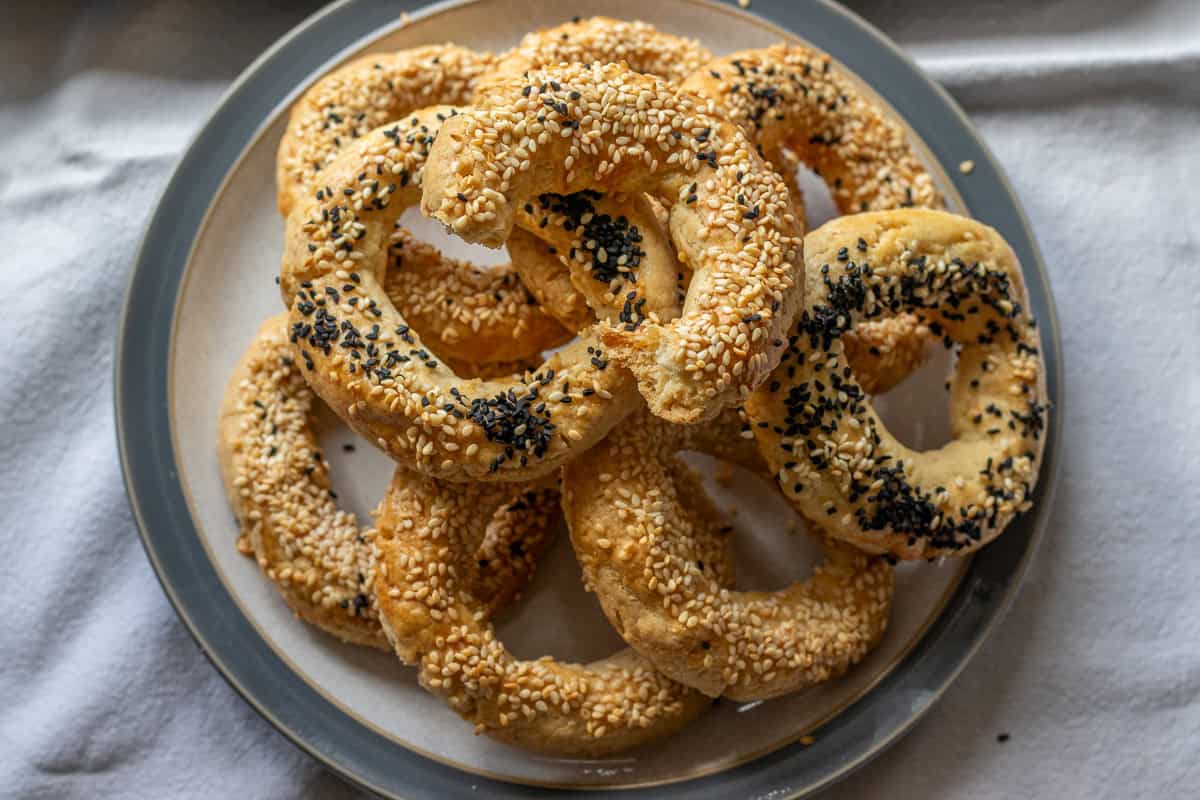
They stay fresh for days; they are perfect to share with friends or to enjoy with a hot cup of tea as a snack.
Jump to:
A Bit of Tradition
In Turkey, kandil simidi is a part of an old tradition that brings people together. The word “kandil” refers to special nights when mosques are lit and people take time to pray and think about loved ones. On those nights, families bake these sesame cookies and share them with neighbours and friends. Some put them on small plates, others wrap them in napkins or paper bags before handing them out.
I still make kandil simidi even when it’s not one of those special nights because it reminds me of home. The smell of butter and sesame feels warm and familiar. I like keeping a jar of them ready for tea time or to offer when someone drops by.
Ingredients You'll Need
Please scroll down to the recipe card below for the full ingredients list with measurements, complete recipe method, recipe notes, and nutritional information.

- Flour - Plain flour, also known as all-purpose flour, works well with this recipe.
- Butter - You need softened unsalted butter for this recipe. Bring your butter to room temperature for a couple of hours (depending on the room temperature) until it is soft. It needs to be soft, not melted! Butter works well with vegetable oil together to make the dough tender but not heavy.
- Vinegar - White wine or cider vinegar to add a little crispness to these tea-time snacks.
- Mahleb - It gives that subtle almond-cherry scent that’s traditional in many Turkish pastries such as Açma - Turkish Soft Bread Rings and Pogaca (Turkish Cheese Buns).
- Egg white+sesame seeds - The egg white helps the cookies brown evenly, while sesame seeds add both flavor and crunch.
How to Make Kandil Simidi - Turkish Savory Cookies
In a large bowl, combine softened butter, vegetable oil, sugar, egg yolk, vinegar, and salt. Mix until smooth and creamy. Add mahlep and baking powder, then gradually stir in the flour. Use your hands to bring the dough together into a soft, smooth ball. It shouldn’t stick to your fingers.

If it feels too dry, add a teaspoon of oil. If it’s too sticky, sprinkle a little more flour. Cover the bowl and let the dough rest for about 10 to 15 minutes. This short pause makes shaping easier and keeps the cookies neat while baking.
Line a baking tray with parchment paper and preheat the oven to 180°C (350°F).
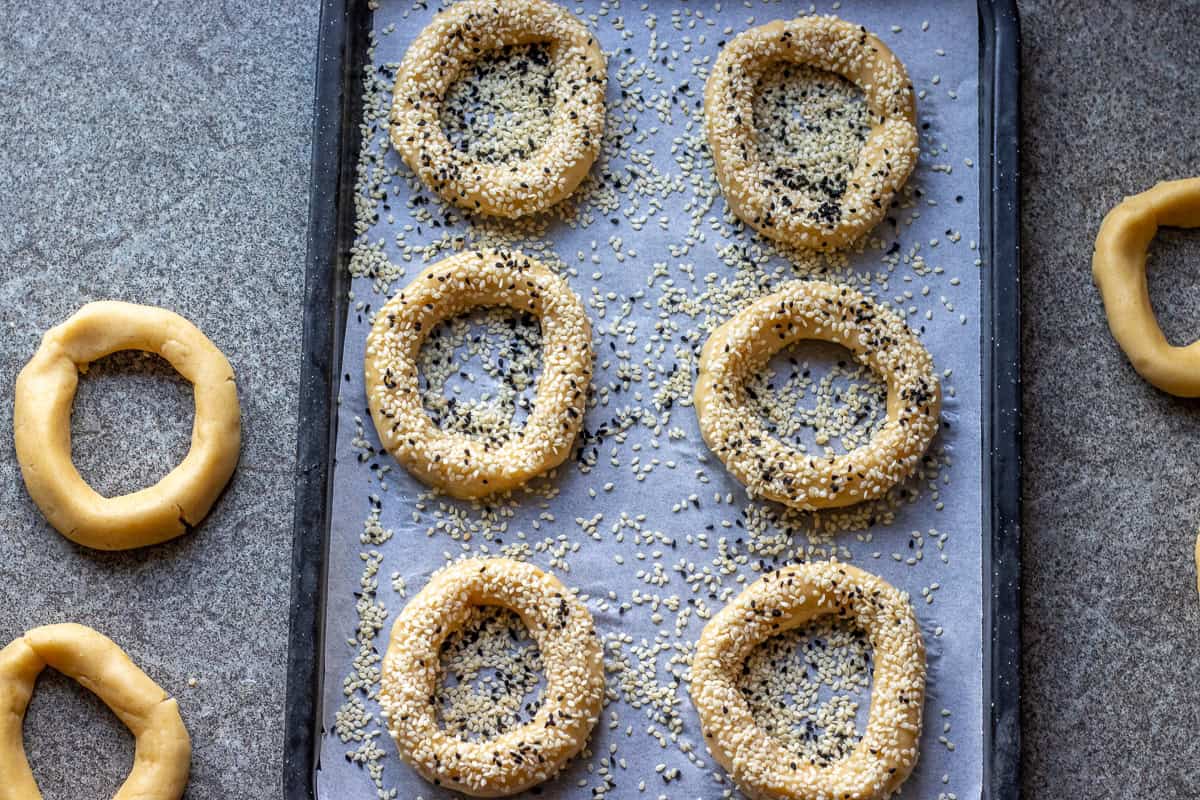
Pinch off small walnut-sized pieces of dough. Roll each one into a thin rope, about 10 to 12 cm long. Join the ends to form a ring and press gently so they stick together.

Lightly whisk the egg white and brush each ring with it, then sprinkle a generous amount of sesame seeds on top. I add some nigella seeds to add a bit of color, but it is entirely optional. Place the rings on the tray, leaving a bit of space between them.
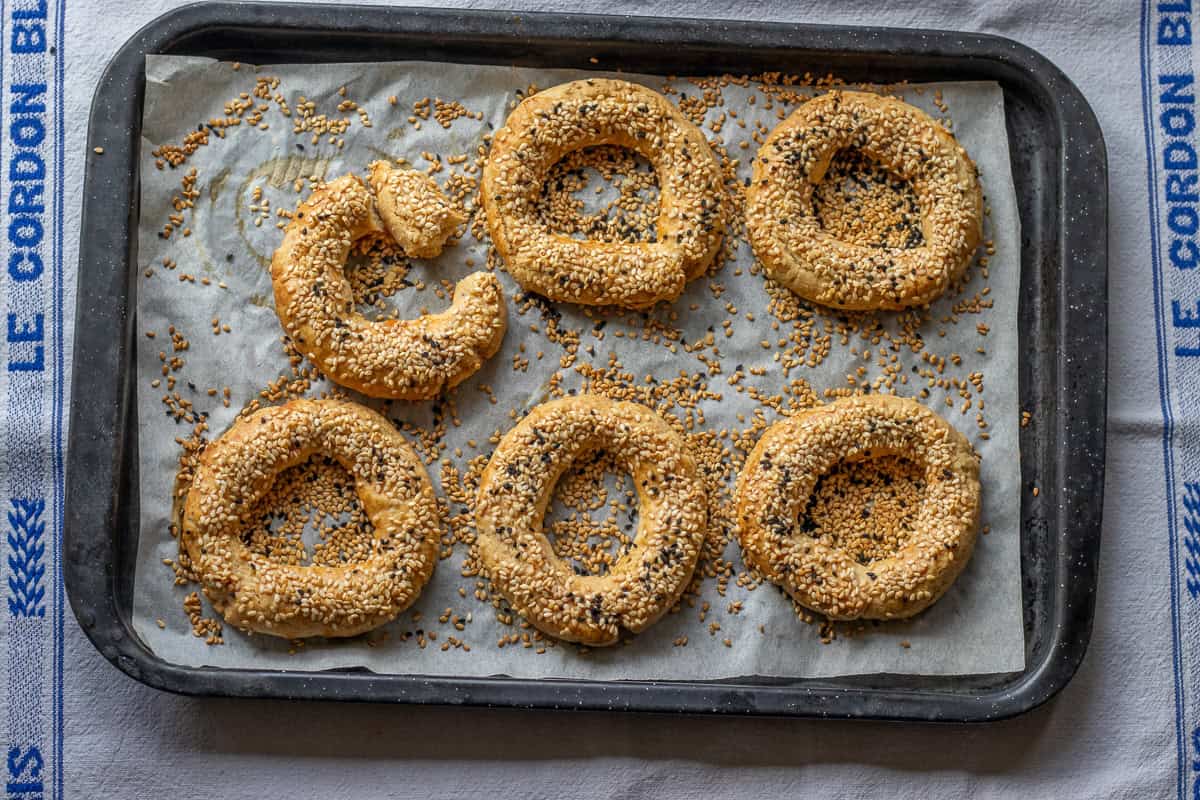
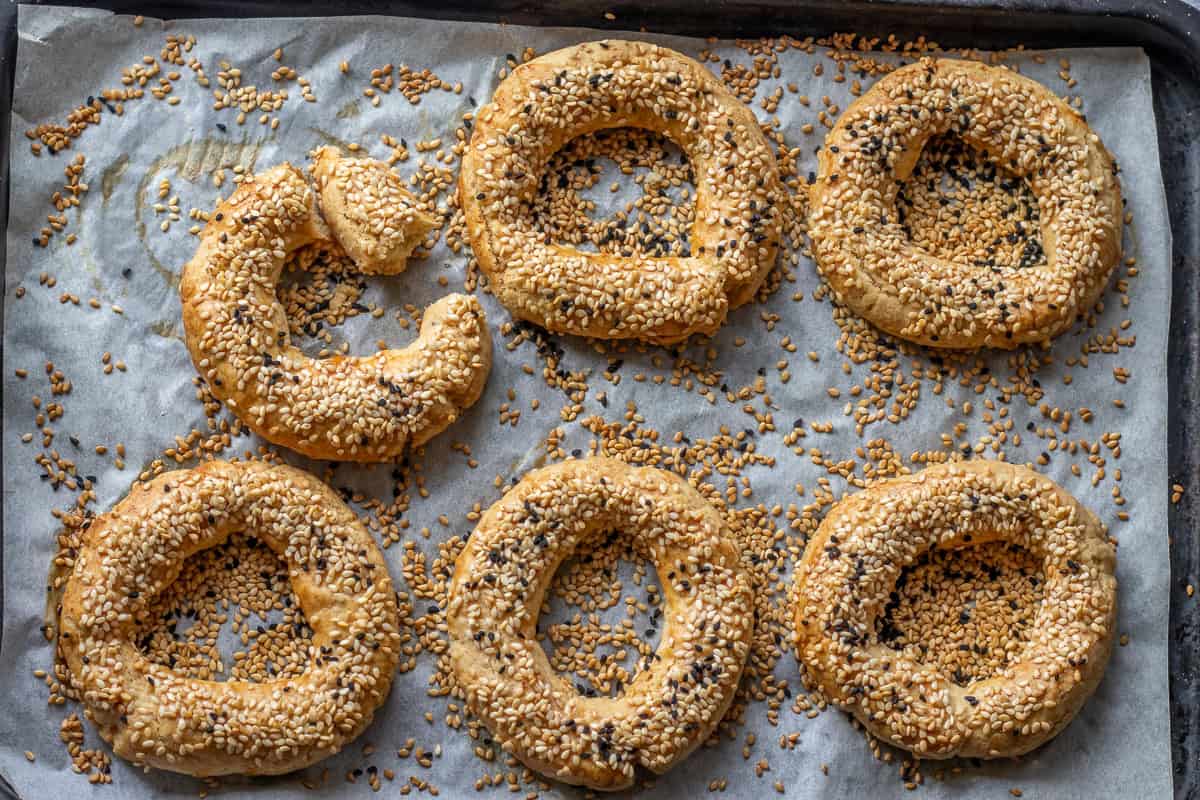
Bake for 15-18 minutes, or until golden. The sesame seeds should look toasted, and the bottoms should be lightly browned. Let them cool on the tray for a few minutes, then move to a rack to cool completely.
Recipe Tips From the Chef
- Use butter at room temperature. Cold butter makes the dough crumbly and harder to shape.
- Mix only until the dough comes together. Overmixing can make the rings tough.
- If it cracks while rolling, add a spoonful of yogurt or a few drops of oil to soften it.
- You can toast the sesame seeds lightly in a pan for a deeper flavor.
- Seal the ends of each ring well before baking so they don’t open in the oven.
- Once the sesame turns golden, take them out. A few extra minutes can make them too hard.
Storage Instructions
Kandil simidi keeps beautifully for days, which is one reason it’s so popular in Turkish households.
Store in an airtight tin or jar at room temperature for up to 10 days. Avoid the fridge as it can soften the cookies and dull the sesame flavor.
Freeze baked cookies for up to 2 months in a zip bag. Thaw at room temperature and warm them briefly in a 160°C oven for a few minutes to refresh their crunch. You can also freeze the unbaked, sesame-coated rings on a tray, then move them to a bag once firm. Bake straight from frozen, adding a minute or two to the baking time.
Serving Ideas
Kandil simidi fits just about anywhere. It’s small, tidy, and always welcome.
Wrap a handful in parchment paper and share with friends or a neighbour, or serve with Turkish tea or coffee for a refreshing afternoon break.
Add to a breakfast spread with cheese, olives, and tomatoes, or pair with soups like Turkish Red Lentil Soup - Mercimek Corbasi or Roasted Red Pepper and Tomato Soup for a crunchy side.
Pack a few in a tin for road trips, lunch boxes, or picnics.
Recipe FAQs
Yes, absolutely. The cookies will still taste great. Mahlep adds a gentle aroma similar to almond or cherry, but the sesame flavor is what stands out most.
They fall right in the middle. A touch of sugar gives mild sweetness, but they’re still perfect with salty cheese or olives.
Yes. Keep the dough wrapped in the fridge for up to 2 days. Let it come back to room temperature before shaping.
Related Recipes
For more delicious cookie recipes, why not try:


Did you make this recipe? Please let me know how it turned out! Leave a comment below and tag @cookingorgeous on Instagram and hashtag it #cookingorgeous.
I hope you enjoy the process of making these delicious and buttery Kandil Simidi - Turkish Savory Cookies as much as you enjoy eating them! 🙂
Bon appétit! / Afiyet olsun!
Want to Save This Recipe?
Enter your email & I'll send it to your inbox. Plus, get great new recipes from me every week!
By submitting this form, you consent to receive emails from Cooking Gorgeous

Kandil Simidi - Turkish Savory Cookies
Equipment
- 1 kitchen scale
- 1 measuring spoons
- 1 Measuring cups
- 1 large baking sheet
Ingredients
- 125 g unsalted butter (softened at room temperature)
- 1 egg yolk
- 1 teaspoon baking powder
- 1½ tablespoon white wine vinegar or apple cider vinegar
- 1 tablespoon sugar
- ½ teaspoon salt
- 3 tablespoon vegetable oil or sunflower oil
- 1 teaspoon mahleb
- 300 g plain white flour / all purpose flour
- 1 egg white (for brushing)
- 2 tablespoon sesame seeds
Instructions
- In a large bowl, combine softened butter, vegetable oil, sugar, egg yolk, vinegar, and salt. Mix until smooth and creamy.
- Add mahlep and baking powder, then gradually stir in the flour. Use your hands to bring the dough together into a soft, smooth ball. It shouldn’t stick to your fingers.
- If it feels too dry, add a teaspoon of oil. If it’s too sticky, sprinkle a little more flour. Cover the bowl and let the dough rest for about 10 to 15 minutes. This short pause makes shaping easier and keeps the cookies neat while baking.
- Line a baking tray with parchment paper and preheat the oven to 180°C (350°F).
- Pinch off small walnut-sized pieces of dough. Roll each one into a thin rope, about 10 to 12 cm long. Join the ends to form a ring and press gently so they stick together.
- Lightly whisk the egg white and brush each ring with it, then sprinkle a generous amount of sesame seeds on top. I add some nigella seeds to add a bit of color, but it is entirely optional.
- Place the rings on the tray, leaving a bit of space between them. Bake for 15-18 minutes, or until golden. The sesame seeds should look toasted, and the bottoms should be lightly browned.
- Let them cool on the tray for a few minutes, then move to a rack to cool completely.
Notes
- Use butter at room temperature. Cold butter makes the dough crumbly and harder to shape.
- Mix only until the dough comes together. Overmixing can make the rings tough.
- Toast the sesame seeds lightly in a pan for a deeper flavor.
- If it cracks while rolling, add a spoonful of yogurt or a few drops of oil to soften it.
- Seal the ends of each ring well before baking so they don’t open in the oven.
- Once the sesame seeds turns golden, take them out. A few extra minutes can make them too hard.



Sila says
Merhaba, sayfanizi çok sevdim. Ama bir konu var … `Greek yogurt’ demisiniz, buna `thick yogurt’ demeniz daha doğru olur bence.
Ayla Clulee says
Merhaba, güzel yorumunuz için çok teşekkür ederim 😊 Haklısınız, “thick yogurt” demek de uygun bir ifade. Tariflerde genelde daha yaygın olduğu için “Greek yogurt” kullanıyorum ama kıvam olarak bahsettiğiniz şey aynı. Yine de geri bildiriminiz için teşekkür ederim, çok değerli 🌿
Caroline says
These little sesame biscuits were crunchy and very tasty. Perfect with tea.